

Investment Insights into the New Era of Primary Healthcare by Xiao Xuesheng of GF Sino-Prosperity Investment
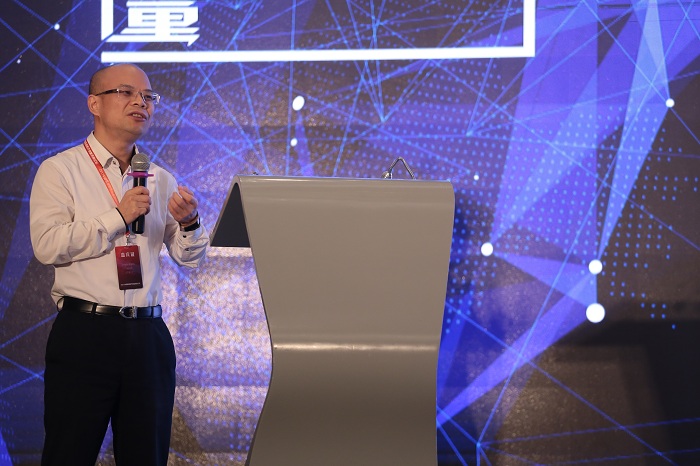
Xiao Xuesheng, General Manager of GF Trust & Securities, Delivers Inspiring Speech at VCBeat’s “2017 China Primary Healthcare Innovation Practice Forum”
On May 17, VCBeat’s “2017 China Primary Healthcare Innovation Practice Forum” was held as scheduled. Mr. Xiao Xuesheng, General Manager of GF Xinde, was invited to deliver an insightful keynote speech titled “Investment Perspectives in the New Era of Primary Healthcare.” The following are the highlights from his speech:
The economy is undergoing a transition, and the government has introduced numerous new directions and strategies for this economic transformation. A significant portion of these initiatives focuses on vigorously developing the medical and healthcare industry and strongly encouraging social capital to enter the healthcare services sector.
In this context, relying solely on government investment is wholly insufficient for healthcare institutions to meet society’s multi-tiered demand for medical services. Even if the government were to assume full responsibility for enterprises at present, what about in five or ten years? As the population ages, public demand for healthcare will become increasingly diverse and stratified. Therefore, a portion of this demand must be addressed by private capital to satisfy market needs.
Moreover, as a vital component of the new services driving economic transformation, the healthcare service sector boasts strong prospects and a promising future. In recent years, the government has introduced numerous policies to encourage capital inflow into the healthcare industry. Against this backdrop, GF Xinde has also made significant investments and strategic deployments in the healthcare industry, primarily focusing on the healthcare services segment.
In 2013, GF Xinde and the major shareholder of Chancheng Hospital established GF Xinde Medical Capital Management Co., Ltd. Xiao Xuesheng believes that only by finding professionals who truly understand the healthcare industry can one successfully execute investments in this sector.
The healthcare industry is exceptionally challenging and heavily brand-dependent. Social capital starting from scratch often struggles to gain customer recognition. In China, the most powerful medical brands are public institutions, such as Peking Union Medical College Hospital. By contrast, very few private hospitals have successfully established strong brands. Building a brand for private hospitals is a long-term endeavor.
Moreover, the competitive landscape of the healthcare services industry also poses challenges to social capital. Despite significant government incentives, medical insurance reimbursement remains the core driver of healthcare investment, and public hospitals undoubtedly hold a dominant position.
Compared with public hospitals, which benefit from free land and tax exemptions, private hospitals must purchase their own land and pay taxes, resulting in significantly higher operating costs for private hospitals than for public ones.
On the other hand, social capital boasts higher management efficiency, which may present opportunities for social capital and private hospitals. It is potentially feasible to leverage team efficiency to offset pressures in areas such as branding, taxation, and land costs.
Overall, it is extremely challenging for social capital to enter the healthcare market. This requires a prolonged period of incubation and accumulation, as well as a gradual process to identify suitable investment sectors.
Xiao Xuesheng noted that GF Xinde has encountered certain challenges in healthcare investment in recent years, gradually identifying breakthroughs and strategic directions amid these difficulties. Compared with general hospitals, specialized private hospitals are more likely to achieve cost-effectiveness and build brand recognition. Furthermore, acquiring existing facilities is a more viable approach for developing general hospitals than establishing new ones from scratch, as these acquired hospitals already possess an established patient base, brand equity, and designated medical insurance quotas.
Let us revisit primary healthcare services. As the mainstay for managing a wide range of common conditions and providing routine medical care, healthcare delivery should shift toward the primary level. He believes that within the realm of primary healthcare, private capital presents significant investment opportunities.
From an investment perspective, primary care institutions mainly provide medical services for common and chronic diseases, with relatively low capital expenditure; the investment cost for community healthcare is also not high. Furthermore, the brand requirements for these medical institutions are not as stringent as those for Grade 3A hospitals.
Community healthcare currently lags behind in many areas, but national policies are increasingly steering its development. Primary care remains relatively weak; given the market demand and policy guidance, this presents an opportunity for private capital.
Taking family doctors as an example, in primary care services, patient acquisition can be effectively achieved through family doctor contract signing. This approach is significantly easier than building a brand from scratch. Once patients are enrolled under these contracts, it creates opportunities to deliver additional services such as chronic disease management and medical rehabilitation. Therefore, this model may represent a relatively accessible and promising entry point for social capital to invest in primary healthcare.
Selected Investment Cases by GF Xinde
1. Blue Ocean Strategy
In 2015, GF Xinde invested in Lanhai Zhilue. On one hand, Lanhai Zhilue can introduce medical equipment for various departments to hospitals; after the equipment is in place, it helps train physicians; and once the physicians are trained, it assists in guiding patients to seek treatment at primary care facilities as much as possible, thereby achieving non-cross-regional treatment. Xiao Xuesheng believes that companies operating under this model should become leaders in the development of primary care departments.
2. Infervision
In addition, GF Xinde has also invested in Infervision, a medical imaging artificial intelligence company. Typically, it takes a radiologist about half an hour to review a CT scan, whereas Infervision’s deep learning technology can enhance the accuracy and efficiency of image interpretation, enabling preliminary screening to be completed in just a few seconds.
In other words, with the introduction of Infervision’s AI technology, even radiologists with limited image interpretation skills can be assisted in conducting preliminary screenings to address many issues, making it a valuable aid for radiologists. Such technology is particularly well-suited for deployment at the primary care level, where it can reduce physicians’ workload, improve their efficiency, and help train grassroots doctors in image reading and diagnostic capabilities. Currently, this technology is being piloted in numerous top-tier tertiary hospitals across China. However, Xiao Xuesheng believes that greater value lies in integrating this technology with medical imaging to empower primary healthcare institutions, enabling more patients to benefit from advanced domestic medical technologies while minimizing unnecessary procedures and doctor-patient disputes.
This will create a substantial market opportunity and provide a solution to the shortage of personnel in primary care hospitals.
3. Community 580
This is a management platform developed in full alignment with the national initiatives to promote family doctor contract services over the past two years. Currently, the suite of products offered by Community 580 is designed to help community hospitals enhance the effectiveness of physicians’ services and advance their level of informatization.
Xiao Xuesheng stated that GF Xinde has established numerous footholds in primary healthcare. In summary, these initiatives largely revolve around physicians and community hospitals, addressing issues such as customer service and client management. This may well represent the investment thesis for the new era of primary healthcare.