

Hailiwin Medical Announces IPO: Chairman Yu Hai Proposes IoT-Driven Regional Tiered Diagnosis and Treatment Model
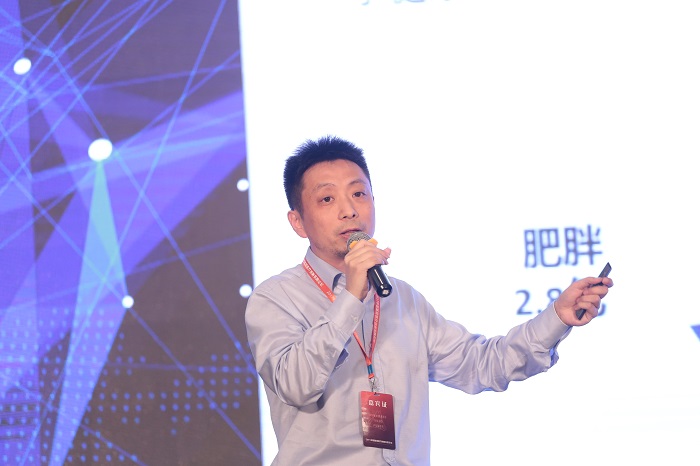
Speaker: Yu Hai
Chairman of Beijing Hailiying Medical Technology Co., Ltd.
Proposed Deputy Secretary-General and Standing Committee Member, Rehabilitation Professional Committee of the Hierarchical Diagnosis and Treatment System, China Association for the Promotion of Rehabilitation Technology Translation and Development
Member of the Health Engineering Branch, Chinese Society of Biomedical Engineering
Special Researcher, Institute of Health Systems Engineering, Peking University
On May 17–18, VCBeat’s “2017 China Primary Healthcare Innovation Practice Forum” was held in Chengdu. Yu Hai, Chairman of Beijing Hailiying Medical Technology Co., Ltd.with"A New Medical Model of Regional Tiered Diagnosis and Treatment Based on the Health Internet of Things"delivered a speech on the theme, with highlights from the presentation as follows.
Background: Internet Healthcare Faces Crisis, Primary Care Encounters Challenges
Recently, there has been a high density of policy documents related to healthcare, one of which is the administrative measures for internet-based medical services. Yu Hai shared three reflections on this document:
First, the document clearly states thatInternet healthcare detached from physical entities is not supported, butTelemedicine services based on physical medical institutions are supported.;
Second, healthcare itself is unlike ride-hailing or food delivery services; it is a highly complex industry replete with humanistic practices.Difficult to be disrupted by the Internet, but the internet can play a role in optimizing processes;
Third, within the current internet healthcare system, there is noNo viable business or profit model has been identified.。
Currently, the national requirements for tiered diagnosis and treatment have been refined to achieve a 70% rate of initial consultations at primary care institutions by 2017. The reason for such high national priority is that the unreasonable allocation of medical resources has already led to significant livelihood issues. When a country's healthcare expenditures exceed 17% of its national economic costs, it will result in very serious consequences, and China has already reached 14%. Yu Hai stated that the surge in medical expenses in China is largely driven by the low volume of initial consultations at primary care institutions—the UK has an initial consultation rate of 90%, whereas China has only 8%.
The core of tiered diagnosis and treatment is primary care, and the key to primary care lies in outpatient services. Primary care outpatient services will be the central pain point of China’s healthcare reform. Currently, there are three major issues in primary care: first, a shortage of specialist physicians; second, an excessive number of patients with chronic diseases; and third, while there is a certain number of primary care physicians and medical institutions, their professional competency is insufficient.
Remote General Practice Clinic: Integrating Primary Care Resources with the Internet of Things
It is precisely in response to this current situation and these challenges that Hailiying Medical has established a Remote General Practice Outpatient Department, representing an entirely new model for outpatient services in primary healthcare institutions.
By leveraging healthcare IoT technology, dispersed primary care facilities within a region can be integrated and upgraded, enabling high-quality medical resources from central hospitals to be efficiently extended to the grassroots level. As a result, patients can access high-quality outpatient services locally.
In the past, patients from remote areas had to endure arduous journeys to reach major hospitals, where they then spent considerable time queuing for registration, consultations, payments, and examinations, often taking several days just to receive a diagnosis. The core issue lies in the fact that the traditional healthcare model is not patient-centered but rather revolves around the complex hospital system, resulting in significantly low medical efficiency.
Yu Hai introduced that Hailiying’s remote general practice outpatient clinics can optimize the traditional model of seeking medical care at large hospitals. Patients need only five minutes to register by swiping their ID cards and undergo comprehensive medical examinations at the nearest clinic. Specialists from tertiary hospitals can conduct remote video consultations and issue electronic prescriptions remotely, with the entire process taking no more than 15 minutes. The cost may be equivalent merely to the transportation expenses incurred when visiting a large hospital. Relying on this innovative outpatient model, it is possible to effectively address quality issues in primary healthcare services while eliminating extra costs unrelated to medical treatment.
The implementation approach is as follows: The Diagnosis and Treatment Center serves as the core hub of the county-level hospital, overseeing the entire outpatient clinic system across the county. The Comprehensive Data Analysis Center centrally processes medical data from throughout the county. The County-wide Video Consultation Center enables unified management of all patients in subordinate primary care hospitals. The County-wide Chronic Disease Management Center provides comprehensive remote outpatient services to primary care physicians through panoramic workstations.
Even if a patient’s condition deteriorates and requires a home visit from the village doctor, the doctor can simply place the main unit in a portable case for transport, while still enabling all functionalities of remote consultation.
Clear Model: No B2C, Establishing a Sustainable Closed-Loop System for Tiered Diagnosis and Treatment
Yu Hai stated that Hailiying’s remote general practice outpatient service can manage 80% of common illnesses, achieving clinical outcomes comparable to those of large hospitals. This one-stop telemedicine service can reduce medical costs from hundreds or thousands of yuan to merely tens of yuan. Furthermore, the service offers green channels, two-way referrals, and includes family doctor contract services.
He pointed out that this remote general practice outpatient system aligns with the background of the integrated county-township-village tiered diagnosis and treatment system—with county-level hospitals serving as the operational core of the entire tiered system, connecting upward with large tertiary hospitals and extending downward to townships and villages. In this model, township health centers will function as remote inpatient wards for county hospitals, forming a complete closed-loop system.
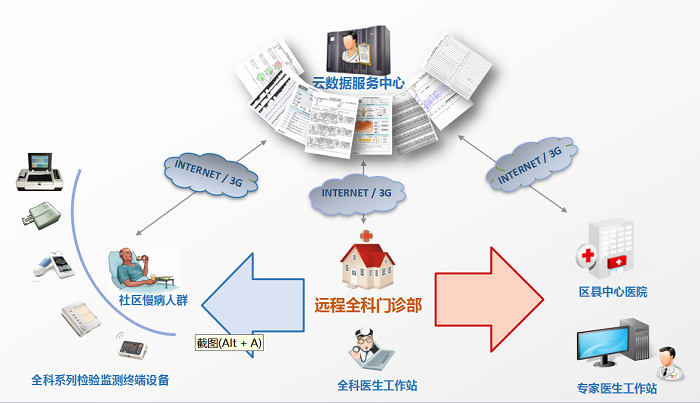
On the other hand, Yu Hai stated that remote general practice outpatient services have a very clear business model. First, there are social benefits: expert expertise and certain clinical diagnosis and treatment processes can be decentralized to primary care institutions; second, hospital-based examinations and testing services are extended to the grassroots level; and finally, services related to medication use, pharmaceutical care management, and prescription issuance are also decentralized to the primary care setting.
Regarding telemedicine models, Yu Hai personally disagrees with the B2C approach. He believes that, first, specialists typically have limited time; direct communication with patients may lead to unclear expression and low efficiency, whereas communication between specialists and healthcare professionals at primary care institutions yields better results. Second, there are clear liability relationships in the two-way referral systems of physical medical institutions, making them more reliable than purely online telemedicine services. Furthermore, face-to-face interaction between doctors and patients is crucial in medical practice, an area where online B2C telemedicine falls short. In Hailiying’s system, patients interact directly with primary care physicians.
“We believe that through such a system, we can ultimately implement a vibrant and sustainable business model, thereby increasing the revenue of primary healthcare institutions.”