

25 Leading Chinese Companies Recognized for Best Practices in Grassroots Healthcare Innovation in 2017
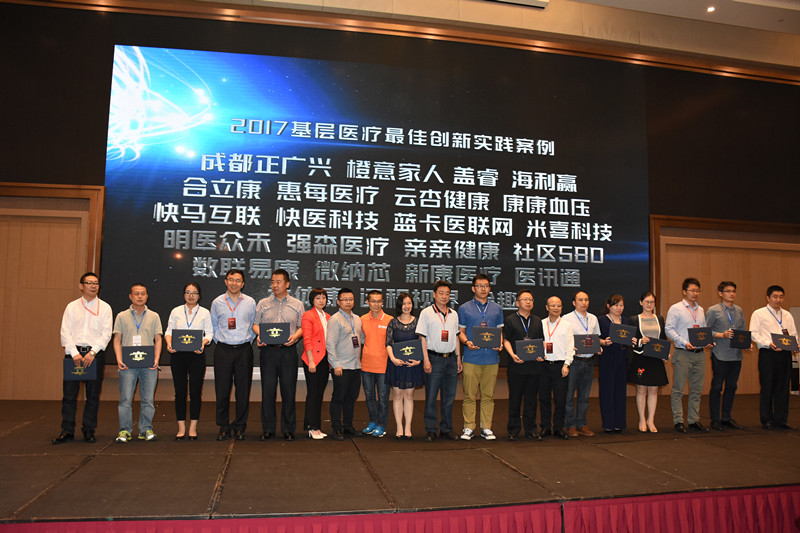
Award Ceremony
On May 17, at the “2017 China Primary Healthcare Innovation Practice Forum,” hosted by the China Association for Promotion of Rehabilitation Technology Transformation and Development and co-hosted by VCBeat·VBInsight, the 2017 China Primary Healthcare Best Practice Case Awards were presented to 25 outstanding primary healthcare enterprises.。
The guests participating in the award ceremony were Zhang Xifan, Deputy Director of the Cooperative Medical Care Division under the Department of Primary Health Care of the National Health and Family Planning Commission; Ouyang Xiangyu, Managing Director of Legend Capital; Xiao Xuesheng, General Manager of GF Xinde Investment Management Co., Ltd.; and Li Datao, Founder of VCBeat.
Primary healthcare has long faced severe challenges,How can high-quality medical and health resources be systematically decentralized to lower-tier institutions? How can we address the current challenges of insufficient total medical resources, scarcity of high-quality medical resources, and incomplete interoperability in health information systems? Given the potential for a significant increase in medication usage at the primary care level, how can pharmaceutical distribution issues at this level be resolved?
To explore solutions to these issues, VCBeat launched a series themed “The Power of Downward Reach: Innovative Practices in Primary Healthcare under the New Healthcare Reform,”Call for Primary Care Service Practice Cases Across the Entire Industry. Over 100 companies registered during the three-month campaign.。
These registered entities include chain clinics, family medicine practices, health management firms, imaging centers, ambulatory surgery centers, and third-party testing laboratories. We have successively published case studies on these companies. Following the release of these corporate profiles, we received a substantial number of investment matchmaking requests and garnered attention from tens of thousands of industry professionals.
Finally, from among the numerous applicants, a panel of expert judges selected 25 companies.This study evaluates the practical achievements of these enterprises in the primary healthcare sector from the perspectives of industrial policy, technological evolution, business models, and industry collaboration.
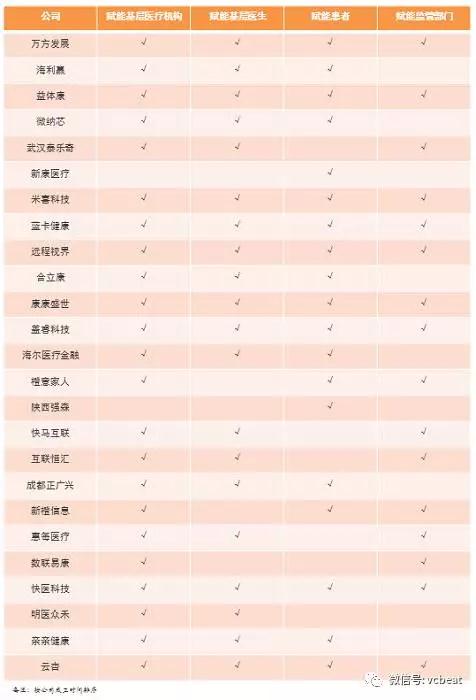
25 Award-Winning Case Studies in Primary Healthcare Practice
Wanfang Development:Transitioning from real estate to the “Internet + Healthcare” sector, the company has taken equity stakes in Chengdu Yihuan Medical and Beijing Yintian, and acquired Zhixiang Network and Xintong NetEase, totaling four healthcare-related companies, with the aim of building an integrated ecosystem of Internet healthcare and health informatics. In addition, the company has entered the smart hardware market. In 2016, Wanfang Development acquired a stake in the U.S.-based ODG (Osterhout Design Group), formally entering the wearable technology sector. Meanwhile, Wanfang Development is focusing on the development and application of VR/AR technologies in healthcare, leveraging advanced auxiliary diagnostic and therapeutic wearable devices to enhance the value of its existing intellectual assets. Currently, Wanfang Development’s healthcare ecosystem network encompasses medical IT (including regional healthcare informatization, public health informatization, electronic medical records, HIS, CIS, LIS, PACS, and smart pharmacies), internet hospitals, offline pharmacies, and physical hospitals, covering nearly the entire lifecycle of healthcare services.
Johnson Medical:It functions like a "Grade 3A" hospital right at residents’ doorsteps, deeply embedded in the community to understand local healthcare needs and provide corresponding medical services. Currently, it has established a network of 20 chain clinics, with each clinic serving up to 3,000 patients per month and generating annual revenues of RMB 6 million.
Chengdu Zhengguangxing:A family physician group guided by the integration of industry, academia, and research. During its operations, it established three physical institutions based on replicability and standardization: the Nanxin Community Health Service Center in Chengdu High-Tech Zone, the Chengdu Hi-Tech Zhengguangxing Comprehensive Outpatient Department, and the Outpatient Clinic of the Chengdu High-Tech Administrative Committee. The total revenue for 2017 was projected to be approximately RMB 40 million.
Yitijian:By leveraging telemedicine to deeply address grassroots needs, we have served over 5,000 clinics in a short period and will further tap into the vast potential of the blue-ocean market at the primary care level, encompassing clinics and community healthcare.
MiXi Technology:Penetrating primary healthcare through family doctor services, with a target of 50 cities and 50,000 doctors. By helping community family doctors improve work efficiency, we enable them to complete government-assigned tasks more easily and reduce their burden. Meanwhile, by providing value-added services that meet residents' needs, we increase doctors' market-oriented income, reward proactive service, and enhance their motivation to deliver care.
Yunxing Medical:Positioning the product for grassroots, small-scale medical institutions is fundamentally driven by the direction of China’s new healthcare reform policies. The concentration of medical resources in tertiary hospitals has led to difficulties and high costs for patients seeking care. Addressing tiered diagnosis and treatment and rectifying the uneven distribution of medical resources are top priorities of the new healthcare reform. The goal is to spark an information technology revolution across 200,000 grassroots medical institutions.
HeliKang:Centered on pediatric respiratory diseases, 5,000 nebulization devices were donated and connected to 1,200 primary healthcare institutions. By integrating pharmaceuticals, medical devices, diagnostics, and even internet-based tools, a full-process solution was provided for patients, thereby facilitating academic information dissemination and integrated promotion to target physicians.
Huimei Medical:Beyond providing capital, Mayo Clinic has comprehensively introduced to Huimei Healthcare its brand, knowledge systems, medical technologies, management and training frameworks, and expert consulting services—originally applied across all levels of hospitals, clinics, physicians, nurses, patients, and administrators—to establish information, healthcare, and technology platforms related to health and medicine in China. This constitutes the most critical value proposition for Huimei Healthcare’s presence in the Chinese market. The company has already penetrated grassroots healthcare in China, with a target of reaching 5,000 clinics.
Micro-Nano Core:Using Tianjin Micro-Nano Core’s Celercare and Pointcare fully automated biochemical analyzers, only 2–3 drops of whole blood from the subject are required. With a compact testing device, 14 biochemical parameters can be measured within 10 minutes. This equipment enables primary healthcare institutions to easily conduct high-standard biochemical tests, effectively helping grassroots facilities—especially those in remote areas—address the challenge of “difficulty in accessing medical care.” The project has been visited twice by the Premier, and its distribution channels have expanded into 24 countries, making this in vitro diagnostic device highly popular.
Community 580:Having signed contracts with 2,000 primary care hospitals and established a presence in 84 cities across 23 provinces, it achieved the industry’s top rank within two years. Its entire product framework is designed specifically to serve primary healthcare. Through family doctor contract services, Community 580 adopts a novel B2B2C service model: it signs agreements with hospitals and leverages a SaaS cloud platform, hospital information systems, and streamlined service workflows to enable rapid deployment, thereby extending community medical services via the internet.
Therapeutic Interest:China’s first internet-based education platform centered on clinical reasoning training, covering 500 medical institutions nationwide, serving hundreds of thousands of physician users, and generating tens of millions in revenue, it stands as the domestic platform with the largest case repository for clinical reasoning training.
Hailiying:The county-township-village tiered diagnosis and treatment model based on the Health Internet of Things (HIoT) focuses on technological innovation to establish the technical foundation for regional collaborative care within a tiered healthcare system. It has developed the “Remote General Practice Outpatient Clinic” system, which extends to the most grassroots level across the entire region. This system enables comprehensive medical services for primary care providers, including local examinations, remote video consultations, remote diagnosis, remote data analysis, and two-way referrals.
Xinkang Medical:Centered on data operations, we have comprehensively adopted information systems to manage residents’ health behaviors, progressively establishing a comprehensive health database covering the entire life cycle of residents. Currently, we hold controlling interests in nine legal entities and 200 primary community health service institutions, managing the health records of nearly 3 million residents.
Lanka Health:Medical institutions that leverage cloud platforms and mobile internet technologies to deliver primary care general practice and family doctor contract services within grassroots communities. These institutions connect upward with tertiary hospitals and specialists across various disciplines, provide downward guidance to grassroots clinics, establish lifelong health records for members, and implement a two-way referral system between tertiary hospitals and Blue Card Clinics, thereby ensuring the quality of primary healthcare.
Remote Vision:Focusing on an O2O platform for specialized telemedicine consortia, we provide free medical equipment to primary healthcare institutions. This includes fundus cameras, remote electrocardiogram (ECG) machines, and hysteroscopic remote diagnosis and treatment systems. Online, Vision Remote integrates top-tier specialist physicians, county- and city-level specialists, family doctors, and village doctors. Through online image interpretation, remote consultations, and remote diagnoses, experts enable tiered diagnosis and treatment by allowing patients to receive care locally or be referred to higher-level hospitals based on their condition.
Kangkang Shengshi:Kangkang Blood Pressure, a flagship product, is primarily designed for various levels and roles within the healthcare service system for hypertension and other chronic diseases. It offers a productized solution combining “hardware + software + services” for hypertension management, thereby creating a closed-loop ecosystem that integrates online and offline chronic disease management.
Gairui Technology:Leveraging its hardware advantages and diversified business layout, the company is a high-tech enterprise primarily engaged in the R&D, sales, value-added service management, and operations of mobile healthcare products. It is responsible for basic healthcare solutions, medical product R&D, and internet-based operational management. Its flagship hardware products include the GP101 Multi-Parameter Vital Signs Monitor, the GP102 Health Management Terminal, and the GT1000 All-in-One Primary Care System. Over the next two years, Gerui Technology will focus on medical consumables, remote ECG consultation, family doctor services, and artificial intelligence.
Haier Medical Finance:“Empowering Primary Healthcare with Financial Solutions” is a healthcare industry platform under Haier Industrial Finance that provides integrated financial service solutions. Guided by the development philosophy of “industrial finance,” it has deeply cultivated the medical industry. By the end of 2016, the number of primary-level hospitals in its cooperation network accounted for approximately 51% of the total number of hospitals served throughout the year.
Orange Family:A service provider dedicated to the management of medical-grade chronic respiratory diseases, establishing comprehensive care encompassing initial screening, referral, treatment, and rehabilitation for respiratory conditions. It researches, develops, and manufactures the “Chengyi Pulse Oximeter,” “Chengyi Dr.Watch 2.0,” “Spirometer,” “Sleep Apnea Initial Screening Device,” and related telemedicine products; and has built the cloud-based doctor-patient interaction platforms “Chengyi Health” and “Chengyi Doctor.”
KuaiMa Interconnect:As a third-party pharmaceutical service enterprise, its product, Kuai Xing Fang, integrates pre-prescription review with in-process control, and real-time alerts with comprehensive prevention by interfacing with hospital information systems. It conducts pre-screening based on audit rules before formal prescription submission to identify irrational prescribing practices in advance, shifting problem identification upstream and providing real-time prompts to physicians. This effectively reduces potential risks for medical institutions, positioning it as a third-party pharmaceutical care service platform.
MedNews(Interconnected Henghui):The Primary Care Family Doctor Assisted Contract Service System, the only doctor-patient communication platform approved by the Henan Provincial Health and Family Planning Commission, proposes a comprehensive solution focused on primary care family doctor contracting and follow-up services. It is an innovative medical service platform that provides closed-loop healthcare services based on the family doctor assistance system, with family doctor team services, chronic disease management, and tiered diagnosis and treatment as its core components.
Shulian Yikang:By targeting primary care through health insurance cost containment and positioning itself as a third-party regulatory platform, the company leveraged medical payment as an entry point. Relying on a big data-driven regulatory decision-making platform, it integrated payment, medical services, health management, and pharmaceutical supply to build a comprehensive ecosystem. In early 2017, its big data-based cost control system was integrated into Sichuan Province’s Primary Healthcare Institution Management Information System, helping nearly 6,000 primary healthcare institutions across the province standardize medical service practices, improve the quality of care, and achieve proactive cost containment.
Kuaiyi Tech:It is the entity responsible for the research, development, and operation of “Healthy Sichuan,” the provincial-level public medical and health service cloud platform in Sichuan Province. As the front-end public service portal for the Sichuan Provincial Regional Population Health Information Platform, the Healthy Sichuan Cloud Platform leverages cloud computing, big data, the Internet of Things (IoT), and mobile internet technologies to aggregate high-quality medical resources across the province. It is committed to building an online medical and health service ecosystem that covers the entire human life cycle, the full process of medical services, and all formats of health products. The company has developed the “Bashu Kuaiyi” platform, which relies on primary healthcare institutions and general practitioners, uses family doctor contract services as a key mechanism, and has formed an innovative model for primary medical and health services characterized by immediate response, precise matching and combination of medical resources, and intelligent online-offline interaction between doctors and patients. It provides the public with convenient medical access services, internet-based medical services, and diversified, precision health management services based on public medical and health data.
Mingyi Zhonghe:Internet-Based Primary Care Clinic Cloud Platform has independently developed the Yidebang Clinic Ecosystem Service Cloud Software, which encompasses four core business segments: "Cloud Clinics, Cloud Hospitals, Cloud Pharmacies, and Cloud Education." Its user base is primarily concentrated in Hebei, Henan, Shandong, Guangdong, and other regions. The platform primarily serves private clinics, pharmacies, hospitals, as well as public health centers and community service centers. Its collaborative partners include cross-regional high-end resources aimed at jointly serving primary healthcare institutions—such as large hospitals, pharmaceutical companies, financial institutions, and insurance providers—as well as local collaborative medical resources, including testing centers, rehabilitation facilities, and elderly care institutions.
Qinqin Health:By leveraging mobile internet technology, we have built a comprehensive mobile online clinic platform for primary healthcare institutions, integrating marketing, learning, services, and management. With “connectivity” at its core, the platform provides primary healthcare institutions with a means to serve patients. On the platform, doctors and patients can interact in real time, unrestricted by time or location. Primary healthcare institutions can even help patients establish a complete health service system spanning prevention, diagnosis and treatment, and rehabilitation.