

HealthLoop Secures $8.4M Series B Funding to Enhance Care Efficiency with Automated Patient Engagement Platform
VCBeat (WeChat ID: vcbeat) has learned that HealthLoop, founded in 2009 and headquartered in Mountain View, California, recently secured $8.4 million in Series B financing. The round was led by Canvas Ventures, with participation from the iCarbonX DigitalLife Alliance, NextEquity, Lafayette General Hospital, and venture capital firm Summation Health.
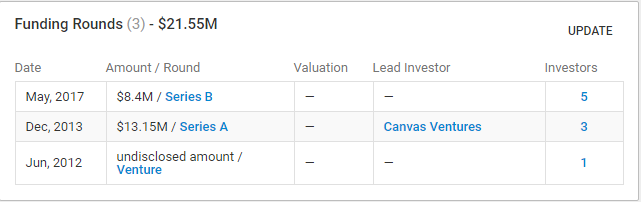
HealthLoop Funding History
The proceeds from this financing round will be used to build a commercial team, expand deployment in hospitals across China, advance the company’s technology, and provide high-level care to patients.
Project Origins, Team, and Product Overview
“Automated empathy” is a new healthcare buzzword used to help physicians maintain connections with patients before and after medical procedures; it is convenient and cost-effective for doctors who are already stretched thin.
This may sound paradoxical, but it holds strong appeal for hospitals and other healthcare providers, as the cost structure of the care they deliver has undergone significant changes. Regardless of whether emails truly foster empathetic connections, tailoring regular electronic communications to patients is viewed as a healthcare innovation with the potential to reduce costs and improve quality.
The “Automated Empathy” platform, HealthLoop, is designed to enhance communication between physicians and patients and support post-discharge follow-up care to track patient recovery. The digital health company collects patient-reported outcome data, along with data on postoperative physical therapy visits and home healthcare visits.
Using HealthLoop can reduce the incidence of adverse reactions and surgical complications. The company’s customer base includes mid-market organizations, single-specialty practices, and hospitals. To date, HealthLoop has onboarded more than 70 hospitals and medical groups as clients.
Introduction to Core Team Members

Dr. Jordan Shlain, founder of HealthLoop, is a nationally recognized physician who has pioneered innovative healthcare solutions. In addition to serving as HealthLoop’s full-time physician and founder, he was appointed by the Mayor to the San Francisco Health Service System Commission and serves on the board of directors of Hope Street Group, a policy think tank based in Washington, D.C.
CEO Todd Johnson is an entrepreneur dedicated to building outstanding products, teams, and companies that serve the continuum of healthcare information technology. While striving to cultivate a strong corporate culture and brand, Todd integrates innovative ideas into the enterprise. Prior to joining HealthLoop, Todd was the Founder and CEO of Salar.
Dr. Ben Rosner is a clinician, scientist, and entrepreneur. His industry roles have included serving as Medical Director at Archimedes, Inc., where he oversaw mathematical modeling for pharmaceutical companies, voluntary health organizations, biotechnology firms, and healthcare systems. In this capacity, he has published high-impact research in peer-reviewed literature, presented on national platforms, contributed to the revision of clinical practice guidelines, and influenced recommendations to payers and national policymakers regarding more intelligent and multifaceted approaches to cost-effective drug design and implementation.
Harry brings 15 years of experience in leading product strategy and commercialization, aimed at enhancing the financial, clinical, and operational performance of healthcare providers. He is a professional leader dedicated to improving the capabilities of healthcare administrators and fostering collaboration among clinicians, patients, and other stakeholders to more effectively improve cost, quality, and outcomes. Mayank has 20 years of experience in implementation science and health technology solutions. Building on his engineering and scientific computing education from Cornell and Stanford Universities, Mayank has achieved significant success in creating scalable, secure software for managing, analyzing, and visualizing biological and health data. Since April 2011, Mayank has been with HealthLoop, where he leads the engineering team and oversees the information and software architecture of the HealthLoop application.
Dr. Mandy Armitage has 10 years of clinical and writing experience. She is trained and board-certified in Physical Medicine and Rehabilitation as well as Sports Medicine. She also possesses expertise in medical communications, including medical marketing, clinician education, and advisory board engagement. She is a recognized expert at national conferences focused on non-clinical career pathways for medical professionals.
Dr. Gonzalez is a physician whose career has focused on clinical medicine, population health, and technology. Prior to joining HealthLoop, she served as a Senior Policy Fellow with the FCC Connect2Health Task Force, which was dedicated to promoting nationwide community broadband health solutions. As a Preventive Medicine Physician at Johns Hopkins University, she worked to optimize and analyze mobile electronic health record (EHR) systems and online patient safety reporting tools, publishing her findings in peer-reviewed literature.
HealthLoop: Introduction to Key Features
① Routine monitoring to identify potential health risks
Physicians using HealthLoop send daily text messages or emails to their patients, urging them to “check in” via the HealthLoop website on their mobile devices or computers. Patients are then required to answer several questions designed to assess their health status and receive tips on preoperative preparation or post-discharge care. According to Johnson, these questions and tips are thoughtfully crafted with a warm, caring tone, aiming to alleviate patients’ concerns about their condition as much as possible.
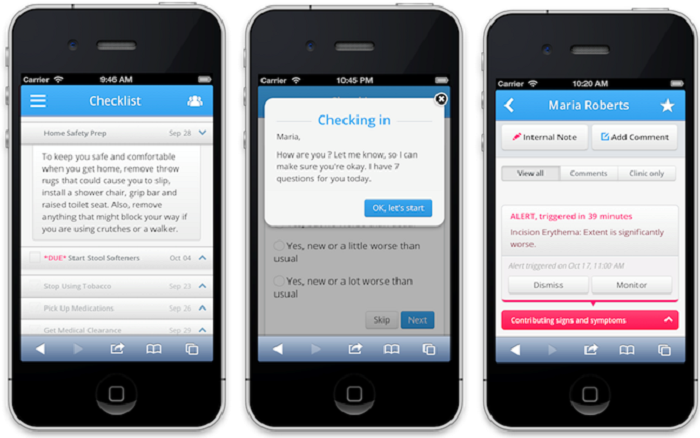
Subsequently, the algorithm identifies potential issues and flags possible complications based on patient responses, enabling physicians to intervene promptly and avoid unnecessary emergency visits and hospital readmissions. In cases where a patient’s condition deteriorates, HealthLoop can promptly alert hospital staff. If the hospital has not designated specific personnel to handle such alerts, patients can directly request assistance from any nurse or physician through HealthLoop.
② HealthLoop Patient Status Questionnaire
In addition to its core functionality for addressing daily health inquiries, HealthLoop also assists hospitals in collecting patient outcome surveys initiated by the U.S. Centers for Medicare & Medicaid Services (CMS), which are designed to assess hospitals’ overall quality of care. Due to the system’s high efficiency, HealthLoop now engages in 510,544 patient interactions per month, reduces hospital readmission rates by 30%, and earns a recommendation rate of 91% among patients.
HealthLoop’s Future Development in the Industry
CEO Todd Johnson stated in a press release, “Healthcare should always be patient-centered. To achieve better outcomes, patients must be leveraged as valuable resources. They desire the best possible results and need seamless connectivity to their care teams, enabling them to monitor their own health when facing serious medical issues. We are impressed by MSK’s commitment to delivering the highest quality of care through innovative technologies that provide every patient with a high level of personalized attention.” He further remarked, “Large healthcare systems generally recognize the critical importance of gaining comprehensive insights into patients’ conditions and voices, whether they are receiving treatment in the hospital or recovering after discharge.”
According to Healthloop’s internal data, 78% of users respond fully to automated check-in requests, and 87% use Healthloop to avoid phone calls or in-person visits for medical care or clinic consultations. Furthermore, a patient education survey released in December indicated that patients using Healthloop performed significantly better than those provided with printed materials. For instance, 66% of Healthloop users correctly answered questions specific to radiation, compared to only 21% of patients who received printed materials.
HealthLoop further enhances patient communication and progress tracking in a more effective manner.In the telemedicine industry, HealthLoop’s mission is to leverage a cloud-based platform to automatically follow up with patients, enabling physicians, patients, and caregivers to conveniently access clinical information that is clear, actionable, and engaging. HealthLoop’s peer-reviewed follow-up program automates routine care aspects while tracking patient progress and monitoring clinically relevant data. Its analytics engine screens and filters patient-generated data in real time, allowing care teams to focus their time and attention on the patients who need them most. HealthLoop commits that its technology will help patients adhere to treatment and recovery plans, avoid hospital readmissions, and achieve greater satisfaction with their care.
HealthLoop’s technology is currently being tested at reputable medical centers, including the Cleveland Clinic, the University of California, San Francisco (UCSF), and the Newport Orthopedic Institute in Orange County. During the trial period, physicians can send daily emails via the HealthLoop platform, which include milestone information on routine surgical preparation and recovery, and request feedback from patients or caregivers regarding specific issues that may arise during the recovery process. Physicians can either write their own email scripts, as done by the orthopedic surgeons at Newport, or use the company’s suggested content. An online dashboard helps doctors and administrators track which patients are progressing well and who may require additional follow-up care. Patients can also communicate with office staff about medications and office visits. Their responses to the daily emails can trigger phone calls from the physician’s office.
HealthLoop Faces Industry Competition
Companies similar to those in the “doctor-patient interaction” industry include Wellframe, Curaspan, and Infield Health.
Wellframe reimagines care plans by leveraging mobile devices, artificial intelligence, and human-centered process redesign. It has developed a clinically validated, proprietary approach to deliver care plans to patients via mobile devices as dynamically generated, personalized multimedia daily to-do lists. By utilizing medical data, predictive algorithms, and mobile applications, Wellframe helps patients formulate recovery plans, enabling them to regain health sooner. Wellframe’s intelligent care management platform enables organizations to better mitigate clinical and financial risks while amplifying the impact of existing healthcare resources.
Connecture’s business involves developing various SaaS products that link health insurance plans, payers, and government agencies, thereby assisting individuals in selecting appropriate health insurance coverage. “Connecture plays a pivotal role in the distribution and growth of health insurance plans. Its technology platform enables users to more easily identify the best health insurance options, complemented by favorable insurance policies.” Another key function of the company is to help healthcare-related organizations acquire and retain members, while simultaneously enhancing operational efficiency and reducing technology costs.
InfoBionic has established a commercialized remote patient monitoring system, MOME Kardia. MOME Kardia is designed to help patients with arrhythmia monitor their electrocardiogram (ECG), respiration, and physical activity. The lightweight monitoring device can be worn as a necklace or attached to a belt. MOME transmits data to a cloud-based analytics platform, thereby minimizing false alarms. The analyzed data is then sent to physicians. The device offers three monitoring modes: Holter monitoring, activity tracking, and Mobile Cardiac Telemetry (MCT). Physicians can remotely switch to any of these monitoring modes based on the patient’s cardiac symptoms and specific needs. Patient data can be accessed via the web or an iPad application. The physician interface provides insights into the patient’s monitoring progress and automatically generates reports containing multiple parameters and data points.