

Bai Zhaohui, Director of Xinhua Community Health Service Center in Shanghai's Changning District, Advances Regional Tiered Diagnosis and Treatment with Family Doctor Referral as the New Paradigm
Guest Profile
Bai Zhaohui
Director of Xinhua Community Health Service Center, Changning District, Shanghai
Graduated from the Medical Department, Clinical Medicine Program at Shanghai Medical University in 1992. Worked at Zhongshan Hospital of Fudan University in Shanghai from 1992 to 1998, serving as a Resident Physician and Attending Physician. From 1998 to 2004, worked at Guanghua Integrated Traditional Chinese and Western Medicine Hospital in Changning District, Shanghai, serving as an Attending Physician and Assistant to the President. From 2004 to 2010, served as Associate Chief Physician and Vice President at Tongren Hospital in Changning District, Shanghai. Actively participated in and explored the “3-2-1” tiered diagnosis and treatment model suitable for secondary general hospitals. Obtained a Master’s degree in Management from Shanghai University of Finance and Economics in 2009.
Since July 2010, he has served as the Director of the Xinhua Subdistrict Community Health Service Center in Changning District, Shanghai. In 2012, he was appointed as a Standing Council Member of the Second China Community Health Association. In October 2013, he was elected as the inaugural Chairman of the Center Directors’ Alliance under the China Community Health Association. He possesses unique insights into strengthening the capacity building of general practitioner teams, cultivating the family doctor workforce, and exploring the family doctor studio model. Furthermore, he has pioneered and established a new model of community-based first-contact care and tiered diagnosis and treatment led by family doctors.
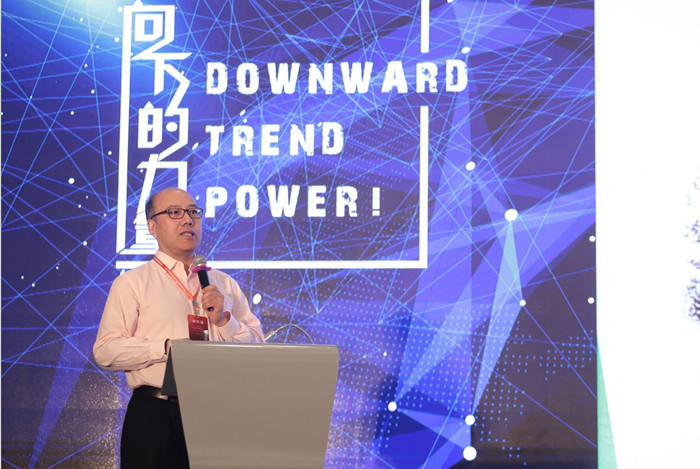
From May 17 to 18, Bai Zhaohui was invited to attend VCBeat’s “2017 China Primary Healthcare Innovation Practice Forum” and delivered"Promoting Regional Tiered Diagnosis and Treatment, Strengthening Primary Healthcare Infrastructure"Delivered a speech on the theme, with highlights as follows:
Basic Information of Xinhua Community Health Service Center in Changning District
Shanghai’s Changning District is a pilot area for community health reform under the National Healthcare Reform Office. Its primary healthcare reforms have consistently led the way across China, with governments at all levels in Changning District prioritizing the reform of community health service models as a key focus of their healthcare work for over a decade.Xinhua Subdistrict is one of the ten subdistricts and towns in Changning District, comprising 17 residential communities. It covers an area of 2.2 square kilometers and has a permanent population of over 70,000.
Xinhua Community Health Center, formerly known as Xinhua District Hospital, operates four community health service stations. It covers a total service area of over 5,400 square meters and handled 250,000 outpatient visits in 2016. Throughout the process of community health reform in Changning District, Xinhua Community Health Center has consistently remained at the forefront and was recognized in 2011 as one of the first batch of National Demonstration Community Health Centers.
Three Key Differences Between Community Hospitals and Community Health Service Centers
In the development of primary healthcare, differing orientations and starting points determine distinct developmental trajectories for primary healthcare institutions. While some refer to these institutions as “community hospitals,” there are fundamental differences between “community hospitals” and “community health service centers” in terms of talent development, capacity building, and support mechanisms.
The first difference is“The Difference Between ‘Specialists’ and ‘Generalists’”Community hospitals, when training personnel, place greater emphasis on cultivating specialists. For instance, before 2000, when the Xinhua Community Health Service Center was still known as the Xinhua District Hospital, community physicians aimed to become specialists comparable to those in tertiary hospitals. They seized various opportunities to undertake advanced studies at tertiary hospitals and acquire specialized technical skills, such as gastrointestinal endoscopy. After 2000, as district hospitals transitioned into community health service centers, physicians gradually shifted from specializing in specific fields to practicing general medicine, thereby meeting the community’s needs for health management. Consequently, the direction of talent development in community health service centers is to cultivate generalists capable of providing residents with long-term, continuous, and comprehensive health management services.
The second difference is“The Difference Between ‘Managing Diseases’ and ‘Managing Patients’”Community hospitals focus on addressing medical treatment needs, whereas community health service centers target population-based health management. The outdated concept of chronic disease management centered on “disease control” should be replaced by an approach focused on managing individuals with chronic conditions. Different management objectives dictate distinct capacity-building goals: the goal for community hospitals is to enhance diagnostic and therapeutic capabilities, while the goal for community health service centers is to strengthen comprehensive management and disease prevention capabilities.
The third difference is“The Difference Between ‘Revenue’ and ‘Services’”Community hospitals prioritize revenue generation, aiming to maximize the overall efficiency and profitability of the institution. In contrast, community health service centers emphasize public welfare, focusing on healthcare services and disease prevention to reduce disease incidence. These differing operational objectives result in distinct motivational mechanisms for enhancing the professional competencies of primary care providers. While pursuing revenue, community hospitals inevitably compromise, to varying degrees, the public-welfare nature of their community health management functions.
Therefore, the public-welfare orientation of community health service centers has driven primary care medical personnel to continuously enhance their professional competencies and service quality. Over the past 17 years, Xinhua Community Health Service Center has undergone a transformation from a “hospital” to a “community health service center.” During this period, its primary care medical staff have experienced significant shifts in their service roles, service content, and service capabilities:
Physicians have transitioned from specialized practice to general practice, shifting their service focus from “treating diseases” to “managing health.” They have continuously refined their personal knowledge structures around health management and have all received training as psychological counselors, health managers, and nutritionists. Nurses have shifted their roles from clinical care to community nursing, expanding their services from purely medical care to include disease prevention, community nursing, chronic disease intervention and management, and health education.
As the relationship between medical personnel and community residents has deepened, healthcare providers’ efforts to enhance their professional capabilities have increasingly become spontaneous and proactive initiatives. With the introduction of general practice teams in 2006, the integration of medical and nursing staff into neighborhood committees in 2011, the implementation of effective performance assessments for contracted services in 2013, and the establishment of family doctor studios in 2015, the capacity of community healthcare professionals to manage residents’ health has been significantly improved.
Advancing Regional Tiered Diagnosis and Treatment: Three Key Considerations
Three Issues to Consider in Advancing Regional Tiered Diagnosis and Treatment:
First, advancing the tiered diagnosis and treatment systemProcessIn accordance with the recent national proposal for establishing medical consortiums, a key guiding principle and directional issue is whether they should be established top-down, led by tertiary hospitals, or bottom-up. Within communities, family doctors have formed stable partnerships with residents, laying the foundation for healthcare reform. Therefore, we should adopt a bottom-up approach to build a medical consortium centered on general practitioner referrals.
Second is the implementation of tiered diagnosis and treatment.Subject, is it medical institutions or individuals? People tend to focus more on which hospitals have partnered with which. Before serving as the director of a community health service center, I worked for six years as the vice president of two-tier hospitals, primarily responsible for the vertical integration of resources with community health service centers. The tiered diagnosis and treatment system we implemented has undergone a transition from institutional alliances to collaborations among experts and teams. What proves more effective in practice is the referral and transfer of patients between doctors, rather than the medical consortiums currently formed between institutions. Practice has demonstrated that the primary agents of an effective tiered diagnosis and treatment system should be individual physicians or medical teams.
Third is the tiered diagnosis and treatment system'sContent (Target)Is it “disease-centered referral” or “patient-centered referral”? This concept aligns with the previously discussed distinction between managing diseases and managing patients. The key question is whether we should establish a disease-based referral mechanism or a patient-based care transition mechanism. Within the patient care transition process, who plays the leading role? In my view, primary healthcare should assume the dominant position in the healthcare system.
Three Triage Models at Xinhua Community Health Service Center
Type 1: 321 Model
From 2006 to 2010, Xinhua Community implemented the “3-2-1” service model spearheaded by Tongren Hospital, a district-level hospital in Changning District. At that time, Tongren Hospital, as a district-level secondary hospital, became a branch of Shanghai Renji Hospital (a tertiary hospital), leveraging support from the tertiary institution to fulfill its role as a regional general hospital. Meanwhile, expert teams from Tongren Hospital established contracted partnerships with 40 general practice teams in Changning Community, creating a vertically integrated mechanism centered on Tongren Hospital. Patients requiring referral were transferred from community general practice teams to Tongren Hospital, thereby enabling Tongren Hospital to effectively serve its function as a regional general hospital in diagnosing and treating common and frequently occurring diseases, which significantly drove the hospital’s business development.
The “3-2-1” model continues to play a vital role today. In 2016, Shanghai Chest Hospital joined the collaborative network, bolstering the cohort of tertiary hospitals within the “3-2-1” system and enabling the provision of more specialized cardiothoracic care services to community residents.
The Second Type: The Huadong Hospital Model
Since 2006, under the vigorous advocacy of President Yu Zhuowei, a collaborative mechanism has been established between Huadong Hospital and the Changning Community Health Service Center. Huadong Hospital formed ten expert teams, comprising specialists in administrative management, internal medicine, surgery, and nursing, each paired with one of the ten community health service centers in Changning District. These expert teams regularly conduct ward rounds, provide training for medical staff, offer community consultations, deliver health education, and provide research guidance within the communities. Patients requiring further diagnosis and treatment at a higher-level hospital are referred to Huadong Hospital through these expert teams. This model establishes a direct referral pathway between community health service centers and tertiary hospitals. The referral model of Huadong Hospital is an integrated healthcare resource model aimed at upholding public welfare as a shared goal, providing residents with continuous and comprehensive medical services.
The Third Model: The Zhongshan Hospital Approach
The General Practice-to-General Practice Referral Model Established Between the Department of General Practice at Shanghai Zhongshan Hospital and the Changning District Community Health Service CentersWhen community general practitioners encounter complex patients whose referral needs are unclear, they can refer these patients to general practitioners at Zhongshan Hospital. Leveraging the specialized resources and expertise available at this tertiary hospital, Zhongshan’s general practitioners can perform further triage and differential diagnosis, thereby addressing residents’ health concerns through continuous, professional general practice services.
Family Doctor Referrals May Become the New Direction for Tiered Diagnosis and Treatment in Communities
In addition to the three mature tiered diagnosis and treatment models mentioned above, the advancement of effective contracted services has led family doctor studios to develop their own tiered care models. Through various interactions with specialist physicians at higher-level institutions, family doctors have established expert partnerships, forming specialist teams centered around the family doctor. Referrals for residents under the family doctor’s contracted care are not handled through institutional referral channels, but rather through these expert teams built via repeated prior engagement and exploration.
These specialists are trustworthy in terms of both technical expertise and service quality, and they are highly receptive to referrals from family doctors, as referred patients are considered partners of the family doctors and demonstrate good compliance. This fosters a patient-centered diagnostic and treatment system focused on health issues, involving collaboration between general practitioners and specialist teams. The future direction of tiered diagnosis and treatment in community healthcare will be this specialist team referral model centered around family doctor practices.