

How 16 Industry Leaders Are Empowering Grassroots Healthcare at China's First Grassroots Medical Innovation Forum
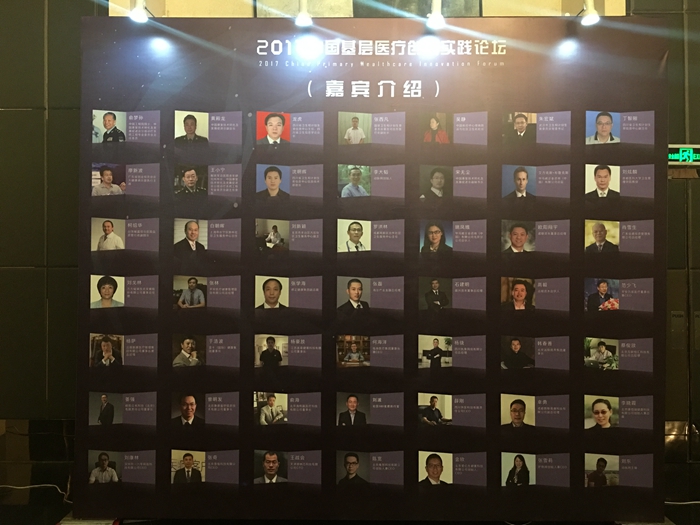
From May 17 to 18, the “2017 China Primary Healthcare Innovation Practice Forum” was grandly held in Chengdu. The conference was hosted by the China Association for Promotion of Rehabilitation Technology Transformation and Development, co-hosted by VCBeat and Eggshell Research Institute, and co-organized by the Sichuan Provincial Investment Promotion Bureau, the Sichuan Health Information Society, the Hierarchical Diagnosis and Treatment System Engineering Professional Committee of the China Association for Promotion of Rehabilitation Technology Transformation and Development, as well as jointly co-organized by Legend Capital, GF Xinde, Wanfang Development, Yuanyi Capital, and Health Intelligence Valley, with the Chinese Medical Education Association serving as a supporting organization. Regarding how to empower primary healthcare, VCBeat shares with you some insights from the attending guests for your reading pleasure.
I. Liao Xinbo, Executive Chairman of the Greater Health Club of the Guangdong Venture Capital Association
Presentation Topic: “The Liberation of Physicians in the Context of New Healthcare Reform”
Liao Xinbo is one of the few medical influencers with millions of followers, affectionately referred to by netizens as “Brother Bo.” He believes that liberating physicians is the cornerstone for driving the current deepening progress of healthcare reform.
Currently, medical consortiums have become a key policy priority for the government this year. At the State Council’s executive meeting on April 12, Premier Li Keqiang pointed out that building and developing medical consortiums is an important component of deepening the coordinated reforms in healthcare delivery, health insurance, and pharmaceuticals. However, there are still many doubts about whether the medical consortium model can succeed.
According to Liao Xinbo, the key lies in whether doctors can truly “move downward” and be attracted to work at the primary care level. From the perspective of national policy, the smooth implementation of multi-site practice for physicians naturally becomes the core driver in promoting the development of medical consortia and the establishment of a tiered diagnosis and treatment system. He offers a trendy conclusion: “When physicians are accessible, medical consortia function smoothly.”
Drawing on the U.S. model, which offers proven experience to learn from, 50% of medical practices in the United States are genuine small and medium-sized physician groups. Smaller physician groups, including independent practitioners and small-scale physician groups, have increasingly chosen to operate collaboratively. This approach effectively reduces costs and improves healthcare quality, fostering a tripartite balance of power among physicians, hospitals, and insurers, thereby establishing a system of mutual checks and balances for benefit distribution within the healthcare services industry.
Under China’s current system, Liao Xinbo believes that there are essentially three keys to liberating physicians and ensuring the smooth operation of medical consortia.
First, the personnel system must be reformed to establish a voluntary contractual relationship between physicians and hospitals. Administrative ranks shall be abolished, the traditional bianzhi (staffing quota) system eliminated, employee benefits socialized, and the professional title evaluation system reformed to implement separate management tracks for clinical practice and scientific research.
The second is the reform of the payment system, separating hospital services, physician services, diagnostic and laboratory testing services, and pharmaceutical services, while encouraging community-based and outpatient care.
The final element is technology: abolish the tiered hospital-based access restrictions on medical technologies, allow technologies to follow physicians, ensure institutions are built according to standards, and decouple physician valuation from hospital tier-based pricing.
II. Deputy Director, Fangzhuang Community Health Service Center, Fengtai District, BeijingLiu Xinying
Presentation Topic: “Exploration and Practice of Standardization in ‘Internet+’ Community Health Management”
Fangzhuang is a benchmark for community health service centers in China. Currently, community hospitals shoulder a substantial volume of basic medical and public health services, resulting in heavy workloads and insufficient human resources. Furthermore, many community health institutions have not yet integrated their internal health service information systems, let alone achieved information sharing within medical consortiums.
However, one advantage of community health services is the ability to provide continuous health management for patients, thereby accumulating substantial health management data. By leveraging internet-based technologies to extend these data resources into residents’ homes, significant value in health management can be realized.
Deputy Director Liu Xinying revealed that in 2013, Fangzhuang established a general practitioner clinical workflow to enable refined patient management. By integrating various internal hospital systems and leveraging a cloud-based platform, the center connected its data with hospitals within the medical consortium, thereby achieving bidirectional referrals via the internet.
Finally, in-hospital data is transmitted to residents’ homes via the Internet, enabling users to access comprehensive community health management information through mobile apps and online platforms. In this way, an efficient family doctor contract service system can be established based on Internet technologies. Family doctors leverage these tools to provide personalized health assessments and guidance, including health evaluations, intervention plans, scheduled reminders, health monitoring, and follow-up services.
Building on Fangzhuang’s exploration and practice in the application of internet-based community health services, in July 2016, the National Health and Family Planning Commission assigned Fangzhuang Community Health Center a new research project: “Research on Standardization Construction for Internet Plus Community Health Management.” The aim was to develop a guideline for the standardized construction of internet plus community health management services, providing a reference for other community health service centers.
Liu Xinying stated that this application guideline has undergone 21 revisions. It can serve as an instructional manual or translated text for community health services. The guideline specifies the overall business framework for the development and construction of four validated applications involved in the use of internet technology by community health service institutions to carry out community health management: mobile terminal apps, health portals, two-way referral systems, and intelligent chronic disease management. It also defines the functional and technical specifications for implementation. This guideline is applicable to the planning, design, development, deployment, and application of the aforementioned projects. Community health service institutions may use this guideline to propose construction requirements to developers, thereby bridging the gap between community services and information technology vendors.
III. Ko Shao-Hua, Vice President of Quality and Administration at Taiwan Min-Sheng General Hospital
Speech Title: “Current Status and Challenges of Primary Care in Taiwan”
Ke Shaohua began by outlining the evolution of Taiwan’s healthcare system. From 1945 to 1975, a defining characteristic of Taiwan’s medical landscape was that the vast majority of large-scale healthcare institutions were publicly owned, with virtually no private hospitals in existence. The year 1975 marked a watershed moment for healthcare in Taiwan, as the private medical sector rose to prominence, driven by significant capital injections from large conglomerates.
From 1975 to 1995, a period often regarded as Taiwan’s golden age of rapid economic growth, physicians and patients faced starkly contrasting realities. Physicians, empowered by pricing authority, benefited from highly competitive compensation packages offered by private hospitals and primary care institutions, which successfully attracted talent away from public and large-scale hospitals. In contrast, patients frequently struggled to access medical care due to the financial burden of healthcare costs.
In 1995, Taiwan entered the era of universal National Health Insurance (NHI). Medical reimbursements were standardized, and regulations along with insurance claim reviews gradually became more stringent. Hospital profit margins were increasingly squeezed, leading to the consolidation of large hospitals into corporate groups, while medical aesthetics gradually became mainstream in primary care. The current state of primary healthcare in Taiwan is characterized by the collapse of emergency and critical care departments in large hospitals, a continuous increase in the number of primary care clinics, large hospitals treating minor ailments, inflexibilities in the NHI global budget system for primary care, and the increasing aestheticization of primary care institutions.
Ke Shaohua summarizes the dilemmas of primary healthcare into four major categories: the collapse of regional hospital hierarchies leading to a broken two-way referral system; institutional designs that fail to restrict patients from seeking care directly at large hospitals; the lack of a sustainable business model for online medical services; challenges in professionalizing general practitioners and broadening the scope of specialists, along with difficulties in leveraging financial resources.
As for what lessons can be drawn from the Taiwan model, Ke Shaohua believes that, first, it is unethical to derive profits from medical practices; second, the sustainable development of healthcare requires continuous profit support; third, an efficient system foundation achieves economies of scale and integrates with capital markets; fourth, a shift “From Cure to Care”; and fifth, quality-based branding serves as a key asset in the secondary healthcare market.
As for the way forward for primary care in Taiwan, Ke Shaohua also offers five recommendations: leveraging self-media and social platforms to expand service coverage, utilizing cloud-based healthcare and health databases, providing out-of-pocket personalized medical services, offering second opinions, and integrating supply chain platforms to effectively reduce costs and create value.
IV. General Manager of GF Xinde Investment Management Co., Ltd.Xiao Xuesheng
Speech Topic: “Investment Considerations in the New Era of Primary Healthcare”
GF Xinde has invested in well-known enterprises such as Infervision, Community 580, and Blue Ocean Strategy. Xiao Xuesheng believes that public demand for healthcare is multi-layered; since the government cannot provide comprehensive coverage, it is necessary to release a portion of market demand to social capital.
In recent years, GF Xinde has gradually identified certain breakthroughs and strategic directions amidst these challenges. Compared with general hospitals, private specialized hospitals are more likely to achieve cost-effectiveness and build strong brands. In contrast to establishing new general hospitals from scratch, it is more advisable to develop comprehensive hospitals through acquisitions, as these acquired institutions already possess an existing customer base, brand recognition, and designated medical insurance quotas.
In the realm of primary healthcare services, Xiao Xuesheng believes that social capital presents significant investment opportunities. This is not only driven by national policy guidance but also because primary care largely focuses on the management of common and chronic diseases, which entails relatively low capital expenditure.
GF Xinde’s investment logic at the grassroots level largely revolves around physicians and community hospitals, addressing issues such as customer service and customer relationship management. For instance, it helps community hospitals enhance physicians’ service effectiveness, improve their service capabilities, and advance the hospitals’ level of informatization.
V. Liu Kanglin, Senior Vice President of 160 Medical and CEO of 160 Network Technology
Presentation Topic: "160 Online Hospital: Facilitating the Implementation of Tiered Diagnosis and Treatment"
In 2015, Jiuyi 160 was listed on the New Third Board, becoming the first publicly traded company in the internet healthcare sector. Over the years, it has primarily focused on three key initiatives: first, serving large public hospitals; second, supporting primary healthcare institutions—the first two being related to public welfare; and third, integrating the health industry chain to establish a profitable business model.
In this year’s Government Work Report, Premier Li Keqiang set a clear target for the tiered diagnosis and treatment system: expanding pilot programs and physician contract services to more than 85% of prefecture-level cities, achieving family doctor contract coverage for over 30% of the population, and reaching a contract coverage rate of 60% among patients with chronic diseases.
Liu Kanglin emphasized that there are four models of tiered diagnosis and treatment: the first is patient guidance, the second is triage, the third is referral, and the fourth is consultation. The approach adopted by Juyi 160 leverages the operational advantages of both online and offline channels. This not only improves the efficiency of primary healthcare but also, by harnessing the advantages of the Internet and IoT technology, integrates people and resources. On the Juyi 160 platform, with a patient-centered and condition-prioritized approach, resources are rationally matched. This enables common diseases and chronic conditions to be directed to general practitioners, while specialized diseases are referred to specialists or for expert consultations, thereby achieving tiered diagnosis and treatment.
To leverage mobile internet technology to facilitate the implementation of tiered diagnosis and treatment, Liu Kanglin believes that it is essential to gain recognition from patients, medical institutions, and physicians. On one hand, the patient experience should be enhanced so that individuals perceive community-based care as more convenient. Meanwhile, the operational needs of healthcare institutions must be met to improve their efficiency. Furthermore, physicians’ intrinsic motivations should be mobilized to ensure effective matching between doctors and patients.
Regarding the future of Jiuyi160, Liu Kanglin believes that tiered diagnosis and treatment will inevitably involve collaboration with physical hospitals; at least in the current stage, this is certainly the case. The platform will not bypass hospitals to independently conduct medical procedures or provide internet-based diagnoses. By partnering with healthcare institutions, extending services upstream to prevention and downstream to rehabilitation, leveraging chronic disease management systems, and integrating pharmaceuticals and insurance to build a big data platform, Jiuyi160 aims to serve patients collectively. This represents the direction for the future.
VI. Yang Sa, Chairman and General Manager of Yunnan Xinkang Medical Management Group Co., Ltd.
Speech Topic: "Application of Information Systems in Primary Healthcare Institutions"
Xinkang Medical, established on March 15, 2012, is a large-scale medical chain enterprise integrating medical services, health services, and community public health. Its subordinate medical branches are primarily distributed across the four main urban districts of Kunming City. The company has consistently adhered to the full-process control of its “3C” service model—Communicate: effective and seamless communication; Cure: appropriate and precise treatment; Care: convenient and considerate care.
At the conference, Yang Sa first shared the current status and pain points of informatization in primary healthcare. He summarized four key issues: overall low capability, scarcity of resources, fragmented oversight with multiple systems, and a lack of motivation for reform. Xinkang Medical is not merely building an information system; instead, it designs its solutions along the trajectory of data standardization, marking the transition from IT (Information Technology) to DT (Data Technology). The system construction is primarily achieved through three aspects: data mining, data collection, and data interaction.
Yang Sa once again emphasized the importance of starting with resident health records. Xinkang Medical will establish household-based health records and implement physician contracting, leveraging data connectivity and interaction to ultimately build a big data repository covering the entire lifecycle. At the community level, dynamic management can be achieved through data mining. Although each community is small in scale, data-driven and networked support is available for monitoring hourly dynamics, outpatient visit volumes, departmental performance, and optimizing the allocation of physician resources across different time periods.
"The core of community healthcare lies in prevention, and XinKang Medical has been focusing more on preventive measures. Yang Sa stated that over the next five years, XinKang Medical will operate 3,000 community medical institutions through strategic capital alliances under the XinKang Standard."
VII. Jiang Qiang, Chairman of Mingyi Zhonghe Technology (Beijing) Co., Ltd.
Speech Topic: "Internet Solutions for Strengthening Primary Healthcare"
Mingyi Zhonghe was established on August 6, 2015. Leveraging internet technology and using clinic informatization as its entry point, the company comprehensively enhances clinics’ operational capabilities.
Jiang Qiang believes that the inadequate diagnostic and treatment capabilities of primary care clinics, resulting from shortages of medical personnel and medicines, are the root cause of the public’s difficulties and high costs in accessing healthcare. Primary care clinics—including village health rooms, outpatient departments, and private practices—serve as the “foundation” of the healthcare service system. As the closest point of care for grassroots patients and providers of care within “acquaintance-based” doctor-patient relationships, they act as the first line of defense for public health, a role of undeniable importance.
However, with the systemic reforms in healthcare delivery, pharmaceuticals, health insurance, and medical personnel, policy support has been provided to address the shortage of medical resources and medications at the primary care level. Mingyi Zhonghe’s solutions are primarily reflected in four aspects: “Cloud” Clinics (empowering daily management capabilities), “Cloud” Pharmacies (enhancing pharmaceutical service capabilities), “Cloud” Hospitals (empowering diagnostic and therapeutic capabilities), and “Cloud” Medical Academy (continuously empowering clinical diagnosis and treatment capabilities).
VIII. President of Beijing Kangborui Health Technology Co., Ltd.Li Xiaoxia
Speech Topic: “How Internet Healthcare Drives Innovative Practices in Primary Care”
Kangbairui is a technology service company dedicated to promoting internationally leading health concepts and technologies, and providing comprehensive health management services to individuals, families, corporate groups, and third-party clients. It also offers health and medical data analytics, healthcare services, and technical solutions for health management platforms to the health industry. Li Xiaoxia outlined the pain points in primary healthcare from the perspectives of policy, physicians, technology, management, and service delivery.
Regarding community-based primary healthcare management solutions, Li Xiaoxia stated that Kangborui approaches the issue from three aspects to build a tiered diagnosis and treatment system, a community chronic disease management and medical-health service platform, and an efficient work system for family doctors. First, in primary care, it addresses the transformation of management and service models. Second, for family doctors, it enhances professional capabilities, improves performance, and alleviates the pressure of large-scale service delivery. Third, for community residents, it achieves service goals guided by policies and needs.
Looking ahead, Li Xiaoxia hopes that Kangbairui will leverage an integrated online-and-offline health management service to connect technology, expertise, services, and individuals. Healthcare will no longer be passive, fragmented, or disjointed; it will transcend mere data and devices to foster genuine human interaction. As individuals engage in exercise, eating, and sleep, various health metrics will be automatically transmitted to terminal devices, enabling real-time feedback and analysis of their health status anytime, anywhere.
9. Chen Kuan, Founder and CEO of Beijing Infervision Technology Co., Ltd.
Speech Topic: "Empowering Primary Hospitals with Tertiary Hospital-Level Radiological Diagnostic Capabilities: Opportunities and Challenges of Artificial Intelligence"
Infervision is a high-tech artificial intelligence company dedicated to applying deep learning technologies to provide fast and accurate solutions for medical imaging diagnosis. With a top-tier data science team, the company effectively leverages various types of medical data (structured, semi-structured, and especially unstructured data) to develop model products with clinical value. Its primary services include intelligent imaging report verification, intelligent assisted screening, and intelligent differential diagnosis.
Chen Kuan stated that in the field of medical imaging, high-quality healthcare resources are extremely scarce and unevenly distributed. Physicians at large hospitals endure heavy workloads daily, making missed diagnoses and misdiagnoses inevitable. Although some remote areas possess advanced equipment, they struggle to implement them effectively. Infervision aims to address these challenges by leveraging artificial intelligence technologies, particularly deep learning.
Traditional artificial intelligence requires extensive manual guidance from experts to train models. Deep learning, however, operates differently: it only needs large volumes of data, with labels indicating which cases are pulmonary tuberculosis, allowing the model to gradually establish its own diagnostic criteria and subsequently perform diagnoses automatically. For the diagnosis of pulmonary nodules, machine sensitivity is approximately 85%, whereas human sensitivity is 62%. Its primary limitation, however, is the absolute requirement for massive datasets.
So, how can primary care physicians be equipped with diagnostic capabilities? Within the tiered diagnosis and treatment system advocated by the state, primary care physicians have limited expertise. Artificial intelligence can be leveraged to empower grassroots hospitals by assisting physicians in screening while simultaneously training them to standardize image acquisition and report writing. Chen Kuan revealed that Infervision’s mature products will be deployed in thousands of primary healthcare institutions, serving more grassroots medical facilities through internet-based channels and third-party imaging centers.
From preventive medicine at the outset, to screening and assisting physicians in diagnosis, and ultimately to precision medicine—leveraging genetic technologies, medical imaging, and big data to enable more accurate clinical judgments—this outlines the developmental trajectory of technological products.
10. Wang Zhanhui, CTO of Tianjin Micro-Nano Core Technology Co., Ltd.
Presentation Title: “New Opportunities Brought by Microfluidic Biochemical Analyzers to Primary Community Healthcare”
Established six years ago, Micro-Nano Core’s two products have been deployed in over 3,000 medical institutions of various levels worldwide (including nearly 10% of tertiary hospitals). At the outset, Wang Zhanhui stated that Micro-Nano Core’s business primarily focuses on intelligent hardware, which differs significantly from the current business models of health service companies.
Tianjin Weina Xin’s Celercare and Pointcare fully automated biochemical analyzers feature user-friendly operation. Requiring only 2–3 drops of whole blood from the patient, these compact devices can measure 14 biochemical parameters within 10 minutes. This technology enables primary healthcare institutions to easily conduct high-standard biochemical testing, effectively helping grassroots facilities—particularly those in remote areas—address the challenge of limited access to medical care. Wang Zhanhui stated that although the device appears small, it is by no means low-end; it utilizes top-tier components and optical systems, surpassing those found in most large hospitals.
For clinics, Minxin’s products are specifically designed for primary care settings, where staff numbers are limited and professional laboratory technicians are scarce. The compact fully automated biochemistry analyzer can be placed directly on a desktop. While traditional systems incur daily maintenance costs of RMB 100–200, Minxin’s products require no maintenance fees. This allows primary care physicians to eliminate the need for ancillary equipment such as centrifuges and water purification systems, as well as avoid cumbersome and costly equipment maintenance, while maintaining consistent testing performance. Beyond tertiary hospitals, Wang Zhan revealed that their products have even been installed at Karamay Hospital in Xinjiang.
11. Zeng Mingfa, Chairman of Beijing Kangkang Shengshi Information Technology Co., Ltd.
Speech Topic: "Bridging the Last Mile in Chronic Disease Management with the 'Dual-Complete Plan'"
Kangkang Blood Pressure has been established for four years and currently operates three facilities in Beijing, Xi’an, and Guiyang. The Xi’an branch is primarily responsible for the research and development of smart hardware, while Guiyang is home to the Kangkang Chronic Disease Internet Hospital. Zeng Mingfa stated that Kangkang Blood Pressure focuses exclusively on hypertension management and has received support from various national and scientific research institutions.
Chronic diseases represent a major public health challenge in China. Despite significant national investment that has doubled the treatment rate, the control rate has remained persistently low. In addition to outlining plans for the broader health industry, the Healthy China 2030 initiative sets a specific target: to reduce the sudden mortality rate from chronic diseases by 30%.
Zeng Mingfa believes that chronic diseases are indeed well-suited for internet-based healthcare, as they are easy to diagnose and affect a broad population. Internet medicine cannot manage acute or severe conditions, and even tertiary hospitals cannot cure chronic diseases; what is truly needed is long-term intervention. In light of this situation, leveraging big data and wearable devices proves to be quite effective.
What exactly is the “Shuangquan Plan”? Zeng Mingfa explained that its full name is “Comprehensive Screening, Full-Process Management,” representing a system and methodology for the prevention and control of chronic diseases, with hypertension and diabetes as representative conditions. Built upon the experience and methods of the “Shougang Model” and integrated with new technological tools, it constitutes an inheritance and optimization of that model in the internet era.
First, centered on primary healthcare institutions, “Dual-Comprehensive Workstations” are established as service hubs for “comprehensive screening and full-process management” of residents within the jurisdiction. Meanwhile, by leveraging the golden combination of wearable 24-hour ambulatory blood pressure monitoring devices and remote smart blood pressure monitors, medical-grade home monitoring is achieved, with real-time data upload and sharing to enable effective remote home care. Finally, the “1+4 Collaborative Service Model” facilitates seamless communication and interaction among residents, contracted physicians, renowned specialists, physician assistants, and family members.
Zeng Mingfa stated that Kangkang Blood Pressure is an open platform. During the meeting, he revealed that in addition to its hypertension management initiatives in Guiyang, Tencent’s diabetes management model would also be incorporated into the comprehensive promotion strategy. Kangkang Blood Pressure aims to collaborate with industry partners to enable home-based monitoring for chronic diseases and will provide training to grassroots healthcare providers through experts based in Beijing, thereby empowering them to deliver these services effectively.
12. Yang Xiao, General Manager of Sichuan Zhixiang Network Co., Ltd.
Speech Topic: "Upgrade and Transformation: Grassroots Medical Innovation Practices in Retail Pharmacies"
Zhixiang Network Co., Ltd. was officially established in 2008. Yang Xiao believes that pharmacies are retail entities, not medical institutions. However, from a pharmaceutical perspective, he feels that current practices are insufficient; therefore, he aims to have Zhixiang Network provide medication guidance for chain pharmacies.
In the pharmaceutical distribution sector, public hospitals, retail pharmacies, and primary care terminals essentially follow a 9:3:1 ratio. He believes that when addressing primary healthcare services for users, the general public still largely adheres to the mindset of “going to hospitals for serious illnesses and to pharmacies for minor ailments.” Therefore, retail pharmacies are an indispensable component of the primary healthcare system. If family doctor contracts were bundled with retail pharmacy services, the overall level of care could be significantly improved.
From 2010 to 2016, the pharmacy sector experienced rapid expansion, with an average growth rate of 12%, significantly outpacing the 4–5% annual growth rate of international retail pharmacies during the same period. However, the industry faced numerous challenges, including low market concentration, intense competition, saturation in the number of stores, substantial cost increases, declining gross and net profit margins, low levels of pharmaceutical care services, and limited service offerings.
Therefore, new internet-based business models play a crucial role in promoting service innovation within the pharmaceutical retail industry. For instance, the Pharmacy Cloud System consists of two components: a pharmacy membership card app for consumers and a Pharmacy Steward platform for pharmacies. Furthermore, the modernization and intelligent upgrading of logistics systems and information platforms facilitate service enhancements in the pharmaceutical retail sector.
Finally, big data analytics powered by cloud technology enables precise conclusions regarding the number of pharmacies and level of competition in each region, local housing prices, consumer spending levels, and the product preferences of chain pharmacy customers.
At the conclusion of the conference, Yang Xiao highlighted Wanfang’s ecosystem in the broader health sector, encompassing pharmaceuticals, future big data, artificial intelligence, and more. Wanfang’s strategic layout of its medical ecosystem network already covers medical IT (including social security informatization, regional healthcare informatization, public health informatization, electronic medical records, HIS, CIS, LIS, PACS, medical insurance cost control, and pharmacy informatization), as well as online healthcare (cloud hospitals), thereby nearly covering the entire lifecycle of healthcare services.
Meanwhile, Wanfang Development has completed the layout of its healthcare sector, centered on “tiered diagnosis and treatment, pharmaceutical B2C, remote consultation, government services, hospital informatization, and rehabilitation and elderly care,” and has established an internet healthcare ecosystem integrating online and offline services.
13. General Manager of Beijing Hulian Henghui Technology Co., Ltd.Cai Junfang
Title: "Implementing Family Doctor Services to Advance Primary Care Chronic Disease Management"
Yixuntong provides comprehensive, innovative solutions focused on grassroots family doctor contracting and follow-up services, with family doctor team-based care, chronic disease management, and tiered diagnosis and treatment as its core components. Pilot programs conducted at the county level have validated Yixuntong’s operational feasibility, replicability, and profitability. By facilitating tiered diagnosis and treatment through structured patient triage and electronic prescriptions, the platform has generated transaction volume and revenue while achieving significant positive social impact.
Cai Junfang emphasized at the conference that enterprises are struggling in the mobile healthcare sector. While businesses must focus on commercial viability and profitability, they must also consider their public welfare responsibilities, align with the goals of national healthcare reform, and account for industry transformations. He argued that primary care should not be predominantly medical-centric; rather, it is more critical to establish networks at the grassroots level and integrate resources beyond the medical domain.
Cai Junfang believes that physicians are the most critical factor in healthcare reform. Therefore, Yixuntong has innovatively introduced the concept of the "Micro-Clinic," transplanting the internal ecosystem of hospitals onto the Yixuntong platform. This link connects physicians, patients, and hospitals, while empowering them with various rights and capabilities. Through the Micro-Clinic, basic medical services and health management services can be provided to patients. Furthermore, by leveraging the social resources integrated by Yixuntong, it addresses the challenges of chronic disease management.
Chronic disease management is inherently integrated with family doctor services. Cai Junfang stated that, building upon the micro-clinic team service model, Yixuntong has developed a targeted Family Doctor Assistance System. Under government leadership, this system supports the implementation of family doctor contract signing and subsequent services. Through the platform, family doctor teams manage patients to deliver post-contract services encompassing enrollment, management, prevention, treatment, and rehabilitation.
“With ambitious goals for the future, Cai Junfang stated that the company aims to leverage Yixuntong’s integrated healthcare system and physician-centric resources to address the challenges of difficult and costly access to medical care, primarily focusing on chronic disease management at the primary care level.”
14. Liu Bo, Founder and CEO of Community 580
Presentation Topic: "Win-Win Cooperation in Community Healthcare 3.0"
Mr. Liu Bo began by sharing his observations: in 2015, the most discussed topic was family doctors; in 2016, it was tiered diagnosis and treatment; and at the start of 2017, the focus shifted to medical consortia, which are inseparable from community hospitals. Community Healthcare 1.0 refers to basic medical services, Community Healthcare 2.0 to public health services, and the core service of Community Healthcare 3.0 is the family doctor model. This model entails numerous requirements, including first-contact care, referral systems, health insurance cost containment, health management, home hospital beds, and physician integration.
Regarding Community Healthcare 3.0, Mr. Liu Bo believes that significant changes will occur in the future. This market is actually quite substantial; its size was RMB 460 billion in 2016 and is projected to grow to RMB 1 trillion by 2020. The extended services driven by family doctor health management will create an even larger market. To date, Shequ 580 has signed cooperation agreements with more than 1,600 community health service centers across China.
Liu Bo stated that they introduced a system to the community, integrating the Internet, the Internet of Things (IoT), and communications technologies. Aiming to enhance the level and capability of informatization in large community hospitals, they developed a hospital informatization improvement plan. This solution facilitates system integration for hospitals, improves physicians' efficiency, and helps establish an internet-based platform to enable services such as appointment scheduling, online consultations, and information inquiries.
Meanwhile, Shequ 580 is also assisting county-level people’s hospitals in establishing medical consortiums centered on tertiary or secondary Grade-A hospitals, enabling two-way referrals, remote diagnosis and treatment, telemedicine, and appointment scheduling. This facilitates the rapid development of regional medical consortium systems and helps manage the operations of community hospitals.
15. Zhang Lei, General Manager of Haier Industrial Finance
Speech Title: “Financial Support for Industrial Upgrading: ‘Deep Vertical’ Investment in Primary Healthcare”
Haier has not been in the medical finance sector for long, and Zhang Lei frankly admits that they are newcomers to the healthcare field. Currently, the primary target clientele of Haier Finance is grassroots healthcare institutions; in terms of loan disbursement volume, 50% is allocated to grassroots healthcare facilities and private hospitals.
Zhang Lei introduced that the specific strategic goal of Haier Financial is “horizontal and vertical integration with deep vertical specialization,” aiming to build a medical health community. By focusing on disease types and entering through medical devices, it provides “deeply vertical” integrated medical service solutions. The specific implementation model involves offering operational leasing solutions for disease screening and treatment equipment based on disease types, utilizing a “equity-debt combination” to meet the comprehensive funding needs of county-level medical consortia, and providing pharmaceutical supply chain finance solutions.
16. Wang Jianfei, Executive Director of Legend Capital
Presentation Topic: "New Investment Opportunities in Primary Healthcare"
Legend Capital was established in 2001. It began raising two separate funds in 2015, focusing primarily on investments in the healthcare sector. Wang Jianfei noted that investing within the broad healthcare landscape is quite challenging. Frankly speaking, Legend Capital has accumulated substantial experience and a strong track record in investing in pharmaceuticals and medical devices.
Wang Jianfei, Executive Director at Legend Capital, stated that in 2013 and 2014, he viewed service-oriented entry points very favorably. Many pharmaceutical-related companies invested in during that period benefited directly from the continuous improvement of China’s national medical insurance coverage. However, a turning point has emerged: as medical insurance faces supply shortages, many upstream players in the pharmaceutical and hospital sectors are encountering significant challenges. A second key point is that China’s healthcare service system remains heavily reliant on the public sector. Statistics show that 88% of medical services are provided by public hospitals. This implies that investors need to examine the industry from a societal perspective to identify opportunities.
Regarding primary healthcare, he believes that from a market perspective, adhering to the principle of proximity to patients, village clinics (i.e., village health stations) and urban clinics constitute the main terminal service network of the primary healthcare market. Secondly, if urban medical services are dominated by community health service centers and clinics, the number of patient visits has been steadily increasing. Currently, existing services in community health are mainly concentrated in general practice and internal medicine, with traditional Chinese medicine also accounting for a significant proportion. Of course, from the perspective of market structure, it is evident that despite policy-driven initiatives, the siphon effect of tertiary hospitals has remained largely unchanged. Nevertheless, he firmly believes that tiered diagnosis and treatment at the primary level is the inevitable path to resolving challenges in public healthcare, thereby driving the development of related industrial chains.
Regarding the classification of companies in primary care, there are two main categories. The first category comprises companies that directly provide medical services to users, families, or enterprises, such as chain medical service providers and internet hospitals. The second category includes companies that enhance the service capabilities of primary healthcare institutions, covering third-party services, laboratory testing, remote ECG, medical imaging, health insurance payment solutions, chronic disease management (pharmaceutical distribution), as well as tools, informatization systems, pharmaceuticals, and medical devices.