

HuiMei Technology Files IPO Prospectus: Empowering Over 2,000 Community Clinics with AI-Powered Clinical Decision Support
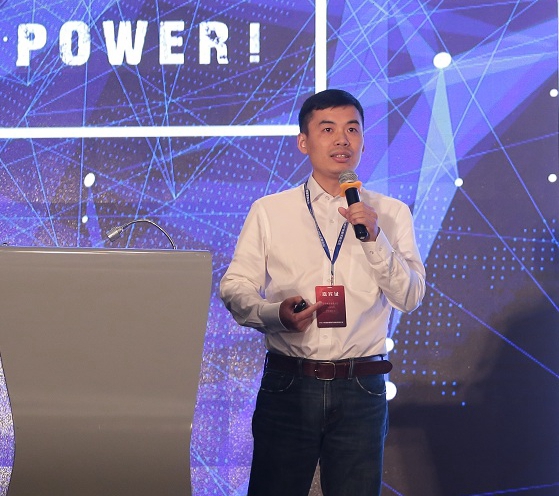
From May 17 to 18, VCBeat’s “2017 China Primary Healthcare Innovation Practice Forum” was held in Chengdu. Mr. Zhang Qi, CEO of Beijing Huimei Technology Co., Ltd., was invited to deliver a speech titled “Huimei Clinical Decision Support System: Empowering General Practitioners to Truly ‘Manage’ Patients.” This article presents an edited compilation of the highlights from his presentation.
Zhang Qi, CEO of Beijing Huimei Technology Co., Ltd.
Ph.D. from the University of Science and Technology of China; formerly Head of the Personalized Recommendation Team at Alibaba’s Tmall Division. In 2015, he joined Huimei Healthcare Group, a venture jointly capitalized by Hillhouse Capital—one of Asia’s largest and best-performing investment funds—and the Mayo Clinic, the top-ranked medical institution in the United States. At Huimei Healthcare Group, he was responsible for the operations of its subsidiary, Huimei Technology.
Huimei Technology is a subsidiary of the Huimei Medical Group. Leveraging its meticulously developed intelligent knowledge base designed to support the daily diagnostic and treatment workflows of primary care and general practitioners, Huimei Technology has launched the Huimei Clinical Decision Support System and the Huimei Intelligent Triage System, with the aim of building a smart healthcare platform.
Integrated with the Mayo Clinic Knowledge System
Mayo Clinic, as it is commonly known by healthcare professionals in China, is part of the Mayo Clinic Health System in the United States. It is one of the largest nonprofit medical groups in the U.S., serving over 1.3 million patients from more than 140 countries worldwide each year. In addition to its own facilities, Mayo Clinic operates a healthcare network that leverages its cutting-edge diagnostic and treatment expertise to help affiliated hospitals and clinics maintain high standards of care.
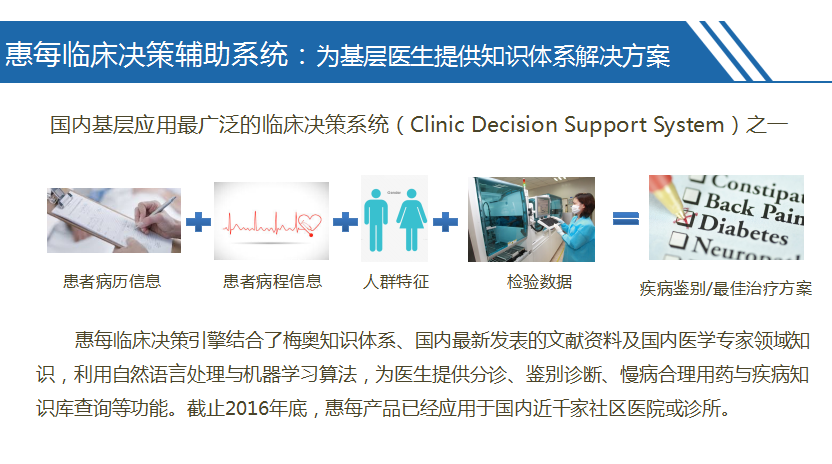
Huimei Medical Group introduced Mayo Clinic’s comprehensive knowledge system in 2015, integrating it with Chinese clinical guidelines and expert consensus. In 2016, Huimei Technology (a subsidiary of Huimei Medical Group) launched the AI-powered Huimei Clinical Decision Support System. This system provides general practitioners with a complete knowledge-based solution, offering functionalities such as triage, differential diagnosis, rational medication management for chronic diseases, and disease-related knowledge.
AI TechnologyEnhancing the Scientific Rigor of Diagnosis and Treatment
At present, primary healthcare institutions and physicians face numerous challenges: insufficient scientific rigor in diagnosis, leading to missed or misdiagnoses; a lack of standardized and normalized treatment protocols, resulting in significant variability where ten physicians may devise ten different treatment plans; and difficulties in managing chronic diseases, as patients often present with multiple comorbidities and complex medication regimens, placing a substantial burden on primary care physicians’ ability to effectively manage patient conditions.
According to the Ministry of Health’s Statistical Yearbook, only about 40% of urban physicians in China hold a bachelor’s degree or higher, while the proportion is even lower among rural physicians, at just 16%. Training a physician typically takes five to ten years; however, leveraging AI technology can, to some extent, enhance the diagnostic and treatment capabilities of primary-care physicians and help mitigate certain healthcare challenges.
Huimei Clinical Decision Support System is a solution that combines artificial intelligence with a knowledge framework for primary care physicians, featuring functions such as rational medication management for chronic diseases, differential diagnosis and treatment plan recommendations, and disease knowledge base queries.
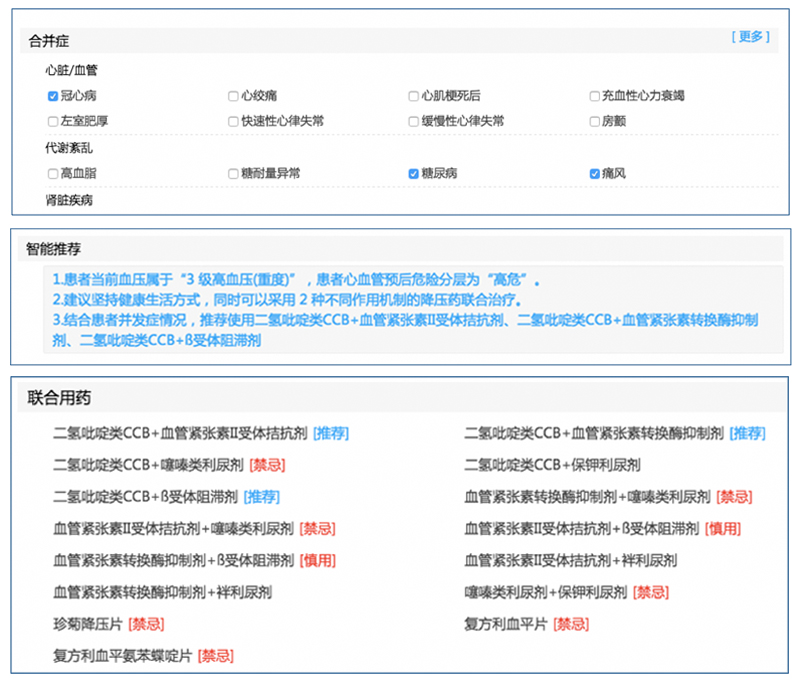
If you were a physician, how would you select antihypertensive medications for an elderly patient with hypertension?
Typically, after taking a patient’s medical history, physicians may identify numerous comorbidities; for instance, patients with hypertension often present with concurrent gout and coronary heart disease. This complexity frequently poses a significant challenge for primary care physicians.
The Huimei system assists physicians in evaluating patient conditions and recommending reference treatment plans. Furthermore, regarding medication selection, the system clearly labels prompts such as “Recommended,” “Use with Caution,” and “Contraindicated” to prevent inappropriate drug use.
In addition to providing assistance to physicians during diagnosis and treatment, the system’s prompts can also be leveraged for patient education, informing them of the severity of potential complications and appropriate management measures. This approach will significantly enhance patient satisfaction.
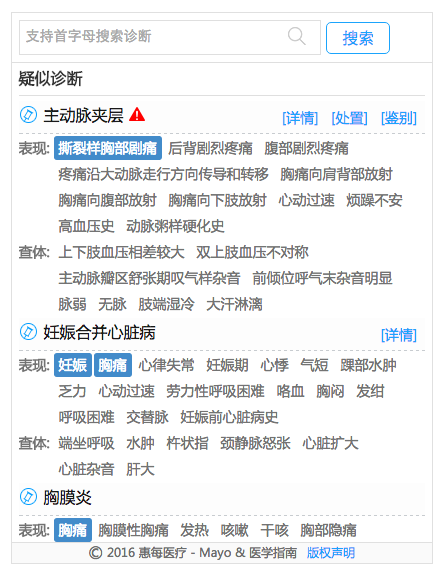
Most specialists have limited knowledge of other medical specialties, which can increase the risk of missed or incorrect diagnoses. Zhang Qi shared a real-life case with the audience:
An elderly pregnant woman with a history of hypertension suddenly experienced chest pain at night. Despite emergency management by the obstetrician, resuscitation efforts were unsuccessful, and the patient died. The cause of death was later determined to be ruptured aortic dissection.
Most physicians have limited knowledge of other specialties: when they encounter patients with conditions outside their own field, they are often uncertain about how to manage them.
Clinical decision support systems can assist physicians in case identification, provide potential diagnostic outcomes, and offer the rationale for these diagnoses, thereby facilitating more informed clinical judgment. In clinical practice, such capabilities enable physicians to recognize risks earlier, implement preventive measures proactively, and reduce the likelihood of potential medical disputes.
The system encompasses knowledge on disease concepts, etiology, clinical manifestations, complications, examinations, diagnosis, treatment, and prevention, thereby meeting physicians’ needs for querying a disease knowledge base. Many community hospitals lack external internet access; consequently, if physicians wish to look up information on diseases or medications, they must rely on other tools, which is time-consuming, labor-intensive, and highly inconvenient. By consolidating all disease-related knowledge into a single software application, the Huimei Clinical Decision Support System enables physicians to consult information at any time without disrupting their workflow.
Seamless Integration Widely Applied
This system currently supports multiple collaboration models. Through the “Powered By” model, AI technology is applied to chain clinics, public community hospitals, internet hospitals, and healthcare IT vendors, leveraging artificial intelligence to enhance the diagnostic and treatment capabilities of primary-care physicians. From an informatics perspective, this “Powered By” collaboration enables clients to integrate Huimei’s Clinical Decision Support System as an AI module within their own platforms, achieving seamless embedding and providing multidimensional assistance to physicians.
Currently, the Huimei Clinical Decision Support System has been adopted by numerous Grade A tertiary hospitals, public community hospitals, chain clinics, and internet hospitals. Many well-known domestic chain clinics, such as Ping An Wanjia, Johnson Medical, WeDoctor General Practice Center, LanKa Health, and Dr. Lv Chain Clinics, have also become users of Huimei Technology. Currently, Huimei Technology’s clinical decision support system is a leading medical AI system in China.