

Infervision Founder Chen Kuan: Empowering Primary Care Radiologists with AI to Deliver Tier-3 Hospital-Level Diagnoses

Infervision
Artificial Intelligence Product Developer
On May 17, VCBeat’s “2017 China Primary Healthcare Innovation Practice Forum” was held as scheduled. Mr. Chen Kuan, founder of Infervision, was invited to deliver a presentation titled “Enabling Primary Care Radiologists to Deliver Tertiary Hospital-Level Diagnoses: Opportunities and Challenges of Artificial Intelligence” as the theme, delivered an inspiring speech. The content of the speech is as follows:
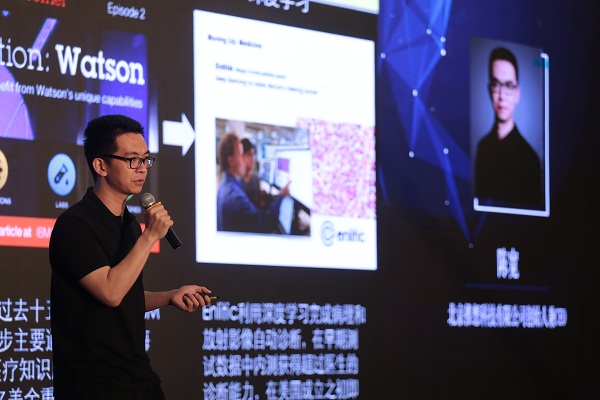
Chen Kuan
In the field of medical imaging, high-quality medical resources are scarce and unevenly distributed. Physicians at large hospitals endure heavy daily workloads, making missed diagnoses and misdiagnoses inevitable. In some remote areas, despite the availability of advanced medical equipment, utilization rates remain low due to a shortage of experienced physicians.
Infervision, as an artificial intelligence company, is dedicated to applying deep learning technologies to provide fast and accurate solutions for medical imaging diagnosis. We boast a top-tier data science team capable of effectively leveraging various types of medical data (structured, semi-structured, and especially unstructured data) to develop model products with clinical value.
In an interview with VCBeat, Chen Kuan stated that the company’s product—the INFERVISION intelligent medical imaging system—has been deployed in the radiology departments of hundreds of primary-care hospitals, including its intelligent X-ray auxiliary screening product and intelligent CT auxiliary screening product.has also entered the final stage of CFDA certification and is expected to obtain approval within the year。
Regarding the revenue model, Infervision has explored two approaches.One approach is to sell the entire equipment package to hospitals in a single transaction. The other is to charge patients on a per-use basis. Meanwhile, Chen Kuan noted that medical artificial intelligence remains a novelty for most people, and relevant authorities have yet to establish specific pricing standards. As everyone is navigating uncharted territory, the current primary focus remains on market education.。
About Deep Learning
Deep learning first appeared in a 2006 paper published by Geoffrey Hinton, a professor at the University of Toronto. At the time, the technology attracted little attention. It was not until 2011, when Hinton’s student used deep learning to build a model that helped autonomous vehicles recognize traffic lights with an accuracy rate of 99.44%, and subsequently won an award in the ImageNet artificial intelligence competition in 2012, that deep learning came into the spotlight of the scientific community.
In the healthcare industry, products applying traditional artificial intelligence technologies to medical imaging have been available for 15 years. However, through interactions with physicians in China, Chen Kuan discovered that traditional AI methods (conventional CDA technology) suffer from low efficiency and are prone to missed diagnoses. Consequently, whether in U.S. or Chinese hospitals, the utilization rates of these systems remain low after procurement.
Traditional artificial intelligence algorithms require extensive expert guidance to instruct computers on how to perform recognition tasks. Deep learning, however, operates differently. Taking pulmonary tuberculosis as an example, deep learning only requires the provision of large volumes of data, with labels indicating which cases are tuberculosis, which represent normal vascular interruptions, and which correspond to normal tissue. Based on this data, deep learning algorithms gradually establish diagnostic criteria and automatically complete the diagnostic process.
Compared with traditional artificial intelligence algorithms, deep learning does not require feature extraction; it only needs a large amount of valid data, and the algorithm will learn to recognize patterns on its own.However, medical scenarios are highly complex, and features alone cannot encompass all possible situations. For instance, if a woman were disguised as a Buddhist nun, traditional artificial intelligence would struggle to determine her gender, whereas deep learning would correctly identify her as female, much like human judgment.
Another advantage of deep learning is its rapid computational speed. While traditional artificial intelligence algorithms used by tertiary hospitals previously required 30 minutes to process a single patient’s CT data, deep learning algorithms can complete the diagnosis in just 5–10 seconds.
Infervision’s Three Major Services
CurrentlyInfervision’s products provide services in three areas: intelligent imaging report verification, intelligent assisted screening, and intelligent differential diagnosis.
Intelligent Imaging Report Verification
Due to a lack of experience, physicians in primary care and community hospitals sometimes lack confidence in the medical laboratory reports they generate, particularly in cases involving complex or rare diseases. Infervision’s products are designed to assist physicians by providing an additional layer of review for these reports. In clinical trials, the Infervision Intelligent Reporting System identified two cases of malignant lung cancer among 160 reports previously classified as “normal” at a large Grade 3A hospital.
Intelligent Assisted Screening
Hospitals encounter a large number of suspected patients daily, yet the actual prevalence of disease among them is low; data indicate that the detection rate for lung cancer is even below 1%. Infervision’s intelligent X-ray auxiliary screening product can automatically determine whether lesions are present in images, helping physicians allocate their time and energy more reasonably and effectively.
Infervision’s intelligent CT line-assisted screening product can automatically mark the locations of lesions on each CT slice, assisting physicians in completing CT diagnoses quickly and accurately. This allows doctors to spend less time screening healthy populations, reduces repetitive tasks, enables them to focus on the diagnosis and treatment of serious diseases, and alleviates physician fatigue.
In terms of diagnostic speed, it takes a physician three and a half hours to diagnose 20 cases, whereas using Infervision’s AI solution requires only 6 minutes and 15 seconds, even on a computer with the lowest specifications.
In terms of diagnostic accuracy, the overall sensitivity of artificial intelligence for nodules of various sizes is approximately 85%, with variations observed across different nodule sizes. Test data from Infervision on March 9, 2017, showed that for nodules measuring 0–3 mm,The sensitivity of Infervision’s model is 84.03%; the sensitivity for nodules measuring 3–6 mm is 88.31%, and for nodules >6 mm, it is 100%.。
In clinical practice, physicians’ detection rates are significantly lower, particularly for nodules measuring 0–3 mm, which are prone to being missed. Such missed diagnoses can cause patients to miss the optimal window for diagnosis and treatment. This service is especially critical for primary care physicians; primary healthcare institutions equipped with Infervision’s AI products,It is equivalent to having an associate chief physician assisting in the diagnosis and treatment.。
Intelligent Differential Diagnosis
The third service is intelligent differential diagnosis. In simple terms, artificial intelligence can not only detect and annotate nodules but also assess their benign or malignant nature. According to Chen Kuan, this technology is still under development and is positioned to assist physicians in making judgments; the final diagnosis remains the responsibility of the clinician, with Infervision’s products serving merely as an aid.
Infervision Products Empower Tiered Diagnosis and Treatment
In the field of medical imaging, tiered diagnosis and treatment face significant challenges, which can be effectively addressed by Infervision’s intelligent imaging-assisted diagnostic solutions.
First, the limited level of imaging diagnosis in primary hospitals, especially CT diagnosis and treatment, has a large gap compared with tertiary hospitals. Infervision's intelligent auxiliary diagnosis solution,Supplementing the scarce diagnostic resources in primary healthcare institutions with the expertise of an associate chief physician.
Second is primary healthcareLack of Training Resources and Tools to Enhance Primary Care Diagnostic Capabilities, intelligent assisted diagnostic solutions can intelligently mark lesion locations on images. In thisDuring the process, physicians can learn from machine learning to enhance their diagnostic capabilities.
Thirdly,Inconsistent Imaging Quality and Diagnostic Reporting Standards in Primary Healthcare Institutions, making information sharing extremely difficult. Whereas artificial intelligenceStandardized Supervision Can Improve Technicians' Operational Compliance, ensuring image quality, reducing resource waste caused by repeated examinations, and enabling report standardization through an intelligent reporting system to minimize unnecessary repeat tests for patients.
Fourth, the current state of healthcare isLack of Standardized Oversight for Referral Decision-Making, to ensure the implementation of referral guidelines. And artificial intelligenceAs a machine, it will strictly adhere to the requirements of the referral guidelines., providing physicians with standardized referral recommendations.
In his concluding remarks, Chen Kuan stated that Infervision’s productsThe pathway spans from prevention and screening to assisted diagnosis, and ultimately to precision medicine, leveraging genomics, medical imaging, and data analytics to enable physicians to make more precise clinical judgments.