8 Major Opportunities and 8 Surprises from the 2017 China Health Information Technology Exchange Conference
Source: China Digital Healthcare Network / Tan Xiaoyu
On May 18, the 2017 China Health Information Technology Exchange Conference and Software Product Exchange Conference kicked off in Qingdao. As a major annual professional event in the healthcare industry, it attracted more than 6,000 representatives from government, industry, academia, research, investment, management, and user sectors across multiple provinces and cities in China, as well as from Hong Kong, Macao, Taiwan, the United States, Japan, Australia, Cambodia, and other regions. The conference also received significant attention and participation from national-level supervisory authorities. Therefore, judged from any perspective, it is set to be a focal point of excitement for the entire industry.
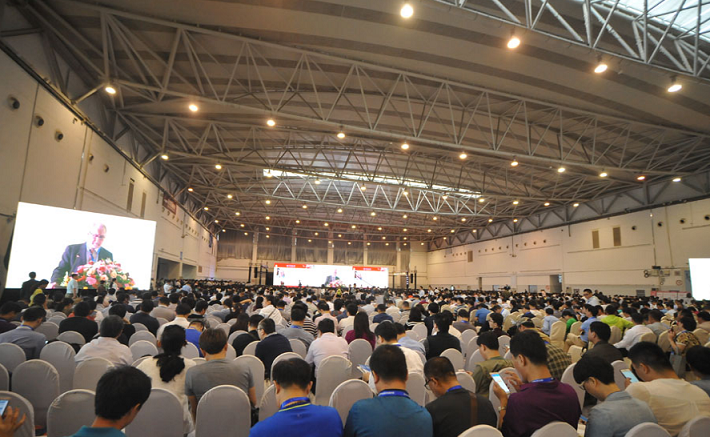
Overview of the Conference Site Image Source: Qingdao News Network
This conference focused on the “Outline of the ‘Healthy China 2030’ Planning Program” and the 13th Five-Year Plan for Health and Wellness. Taking the top-level design of the 13th Five-Year Plan for Deepening Healthcare Reform as its starting point, it interpreted the 13th Five-Year National Plan for Population Health Information Development. In-depth and forward-looking discussions were held on hot topics such as health and medical big data and Internet Plus Healthcare, supply-side structural reform of healthcare services and tiered diagnosis and treatment, cultivation of new business models in health and medical services, and the application of new information technologies in the field of health and wellness.
Ms. Wang Suilian, Vice Governor of Shandong Provincial People’s Government; Dr. Martin Taylor, WHO Representative in China; Dr. Boonchai Kijsanayotin, President of the Asian eHealth Alliance; and Ms. Lo Fan Shuk-fun, Chairperson of Hong Kong Science Park, each delivered addresses at the conference. Mr. Jin Xiaotao, Deputy Director of the National Health and Family Planning Commission and President of the Chinese Medical Information Association, attended the opening ceremony and delivered a keynote speech. The opening ceremony was moderated by Mr. Meng Qun, Director of the Statistical Information Center of the National Health and Family Planning Commission, Executive Vice President and Secretary-General of the Chinese Medical Information Association, who also gave a presentation titled “Big Health, Big Data, Deep Integration, and Major Development.”
[Major Positive News as Expected]
1. Medical Big Data Enters Its Golden Age of Development
In his speech, Jin Xiaotao stated, “The high level of attention the CPC Central Committee has paid to big data in health and medical care and to the development of healthcare informatization serves as a crucial guide for our direction of development. This is indeed the best period for the growth of health and medical big data.” The “Guiding Opinions on Promoting and Standardizing the Application and Development of Big Data in Health and Medical Care,” issued by the State Council, provides guidance and a call to action for the entire society. “We must thoroughly understand the national strategic planning to determine what we should do and where we should head in the future.” Jin Xiaotao emphasized, “Our industry is full of vitality.” Under the “1+7+X” framework, the National Health and Family Planning Commission is further advancing the construction and application development of health and medical big data centers, fostering clusters of mass entrepreneurship and innovation. The scale of the health and medical big data industry can reach the order of hundreds of trillions of yuan, and concerted efforts will be made to cultivate the health industry into a key pillar of the national economy. In his keynote address, Meng Qun also stressed that future initiatives will further promote and standardize the application and development of health and medical big data, advance the continuous construction of data centers and industrial parks dedicated to health, conduct training programs and collect case studies on health and medical big data, and simultaneously promote the integrated development of omics data and clinical medical data.
2. Seven regions and nine hospitals passed the evaluation for the standardization maturity of healthcare information interoperability
In recent years, the assessment of standardization maturity for medical and health information has garnered increasing attention. During the conference, the awarding ceremony for the 2016 National Assessment of Standardization Maturity for Interconnectivity of Medical and Health Information was held. Following review and certification by an expert panel, seven pilot regions, including the Zhangjiagang Municipal Health and Family Planning Commission, and nine pilot hospitals, including Beijing Children’s Hospital affiliated with Capital Medical University, passed the national assessment. Notably, the Zhangjiagang Municipal Health and Family Planning Commission achieved a Level 5 Grade B (district/county level) rating, making it the highest-rated pilot region in the current assessment results.
3. A diversified landscape for medical service provision has begun to take shape
Hou Yan, Director of the Department of Planning and Information under the National Health and Family Planning Commission (NHFPC) and Vice President of the Chinese Medical Informatics Association, stated in his comprehensive interpretation of the Healthy China Strategy and the 13th Five-Year Plan for Health and Wellness that China’s major health indicators are generally at a relatively high level. Medical and healthcare resources have continued to grow, service utilization has increased substantially, a diversified pattern of medical service provision has taken initial shape, and the share of out-of-pocket personal health expenditure has dropped to its lowest level in nearly two decades. Furthermore, Hou Yan emphasized that China is currently facing multifaceted challenges, including the transformation and upgrading of consumption structures, population aging, new-type urbanization, and shifts in disease patterns. The 13th Five-Year Plan period represents the decisive stage for China to complete the building of a moderately prosperous society in all respects. In this context, advancing the Healthy China initiative is of great significance. Co-construction and sharing constitute the implementation pathway for building a Healthy China, promoting supply-side structural reform from the perspective of holistic health and comprehensive healthcare.
4. The Integrated Development of Commercial Insurance and Healthcare Receives Attention
In his keynote address, Meng Qun stated that future efforts will promote the integrated development of healthcare and commercial insurance, leveraging the internet to develop innovative health management services. This includes building a medical insurance cost-control system to strengthen end-to-end supervision and intelligent auditing of medical services. Through platform construction, data sharing among different systems—such as medical insurance, pharmaceuticals, and healthcare—will be facilitated. By relying on big health data, precise diagnosis and treatment can be achieved, and various health insurance products can be designed. The operational model will shift from post-event claims settlement to a comprehensive approach encompassing pre-event prevention, in-process monitoring, and post-event claims settlement.
5. Promote Interconnectivity Between Provincial Platforms and the National Platform
Meng Qun emphasized that by the end of June 2017, Heilongjiang, Jilin, Guangdong, Yunnan, and Tibet would complete the construction of their provincial-level interconnectivity platforms, marking the initial completion of such platform construction across all 31 provinces (autonomous regions and municipalities directly under the Central Government) in China.
6. Accelerate the construction of regional national health information platforms centered on electronic health records
7. Promote the Construction of Hospital Integration Platforms
8. Promote the Issuance and Application of National Health Cards
Meng Qun emphasized that all regions should integrate health and family planning resources and strengthen the implementation of convenient and beneficial application measures. Basic application projects were to be completed by the end of 2018, while extended application projects were to be realized by the end of 2020. In practice, physical cards and virtual cards should be combined. Hospitals should strive to complete the migration from medical visit cards to health cards; primary healthcare institutions should actively promote the family doctor contract service program; regional health authorities should advance the “one-card” system for health services across city clusters; meanwhile, initiatives such as the Children’s Health Card Project and the Health Card Project for impoverished populations should also be promoted.
[Unexpectedly Creative Surprises]
1. Competent authorities are making concerted efforts at the organizational level to promote the development of the medical big data industry
In his keynote address themed “Big Health, Big Data, Deep Integration, and Major Development,” Meng Qun pointed out that, with regard to big data, the National Health and Family Planning Commission (NHFPC) has established a Leading Group for Cybersecurity and Informatization. Under this group, the NHFPC Big Data Office has been set up, which in turn oversees two subordinate units: the Informatization and Big Data Application Office within the Department of Planning and Information, and the Big Data Technology Management Division of the Statistical Information Center. The organizational structure of the Chinese Health Information Association has also been adjusted in response to emerging needs, with the recent establishment of 15 special committees focused on healthcare big data. This indicates that the NHFPC has begun to promote the development of China’s healthcare big data industry at the organizational level. Such initiatives will inevitably attract new key driving forces, representing a significant positive development for China’s healthcare big data sector.
2. Regulatory authorities adopt an encouraging stance toward internet-based healthcare
Previously, the "Administrative Measures for Internet-Based Diagnosis and Treatment (Trial) (Draft for Comment)" and the "Opinions of the National Health and Family Planning Commission on Promoting the Development of Internet Medical Services (Draft for Comment)," issued by the General Office of the National Health and Family Planning Commission (NHFPC), stirred significant waves in the healthcare industry. The restrictive stance toward internet-based healthcare outlined in these drafts caused considerable anxiety among industry stakeholders. In response, Jin Xiaotao provided an official clarification in his speech. Jin Xiaotao pointed out that while a series of corresponding laws and regulations are indeed forthcoming, the NHFPC attaches great importance to issues concerning internet-based healthcare. Building on accumulated experience, the NHFPC will further guide and promote its development. After soliciting opinions from various parties through multiple channels, the NHFPC will issue guiding opinions as soon as possible to align with the trend of "Internet Plus," support the emerging model of "Internet Plus Healthcare," guide its standardized development, and advance it toward a higher level of smart healthcare.
3. Further Clarification of Standards for IT Positioning
In his keynote address, Meng Qun provided a detailed explanation of the statistical and informatization position settings within the provincial, municipal, and county Health and Family Planning Commissions: Information Business Management Category—Director of the Information Center; Information Technology Management Category—Comprehensive Information Management Position, Information System Construction and Application Position; Infrastructure Management Category—Infrastructure Construction and Operations & Maintenance Position, Information and Network Security Management Position, Informatization Standards Position; Statistics and Data Management Category—Comprehensive Statistical Management Position, Data Resource Development Position, Data Utilization Position.
Provincial level—12 positions across 4 categories, with multiple staff allowed per position; Prefectural/City level—12 positions across 4 categories or 10 positions across 4 categories, with multiple staff allowed per position; County/District level—9 positions across 4 categories, allowing either multiple staff per position or one staff covering multiple positions.
Hospital Statistics and Informatics Position Structure: Information Business Management Category—Information Supervisor (Hospital-level Chief Information Officer), Comprehensive Management Position (Director of the Information Center); Application Management Category—Application Management Position; Infrastructure Design Management Category—System Management Position, Network Management Position, Information Security Management Position, Server Room Management Position; Information Technology Support Category—Computer Terminal Operations and Maintenance Management Position, Database Management Position; Data Utilization and Service Category—Statistics and Medical Record Management Position, Database Position.
4. Launch of the National Health Security Information System Construction Project
Meng Qun pointed out that the content of China's National Health Informationization Project mainly includes the following five aspects:
Standard specifications, business processes, data resources, document sharing, exchange interfaces, and data security management.
Interconnectivity, relying on the National E-Government Extranet and a nationwide unified data sharing and exchange platform; 10 provincial-level platforms, 44 hospitals affiliated with or administered by the National Health Commission, and 4 co-construction units.
Operational systems: six major categories comprising 37 information subsystems, including public health, medical and health public services, monitoring and evaluation of the essential medicines system operation, healthcare service quality and performance evaluation, comprehensive service evaluation, and integrated population management.
Information resources, including databases for electronic health records (EHRs), electronic medical records (EMRs), the entire population, operational processes, foundational data, and specialized topics.
Information Security and Operations & Maintenance: Building an Application Support Platform, a Security Assurance Environment, and an Operations & Maintenance System.
The overall architecture of the National Health Security Project consists of one data center, which supports six business sub-platforms, and one data backup center. It features unified data collection and shared business applications. Its overarching framework is “large platform + multiple systems,” with a data-centric approach.
5. Launch of the Sixth National Health Services Survey
A health services survey covering 156 counties (cities and districts) across 31 provinces (autonomous regions and municipalities directly under the Central Government) in China has officially been launched. Meng Qun emphasized that the National Health Services Survey serves as a primary source of information for evaluating the effectiveness of the current round of healthcare and pharmaceutical system reforms, and also functions as the baseline survey for “Healthy China 2030.” The National Health and Family Planning Commission will employ an analytical approach that combines big data analytics with traditional statistical methods, integrating the evaluation of healthcare reform and development outcomes with future projections.
6. R&D of Health Information Standards Receives Attention
In the healthcare sector, China is currently strengthening research and development in standardization and medical terminology. In terms of standards development, efforts are focused on researching and formulating standards related to the National Health Data Dictionary, information security, drug coding, the Internet of Medical Things (IoMT), internet-based healthcare, big data, precision medicine, and telemedicine. Regarding medical terminology R&D, key research priorities include Systematized Nomenclature of Medicine (SNOMED) and clinical terminology supplementation.
7. Accelerate the development of an industry-wide trusted network system based on electronic authentication
Addressing the topic of building a trusted system for industry networks, Meng Qun emphasized two key aspects in his speech: digital identity management and reliable electronic signature services. He stressed that there is an urgent need to establish such trusted systems to support industry interoperability, the application of big data in health and medical care, and the integration of internet technologies with healthcare services (“Internet + Healthcare”).
8. Promote the Application of New Technologies in the Healthcare Industry
In his keynote address, Meng Qun emphasized that China will steadily advance the application of new technologies in the healthcare sector across multiple levels. This means that, in compliance with developmental trends and legal regulations, more high-tech innovations will be integrated into the healthcare industry. The pivotal role of technology in driving industrial development is self-evident, making the prospect of diversified growth in China’s healthcare industry highly promising.
[China's Healthcare IT Market: A Hundred Schools of Thought Contend]
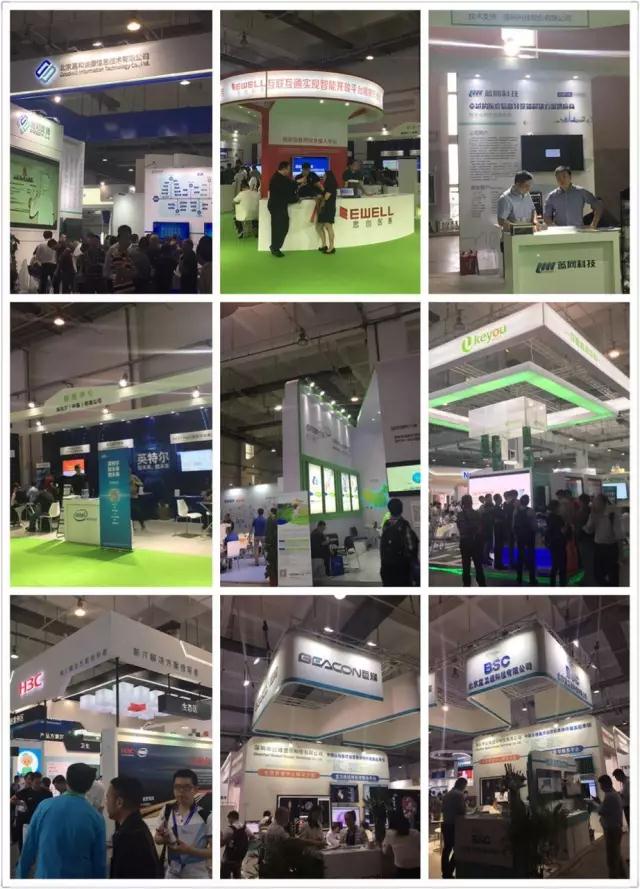
Compared with previous editions of the conference, reporters have learned that, in addition to a more forward-looking and open conference theme, there are also new changes in the composition of exhibiting companies. Refreshing new products and solutions are overturning people’s entrenched perceptions of many enterprises. “Competition in this industry is becoming increasingly intense; of course, this is a good thing,” summarized one exhibitor regarding the current healthcare informatics market. Just as a hundred flowers blooming make the spring, driven by policy, capital, technology, and market demand, it is believed that in the near future, China’s healthcare informatics market will not only present a more prosperous landscape but also form a new competitive pattern.