

Haisikai Breaks French Monopoly in Non-Invasive Liver Fibrosis Quantitative Diagnosis with 2-Minute Detection Technology
According to statistics from the World Health Organization, approximately 1.4 to 1.5 million deaths occur annually due to various types of hepatitis, ranking it as the seventh leading cause of death among all diseases. Hepatitis is poised to surpass HIV/AIDS as the sixth leading global health threat. Statistics from the Centers for Disease Control and Prevention indicate that:China reports over 1 million new cases of viral hepatitis annually, with hepatitis B patients accounting for approximately 80% of these cases. The number of hepatitis B surface antigen (HBsAg) carriers in China exceeds 120 million, representing 8%–10% of the national population and nearly one-third of the global total of hepatitis B virus carriers.;
Moreover, there are nearly 1 million new hepatitis B infections annually. The 2015 Chinese Guidelines for the Prevention and Treatment of Fatty Liver Disease (Popular Science Edition) pointed out that fatty liver disease has even surpassed viral hepatitis to become the most prevalent liver disease in China, with more than 200 million patients. Consequently, China has currently become the country bearing the highest social costs for the diagnosis and treatment of liver diseases worldwide.
The Liver Hardens in “Silence”
There are so many patients with liver diseases, but the detection and treatment of liver diseases are not easy, for exampleThe progression from a healthy liver to cirrhosis is a protracted and insidious process, during which patients remain asymptomatic. By the time symptoms manifest, the disease has typically reached an advanced stage, resulting in significantly higher treatment costs and complexity. Early screening and intervention can prevent the development of cirrhosis; therefore, early detection and treatment are the preferred approach.。
The gold standard for clinical detection of liver fibrosis is liver biopsy., the process of obtaining pathological samples is invasive and cannot be recovered in a short period of time. It is also difficult to use liver biopsy as a routine examination in clinical practice, so the use of liver puncture biopsy has always been limited.Previously, the field of non-invasive liver testing had long been monopolized by foreign technologies.. Dr. Shao Jinhua, founder of Wuxi Hisky Medical Technology Co., Ltd. (hereinafter referred to as “Hisky”), recognized this opportunity and co-founded Hisky with his partners. VCBeat has provided follow-up coverage on this development.
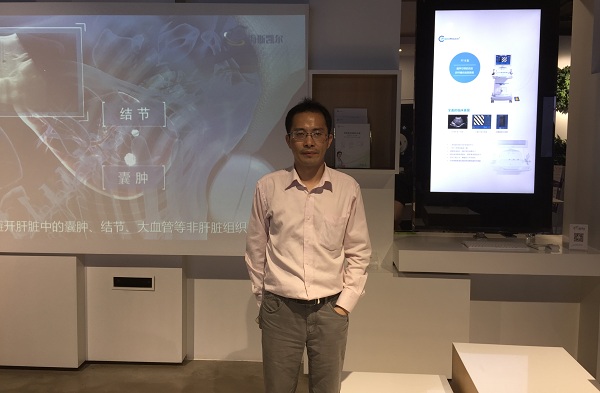
Shao Jinhua
Dr. Shao Jinhua, the founder of Hisky Medical, graduated from Tsinghua University with a major in Biomedical Engineering. Building on Tsinghua University’s applied research foundation established since the 1990s, he founded Hisky Medical in 2010. Since its inception, the company has engaged in sustained industry-academia-research collaboration with Tsinghua University over many years. Currently, it holds numerous domestic and international patents and software copyrights in the fields of non-invasive medical diagnosis and health management.
Has reached an internationally advanced level in the field of transient elastography technology and its industrialization.and is expected to provide new tools for the non-invasive diagnosis of lesions in the liver, breast, thyroid, cardiovascular system, and other organs.
Non-invasive Liver Fibrosis Diagnostic System
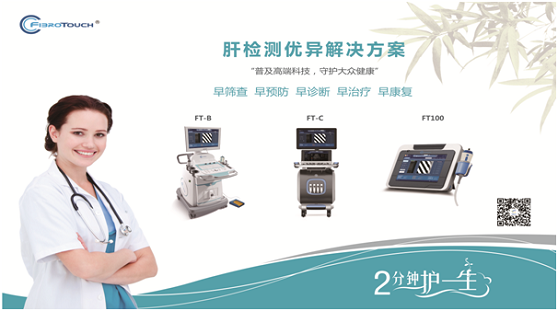
Shao Jinhua told VCBeat,Currently, Hisky’s flagship product is the FibroTouch series of non-invasive liver fibrosis diagnostic systems, which has obtained certification from the China Food and Drug Administration (CFDA) and the European CE mark, and is used in hundreds of hospitals.。
The FibroTouch series is available to meetUsed by health examination centers, primary healthcare institutions, and large hospitals, let us take FibroTouch-C as an example to understand the technological features and clinical advantages of FibroTouch products.
FibroTouch-C is guided by color Doppler imagingSeverity of Liver Fibrosis and Fatty Liverquantitative detection system that leverages the advantages of transient elastography to provide an integrated detection and comprehensive assessment solution for liver tissue morphology, hepatic fibrosis severity, and hepatic steatosis.The test is not only non-invasive for patients but also provides users with multiple measurement results, such as quantitative assessments of liver fibrosis severity, quantitative assessments of hepatic steatosis severity, liver morphology via ultrasound imaging, and blood flow observation.。
Without devices such as FibroTouch, patients undergoing liver assessment would require multiple instruments; evaluating liver fibrosis would necessitate not only liver biopsy but also ultrasound examination.In contrast, FibroTouch can obtain the required results in just two minutes.
It is precisely because of the functions and advantages of FibroTouch,It can be used for screening, diagnosis, treatment, and follow-up assessment in patients with chronic liver disease.
As FibroTouch is a non-invasive and painless liver assessment with rapid testing capabilities, it can generate a quantitative report for patients within two minutes. This high throughput not only meets the demands of large-scale health screening programs but also enables follow-up assessments after initial baseline data are obtained. Such follow-ups help evaluate drug efficacy, guide medication management, and provide support for clinical treatment.
Technical Advantages of Hisky’s Technology Compared to Foreign Technologies
What are the technological advantages of Hisky over foreign technologies?
First, image-guided technology,Hiscan incorporates imaging guidance technology into transient elastography, enabling comprehensive liver scanning to identify more optimal measurement sites based on imaging findings, thereby providing more intuitive and accurate assistance for clinical diagnosis.。
Meanwhile, the entire FibroTouch product line has added quantitative detection of the controlled attenuation parameter (CAP) to better help the growing population of patients with fatty liver disease manage the severity of their condition.
Furthermore, FibroTouch utilizes dynamic broadband multi-applicable probes that meet the clinical needs of diverse patient populations, regardless of body habitus, thereby significantly improving the success rate of detection. In contrast, the M probe used in foreign technologies exhibits a high failure rate in obese individuals, particularly among this demographic.
Another difference lies in the algorithms. Hisky’s patented technology can intelligently differentiate between subcutaneous fat and liver tissue, thereby directly targeting the liver tissue.
While competing with overseas technologies in the market, multi-dimensional rivalry has persisted. In terms of intellectual property (IP), Hisky leverages its partnership with Tsinghua University to uphold independent research and development and increase investment in scientific research. Meanwhile, Hisky actively employs legal measures to safeguard its IP rights and protect the legitimate interests of the enterprise.
In October 2016, Hisky Medical filed a lawsuit against Echosens, a French company controlled by Furui Shares, and its Chinese subsidiary, Shanghai EchoSens, at the Shanghai Intellectual Property Court for infringing on Hisky Medical's patent rights. The plaintiff requested the court to order the defendants to cease the infringement of patent rights, stop the production and sale of related products, and compensate Hisky Medical for the corresponding losses.
Regarding future development, Shao Jinhua stated that the company will continue to iterate its products. In addition to applying the products in liver-related diagnostics, it will expand into areas such as human liver cancer, breast, and thyroid conditions. In terms of market strategy, Hiscar will focus on expanding its coverage in overseas markets.
In terms of corporate financing, Hisky Medical secured RMB 100 million in Series B funding in June 2016, led by Legend Capital and participated in by Bencao Capital and Chang’an Private Capital. Shao Jinhua stated, “The entry of Legend Capital, a mainstream healthcare-focused fund, will significantly promote the adoption of non-invasive liver fibrosis diagnostic technology in clinical medicine and accelerate the internationalization of Hisky’s FibroTouch series of liver fibrosis detectors.”