

Li Xiaoxia, President of Kangborui Health: Addressing Five Key Pain Points in Primary Care Through Internet-Enabled Healthcare Innovation
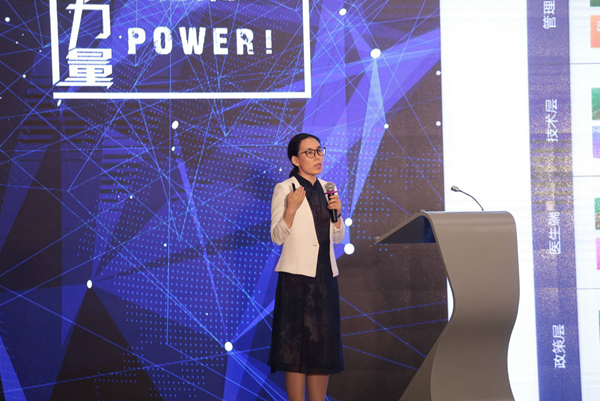
Guest Profile
Li Xiaoxia, President
Health Expert, China Health Association
Top Ten Technological Workers in China's Health Care Industry
2013 Innovative Figures in China's Health Management Models
Expert, Chinese Enterprise Health Promotion Lecture Tour
The First Batch of Functional Medicine Physicians in Asia from the Institute for Functional Medicine (USA)
Standing Director, Sub-health Professional Committee, China Association for the Promotion of Human Health Science and Technology
Special Researcher, Academic Management Department, China International Medical Exchange Foundation
As one of the earliest experts in China to launch health management services, Li Xiaoxia has founded three specialized health companies, guided the establishment of nearly 40 health centers across China, and provided health management services to hundreds of thousands of individuals. Together with her team, she developed a full-lifecycle health management service system, pioneering the “Internet + Health Management” model.
He has been recognized as an Innovator in Chinese Health Management Models and one of the Top Ten Technological Professionals in China’s Health Care Industry. He serves as a Special Researcher in the Academic Management Department of the China International Medical Exchange Foundation and as an Executive Director of the Sub-health Professional Committee under the China Association for Promotion of Human Health Science and Technology.
Drawing on her professional expertise in clinical medicine, functional medicine, nutrition, and psychology, as well as her extensive clinical experience, she has integrated diverse technical resources from Japan, Canada, and the United States to promote cutting-edge international health concepts. The personalized health programs developed by her and her team for individual prevention and chronic disease rehabilitation have been widely acclaimed across various sectors, playing a significant role in advancing the construction of China’s health management service operational system and enhancing the professionalism of its services.
May 17–18, Li Xiaoxia was invited to attendVCBeat “2017 China Primary Healthcare Innovation Practice Forum,”with"Internet Healthcare's Role in Promoting Innovative Practices at the Primary Care Level"delivered a speech on the topic of,Here are the highlights from the speech:
From community services to family doctors, and then to establishing health and medical service companies, Li Xiaoxia believes that primary healthcare faces the following five major pain points:
Service Level, the primary healthcare sector has long been plagued by challenges such as barriers to data collection and maintenance, complex and redundant service offerings, unclear health management models, and difficulties in implementing family doctor contract services. After attending VCBeat’s closed-door meeting on the 16th, she remarked that although she had observed many large-scale institutions and admired their ability to achieve such substantial scale, the primary healthcare system as a whole has yet to transition its health management model. It remains focused primarily on basic clinical care; for instance, family doctor contract services often exist in name only, with contracts signed but actual services not delivered.
Management LevelFurthermore, the performance evaluation system for physicians and health management is inadequate, lacking dynamic documentation during implementation. Consequently, it is difficult to quantify workloads, making it challenging to achieve both personalized and scalable health management. Li Xiaoxia noted, “Physicians working in primary care settings are well aware of the quality of the health records currently at our disposal. Although hundreds of millions of people undergo physical examinations annually in China, we lack clear insights into their lifestyles, dietary habits, and physical activity levels.” Therefore, the absence of high-quality health records poses a significant challenge to chronic disease management.
Technical LevelAlthough health-oriented smart devices and their applications are now widely available, many suffer from poor practicality. When deployed in community or primary care settings, they may initially generate excitement, but ultimately end up as mere ornaments—unused by both physicians and patients. Moreover, there is a significant lack of universally accessible and user-friendly tools at the primary care level.
Additionally, inAt the Physician and Policy Levels, Li Xiaoxia believes that there are also many problems. There is a shortage of primary care general practitioners, and their professional competence varies significantly. Doctors are bogged down by numerous routine administrative tasks, making it difficult to implement health management. Furthermore, policies aimed at increasing the coverage rates of tiered diagnosis and treatment and family doctor signing services face substantial challenges.
Beijing Kangbairui Health Technology Co., Ltd. is a technology service company dedicated to promoting and disseminating internationally leading health concepts and technologies, as well as providing comprehensive health management services to individuals, families, corporate groups, and third-party clients. Headquartered in the core business district of Shangdi, Haidian District, Beijing—Silicon Valley Bright City—the company boasts a professional technical service team of nearly 100 members (all with frontline grassroots experience), with its business operations covering multiple provinces, municipalities, and autonomous regions across China. Since 2003, the company has provided technical outputs to more than 40 industry institutions and has established strategic partnerships with numerous health industry groups, equipment big data suppliers, sports medicine partners, and internet healthcare partners. According to Li Xiaoxia, Kangbairui has recently been honored by Alibaba Cloud with “Top 20 Cases from the First China Cloud-Based Innovation and Entrepreneurship Competition"and awarded the title of "Most Promising Investment Potential Award”, this selection process surveyed over 600 projects in the past four months, which is a testament to the support and recognition for the “Daxia Health” team.
The company’s core philosophy is to focus on the health status of the general public, providing comprehensive health management solutions for every individual. It aims to deliver universally accessible professional health concepts, technologies, and services to customers, integrated into a digitalized system. Furthermore, by combining intelligent hardware with data collection and application, the company creates detailed health profiles for customers during the data acquisition process. Unlike models focused on single diseases or superficial health consultations, it offers scientific solutions tailored to each customer’s health status and dietary habits. Li Xiaoxia stated, “Through technological and model innovation, we strive to provide health management services that are accessible to all, aiming to lead health improvement through lifestyle changes.”
Regarding primary healthcare management at the community level, Li Xiaoxia stated that it is necessary to establish a tiered diagnosis and treatment system, a community-based chronic disease management platform, an integrated medical and health service platform, and an efficient workflow system for family doctors. She also proposed solutions in three key areas.
1. Primary Healthcare: Addressing the Transformation of Management and Service Models
Dynamic, intelligent internet-based archive management system for more precise performance decision-making; family doctor contracting and service tools supporting the configuration of health service packages and intelligent workflow management; coverage of standardized community health service functions to promote tiered diagnosis and treatment; collaboration in building community health kiosks to enhance the primary healthcare ecosystem.
2. Family Doctors: Enhancing Professional Competence, Improving Performance, and Alleviating the Pressure of Scaling Services
Enhance the service capacity of family doctor contracting, and improve the efficiency and quality of health and medical services provided by community physicians; implement intelligent basic functions for community health services to simplify complex tasks; standardize health management processes and clearly present health management content; establish a health management service platform oriented toward service workflows and health issues; and create a closed loop for resident health data collection and health management service delivery.
3. Community Residents: Achieving Service Goals Guided by Policies and Needs
Exclusive Health App for Community Residents: Intelligent Personalized Health Services; Dedicated Family Doctor Binding for Easier Online Medical Care; Meeting Residents' Needs for Personalized Health Promotion; Enabling Chronic Disease Prevention and Control through Lifestyle Management.
Product Advantages and Core
Building on the three solutions outlined above, Li Xiaoxia used Kangbairui’s Lifecycle Health Management Service System as a case study to provide a detailed introduction of this core product. She stated, “Community residents each have their own health preferences, and every individual can be paired with a dedicated family doctor who provides comprehensive health guidance plans. Kangbairui’s health management service system is a health-oriented interactive platform that centers on personal health issues and follows structured service pathways, leveraging its strengths in primary medical professional services.” So, what are the specific advantages of this system? Li Xiaoxia highlighted four key points:
Core 1: Focus on dynamic health records, with joint processing, presentation, and management of multi-perspective records
Li Xiaoxia stated that dynamic and real-time data collection to generate personal health profiles, along with mining insights from truly dynamic health records, constitutes the core of their health management approach.
Core 2: Full Lifecycle Health Management
Positioned for full-lifecycle health management, it comprehensively considers age, risk factors, and goals to achieve planned tasks with intelligent guidance. Currently, Kangborui has divided the life cycle into 11 stages, covering individuals from preconception to seniors under 90 years of age, and has completed health screenings for those aged 18 to 65.
Core 3: Community-Based Chronic Disease Management, Analysis of Associated Factors for Diseases, and Automated Guidance Solutions
For community-based chronic disease management, the system enables physicians to provide clients with tailored health plans. Using hypertension as an example, Li Xiaoxia presented on-site the overall service offerings and workflow of the system in chronic disease management. For hypertensive patients, the system records historical blood pressure data, identifies factors influencing blood pressure levels, and provides a basis for developing personalized intervention plans. Based on clients’ health data, individualized health plans are formulated; health managers follow up and monitor completion of daily health tasks via phone calls or text messages. Additionally, the system supports real-time upload of blood pressure measurements, tracks dynamic changes in blood pressure, provides timely interpretation of indicators, and ultimately establishes a comprehensive, hypertension-specific management plan (including exercise and nutritional regimens).
Core Four: Promote family doctor enrollment, with health task supervision oriented toward basic services plus the smallest achievable service unit goals, to ensure the implementation and closed-loop management of chronic diseases.
Family doctor enrollment provides basic service packages tailored to each disease. By offering customers the smallest accessible unit combinations of services available within their community, both patients and physicians gain clear visibility into the scope of services included in the package, thereby enhancing service quality and efficiency. Kangbairui delivers customer health management through a personalized health app, covering risk management for 13 diseases, condition management for 28 diseases, symptom management for 10 symptoms, and management of 10 positive indicator themes. This generates intelligent data on examinations, reminders, prescriptions, exercise, nutrition, and dynamic health metrics.
How to Assist with Work?
Li Xiaoxia explained how Kangbairui’s system assists doctors and clients in their work as follows:
Leveraging the Kangbairui Family Doctor Service Platform, we enable multidimensional personal health data management and composite indicator analysis. This facilitates correlation-based intelligent generation of individualized health interventions and automates clinical workflow tasks, including mandatory ancillary tests for all hypertensive patients. Integrated with a dedicated personal health service mobile app, users can record their physical health status anytime, anywhere—covering aspects such as nutrition and exercise—thereby building a comprehensive health database. Users have full access to their historical health records and receive alerts for abnormal indicators.
In addition, Kangbairui provides personalized health management for each client based on the principle of “balancing exercise and diet.” It offers scientific and effective end-to-end guidance tailored to individual diseases and risk factors. For each single condition or comorbidity, the system automatically generates a “health prescription,” enabling physicians to issue evidence-based “nutritional prescriptions” even without specialized expertise in nutrition. Meanwhile, the system also sets corresponding exercise goals for clients, such as target calorie expenditure; by simply submitting their data, clients can instantly assess whether their physical activity levels are sufficient.
Finally, Li Xiaoxia stated that the greatest challenge currently facing primary healthcare management is how to train physicians into competent family doctors capable of delivering effective disease prevention outcomes for patients. She expressed her hope that every physician could leverage a robust system to enhance their work efficiency and professional expertise. “In the future, we aim to facilitate deep connections between doctors and patients through our system, providing our clients with big data analytics and management tools as well as disease intervention models (including regular health check-ups and the use of wearable devices), thereby ensuring an excellent user experience. Furthermore, by leveraging patient health profiles, we seek to drive positive changes in their lifestyles.”
Furthermore, she expressed her hope that this innovative “Health + Internet” model will help drive the development of primary healthcare under medical reform, enabling more people to maintain their health, suffer from fewer illnesses, and reduce hospital visits. Meanwhile, she emphasized the importance of integrating online and offline services, stating, “Technology can never replace compassion. No matter how advanced or intelligent internet-based healthcare becomes, we still want to be able to touch our patients’ foreheads. Through a combination of online and offline approaches, we aim to provide them with humanistic care and the best possible service.”
Regarding future plans, Li Xiaoxia revealed to VCBeat that Kangborui may continue to expand its nationwide footprint in corporate group health management, such as through enterprise hospitals and corporate infirmaries—areas where it has over a decade of experience and has achieved considerable maturity. Additionally, the company will enhance its medical insurance services, providing health management to insurance clients while enabling insurers to effectively control costs. Finally, Li Xiaoxia emphasized that implementing their system in primary care settings is of paramount importance, as the entire electronic health record system and service offerings are designed around chronic disease management in primary care, making this system highly suitable for such settings.