

KPMG China Healthcare Director Alexander Brookes Highlights Four Challenges Overcome and Five Benefits Achieved in Implementing Tiered Healthcare Systems in the UK and Canada
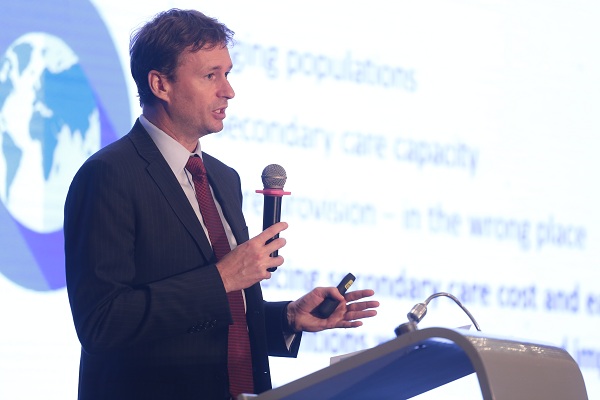
As the Director of Healthcare at KPMG China, Alexander Brookes brings 13 years of experience in the healthcare and consulting industries, with extensive expertise in policy formulation, social health insurance, pricing strategy, integrated care, and healthcare service redevelopment.
He participated in the development and design of a service package under the social health insurance system of a Middle Eastern country, covering the entire healthcare spectrum. He also contributed to the design of the regulatory authority for that country’s social health insurance system, including relevant policies and the regulatory framework. During his secondment to the UK Department of Health, he was involved in designing community health policies, services, and cost models for end-of-life care and healthy children’s medical services.
From May 17 to 18, Mr. Alexander Brookes, Healthcare Industry Director at KPMG Advisory (China) Limited, was invited to attend the “2017 China Primary Healthcare Innovation Practice Forum,” andDelivered an insightful speech on the theme of “The Vital Role of Primary Healthcare in the Tiered Diagnosis and Treatment System.” The following is a summary of the speech:
A 2015 survey in Australia showed that among all hospitalized patients in its healthcare institutions,39% of patients can completely avoid hospitalization, treatment can be administered at local community healthcare facilities. This is not just a challenge in Australia; healthcare institutions worldwide are grappling with this issue: primary care facilities are unable to fully function, patients are subjected to overtreatment, and large hospitals are overwhelmed.
As population aging intensifies and life expectancy continues to rise, hospitals face growing challenges in managing chronic diseases, placing increasing pressure on healthcare institutions. If patients with chronic conditions cannot receive appropriate treatment and management at the right time and in the right settings, and in the absence of an integrated healthcare system, all patients would flock to secondary or tertiary hospitals, inevitably overwhelming the current healthcare system.
Centering on Primary Care to Achieve Effective Healthcare Integration
Over the past 15 to 20 years, many countries have been exploring how to improve healthcare efficiency through integrated care, soThe Concept of IntegrationWhat is it? The so-called integration,Placing primary healthcare at the core of the entire healthcare system, with patients as the center of service.,Establish synergies and connections with other care pathways, such as hospital care, social/elderly care, mental health, and public health.,rather than merely referring patients to community health service centers for subsequent transfer to large medical institutions, this is the distinction between lines and planes.
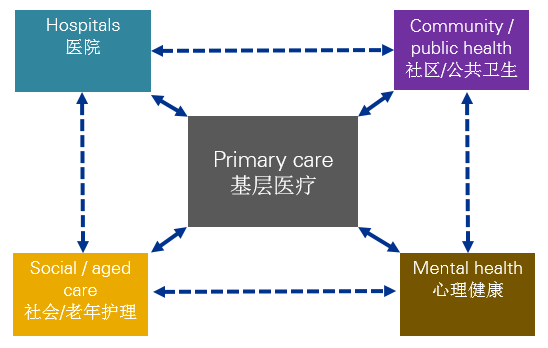
Many countries have already adopted this model and achieved certain benefits. Below, we will examine the specific advantages of healthcare integration:
First: From the patient’s perspective, integration of the entire healthcare system will lead to better treatment outcomes and increased patient satisfaction; from the primary care perspective, primary healthcare institutions will be better equipped to manage patients with chronic diseases, thereby improving their diagnosis and treatment efficacy.
Second:Reduce the frequency of emergency hospital admissions for patients and alleviate pressure on hospitals.. If the first measure is implemented effectively, the number of patients requiring hospitalization will decrease, allowing those who truly need inpatient care to receive better services.
Third:Optimizing Healthcare Processes. For hospitals and the government, a decline in the number of emergency patients,Reducing the average length of hospital stay not only improves hospital efficiency but also allows physicians to dedicate time to planned medical services or scientific research, rather than being solely occupied with emergency care.. This also reflects from another perspectiveThe Effectiveness of Prevention in Community-Based Treatment, which is an important consideration metric in hospitals across many countries.
Fourth: If this system operates effectively, medical costs will become more transparent, allowing us to clearly see how funds are allocated across different systems. Meanwhile, relevant information—such as data on medical expenses and patient records—will be better shared.As information becomes more accurate and timely, it will in turn guide the management of the entire healthcare system, thereby enhancing and improving its overall efficiency.
Fifth: The final benefit is that, after this system is implemented,"Patients can receive better treatment at lower costs, which is truly the key to effective healthcare system management."
Challenges of Integrated Healthcare Systems
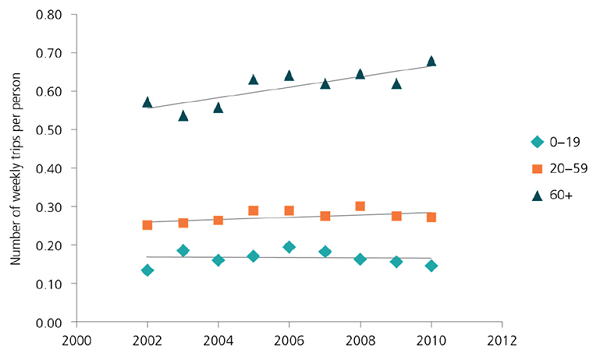
Average Number of Medical Consultations per Person per Week by Age Group in the United Kingdom
As can be seen from the figure above, with the integration of the UK’s primary care system, the average number of patient visits per week is increasing; however, hereMedical consultations occur more frequently in community healthcare settings and with family doctors, rather than in secondary or tertiary hospitals., therefore, even though the number of patient visits has increased, the overall pressure on hospitals remains relatively low.
However, even in countries that have already implemented healthcare integration, operational challenges persist, primarily manifesting in the following aspects:
First:Physicians' Clinical Practice. The effective operation of the entire healthcare system requires physicians to make sound decisions based on patients’ actual conditions, such as whether referral is indicated.
Second:Public Acceptance of Primary Healthcare Institutions. Many patients, seeking peace of mind when ill, generally prefer to seek treatment at large hospitals. This is not only a challenge faced by China’s healthcare system but also a common issue confronting healthcare systems worldwide.
Third:How to Improve Treatment Quality and Outcomes After Integration. The approach in the United Kingdom involves, on the one hand, establishing a set of evaluation metrics,Incentivizing Grassroots PhysiciansImprove treatment quality based on indicators; on the other hand,Continuously share positive treatment outcomes with patients."Enhance therapeutic outcomes by enabling patients to engage in self-management of their health through health education."
Fourth:Redistribution of Medical Costs. This is a common challenge faced by many countries in integrating primary care with hospital-based care.
Gaining Experience from Failure and Success
Addressing these challenges requires not only cooperation between doctors and patients, but alsoMedia Support, the media needs to disseminate to the public the role and advantages of the new healthcare system, enabling them to understand it before accepting it. In addition, there is a need forA team with systematic management to lead such reforms, to ensure the system continues to operate effectively.
It is important to draw everyone’s attention to the fact that,Healthcare system integration should not be pursued with a focus on short-term gains. Relevant data indicate that countries attempting to achieve this within a short timeframe have failed, whereas more successful nations have generally started from the fundamentals and persisted in implementing changes.,Emphasize employee incentive mechanisms to maintain staff initiative, with timely feedback, discussion, and improvement throughout the process.
Here is an example from the UKCase Studies of Failed Early Healthcare ReformsThe United Kingdom also underwent consolidation of its healthcare institutions in 1980 and 2000. During this process, the focus was placed not on patients, but on hospitals and their physicians and nurses, while neglecting patient education and oversight of medical quality. Furthermore, media involvement came relatively late; by the time problems emerged in the system’s operation, the media only reported negative news, thereby creating a vicious cycle. In contrast, Canada’s healthcare system integration followed a planned approach, gradually coordinating the relationships among physicians, patients, the media, hospitals, and other stakeholders, ultimately achieving favorable outcomes.
Finally, let us share recent data from the Hong Kong Hospital Authority. Taking the New Territories West Cluster as an example, patients face a waiting time of approximately 91 months for joint replacement surgery. Although public hospital fees in Hong Kong are subsidized by the government, with patients paying only HKD 100 per day, the 91-month wait is excessively long. Prolonged suffering inevitably leads to a decline in patients’ quality of life. Therefore, effective allocation and integration of healthcare resources are essential to improve patient care experiences.