

Yixuntong CEO Cai Junfang: Implementing Family Doctor Services to Advance Community-Based Chronic Disease Management
On May 17, VCBeat’s “2017 China Primary Healthcare Innovation Practice Forum” was held in Chengdu. Cai Junfang, General Manager of Beijing Hulian Huihui Technology Co., Ltd. (Yixuntong), delivered a speech titled “Family Doctor Contract Service Support System for Chronic Disease Management, Prevention, and Control at the Primary Care Level.” Below are the highlights from his presentation.
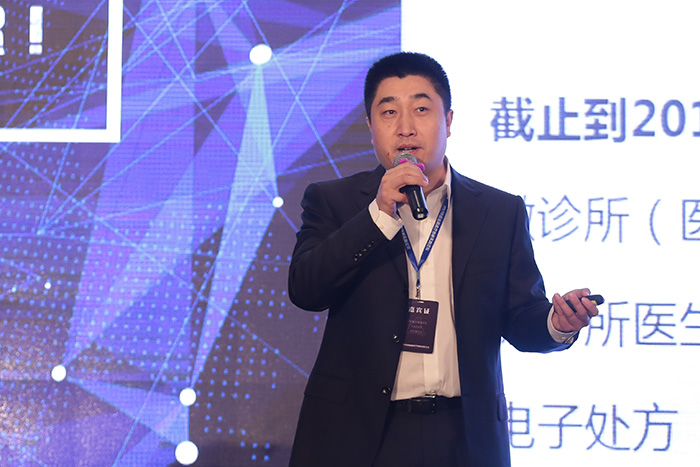
Cai Junfang, General Manager of Beijing Hulian Henghui Technology Co., Ltd.
Cai Junfang noted that on the day of the conference, leaders and experts from the National Health and Family Planning Commission, primary healthcare institutions, and universities primarily discussed the importance and development status of primary healthcare from the perspective of social development. As an enterprise, it is essential to align with national policies and industrial trends while also focusing on business model innovation and economic efficiency. In the specialized field of healthcare, this translates into balancing the interests between the government’s leading role as a provider of public goods and the participation of social forces, which presents both challenges and opportunities for innovating healthcare service models.
Currently, many companies in the mobile health sector are struggling and facing constrained growth. At the conference, Cai Junfang shared insights on enterprise development models based on primary care, drawing from Yixuntong’s practical experience in grassroots healthcare over the past few years.
Cai Junfang began by presenting photographs documenting the Yixuntong team’s grassroots efforts in rural Henan, where they navigated local communities to facilitate family doctor contracting and service delivery using their proprietary Family Doctor Contracting Support System. The patient demographics, administrative responsibilities, and working conditions encountered by primary healthcare providers in these rural settings differ significantly from those typically associated with hospitals or community health centers as commonly perceived. It is precisely within this context that Yixuntong has established its business model.
Yixuntong was developed on the basis of the only doctor-patient communication platform in Henan Province approved by the Provincial Health and Family Planning Commission. It serves as a platform to assist the government in family doctor contracting and follow-up services, focusing on primary care family doctor contracts and subsequent chronic disease management.ServiceA comprehensive, innovative solution centered on family physician team services, chronic disease management, and tiered diagnosis and treatment.
Electronic contracting with family doctors serves as the business entry point for Yixuntong. Through deep integration with government entities and adherence to agreed-upon data security and sharing protocols, Yixuntong has achieved interoperability and data sharing between existing grassroots government health data and its own electronic contracting and electronic health record systems. This lays the foundation for the “Yixuntong Assistant System” to provide scientific management and tiered services for chronic disease patients, based on extensive, authentic, and reliable data. Cai Junfang believes that in the realm of chronic disease management, rural grassroots areas in China do not lack medical institutions; rather, they lack professional chronic disease management organizations. It is necessary to establish a service network at the grassroots level that integrates various resources, including medical care, and creates effective mechanisms for chronic disease prevention and control. For instance, the platform established by Yixuntong at the grassroots level integrates physician groups, expert committees, family planning specialists, and public welfare funds, and even incorporates insurance services.
Yixuntong has been in operation for seven years, developing steadily with each step as healthcare reform deepened. From its origins as the Doctor-Patient Communication Center under the Henan Provincial Health and Family Planning Commission, to the establishment of the “Micro-Clinic” team-based service model, and further to physician triage by severity levels, multi-site practice, and finally the family doctor contract assistance system, Yixuntong has consistently evolved in tandem with the trajectory of healthcare reform.
Yixuntong delivers government-led services based on a family doctor assistance system, with family doctors at its core, micro-clinics as the operational model, and chronic disease management as the primary focus. In medical practice, who is the most critical role and active factor? The physician. Yixuntong’s micro-clinic serves as a link connecting physicians, patients, and hospitals. Yixuntong provides a range of support to enable micro-clinic teams to operate effectively under the leadership of core physicians, leveraging various resources offered by the platform for collaborative efforts. Through micro-clinics, physicians can deliver team-based medical care and health management services to patients, while addressing chronic disease management by integrating social resources coordinated by Yixuntong.
Why Has Yixuntong Made Chronic Diseases a Key Focus? With changes in society, the economy, and the environment, chronic diseases have gradually become the primary threat to public health in China. Patients with chronic diseases account for 80% of total deaths in China and consume 75% of the nation’s healthcare expenditures. According to authoritative statistics, if the prevalence of chronic diseases is not effectively curtailed, the number of patients aged 40 and above will increase by two to three times by 2040. If the current healthcare model and development pace remain unchanged, healthcare spending on chronic diseases will continue to rise rapidly, projected to exceed 50% of GDP by 2050, which would severely hinder China’s economic and social development.
China’s current healthcare system is “treatment-centered and hospital-centered,” having evolved to address a disease spectrum previously dominated by infectious and contagious diseases. It no longer meets the needs of chronic disease prevention and control. Chronic disease management is not merely a medical intervention; it primarily involves holistic patient management. This requires not only reforming the healthcare system but also establishing a complementary social service system.
Many people often claim that primary care physicians have poor professional competence. Cai Junfang believes this view is somewhat one-sided: if benchmarked against the standards of specialists in large hospitals, primary care physicians indeed appear less skilled. However, the role of primary care physicians extends beyond merely providing medical services and treating patients; it focuses more on chronic disease management. In this sense, the gap between their current capabilities and actual needs is not as wide as commonly perceived. Given the current overall shortage of primary healthcare resources, how can chronic disease management be effectively implemented to achieve the goal of keeping 90% of serious illnesses within county-level jurisdictions? Cai Junfang argues that establishing a chronic disease management model integrating medical and social services is crucial. The current healthcare system must undergo key transformations in comprehensive health promotion strategies and policies, health financing, and service delivery arrangements. Yixuntong has made beneficial attempts in this regard.
Through grassroots practice, Yixuntong has proposed the “122 Model” (one family physician support system + two centers: Regional Medical Center and Chronic Disease Management and Prevention Center + two supports: a high-end physician team and an Expert Committee on Chronic Disease Management). The regional chronic disease management center serves as an organizational vehicle for integrating regional resources, bringing together relevant entities such as social security agencies, poverty alleviation funds, financial institutions, and product providers. Meanwhile, Yixuntong has also integrated a team of high-end physicians from Henan Province to address the issue of distributing premium medical resources to lower-tier facilities, thereby improving the quality of primary care diagnosis and treatment.
As Yixuntong is a corporation, achieving commercial profitability is its primary objective. First, Yixuntong has achieved deep integration with the government’s family doctor contracting initiatives. This integration addresses a critical yet highly sensitive challenge in the healthcare sector: realizing a model characterized by government leadership, social participation, and mutual benefit. Furthermore, through secure data sharing, it has established an entry-point model for mobile healthcare. Second, by leveraging a family doctor assistance system, Yixuntong empowers primary care teams with general practitioner (GP) competencies, thereby establishing a GP model that delivers comprehensive family doctor services to households at the grassroots level.
In primary care chronic disease management, YiXunTong initially targets patients with hypertension, diabetes, respiratory diseases such as chronic obstructive pulmonary disease (COPD), and cancer. These conditions are characterized by high prevalence and significant health risks, sharing common biological and behavioral features that allow for prevention and control through broadly similar approaches, thereby reducing the expenditure of effort and resources.
At the primary care level, there is a substantial gap between the number of patients with chronic diseases who actually receive prevention and treatment and the number who should be treated. For instance, while the prevalence of hypertension in China is approximately 25%, data from primary care settings indicate a rate of only about 8.8%, not exceeding 10%, with less than 1% of cases effectively controlled. This discrepancy arises because many patients remain undiagnosed and thus do not receive appropriate treatment or interventions.
This year, with government support, Yixuntong will expand its pilot programs to 18 county-level regions, promoting the “Yixuntong” Family Doctor Assistance System and establishing a new model for family doctor contracting and service delivery. Furthermore, it will expand into areas such as medical big data, intelligent diagnosis, and intelligent training to further enhance the service capabilities of family doctor teams. The ultimate goal is to establish an integrated model for chronic disease prevention and control that merges medical services with social services, thereby realizing the vision and objectives outlined in “Healthy China.”