

Philips Highlights 'Connected Health' as China's Integrated Healthcare Ecosystem Emerges
“Future Healthcare” once mentioned a future human GIS (Geographic Information System)—connecting demographics, physiology, anatomy, biology, environmental science, and other aspects to form a multidimensional information chimera, thereby interpreting an individual’s health status.
We have personally witnessed the Internet connect computers to computers, evolve into the mobile Internet connecting people to people, and further transform into the Internet of Things (IoT), which continuously connects things to things and things to people, weaving new dimensions time and again. It is precisely through these connections that the broader health industry has grown increasingly “broad,” driven by ever-advancing information technologies that extend the network of connectivity in the medical and healthcare sector to greater reach.
Recently, VCBeat (WeChat ID: vcbeat) learned that Philips’ annual “Future Health Index” elucidates this connectivity within the health industry. The index is a precise survey assessing the state of data connectivity and integration across the sector, drawing on responses from 33,000 patient representatives, healthcare providers, insurance practitioners, and policymakers across 19 countries on five continents. Data sources include the World Health Organization and the World Bank, among others.
The degree of connectivity and integration in the healthcare industry surveyed here, namely"Connected Healthcare"The concept carries substantial meaning. Its primary form isAcquire data from healthcare information systems or medical IoT devices, derive actionable insights, and use them to guide individuals’ health behaviors.。
Philips: “Connected Health” Is the Prevailing Trend
According to the survey conducted by Philips, data-monitoring blood pressure monitors, heart rate monitors, wearable devices, and mobile apps can all empower individuals to better manage their health. The key to improving health lies in patients sharing their personal health data with medical experts and receiving analytical guidance. However, most people do not have the habit of using connected health technologies to monitor health indicators—only 40% reported using such technologies.
The survey also reveals that “connected healthcare” is fundamentally dismantling some of the most severe health challenges by shifting the focus from treatment to health management and disease prevention. However, at this stage, people have yet to recognize the importance of enhancing awareness and communication. For instance, the survey highlights a particularly interesting example: in the United States,84% of people consider themselves to be in excellent health, while only 53% of medical experts believe that Americans are in good health.. This cognitive asymmetry is where technological intervention is needed.
“There is a significant gap between what people expect and what they actually get,” said Frans van Houten, President and CEO of Royal Philips. He added that while many assume data connectivity in the healthcare sector is widespread, the actual level of integration remains very limited.
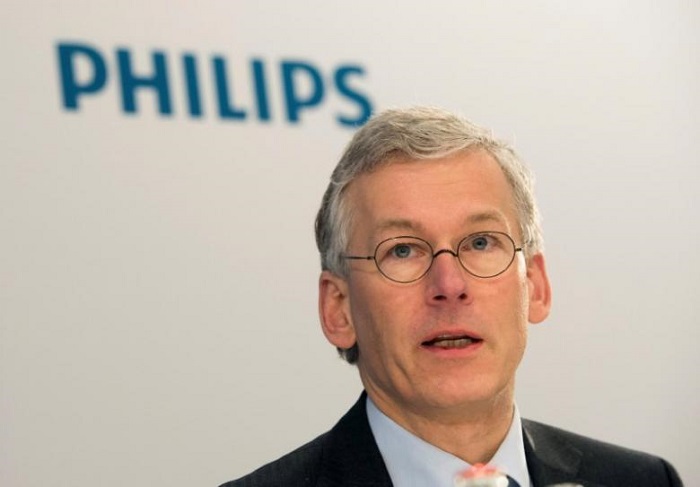
Philips President and CEO Frans van Houten (Image source:Reuters India)
The 2017 Future Health Index survey reinforced Philips’ confidence in its strategy of patient-centered integrated health services, further affirming that “connected healthcare” is precisely what people need.
Philips envisions using devices to enable individuals to monitor their health conditions in home settings, thereby preventing hospitalizations for serious illnesses or facilitating recovery following medical treatment. Frans van Houten stated that as Philips advances its connected health management strategy, data will be utilized in two key areas: first, leveraging artificial intelligence to comprehensively analyze individual health and simplify complex conditions; second, employing Wellcentive, the population health management company acquired by Philips last year, to monitor and manage specific patient populations, particularly those with chronic diseases.
In China: BAT and various sub-sectors of the healthcare industry are “connecting everything”
Across China, many enterprises have already begun implementing this type of “connected healthcare.”For example, there are WeiTang, Tang Hushi, and YueTang for diabetes management; KangKang Blood Pressure for blood pressure monitoring; Lianxin Medical Technology, which provides hospitals with intelligent big data systems; KangBaiRui, which offers detailed personal health data assessments; and YiTiKang and ShouHuYun, which manufacture various types of smart hardware paired with big data monitoring.
Domestic tech giants, led by BAT (Baidu, Alibaba, and Tencent), have also made significant forays into this sector. Whether it is the “Beijing Health Cloud,” an equipment cloud platform jointly launched by Baidu and the Beijing Municipal Government; Alibaba Cloud’s intelligent health solutions division; or Tencent’s WeChat Hardware Platform and its subsidiary Tengai Medical, these initiatives are all carving out a niche in the health data segment and even establishing ecosystems for health-focused social networking.
The core of “connectivity” lies in achieving proactive monitoring through data analysis; therefore, the ultimate focus remains on how to effectively collect and process data. In this context, we have observed a product specializing in health data integration and analytics services: Miao+ by Miao Health. It has already integrated more than 300 smart devices from well-known hardware brands such as Fitbit, Lifesense, and Xiaomi. By collecting multidimensional data from various devices and performing automated analysis, it provides personalized health solutions and health risk assessments based on scientific evaluation models. Furthermore, it offers comprehensive, human-assisted health-related services tailored to users’ individual needs.
As demonstrated in Philips’ research, most of us still fail to fully grasp the transformative impact that connected health monitoring can have on the entire healthcare system. A McKinsey report titled “The Big Data Revolution in Healthcare” pointed out that the aggregation of non-clinical public data, along with advances in data analytics technologies and tools, will serve as a “miracle weight-loss drug” for healthcare spending, potentially saving hundreds of billions of dollars in the United States.
If China can fully leverage health big data and implement proactive management of disease risks, the resulting savings in healthcare expenditures would be substantial.Industry insiders have expressed the view that establishing a unified, socialized medical data platform centered on our social health insurance system, while allowing select data to be leveraged for market-oriented development and fostering downstream medical industry clusters, can help advance preventive healthcare. This represents an ambitious vision for “Connected Health” in China.
In today’s era of “connecting everything,” the healthcare industry may well be experiencing its golden age. Connectivity brings not only the convenience of fully leveraging data but also a paradigm shift in thinking: from “hospitals equate to healthcare” to “healthcare everywhere”; from traditional medical care to an ecosystem of health management beyond hospital walls; and from obscure, paper-based prescriptions to clear guidance accessible on smartphones and smart devices.
Imagine boldly that one day in the future, our medical and health data will be systematically integrated and ingeniously utilized, at which point the so-called “health information silos” may cease to exist.