

Yang Xiao, CEO of Zhixiang Network: Chain Pharmacies Should Assume Medical Functions to Empower Primary Healthcare
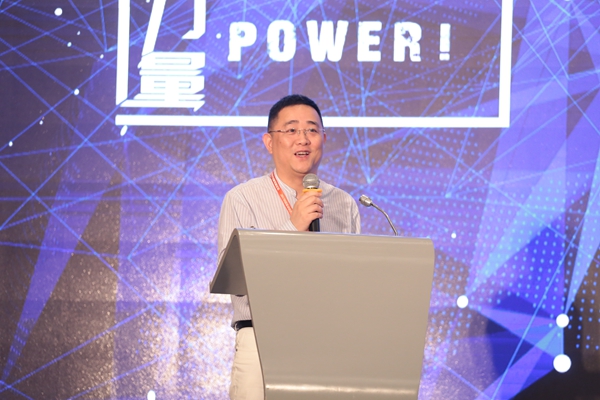
May 17–18,The “2017 China Primary Healthcare Innovation Practice Forum,” co-hosted by VCBeat (WeChat ID: vcbeat), Eggshell Research Institute, and the China Association for Promotion of Rehabilitation Technology Transformation and Development, was held in Chengdu. The conference explored development trends in the primary healthcare industry from the perspectives of industrial policy, technological evolution, business models, and industrial collaboration. It brought together professionals from various sectors of the industry to participate in keynote speeches and roundtable discussions.Yang Xiao, General Manager of Sichuan Zhixiang Network Co., Ltd., delivered a keynote speech titled “Upgrade and Transformation: Grassroots Medical Innovation Practices in Retail Pharmacies” at the conference. Afterward, he accepted an interview with VCBeat, elaborating on his company’s initiatives in grassroots healthcare and sharing his perspectives on the upgrading and transformation of chain pharmacies.
Yang Xiao graduated from West China University of Medical Sciences. In 2008, he co-founded Sichuan Zhixiang Network Co., Ltd. with Xiao Yitian and others to explore the “Internet + Healthcare” model, leveraging internet technologies to transform the traditional operational models of the healthcare and pharmaceutical distribution industries.
Zhixiang Network is primarily engaged in the development and operation of pharmaceutical websites, internet solutions and supporting operations for the drug retail industry, the construction of online drug trading platforms (B2C model), the development of portal websites for healthcare systems, and related software development.
In 2011, Zhixiang Network obtained national-level software enterprise certification. In 2014, the sales volume of its Renbo pharmaceutical e-commerce platform exceeded RMB 200 million. In 2014, it partnered with Baidu Search and Baidu Direct Number. In August 2015, Yidu Advertising Media Company, jointly invested by Zhixiang Network and Sina.com, was officially established. In 2015, its subsidiary Beichi Technology entered into a strategic partnership with Baidu. In 2016, the Yaozhida project was launched and promoted nationwide. This February, Zhixiang Network was acquired by Wanfang Development for RMB 500 million in cash.
Exploration of Zhixiang Network
According to Yang Xiao, Zhixiang Network’s foray into primary healthcare dates back to 2014. At that time, during discussions with peers from Fosun Medical, Huashi Pharmacy, and Sinopharm, Zhixiang Network observed that pharmacists in China had long failed to fulfill their true role in pharmaceutical care services, resulting in a lack of effective pharmaceutical care capabilities within the primary healthcare system.
Yang Xiao cited an example: when he took his daughter to see a doctor, the physician prescribed two medications—a cough suppressant and a syrup. This represents a typical error in combination therapy (which chain pharmacies dispensing the medications might fail to detect). Throughout the entire medical process, there was no effective involvement of pharmacists in prescription review, leading to inappropriate drug combinations. Such errors may prevent effective relief of the patient’s condition and could even result in medical liability incidents due to incorrect polypharmacy, thereby exacerbating doctor-patient conflicts. In another example, many patients taking oral aspirin are unaware of the correct administration method and consume it with acidic beverages, leading to gastrointestinal adverse drug reactions. Therefore, Yang Xiao hopes that licensed pharmacists will provide more professional medication guidance to the primary healthcare system.
Yang Xiao stated that chain pharmacies have played a significant role in this process. Currently, the ratio of pharmaceutical sales among public hospitals, retail pharmacies, and primary healthcare terminals in China is approximately 9:3:1. In this context, if patients are to experience enhanced pharmaceutical care services during medication use, pharmacies need to assume greater responsibilities in providing professional pharmaceutical services.
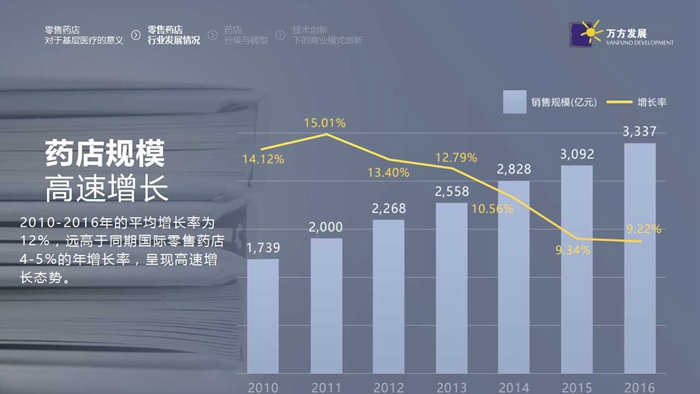
Data cited in his speech showed that the scale of pharmacies in China has expanded rapidly, with an average annual growth rate of 12% from 2010 to 2016, far exceeding the growth of international retail pharmacies during the same period. Fifty percent of pharmacies have their own traditional Chinese medicine (TCM) clinics, and it is TCM practitioners who obtain medical practice qualifications. Although the addition of these services has driven overall sales growth, the service system has not seen commensurate improvement.
If policies could be more open to pharmacies, allowing them to assume greater medical responsibilities, this would significantly support the development of primary healthcare. While there is widespread concern about the shortage of general practitioners in primary care settings, it is not strictly necessary for all primary care services to be delivered exclusively by general practitioners; entrusting these responsibilities to institutions with equivalent medical capabilities is equally viable.
Currently, Zhixiang Network has implemented telemedicine through its system. In Sichuan Province, Zhixiang Network has connected with more than 12,000 pharmacies. Through the “Pharmacy Steward” platform, which utilizes camera technology, and in collaboration with certain hospitals in Qinghai Province, physicians from these hospitals provide remote consultation services to the pharmacies.
Yang Xiao stated that when addressing users' primary healthcare needs, it is important to recognize a common public perception: seeking hospital care for serious illnesses and turning to pharmacies for minor ailments. Therefore, retail pharmacies are an indispensable component of the primary healthcare system. Bundling family doctor contracts with retail pharmacy services could further enhance the quality of care provided by family doctors.
Many people argue that tiered diagnosis and treatment should be implemented by hospitals, but Yang Xiao believes that triage must be conducted by third-party entities. For instance, pharmacies serve as the optimal platforms for triage. Pharmacies should function as a bridgehead, as they can directly capture patient needs firsthand; therefore, pharmacies ought to assume a more dynamic and significant role.
In this scenario, all medication records of pharmacy members can be accessed through relevant software. This achieves the same effect as the decade-long accumulation of data by community hospitals. Meanwhile, it enables patients to receive better treatment at the primary care level.
Retail Pharmacy Transformation Demands
Yang Xiao also pointed out that, in addition to external drivers, there is an intrinsic demand among retail pharmacies to upgrade and transform by providing more in-depth pharmaceutical care services and exploring medical services.
He pointed out that the development of pharmacies still faces several challenges. First, industry concentration is relatively low, and market competition is intense. In the United States, the top three chain pharmacy players account for 30% of the market, with store numbers approaching saturation. From 2000 to 2014, chain pharmacies in China expanded very rapidly, whereas from 2015 to 2016, the growth in the number of new pharmacy stores slowed significantly.
Next isSignificant Surge in Costs, Sharp Decline in Gross Profit and Net Profit Margins, retail pharmacy staff are no longer like the ordinary salespeople of the past; they must possess service capabilities and require professional expertise. Finally, the level of pharmaceutical care services remains relatively low, with limited service offerings primarily focused on medication sales. This is a predicament faced by the entire chain pharmacy industry.
In response to this dilemma, pharmacies are conducting their own explorations. Broadly speaking, the relaxation of national-level policies has led many pharmacies to begin experimenting with e-commerce. Additional favorable factors include policies that encourage the outflow of prescriptions from hospitals and the rise in residents’ income.
Chain pharmacies are beginning to pursue their own innovations, the first of which isHorizontal Integration, enhancing competitiveness and service levels through chain operations and economies of scale. Second,Vertical Integration, and engage in strategic cooperation with manufacturers to enhance product competitiveness. Finally, there are the developments brought about by the internet, such asVarious Management and Service Toolsetc.
In response to this situation, Zhixiang Network has also launched its own technology-driven product—“Pharmacy Cloud.” According to Yang Xiao, Pharmacy Cloud is available in three versions: first, the consumer-facing membership edition; second, the Pharmacy Cloud Steward edition; and third, the Pharmacy Cloud Management Platform.
Through this platform, it is possible to carry out extensions and expansions of services such as online medication purchases and pharmacist assistance. CurrentlyZhixiang Network’s online transaction volume has reached the hundred-million-yuan level, with a user base of approximately 20 million.
Yang Xiao further stated that more can be achieved through cloud technology platforms. For instance, in terms of pharmacy site selection, Zhixiang Network has partnered with Baidu to leverage big data from Baidu Maps. This approach comprehensively considers factors such as the number of pharmacies and level of competition in each area, local housing prices, consumer spending levels, and the purchasing habits of nearby residents on Nuomi.
Then, inform chain pharmacies about the types of products users prefer to purchase, thereby drawing precise conclusions. Additionally, conduct analyses of user medication behaviors; for identical medications, guide pharmacies on which product to prioritize as the first-choice option and include in recommendations when consumers make their selections.
Furthermore, Zhixiang Network has established a joint venture with Kobayashi Pharmaceutical of Japan, named Wanxiang Kanghong. Kanghong Pharmaceutical, the general agent for Kobayashi Pharmaceutical in China, granted Wanxiang Kanghong sales qualifications. Zhixiang Network became the exclusive distributor for a product named Anmei, a topical prescription drug, under Wanxiang Kanghong. The 20,000 partner pharmacies of Zhixiang Network have collectively procured this Anmei medication.
Yang Xiao stated that the traditional pharmaceutical sales model required drug manufacturers to first secure a master distributor, after which sales representatives would engage sub-distributors to jointly carry out market promotion. However, it typically took one to two years to achieve a certain scale of market penetration for a product.
YaoDian Cloud achieved rapid market coverage for this medication in just two months, with 12,000 pharmacies securing access through prepayment. Leveraging the value of the YaoDian Cloud platform, these pharmacies were able to negotiate more favorable prices with pharmaceutical manufacturers. This represents a novel pharmaceutical marketing model that completely eliminates the need for sales representatives and distributors.
Yang Xiao concluded by stating that technological innovation can truly drive business model innovation. Under the Wanfang Big Health ecosystem, Zhixiang Network will conduct further explorations in pharmaceuticals, big data, and artificial intelligence to support the development of pharmaceutical retail and tiered diagnosis and treatment.