

Kangkang Blood Pressure Files IPO Prospectus: Solving the 'Last Mile' Challenge in Chronic Disease Management
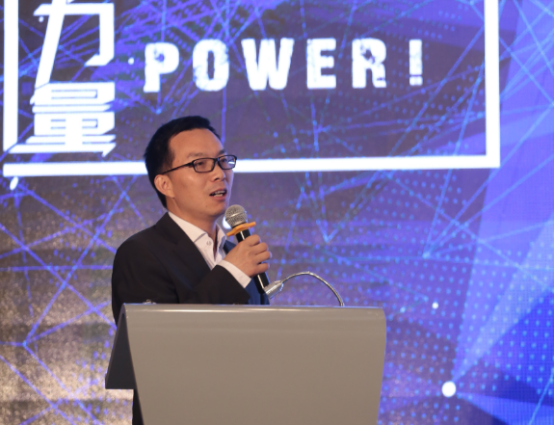
Zeng Mingfa, a senior Internet expert, is a member of the Chinese expert group for the China-U.S. Cybersecurity Dialogue Mechanism, Chairman of Kangkang Blood Pressure, Founder of Guangmang Network Group, and Initiator of Guangmang Venture Capital Fund. He also serves as Deputy Secretary-General of the Organizing Committee of the China Internet Conference and was a founding team member of iResearch Consulting Group.
In 2004, he founded the Anti-Spam Center of the Internet Society of China. In 2008, he facilitated the establishment of the 12321 Reporting and Acceptance Center for Unsolicited and Malicious Network Information under the Ministry of Industry and Information Technology (MIIT). In 2014, he established Guangmang Venture Capital Fund, invested in Kangkang Blood Pressure—a leading domestic hypertension data management platform—and served as its Chairman, thereby entering the entrepreneurial field of mobile health smart hardware.
From May 17 to 18, VCBeat’s “2017 China Primary Healthcare Innovation Practice Forum” was held in Chengdu. Zeng Mingfa, Chairman of Beijing Kang Information Technology Co., Ltd. (KangKang Blood Pressure), delivered a speech titled “Solving the ‘Last Mile’ Challenge in Chronic Disease Management with the ‘Dual-Comprehensive Plan’.”WonderfulSpeech.
Kang Kang Blood Pressure primarily provides chronic disease management solutions for hypertension and community healthcare services. After residents sign up with family doctors, the key challenge lies in ensuring they actually receive these services—specifically, how to bridge the “last mile” gap. This is the most difficult issue to resolve not only for internet healthcare but also for all internet-based services. The recent surge in popularity of bike-sharing services, which has attracted significant capital investment, is largely due to their success in addressing users’ last-mile transportation needs. Similarly, Kang Kang Blood Pressure’s smart blood pressure monitor offers a solution to the last-mile problem in family doctor services.
KangKang Blood Pressure has been dedicated to the management of hypertension as a chronic disease for four years since its establishment. It currently operates three branches in Beijing, Xi’an, and Guiyang. Beijing serves as the headquarters, Xi’an is responsible for the research and development of smart hardware, and Guiyang hosts the KangKang Chronic Disease Internet Hospital. KangKang Blood Pressure has received support from national authorities and research institutions, participated in key projects under the National 13th Five-Year Plan, and ranks first among initiatives in the field of chronic disease prevention and control.
Reduce the premature mortality rate from major chronic diseases by 30%
In the “Outline of the ‘Healthy China 2030’ Plan,” in addition to the strategic planning for the broader health industry, there is another key indicator: by 2030, the premature mortality rate from major chronic diseases should be reduced by 30%. Reducing premature mortality from chronic diseases requires us to strengthen chronic disease prevention and control.
The situation in the field of chronic disease prevention and control is extremely severe. With substantial national investment, the treatment rate has doubled; however, the control rate has remained persistently low. The number of hypertensive patients in China exceeds 270 million, with a prevalence rate exceeding 20%. Meanwhile, the mortality rate from chronic diseases is very high, accounting for the leading cause of death at 85%. The disease burden attributed to chronic conditions constitutes over 70% of the total burden. In China, 3.5 million people die annually from cardiovascular and cerebrovascular diseases, representing 44.9% of all disease-related deaths, with hypertension serving as the contributing factor in 60% of these cases.
Chronic disease management can be conducted via internet-based medical consultations.
How can this issue be resolved? Kangkang Blood Pressure has conducted research on hypertension management and addressed it through internet technology. The recent exposure of the National Health and Family Planning Commission’s draft for public comment on internet hospitals has sparked industry discussion. Apart from non-compliance in its name, the Kangkang Chronic Disease Internet Hospital established by Kangkang Blood Pressure fully complies with the new regulatory requirements: initial consultations are conducted at community-level facilities, while internet-based medical services are limited to the diagnosis and treatment of chronic diseases and remote contracting for chronic disease management.
Why does the draft for public consultation on the administration of internet hospitals advocate for internet-based healthcare to focus on chronic disease management? This is because chronic diseases are relatively easy to diagnose and affect a broad population. Acute or complex conditions cannot be effectively managed online, whereas chronic diseases present a viable opportunity for internet-based healthcare. Once diagnosed, chronic diseases cannot be cured within a hospital setting; instead, they require long-term intervention and comprehensive health management. In response to this need, Kangkang Blood Pressure has developed a chronic disease management approach that integrates big data with wearable devices, enabling medical-grade remote monitoring of chronic conditions at home and allowing for real-time tracking of changes in physiological indicators and symptoms anytime, anywhere.
Kang Kang Blood Pressure has launched the “Shuangquan Initiative,” aiming to build a hospital without walls. The full name of the “Shuangquan Initiative” is Comprehensive Screening and Whole-Process Management, a methodology for chronic disease prevention and control systems represented by hypertension and diabetes. Inheriting from China’s first chronic disease prevention and control network established by experts such as Wu Yingkai and Liu Lisheng at Beijing Shougang, it can effectively reduce the incidence of hypertensive complications and has gained recognition in global hypertension prevention and control efforts.
Its primary approach is to use primary healthcare institutions as the main vehicle, effectively integrating internet-based medical services with traditional healthcare. First, Kangkang Blood Pressure establishes medical workstations centered on primary healthcare institutions, serving as service hubs for residents in the jurisdiction. Then, it leverages IoT devices as an extension to enable remote management.KangKang Blood Pressure provides a comprehensive solution, combining wearable ambulatory blood pressure monitors with remote smart blood pressure devices to achieve medical-grade home monitoring. Data can be uploaded and shared in real time, enabling effective remote home care and addressing the “last mile” challenge in chronic disease management.
Ambulatory monitoring enables more accurate diagnosis of hypertension and assists in medication management.
How to Achieve Comprehensive Screening in Communities? After completing the family doctor contract, community hospital doctors place ambulatory blood pressure monitoring devices in residents' homes. For patients with chronic diseases, especially those with hypertension, blood pressure fluctuations occur in real time. Standard family doctor contracting services involve four follow-up visits per year, or once per quarter; however, blood pressure data outside of these follow-ups remains unavailable, making it impossible to assess the effectiveness of chronic disease management. By leveraging KangKang Blood Pressure’s dynamic data monitoring, hypertensive patients can generate scientific and reliable blood pressure readings at critical times throughout the day. These data are automatically transmitted to a cloud platform, where they become accessible for clinical use by physicians. Unlike typical smart devices that connect via Wi-Fi or Bluetooth, KangKang Blood Pressure devices have built-in communication capabilities. They do not require connection to local networks or smartphones; after measurement, data are automatically uploaded to the cloud and shared with doctors, clinics, and family members.
Kang Kang Blood Pressure has innovatively launched a “1+4” collaborative service model connected via the internet. In typical family doctor contract services, the participants include community hospitals, specialists, and medical teams. Why does Kang Kang Blood Pressure include family members? Because the strength of the internet lies in its interactivity. Family members wish to monitor the patient’s data and health status anytime, anywhere. Thanks to this simple design feature, patient adherence has more than doubled. Coupled with intelligent data analysis, patients using Kang Kang Blood Pressure’s smart devices demonstrate significantly higher adherence compared to those in conventional chronic disease management programs.
The first component of comprehensive screening involves diagnosis, treatment, and ambulatory monitoring. Traditional blood pressure measurements are taken over a very short duration, capturing only instantaneous readings; therefore, relying on such data to diagnose hypertension is scientifically unsound. Currently, the gold standard for diagnosing hypertension in the medical community is ambulatory blood pressure monitoring (ABPM). Through 24-hour ABPM, clinicians can observe parameters such as morning blood pressure, nocturnal blood pressure, blood pressure variability, circadian rhythm, and blood pressure load. This approach facilitates the diagnosis of different types of hypertension and evaluates the efficacy of antihypertensive pharmacotherapy, offering significantly greater clinical value than single or multiple office- or home-based blood pressure measurements. Previously, ABPM was only available at tertiary hospitals, making it inconvenient for patients to complete at home. To address this, Kangkang Blood Pressure has developed a wearable 24-hour monitoring device.
It is also an important tool for guiding medication. Why? Because human blood pressure fluctuates, and there are specific considerations for whether to take medication before or after meals. If a patient takes medication one hour before their blood pressure reaches its lowest point, it can cause blood pressure to drop even further, which is very dangerous. However, taking medication one hour before blood pressure peaks can yield the best therapeutic effect.Kang Kang Blood Pressure once conducted a test on 7,110 patients in Beijing, with only a 19.98% compliance rate for 24-hour monitoring, including 529 cases of reverse-dipper pattern.
The KangKang Ambulatory Blood Pressure Monitor is a self-developed, medical-grade device, with its most critical feature being cloud-based data processing capabilities. Traditional ambulatory blood pressure monitoring relies on in-hospital testing and physician interpretation, which is constrained by insufficient equipment and staffing shortages. By leveraging big data and remote communication technologies, KangKang has jointly established an Out-of-Hospital Blood Pressure Data Monitoring and Analysis Center with the Chinese Hypertension League. Once blood pressure data is uploaded, the Center conducts continuous blood pressure monitoring, single-reading analysis, and ambulatory blood pressure data analysis.
Established in Chengdu in June 2016, the center has generated 40,000 ambulatory blood pressure monitoring reports to date and is currently utilized by more than 200 hospitals across China. For reference, Fuwai Hospital, China’s premier cardiovascular hospital, performs only 40,000 ambulatory blood pressure monitoring cases annually.
Following the implementation of family doctor contract services, full-process management must be achieved, and we attach great importance to this initiative. To enhance patients’ self-management capabilities, KangKang Blood Pressure established a WeChat official account named “Hypertension Steward,” which currently ranks first in readership among similar media outlets, boasts 400,000 followers, and has achieved peak readership exceeding one million views. Additionally, hundreds of online communities have been created to disseminate knowledge on hypertension management, raise health awareness, and provide guidance on subsequent medication use. The KangKang Chronic Disease Management Cloud Platform has established a comprehensive tiered diagnosis and treatment system for chronic diseases, involving general practitioners, family doctors, and physician assistants, through retrospective analytical studies and prospective diagnostic and therapeutic explorations.
“Shuangquan Workstation” Currently Launched in Guiyang, Letting the Data Speak
In terms of implementation at the grassroots community level, Kangkang Blood Pressure has established numerous “Shuangquan” workstations in Guiyang, ultimately aiming to provide chronic disease management for one million hypertensive patients in the city. Currently, Kangkang Blood Pressure is conducting pilot programs in 29 community hospitals in Guiyang, supported by special projects under the National Key R&D Program during the 13th Five-Year Plan period. In these community hospitals, Kangkang Blood Pressure addresses the “last mile” challenge for users by providing medical devices.Currently, Kangkang Blood Pressure has completed contracts with a cumulative total of 20,423 individuals in Guiyang, uploaded nearly 100,000 valid data records, and increased patient measurement compliance by 2.5 times. Through monitoring, 18,823 instances of abnormal blood pressure were detected, and interventions were implemented for 1,356 patients identified as having moderate-to-high risk hypertension.In the future, the “Shuangquan Plan” will also be implemented in Tianjin, Wuhai in Inner Mongolia, Xinjiekou in Beijing, and other locations.
Finally, Zeng Mingfa, Chairman of Kangkang Blood Pressure, stated in an exclusive interview with VCBeat that the challenge of family doctor contracting lies in post-contract service delivery. Public attention and national performance metrics have largely focused on the volume of contracts signed. However, many users fail to receive actual services after signing, or face inconvenience in accessing them, highlighting the “last mile” problem in service provision. Kangkang Blood Pressure addresses this by deploying smart hardware into households to collect key health indicator data, thereby ensuring that both the contractual agreement and the actual service delivery of family doctor programs are effectively implemented.
There are many types of chronic diseases. Kangkang Blood Pressure focuses exclusively on community-based management of hypertension as a chronic condition. The “Shuangquan Initiative” is an open platform, and Kangkang Blood Pressure welcomes other partners to join. On the second day of the conference, Tencent Healthcare joined the initiative by integrating its diabetes management module, working together to build a more robust chronic disease management system.