

Haier's Industrial-Financial Integration Strategy for Penetrating China's Primary Healthcare Market
“We are from Haier; we understand finance, and we are closer to the industry.”On the official website of Haier Industrial Finance, this bolded slogan interprets the uniqueness of the financial enterprise under Haier, an industrial giant.
In this era, consumer demand is shifting from material needs to higher-level spiritual and value-based needs; enterprises should therefore provide consumers with more advanced services.
“The Enterprise Platformization” core philosophy drives HaierFrom simply “manufacturing products” to “building platforms and incubating makers”. The new strategy also spurred the birth of Haier Industrial Finance.
Haier is no longer content to be mentioned merely as a manufacturer of household appliances such as refrigerators, washing machines, and air conditioners.Synonym for "A Better Life", has become the new demands and objectives of this giant.
For a company that possessesOver 200 Million Household UsersFor such a behemoth, to capture the consumer mindset associated with a “better life,” it must consider how to drive industrial upgrades in services and consumption, centered on individuals and families, within the Chinese market characterized by stagnant population growth and accelerating aging.
Under the trend,Healthcare has become a key strategic investment sector for financial holding platforms.。
Haier Medical Finance, a healthcare industry platform under the industrial finance segment of Haier Financial Holdings, has consistently provided integrated financial service solutions to the medical industry.
As of the end of 2016, Haier Medical Finance had already partnered withHundredsHealthcare institutions have established business partnerships,Moreover, primary healthcare institutions at the municipal and county levels and below account for 51% of the total.。
At the “2017 China Primary Healthcare Innovation Practice Forum” hosted by VCBeat, Zhang Lei, General Manager of Haier Industrial Finance, served as a keynote speaker, presenting on"Financial Support for Industrial Upgrading: 'Deep Vertical' Strategy in Primary Healthcare"“...” provides a detailed explanation to the outside world on how Haier achieves the integration of finance and healthcare.
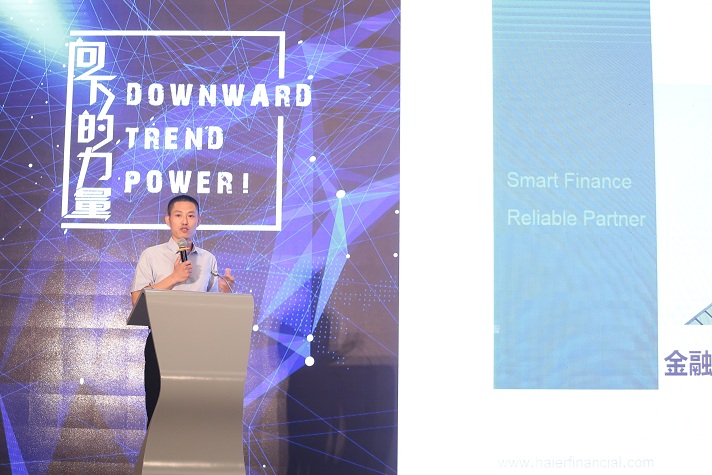
Zhang Lei, General Manager of Haier Industrial Finance
Insightful Perspectives from Zhang Lei, General Manager of Haier Industrial Finance:
I. Convergence of Trends Creates New Opportunities for Value-Added Financial Services
II. “Deep Vertical Integration”: Building Healthcare Communities to Enhance Service Efficiency, Optimize Resource Allocation, and Improve Patient Experience
III. Disease-Specific Operating Lease Solutions: Helping Primary Hospitals “Lift Heavy Loads with Ease”
IV. “Equity-Debt Combination” to Align with Hospitals’ Development Needs at Various Stages
V. Pharmaceutical Supply Chain Finance Solutions to Facilitate the Upgrading of the Pharmaceutical Distribution Industry
I. Convergence of Trends Creates New Opportunities for Value-Added Financial Services
Two Major Backgrounds and Three Key Trends: Haier Industrial Finance’s Assessment of Healthcare Industry Trends
The primary backdrop is consumption upgrading. As population aging intensifies and lifestyles shift, patients’ expectations for medical care experiences and service quality are gradually rising. However, the current allocation of medical resources, particularly high-quality medical resources, remains insufficient.This highlights the contradiction between the insufficient supply of medical resources and the continuous rise in residents' demand for medical care.;
The second major background factor is favorable policies. In recent years, multiple policies have been introduced to encourage private healthcare provision, deregulate medical service pricing, allow physicians to practice at multiple sites, and promote the development of commercial health insurance. Additionally, as basic medical insurance funds in various regions have sequentially faced deficits and insufficient utilization efficiency, reform of the payment system has become the core of healthcare reform.Policy orientation focuses on cost control and structural adjustment, aiming to achieve refined and market-oriented cost containment.。
First, the policy orientation of tiered diagnosis and treatment is to enhance primary care capabilities and foster coordination between upper- and lower-level institutions, thereby achieving the gradual decentralization of medical resources.. Therefore,Primary Care and Private Hospitals Will Enter a Favorable Development Window;
Second, the servitization and intelligent transformation of suppliers. As traditional manufacturing enterprises have generally encountered development bottlenecks in recent years, the previous incremental growth model—relying on rapid market expansion and equipment sales—can no longer sustain corporate development. Consequently, many companies have experienced a significant decline in product sales and a sharp drop in profitability.
These enterprises urgently need to undergo intelligent, IoT-enabled, data-driven, and platform-based transformations to develop an installed-base model for aftermarket services. This process has gradually given rise to new opportunities. Medical device manufacturers, distributors, health IT system vendors, and pharmaceutical distribution platforms are strengthening internet integration in the healthcare sector to build a medical industrial internet ecosystem.
Third, the physician community.Due to the highly uneven distribution of medical resources at this stage, the siphon effect of tertiary hospitals has intensified, leading to a large accumulation of patients in the upstream segment of healthcare resources. Coupled with the varying levels of service capacity among medical institutions, this has resulted in high costs and difficulties for the public in accessing medical care, as well as significant waste in the payment process.For physicians, the difficulty in realizing their personal value, coupled with modest income levels and high stress, has led to the frequent occurrence of doctor-patient disputes.。
The socialization of medical resources requires that most physicians become independent, self-employed practitioners. This would enable them to truly practice at multiple sites, thereby ensuring the effective utilization of physician resources.Many doctors, as independent individuals transitioning from the public healthcare system to the private sector—whether by starting their own practices or establishing physician groups—often possess only clinical expertise. They tend to be weak in areas such as marketing, market development, and management.In this context, new opportunities have also emerged.
II. Strategic Objective: “Deep Vertical Integration” to Build Medical Communities
Based on the observation and superimposed analysis of two major backgrounds and three trends, Haier Medical Finance has established its“Deep Vertical Integration”: Building Vertical Medical Communitiesas the strategic goal,Disease-Centered, Device-Driven: Delivering Integrated Healthcare Service Solutions, thereby driving industrial transformation and upgrading to enhance the efficiency of medical services, optimize the allocation of healthcare resources, and improve the patient care experience.
Deep Verticality: Deconstructing the Term into “Deep” + “Vertical.” “Deep” refers to users being able to access a comprehensive, closed-loop suite of medical services on a single platform. “Vertical” signifies that Haier Medical Finance, as a financial services provider, engages in intensive, specialized cultivation within a specific niche segment of the healthcare industry.
Under the highly specialized and vertically integrated healthcare service model, patients can access comprehensive medical services through a single platform.
For patients, the goal is to access a comprehensive vertical healthcare service chain centered around their disease, encompassing services such as online doctor-patient interactions, medication consultations, hospital registration, physician appointment scheduling, in-hospital treatment, post-discharge rehabilitation, patient communities, continuous monitoring, and emotional support. This approach significantly enhances the medical experience while minimizing inconveniences and the risk of errors. Furthermore, improved treatment outcomes are achieved as patients receive more precise and tailored care.
Disease-Centric.In the selection of specialized disease categories, it is suitable for deep vertical integration, requiring“High frequency, high cost, time-sensitive, large patient base, multiple stages, incurable, yet requiring treatment”These key factors. The most typical ones are cardiovascular disease, uremia, and cancer.
Instrument insertion.Based on disease-specific selection criteria, Haier Industrial Finance’s partner suppliers are currently concentrated in the fields of tumor screening, diagnosis, and treatment, including GE’s breast cancer screening equipment, Elekta’s radiotherapy systems, and Haifu’s non-invasive therapeutic devices. Additionally, Haier Medical Finance has undertaken some collaborative initiatives in the field of hemodialysis.
Improving the efficiency of medical resource allocation has always been a key focus of Haier’s medical finance strategy.Haier Medical Finance connects physician groups, equipment manufacturers, and operational platforms to achieve comprehensive collaboration across strategic upgrades, business models, asset operations, and other dimensions.Meanwhile, it also provides investment and financing, consulting, and ecosystem alliance services to primary healthcare institutions at the grassroots level, helping them improve the quality of medical services, technical standards, and management efficiency.
III. Disease-Specific Operating Lease Solutions: Helping Primary Hospitals “Lift Heavy Weights with Ease”
Taking the women’s health community as an example, Haier Medical Finance, as a partner in the “2020 Initiative for Breast Cancer Screening, Early Diagnosis, and Early Treatment,” entered the field through diagnostic equipment for early disease screening and collaborated with third-party remote medical imaging diagnosis centers. By means of financial leasing, specialized breast diagnostic equipment was deployed in community hospitals and private hospitals.
Meanwhile, by leveraging the expertise of specialists from Grade A tertiary hospitals and resources from physician groups, and utilizing “Internet+” technology, patient data are uploaded to the cloud via the cloud-enabled functions of equipment at grassroots healthcare outlets. Relevant experts then conduct remote imaging diagnosis during their fragmented spare time. This approach not only enhances the effectiveness of disease screening but also provides referred patients with follow-up treatment and rehabilitation services, thereby ensuring the quality of medical care for patients at the primary care level.
Another entry point for Haier Medical Finance is therapeutic equipment. By collaborating with major manufacturers of specialized medical devices,Haier Medical Finance leverages operating lease solutions to collaborate with physician groups and equipment manufacturers, enabling the "separation of asset-light and asset-heavy operations" for projects.。
Among these services, the physician group provides asset-light offerings, including clinical expertise, digital platforms, medical equipment, and management operations. Haier Medical Finance, on the other hand, delivers asset-heavy support in the form of medical equipment and healthcare infrastructure. Tailored financial solutions are provided to address the distinct characteristics and needs of different partners.Each party fulfills its respective responsibilities by developing standardized operational management plans, treatment protocols, and financial solutions, thereby enabling nationwide replication of chain operations.
In addition, Haier Medical Finance is actively expanding its presence in four types of institutions: medical imaging diagnostic centers, clinical laboratories, blood purification facilities, and pathology diagnostic centers. This initiative aims to alleviate the imbalance in resource allocation to some extent and truly address the pain points of healthcare reform. In layman's terms, Haier Medical Finance is“Shouldering the Enterprise’s Lightness with One’s Own Heaviness”。
IV. “Equity-Debt Combination” to Align with Hospitals’ Development Needs at Various Stages
Regarding the capital-intensive needs of primary healthcare service outlets—including township health centers, community service institutions, and clinics—for new construction, relocation, departmental upgrades, and chain replication, Haier Medical Finance leverages its multiple business unitsLine, through the approach of “combining equity and debt,”Align with the developmental characteristics of hospitals at various stages to meet the comprehensive funding needs of county-level medical consortia.
During the start-up and growth phases, primary healthcare institutions have substantial needs for new construction, expansion, and operational support. To address their high capital requirements and limited repayment capacity, Haier Medical Finance has designed unequal installment financing solutions tailored to the cash flow patterns characteristic of different stages in the project lifecycle, such as financing packages for the construction phase, thereby aligning with the practical development needs of hospitals.
V. Pharmaceutical Supply Chain Finance Solutions to Facilitate the Upgrading of the Pharmaceutical Distribution Industry
Under the new circumstances, the pharmaceutical distribution industry is also facing industrial upgrading. The Outline Plan for the Development of the Drug Distribution Industry, issued by the Ministry of Commerce, stipulates that the current development tone of the pharmaceutical distribution industry is "increasing industry concentration."
Based on this,Pharmaceutical distribution companies are actively transitioning toward innovative profitability models and e-commerce integration.Pharmaceutical distribution enterprises have become new vehicles for driving value-added services in drug distribution by building integrated, modern, and intelligent service platforms. These platforms integrate functions such as distribution, logistics, e-commerce, integrated service models, and data processing to provide comprehensive solutions for pharmaceutical distributors.
Haier Medical Finance’s presence in the pharmaceutical distribution sector aims to optimize distribution efficiency while providing diversified financial services to platform clients.
Mainly involved in two aspects:On one hand, it provides supply chain finance services for traditional pharmaceutical distribution enterprises; on the other hand, it integrates financial service modules into B2B/B2C pharmaceutical e-commerce platforms. By deeply integrating with the data of these e-commerce platforms and leveraging merchants’ transaction data and operational information, it matches efficient financial services to the distributors connected to the platforms.。