

Zhang Xueli of HuLianWang: A New Career Development System Is Needed for the High-Turnover Nursing Workforce
Key Insights
1. Home health care can minimize healthcare costs
2. The key issue in the supply of nursing services lies in the service pricing system
3. Empowering nurses is the key to promoting the marketization of nursing services
Guest Profile
Zhang Xueli, Founder and CEO of HuLianWang, is one of the initiators of the 919 Nurse Care Program, China’s first public welfare fund dedicated to nurse care. She formerly served as Director of the Training Center at the Talent Exchange Service Center of the National Health and Family Planning Commission, and as President of the Editorial Board of Chinese Health Human Resources.
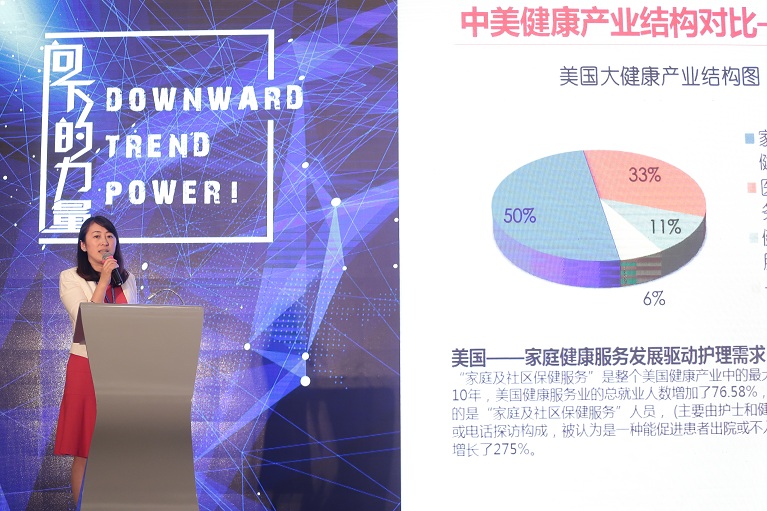
Zhang Xueli, CEO of HuLianWang
From May 17 to 18, VCBeat’s “2017 China Primary Healthcare Innovation Practice Forum” was held in Chengdu. Zhang Xueli, CEO of HuLianWang,"Market-Oriented Development of Nursing Services"as the theme, delivered a speech. The following are highlights from the speech.
Over the past three years of operating Huliwang, we have found that, compared with foreign countries, the marketization of nursing services in China has not yet begun, and for primary healthcare institutions,This very fact may well containHuge profit margins.
I. Home Health Care Can Minimize Healthcare Costs
Currently, China’s existing nursing care service system is largely derived from the medical services provided by public hospitals. In contrast, the United States has already developed highly mature experience in this area.
“Stones from other hills may serve to polish the jade.”
In fact, the global healthcare industry is facing the same challenges.That is: How to reduce the cost of health services?
A widely adopted approach across countries involves reducing medical services provided by large healthcare institutions while strengthening primary care and grassroots diagnostic and treatment services.
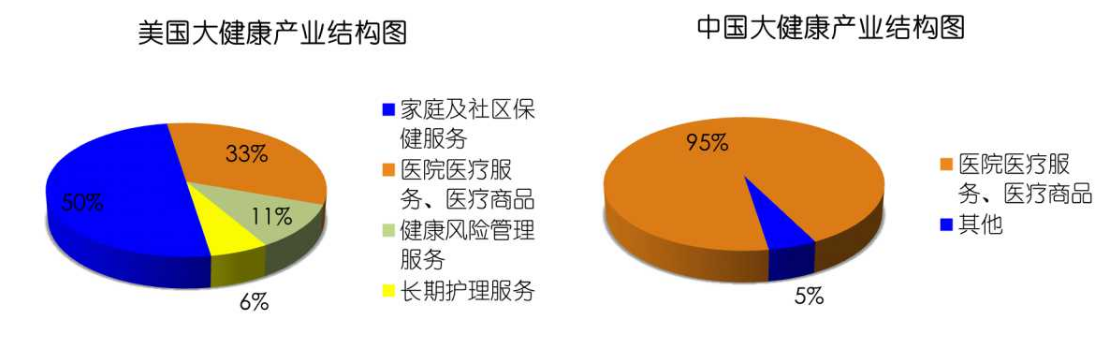
According to 2015 data from the U.S. Census Bureau, “Home and Community Health Services” constituted the largest segment of the U.S. healthcare industry. Over the past decade, total employment in the U.S. healthcare sector increased by 76.58%, with the most rapid growth observed among personnel in “Home and Community Health Services,” which rose by 275%. This category primarily consists of home or telephone visits by nurses and health aides and is regarded as a means to facilitate hospital discharge or prevent hospital admission.
A comparison reveals that the most significant difference between the Chinese and U.S. healthcare systems lies in the fact that a substantial portion of medical care in the United States is paid for by commercial insurance, reflecting a high degree of marketization. Their experience shows that,The Best Way to Reduce Healthcare Costs Is to Provide Home Health Care Services。
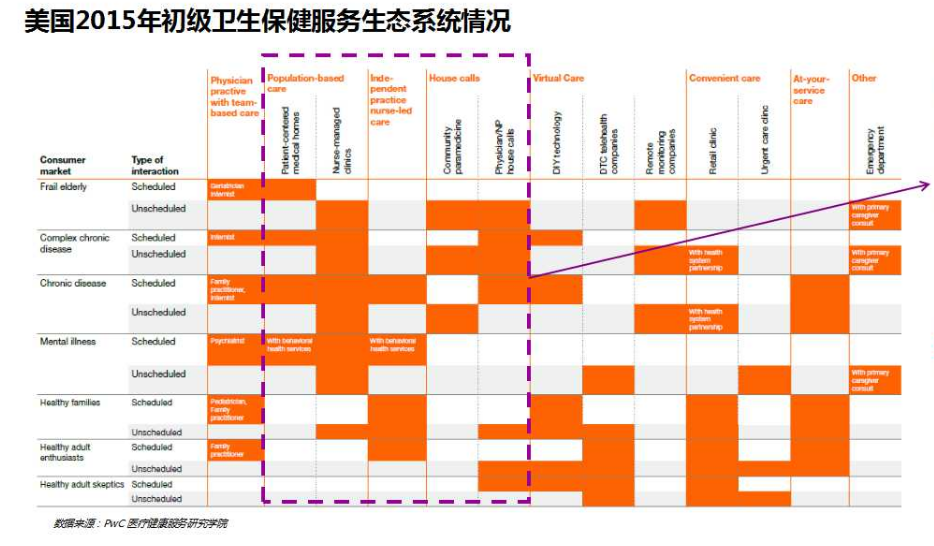
In 2015, among the U.S. population of 314 million, there were 200 million patients with chronic diseases or multimorbidity, 62 million recipients of adolescent healthcare services, 9.4 million patients with mental disorders, and 5.8 million elderly patients aged 75 and older.
Due to the high cost of physicians and the strong comprehensive skills and qualifications of nurses in the United States, there is a greater reliance on community healthcare services, nursing stations, home visits by nurse practitioners, and visitation services provided by family physicians and nurses to deliver care for populations with chronic diseases and the elderly.
From 2000 to 2016, employment in the U.S. healthcare industry grew by 42%, far outpacing other industries (which averaged 9.8%). In 2016, there were 4.6 million more jobs than in 2000.
II. The Key Issue in the Supply of Nursing Services Lies in the Pricing System
With the rise of mobile internet, many O2O platforms offering professional nursing services delivered by nurses to patients’ homes have continuously emerged.
The nursing services we are currently emphasizing do not merely refer to traditional tasks such as administering injections and dispensing medications. The role of nurses can also encompass multiple identity transitions, including family care management, psychological counseling, and humanistic care. Multi-scenario nursing services enable nurses to fully leverage their diverse professional skills.
For instance, with transitional care, this concept was proposed in China more than a decade ago, but it has yet to be effectively implemented. There are two primary reasons for this. First, in a healthcare system dominated by public hospitals, the fee structures and pricing models for nursing services remain unclear and require regulatory filing, making it difficult to establish reasonable incentive distribution for nursing staff. This has resulted in severely inadequate motivation among hospital-based nurses.
Meanwhile, patient demand has remained consistently strong. Many hospitals have attempted to collaborate with third-party organizations to address issues related to benefit distribution. However, this has given rise to a new problem: unclear responsibilities in medical disputes. The nursing station model can help mitigate this issue to some extent.
Shanghai’s Administrative Measures for Nursing Stations clearly stipulate that nursing stations are classified as medical institutions, and social capital is encouraged to apply for registration. During practice registration, the clinical department is designated as “General Practice (Community Nursing),” and the service mode is labeled as “Other Services.” Medical and nursing activities conducted by nursing stations must remain within the scope specified in their Medical Institution Practice License. The registered personnel at nursing stations are predominantly professional nurses, who are required to hold a title of Nurse-in-Charge or higher and have at least five years of clinical work experience.
Meanwhile, the government encourages coordinated collaboration between nursing stations and community health service centers. Taking Shanghai as an example, many long-term care programs, such as home nursing services for the elderly aged 80 and above, have been gradually delegated directly to nursing stations.
However, this has led to a new problem: a severe shortage of caregivers.
The key to addressing issues in the supply of nursing services lies in the pricing system for these services.The first edition of the White Paper on the Current Status of Nurse Group Development in China, jointly released by Xinhua News Agency, the China Social Welfare Foundation, and HuLianWang, noted that, based on an analysis of survey data, the average salary for nurses in second-tier cities is 5,000 yuan, whereas the overall average salary for the entire nursing workforce is only 3,000 yuan.
If nurses continue to apply the previous pricing models after leaving hospitals, it will inevitably lead to a significant exodus of nursing staff.
III. Empowering Nurses Is the Key to Marketizing Nursing Services
How to enhance nurses’ efficiency without increasing costs, enabling the nursing workforce to raise their overall income levels through economic levers such as market-oriented services, thereby reducing turnover rates. Huliwang has adopted a bidirectional tagging scheme.
On one hand, service demand tags are generated based on the needs of service requesters; on the other hand, nurses receive skills training to achieve professional stratification and tagging. This is a distinctive feature of HuLianWang’s services, making it currently the only enterprise in China offering such related services.
Currently, Huliwang has nearly 500,000 registered nurse users and over 100,000 trained users. More than 1,500 medical institutions, pharmaceutical and healthcare companies, and nursing colleges have established partnerships with Huliwang, with its business operations spanning more than 20 provinces and municipalities across China.
Hulianwang is building a lifelong professional development system for nurses outside of public hospitals, establishing market-oriented nursing service quality standards to achieve reasonable market pricing for nursing services.
We aim to increase nurses’ income, but the first step is to enhance their efficiency; therefore, under the Huliwang umbrella, there are alsoHulian Academy, Hulian Assessment, and Hulian Internationaland other extended services.
HuLian Evaluation, enabling scientific tiered assessment of nurses' competency levels to precisely match enterprises with suitable talent;
Nursing Alliance Academy, provide pre-service and on-the-job skills training for nurses to cultivate outstanding professionals with expertise in medical nursing;
Hulian International, delivering internationally oriented, forward-thinking, high-end comprehensive nursing elites to enterprises.