

Billion-Dollar Assisted Reproductive Technology Market Report: Fertility Clinics Dominate, Internet Companies Rush to Build Preconception Centers, and Overseas IVF Emerges as the Top Complementary Option

Having children is the most sincere expectation of every couple. Couples who have not used any contraceptive measures for more than a year and still have not become pregnant are generally classified as infertility patients and need to receive treatment. Among many assisted reproductive technologies, in vitro fertilization (IVF) is the last resort.
Driven by delayed childbearing, endocrine disorders caused by increased life stress, a rise in induced abortions, and environmental pollution, the incidence of infertility continues to climb. As a result, the Department of Infertility has become one of the busiest departments in hospitals.
There are numerous specific disease-related causes of infertility. The most common factors are female pelvic and ovulatory issues, particularly tubal blockage and diminished ovarian reserve. These are followed by male factors, such as genetic disorders, endocrine dysfunction, reproductive tract infections, and sexual dysfunction. A smaller proportion of infertility cases are attributable to immunological causes.
Of course, a 100% cure rate is not yet achievable for patients with infertility.
Reproduction is such a complex issue that the advent of assisted reproductive technologies has not been accompanied solely by joy and warmth. The emergence of every new technology inevitably gives rise to a series of ethical, legal, social, and resource-allocation considerations. Therefore, VCBeat has conducted a comprehensive review of the assisted reproduction industry. Through this article, you will gain insights into the following information:
1. The three mainstream treatment options for infertility currently;
2. Current market size, gross profit margin, and net profit margin of the assisted reproductive technology (ART) industry;
3. Overview of Relevant Policies and Trend Changes in China's Assisted Reproductive Technology Industry;
4. In Vitro Fertilization (IVF) Technology and Its Current Challenges;
5. Analysis of the Assisted Reproductive Technology (ART) Industry Chain;
6. Case Studies of Leading Domestic “Internet Plus” Assisted Reproductive Technology Enterprises and Guest Perspectives;
7. Introduction to Excellent Overseas “Internet Plus” Assisted Reproductive Technology Enterprise Cases;
8. Analysis of the Booming Overseas IVF Market and Expert Commentary.
In the treatment pathway for infertility patients, in vitro fertilization (IVF) serves as the last line of defense. Currently, the primary approaches to treating infertility include pharmacological therapy, surgical intervention, and assisted reproductive technology (ART).
1.1 Three Treatment Modalities
Medical treatment is divided into two categories: ovulation-inducing drug therapy and traditional Chinese medicine (TCM) regulation, primarily indicated for couples in whom no organic abnormalities are detected in either partner. Surgical treatment is mainly targeted at organic abnormalities, such as varicocele in males, or fallopian tube obstruction and intrauterine adhesions in females.
Among couples who remain unable to conceive despite pharmacological or surgical treatment, or who meet other indications, approximately 20% of infertility patients seeking medical care undergo assisted reproductive technology (ART). This figure is largely consistent with the findings of a survey published in the leading journal *Reproductive Biology and Endocrinology*.
Assisted reproductive technologies (ART) primarily encompass two major categories: artificial insemination (AI) and in vitro fertilization-embryo transfer (IVF-ET) along with its derived techniques, the latter being commonly known as “test-tube babies.” Compared to the other two treatment modalities, assisted reproduction can offer patients higher pregnancy rates.
1.2 IVF Has the Highest Pregnancy Rate
Due to the relatively low success rate of artificial insemination, some patients opt for in vitro fertilization (IVF) directly, while others turn to IVF after multiple failed attempts at artificial insemination.
The proportion of patients undergoing in vitro fertilization (IVF) accounts for 15% of those receiving assisted reproductive technology (ART) treatments. IVF yields the highest pregnancy rates, with a national standard benchmark of 35%, although many fertility clinics have already surpassed 50%. Of course, specific success rates are positively correlated with female age, as both egg quality and quantity decline significantly with advancing age, particularly beyond 40 years.
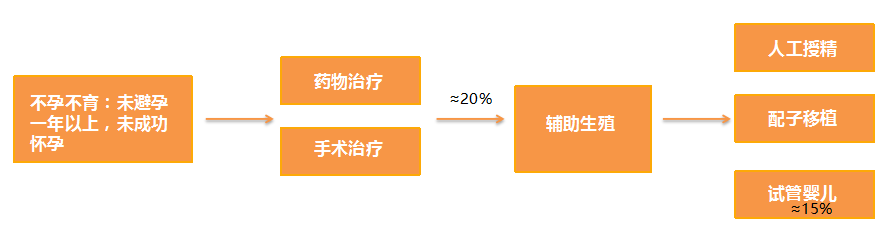
Treatment Pathways for Patients with Infertility
What appears to be a clear treatment pathway requires couples to endure a mix of pleasant, sorrowful, painful, and awkward experiences with each step forward. Every stage is indispensable, including ultrasound monitoring of follicle count, blood tests for hormone levels, hysterosalpingography, administration of ovulation-induction injections, and oocyte retrieval. Some couples, after several unsuccessful IVF attempts, ultimately abandon treatment due to severe physical suffering and financial pressure.
2.1 Severe Market Shortage
Let us first examine a familiar set of data: According to the "Report on the Current Status of Infertility in China," jointly released by the China Population Association and the former National Family Planning Commission (prior to its merger), the prevalence of infertility in China ranges from 12.5% to 15%, with more than 40 million affected individuals. This means that one in every eight couples suffers from infertility. Following the relaxation of the two-child policy, there are approximately 90 million couples in China who meet the criteria for having a second child, among whom 60 million women are aged 35 or older. Many of these advanced maternal age women require assisted reproductive technologies to achieve pregnancy.
It is evident that the base population of patients with infertility is very large.
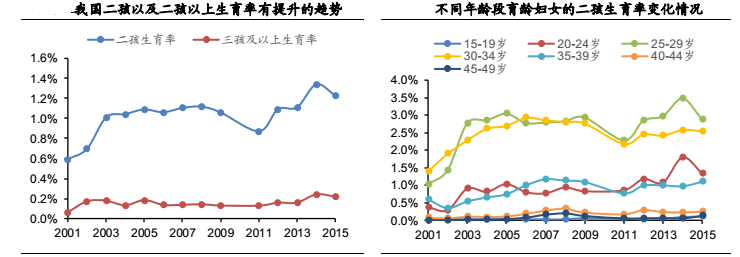
Source: National Bureau of Statistics, GF Securities Development Research Center
So, how many cycles are completed through assisted reproductive technologies? In March 2016, Ma Xiaowei, Deputy Director of the National Health and Family Planning Commission, stated at the press center of the Fourth Session of the 12th National People's Congress that approved assisted reproduction institutions in China perform an average of 700,000 assisted fertility procedures annually.
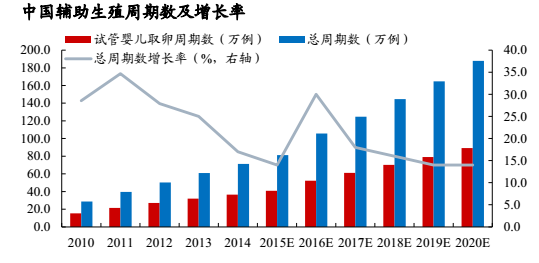
Source: Department of Maternal and Child Health Services, National Health and Family Planning Commission; Hongze Research
With 700,000 assisted reproductive technology (ART) procedures performed against a backdrop of 40 million patients suffering from infertility, the market is experiencing a severe supply-demand imbalance. This has directly resulted in average wait times of over six months for in vitro fertilization (IVF) procedures in first-tier cities such as Beijing and Shanghai.
Due to well-known reasons, different statistical methods may lead to slight variations in the data results; however, the upward trend is undeniable.
An investor specializing in assisted reproductive technology (ART) laboratories told reporters that, given the continued prevalence of unregulated clinics offering services and the tendency for older women to undergo multiple treatment cycles, current cycle volumes are estimated at approximately 1 million based on actual consumption data for pharmaceuticals and medical consumables. This figure is projected to reach 2 million within five years.
# What Is the Theoretical Market Size of Assisted Reproductive Technology?China sees approximately 16 million newborns annually. Based on an infertility prevalence rate of 12.5%–15%, it is theoretically estimated that 2 to 2.4 million potential births are prevented each year due to infertility.
Assuming that 65% of these infants' parents are willing to conceive using assisted reproductive technology (ART), the number of couples undergoing ART procedures annually would be 1.3–1.56 million. With a domestic ART success rate of 30% and an average of 2.5 ART cycles per couple, and given that each ART procedure costs between RMB 20,000 and RMB 40,000, the potential size of the ART market exceeds RMB 100 billion. Furthermore, the relaxation of the two-child policy has expanded the market by 20%, bringing the total potential ART market to approximately RMB 120 billion.
2.2 High Gross Profit Margins in the Assisted Reproductive Technology Industry
The assisted reproductive technology (ART) market has garnered significant attention not only due to its substantial growth potential but also because of its high gross profit margins. In vitro fertilization (IVF), the segment with the highest gross margin in the ART field, carries an average cost of approximately RMB 50,000, which is considered a reasonable figure, with slightly higher prices in major cities.
Song Chengbo, Investment Manager at Youjin Capital, revealed to VCBeat that the cost of assisted reproductive technology is relatively low, with gross profit margins exceeding 90% and net profit margins surpassing 50%. This sector boasts strong growth rates and profitability, making it highly attractive in the current environment of tightening profits for pharmaceutical companies.
According to the annual report of Changsha Gaoxin Hospital Co., Ltd., known as the “first IVF stock,” the hospital completed 229 IVF cycles in 2013, 511 cycles in 2014, and 957 cycles in 2015. Its net profit margin from assisted reproductive services reached 50%, indicating further room for profit growth through enhanced management and operational efficiency.
Furthermore, the National Health and Family Planning Commission has streamlined treatment protocols for assisted reproductive technology (ART), thereby accelerating the growth of the ART market. Pharmaceutical companies specializing in ART-related medications and healthcare service providers are poised to benefit from this trend.
Due to the significant ethical and moral controversies sparked by assisted reproductive technology (ART) in China, coupled with the long-standing implementation of the family planning policy, strict regulation has consistently been the predominant approach at the national level. Consequently, policies related to ART are characterized by overall conservatism and controllability.
However, the authority to approve licenses for assisted reproductive technology (ART) was delegated to provincial health and family planning commissions as early as 2007. Consequently, while emphasizing quality standards and technical specifications, various provinces have successively experienced a surge in the approval of ART centers. Currently, nearly 70% of ART centers have been approved by provincial-level health and family planning commissions.
3.1 Five Years of Rapid Growth in the Number of Institutions
China’s earlier relevant regulations include the Measures for the Administration of Human Assisted Reproductive Technology and the Measures for the Administration of Human Sperm Banks, issued by the former Ministry of Health (now the National Health and Family Planning Commission) in 2001, as well as the Technical Norms for Human Assisted Reproductive Technology, the Basic Standards and Technical Norms for Human Sperm Banks, and the Ethical Principles for Human Assisted Reproductive Technology and Human Sperm Banks, revised in 2003. These documents serve as the primary basis for guiding related assisted reproductive technologies in China.
2007 was a pivotal year. As the demand population continued to expand, the authority to approve assisted reproductive technology (ART) institutions was delegated to provincial health and family planning commissions, allowing each province to formulate development plans tailored to local conditions. Over the following five years, the number of ART institutions experienced explosive growth, surging from 95 in 2007 to 356 by the end of 2012.
3.2 Investigation and Punishment of Institutions Illegally Providing Assisted Reproductive Technology Services
However, alongside rapid development, the assisted reproductive technology (ART) treatment market has been plagued by numerous irregularities, including sex selection and multiple births through ART, which have been repeatedly exposed.
It is precisely due to the prevalence of numerous illegal practices that, in its interpretation of the Special Rectification Action Plan for the Management of Human Assisted Reproductive Technology issued by the former Ministry of Health in 2013, it was stated that there were problems in this field, such as medical institutions authorized to provide assisted reproductive technology (ART) services conducting ART activities in violation of regulations, and unlicensed institutions and individuals illegally providing ART services. Consequently, local governments were required to suspend the approval of new human assisted reproductive technology institutions during the rectification period. Since then, almost no new ART institutions have been established across the country.
On January 5, 2016, the State Council officially issued the "Decision of the Central Committee of the Communist Party of China and the State Council on Implementing the Universal Two-Child Policy and Reforming and Improving Family Planning Service Management," marking the full implementation of the universal two-child policy in China.
Following the comprehensive relaxation of the two-child policy, there has been a significant increase in the number of individuals aged 35 and above seeking to conceive. Due to factors such as ovarian aging and declining sperm quality, this demographic experiences a marked reduction in natural fertility, often necessitating medical interventions to realize their aspiration for a second child.
3.3 China Approves 451 Assisted Reproductive Technology Institutions
On September 21, 2016, the National Health and Family Planning Commission issued the "Notice on Simplifying the Verification Procedure for Fertility Certificates in Human Assisted Reproductive Technology Treatment." The notice clarified that medical institutions approved to provide human assisted reproductive technology services would no longer require couples undergoing such treatments to present fertility certificates; instead, couples need only provide a written commitment confirming their compliance with family planning policies. This policy adjustment is undoubtedly welcome news for families seeking to fulfill their parenting aspirations through assisted reproductive technologies.
On October 14, 2016, the National Health and Family Planning Commission and four other ministries issued the "Several Opinions on Strengthening Basic Medical and Healthcare Services Throughout the Entire Childbearing Process," which stated that standardized comprehensive infertility treatments—including traditional Chinese medicine conditioning, pharmacological therapy, routine obstetric and gynecological surgeries, and assisted reproductive technology services—would be provided to couples experiencing difficulties in conceiving.
On April 18, 2017, the official website of the National Health and Family Planning Commission released the “Announcement on Publishing the List of Medical Institutions Approved to Conduct Human Assisted Reproductive Technologies and Establish Human Sperm Banks (No. 6, 2017),” which published the list of medical institutions across China approved to conduct human assisted reproductive technologies and establish human sperm banks. As of December 31, 2016, a total of 451 medical institutions were approved to conduct human assisted reproductive technologies, and 23 medical institutions were approved to establish human sperm banks.
3.4 Assisted Reproductive Technology (ART) Institutions Still Have Room for Future Growth
However, existing assisted reproductive technology (ART) institutions are far from meeting market demand. Based on provincial and municipal ART facility development plans and the National Health and Family Planning Commission’s standard of one institution per 3 million people, the upper limit for ART center licenses in the future will be no less than 550, leaving room for at least approximately 100 additional institutions.
Furthermore, since eligibility for in vitro fertilization (IVF) services can only be applied for after a center has begun operating artificial insemination programs, approximately one-third of assisted reproductive technology centers in China are currently limited to performing artificial insemination. This indicates significant room for future growth in the number of IVF licenses.
Assisted reproduction is an abbreviation for human assisted reproductive technology (ART), referring to techniques that employ medical interventions to help infertile couples achieve pregnancy. Based on the level of technological advancement, it is primarily categorized into: artificial insemination (AI), oocyte/gamete intrafallopian transfer, in vitro fertilization-embryo transfer (IVF-ET), and other derived technologies. Additionally, there are emerging techniques still in the experimental stage, such as preimplantation genetic testing for monogenic/single gene defects (PGT-M) or comprehensive chromosomal screening in IVF ("test-tube babies with whole-genome screening") and "stem cell babies."
Since Bunge and Sherman first reported the successful use of frozen semen for artificial insemination (AI) in 1953, assisted reproductive technology has a history of just over 60 years and remains a relatively new field worldwide.
4.1 Development of Assisted Reproductive Technology
4.1.1 Artificial Insemination
Artificial insemination refers to an assisted reproductive technology (ART) that achieves pregnancy in women by delivering sperm into the female reproductive tract through non-coital methods. Based on the source of the sperm, artificial insemination (AI) can be classified into artificial insemination with husband’s sperm (AIH) and artificial insemination with donor sperm (AID). According to the site of insemination, such as the vagina, endocervical canal, uterine cavity, fallopian tubes, and peritoneal cavity, it is respectively termed intravaginal insemination (IVI), intracervical insemination (ICI), intrauterine insemination (IUI), and intratubal insemination (IFI).
4.1.2 Gamete Transfer
Gamete transfer is divided into intratubal gamete transfer and intrauterine gamete transfer. Intratubal gamete transfer refers to the direct placement of gametes—namely, mature oocytes and motile sperm—into the ampullary region of the fallopian tube via laparoscopy or a small abdominal incision. This allows fertilization to occur naturally within the fallopian tube in vivo. Subsequently, the zygote migrates to the uterus through ciliary movement along the tubal wall, where it implants and undergoes further development.
Intrauterine Gamete Transfer refers to the direct introduction of sperm and oocytes into the uterine cavity, allowing fertilization, early embryonic development, and implantation to occur within the uterus. This procedure is indicated for women with tubal abnormalities.
4.1.3 In Vitro Fertilization-Embryo Transfer and Its Derived Technologies
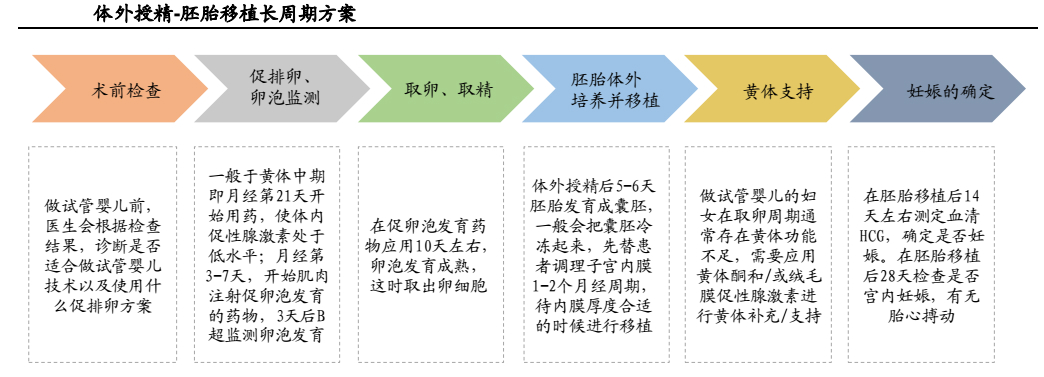
Source: CNKI, GF Securities Development Research Center
First-Generation IVF: In Vitro Fertilization and Embryo Transfer (IVF-ET)
In vitro fertilization and embryo transfer (IVF-ET) is a technique in which oocytes and sperm are retrieved from couples with infertility, fertilized and cultured into embryos in an in vitro system, and then transferred into the uterine cavity to achieve pregnancy. In 1978, British scientist Dr. Robert G. Edwards completed the first successful in vitro fertilization (IVF) procedure, fertilizing an egg outside the human body and resulting in the birth of Louise Brown, the world’s first “test-tube baby.” This milestone marked the dawn of a new era in human assisted reproductive technology.
China's first test-tube baby was developed by renowned Chinese obstetrician and gynecologist Zhang Lizhu and was born on March 10, 1988, at the Third Hospital of Beijing Medical University.
Second-Generation IVF: Intracytoplasmic Sperm Injection (ICSI)
Intracytoplasmic Sperm Injection (ICSI) technology was developed based on earlier in vitro fertilization techniques—such as the microdroplet method, partial zona dissection, and subzonal insemination—used to address fertilization failure caused by insufficient sperm count or functional abnormalities in males. In 1992, Dr. Palermo’s team in Belgium first applied Intracytoplasmic Sperm Injection (ICSI), helping patients achieve clinical pregnancy.
This technology addresses the issue of conventional fertilization failure, improves the success rate of in vitro fertilization (IVF), and represents a milestone in the treatment of male infertility. The techniques involved in ICSI, including ovulation induction medications, embryo culture, and embryo transfer, are the same as those used in IVF-ET.
China’s first IVF baby conceived via ICSI technology was born in 1996 at the Center for Reproductive Medicine, The First Affiliated Hospital of Sun Yat-sen University.
Third-Generation IVF: Preimplantation Genetic Testing (PGS/PGD)
Preimplantation Genetic Screening (PGS) is used to detect chromosomal numerical and structural abnormalities in early embryos prior to implantation. It primarily assesses the structure and number of the 23 pairs of chromosomes in the embryo, identifying genetic material abnormalities through comparative analysis.
Preimplantation Genetic Diagnosis (PGD) is a method that involves analyzing the genetic material of embryos to detect abnormalities, selecting healthy embryos for transfer, and preventing the transmission of genetic diseases.
In 1990, Alan Handyside in the United Kingdom successfully achieved the world’s first live birth of a healthy infant through preimplantation genetic diagnosis (PGD). By employing fluorescence in situ hybridization (FISH), a genetic analysis technique, and leveraging the known sequence of the cystic fibrosis (CF) mutation gene, he identified embryos carrying the mutation and selected those free of the mutant gene for implantation into the uterus. In China, the first case of preimplantation genetic diagnosis was successfully performed using FISH technology in 1999 at the First Affiliated Hospital of Sun Yat-sen University.
PGS enables the selection of chromosomally normal embryos for transfer, thereby preventing miscarriages and the birth of infants with congenital malformations caused by chromosomal abnormalities, while improving success rates. It is suitable for older women with adequate ovarian reserve, as well as infertile couples experiencing repeated implantation failure, recurrent miscarriage, or known chromosomal abnormalities.
PGD can diagnose diseases caused by single-gene defects, such as hemophilia and thalassemia. It is suitable for couples who are concerned about being carriers of genetic disorders or potentially transmitting chromosomal abnormalities to their offspring.
Clinical research results indicate that PGS/PGD can select healthy embryos, reduce the miscarriage rate, and improve the success rate of in vitro fertilization (IVF). According to data from Huachuang Securities’ July 2016 “Special Report on China’s Assisted Reproductive Technology Industry,” current PGS/PGD technology in China can increase the single-cycle success rate of IVF from less than 20% to over 30%.
Common detection methods for PGS/PGD include fluorescence in situ hybridization (FISH), polymerase chain reaction (PCR) technology, single nucleotide polymorphism (SNP) analysis, comparative genomic hybridization (CGH), and next-generation sequencing (NGS).
“PGS/PGD technology can screen out genetic defects, prevent hereditary diseases, and achieve the goal of eugenics,” said Professor Zhu Yimin, Director of the Department of Reproductive Endocrinology at the Women’s Hospital, School of Medicine, Zhejiang University, and Executive Deputy Director of the Zhejiang Provincial Quality Control Center for Assisted Reproductive Technology.
4.2 Few Institutions Offer Third-Generation IVF Technology
Currently, high-end medical institutions represented by CITIC-Xiangya and Peking University Third Hospital are developing rapidly. The annual number of surgical cycles at these hospitals has long exceeded 10,000, and the live birth rate has reached over 60%.
Currently, the clinical application of in vitro fertilization (IVF) technology in China is predominantly at the first-generation (i.e., in vitro fertilization-embryo transfer, IVF-ET) and second-generation (intracytoplasmic sperm injection, ICSI) stages. A small number of institutions are researching and implementing third-generation technology (preimplantation genetic screening/diagnosis, PGS/PGD), with only 40 facilities authorized to do so (including those in formal operation and trial operation).
In China, PGS/PGD technology faces three major issues, which have prevented its widespread adoption and have to some extent promoted the development of overseas IVF services:
First, the cost of PGS/PGD technology is relatively high;
Second, China’s technical system is not yet fully developed, and the range of screening options is insufficiently broad;
Third, this technology involves medical ethics issues and falls within the scope of regulatory oversight.
5.1 Upstream Industry Chain: Medical Devices, Consumables, and Biopharmaceuticals
5.1.1 Diagnostic Reagents
Prior to assisted reproductive technology (ART), comprehensive gynecological endocrine evaluations are required to exclude gynecological endocrine disorders, assess ovarian reserve and responsiveness, and determine the appropriate treatment plan. Throughout the ART process, various gynecological examinations are also conducted to decide whether further interventions are necessary.
Therefore, diagnostic reagents, particularly those for gynecological endocrine testing, play a crucial role in the assisted reproductive technology (ART) industry chain. Domestic companies include Shenzhen YHLO Biotech, Beijing CapitalBio Technology, and Shanghai Kehua Bio-engineering, while international players include AbbVie Pharmaceuticals, Siemens Healthineers, and Roche.
5.1.2 Biopharmaceuticals
Approximately 70%–80% of patients with infertility can achieve pregnancy through interventions such as lifestyle counseling and pharmacological treatment, while the remaining 20% of infertile couples require assistance from human assisted reproductive technology.
Assisted Reproductive Technology (ART) Medications refer to drugs used throughout a complete ART cycle, primarily administered to women. These include down-regulation agents (which allow for better control of the stimulation cycle and help prevent premature ovulation), ovarian stimulation drugs (which promote follicular growth and development), ovulation induction agents (which facilitate follicular generation and maturation, and mimic the physiological luteinizing hormone surge to trigger ovulation), and luteal phase support agents (which prepare the endometrium for embryo implantation).
In the application of assisted reproductive technology, follicle-stimulating hormone (FSH) is an essential medication. Prior to 2012, the domestic market for recombinant FSH was limited to imported products from Merck Serono and Organon (Netherlands), which were expensive, priced at RMB 330–350 per 75 IU. The market for urine-derived FSH was primarily dominated by Livzon Group, with lower prices ranging from RMB 200–220 per 75 IU; however, these products had lower purity and efficacy compared to recombinant formulations.
Changchun GeneScience Pharmaceuticals’ recombinant human follicle-stimulating hormone (rhFSH), a subsidiary of Changchun High-Tech, is the first domestically produced recombinant product, priced at approximately RMB 180 per 75 IU. Subsequently, recombinant human follicle-stimulating hormone manufactured by Nanjing Organon has also captured a significant share of the assisted reproductive technology drug market.
Among listed companies, PDB data indicate that reproductive pipeline products account for 15% of Livzon Pharmaceutical Group’s total revenue, including major brands such as leuprorelin, urinary follicle-stimulating hormone (u-FSH), and human menopausal gonadotropin (hMG). Changchun High-Tech’s blockbuster product, recombinant follicle-stimulating hormone, was launched in 2015; its existing products, growth hormone and triptorelin, are also applied in the reproductive field. According to PDB data, progesterone and progestogen products account for approximately 25% of Xianju Pharmaceutical’s revenue.
5.1.3 Medical Devices
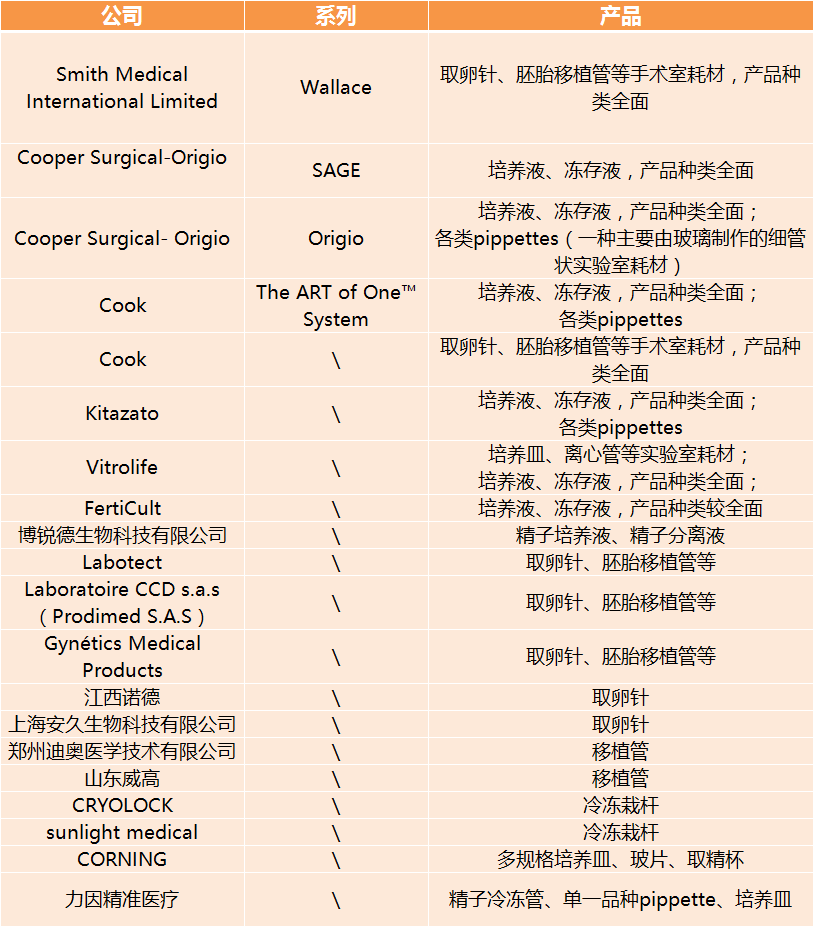
The medical device products required for assisted reproductive technology (ART) mainly include: liquid products such as culture media and preservation solutions that come into contact with gametes, zygotes, and embryos; instrument and consumable products such as oocyte retrieval needles, microinjection needles, embryo transfer catheters, and culture dishes; and specialized equipment such as microinjection microscopes, embryo incubators, and vacuum pumps. The product range is extensive and diverse, encompassing active and passive medical devices as well as reagents.
Medical devices involved in assisted reproductive technology (ART) procedures are largely monopolized by foreign manufacturers such as Vitrolife, William A. Cook, and Origio A/S. Domestic manufacturers, including Shandong Weigao and Shanghai Liyin Precision Medicine, primarily produce ART-related medical instruments and consumables, such as oocyte retrieval needles, embryo transfer catheters, and culture dishes.
Shandong Weigao Xinsheng Medical Device Co., Ltd.’s assisted reproductive technology (ART) R&D team has mastered the core technologies for manufacturing ART devices through years of dedicated research and development. This breakthrough enables domestic medical institutions to reduce their reliance on costly imported ART equipment, providing a new, high-quality alternative.
5.2 Midstream Industry Chain: Internet + Assisted Reproductive Technology
“Internet + Assisted Reproductive Technology” is a hot topic in the field of chronic disease management. In terms of chronic disease characteristics, infertility does not persist for a lifetime like diabetes or hypertension; moreover, its treatment involves standardized protocols with relatively high success rates, primarily categorized into intrauterine insemination (IUI) and in vitro fertilization (IVF).
5.2.1 Two Types of Enterprises
1. Broad-spectrum menstrual health management: Primarily targeting natural conception among the general health-conscious population through apps such as Da Yi Ma (launched in 2012) and Meiyou Period Tracker (launched in 2013). Public data from 2016 showed that their user bases had each surpassed 100 million, comparable to the scale of maternal and infant communities like Babytree, Mama.cn, and Lama Bang. Although these platforms cover content related to infertility, they focus mainly on obstetrics and gynecology and are therefore excluded from this review of assisted reproductive technologies. Additionally, this category includes smart fertility-tracking hardware represented by basic body thermometers such as Yun Cheng and Yun Lü.
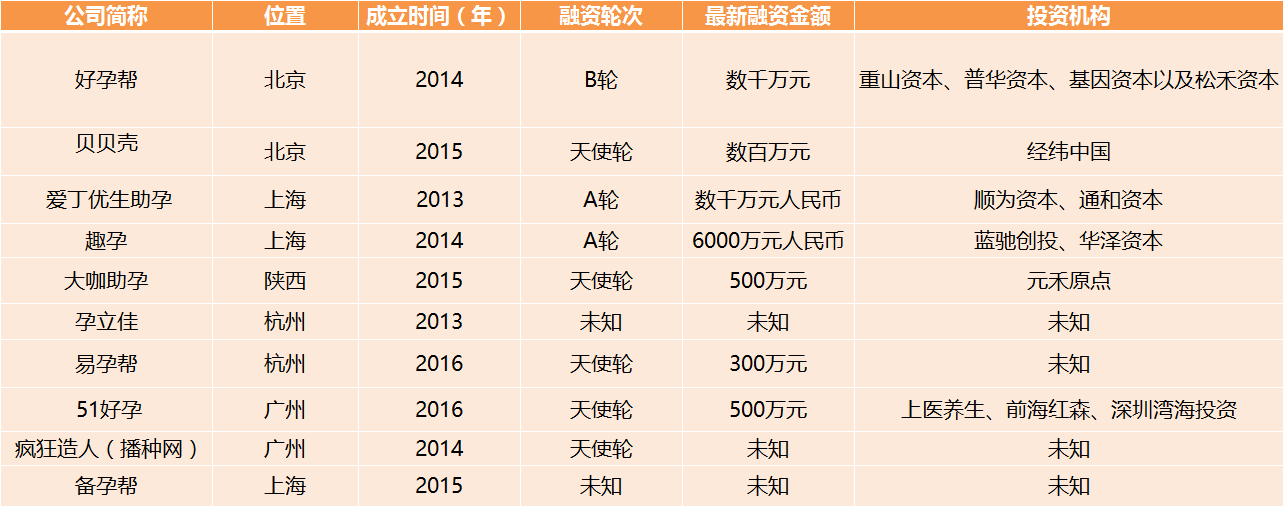
2. Vertical infertility services: Aiding Conception by Eding (formerly known as Dr. Eding) launched in 2013, Haoyunbang in 2014, and Beibeike in 2015. These initiatives directly target users seeking precise infertility solutions, with public data from 2016 indicating a user base in the hundreds of thousands. VCBeat has identified ten similar companies in the market, including Haoyunbang, Beibeike, Aiding You sheng Zhuyun, Quyun, Daka Zhuyun, 51 Haoyun, Yiyunbang, Fengkuang Zaoren (Bozhong Network), Bei Yun Bang, and Yunlijia (Yuncai Hera).
The first wave of mobile health apps aimed to follow a broad health pathway of “tools–community–e-commerce.” As menstrual tracking tools with hundreds of millions of female users, Dayima and Meiyou target menstrual management spanning nearly half of a woman’s life (approximately 40 years from menarche to menopause), offering greater commercial value potential and faster monetization. In essence, they have become a massive traffic gateway for infertility-related services. As leading content entry points, these user flows have attracted significant interest from internet healthcare companies.
The second wave of startups focuses primarily on the medical field of infertility, leveraging internet-based approaches to target individuals with infertility issues. These ventures possess stronger medical attributes (with founding teams predominantly composed of professionals with medical backgrounds), feature higher professional barriers to entry, and require a longer period to establish their reputation.
The reduced user base resulting from precise targeting can be offset by high ARPU (Average Revenue Per User). As previously mentioned, the net profit margin in the assisted reproductive technology sector generally reaches 50%, characterizing it as a typical low-frequency, high-margin industry. However, if the patient journey shortens to less than one year, entrepreneurs face the challenge of continuously acquiring new customers and enhancing stickiness through value-added services.
In response, a viable strategy would be to expand from infertility treatment to scientific preconception care, thereby covering a longer customer journey and a broader scope, which further amplifies its commercial value.
5.2.2 Traffic Monetization Still Relies on Offline Channels
The advantage of the Internet lies in educating users and reducing customer acquisition costs, with its innate strength being the ability to rapidly generate traffic. By leveraging mobile internet tools to retain users, traffic can then be distributed externally to generate value-added revenue. However, the current reality is that, based on the previously analyzed treatment pathway for infertility patients, only a small proportion of users ultimately proceed to the stage of utilizing assisted reproductive technologies.
To put it more directly, “Internet + Infertility” enterprises are currently facing challenges in traffic acquisition: front-end traffic is dominated by platforms with hundreds of millions of users, such as Dayima and Meiyou. Although the incidence of infertility is rising, most cases can be resolved within six months through persistent treatment. Some users require only minimal medical intervention, such as guidance on timed intercourse or ultrasound-based ovulation monitoring, while others need only simple surgical procedures or pharmacological therapy.
The population that truly requires assisted reproductive technologies (ART) after triage is largely monopolized by a limited number of licensed public medical institutions at the downstream end. In terms of business models, due to restrictions on licenses and qualifications, most vertical infertility service enterprises seek breakthroughs by engaging in standardized disease course management or enhancing service experience.
In terms of profitability, high-margin services such as oocyte retrieval, in vitro fertilization (IVF), embryo culture and preparation, and embryo transfer, along with their associated pharmaceuticals, remain within the laboratories of public reproductive centers. These enterprises primarily engage in lower-margin activities, such as ultrasound-based assessments and ovarian stimulation protocol design.
Acquiring traffic through offline channels is prohibitively expensive and therefore not a viable option. Purely driving traffic flows provides insufficient incentive for existing domestic suppliers. A more ideal strategy is for second-wave enterprises to establish or partner with corresponding offline service institutions, thereby forming an independent, closed-loop service system, with traffic monetization directed toward overseas markets. This has been the strategic focus for many such companies in 2017.
The top-tier licensed fertility centers are not short of patients, while the majority of licensed fertility centers still face a significant patient shortage. Therefore, earning commissions by referring clients from preconception care centers to fertility centers is one viable business model for preconception care centers. Other revenue streams include providing accommodation, catering, and caregiving services.
Even better, there are signs that licensing for reproductive medical centers is being opened to private capital: Kunming Reproductive Center of Topchoice Medical opened in 2015, and United Family Healthcare’s Tianjin Reproductive Center was established in 2016.
5.3 Downstream Industry Chain: Assisted Reproductive Technology (ART) Medical Institutions
An anonymous medical investor revealed to VCBeat that, currently, laboratories in the assisted reproductive technology (ART) sector offer the highest returns and profitability, rather than peripheral services. He expressed a preference for investing in laboratories or specialized ART hospitals with high competitive barriers. This investment stance is determined by the current market distribution landscape.
The assisted reproductive technology (ART) center with the highest number of oocyte retrieval cycles for in vitro fertilization (IVF) nationwide is CITIC-Xiangya Reproductive & Genetic Hospital, which exceeded 20,000 cycles in 2016. Approximately five ART centers across China have performed over 10,000 IVF oocyte retrieval cycles each, collectively accounting for about 20% of the national total. Leading institutions include CITIC-Xiangya Reproductive & Genetic Hospital, Peking University Third Hospital, IVMF Medical Group, Shanghai Ninth People’s Hospital Affiliated to Shanghai Jiao Tong University School of Medicine, Shandong University-affiliated Reproductive Hospital, and Jinjiang District Maternal and Child Health Care Hospital of Chengdu. Since a large number of ART centers received approval starting in 2007, the sector has entered a period of rapid development.
The approval threshold for assisted reproductive technology (ART) centers is high, requiring biennial verification. However, reporters have learned that three private institutions in Beijing have already obtained ART licenses: Jia'en Deyun, Baodao, and Jiayuan. The approval of these licenses is closely tied to the founders' backgrounds.
Beijing Jiaen Deyun Hospital is a typical representative and a well-established institution. It obtained the license for assisted reproductive technology in 2005, allowing it to offer in vitro fertilization (IVF) services, and currently completes approximately 3,000 cycles annually.
Reporters have learned that Dr. Liu Jiaen, the founder, studied under Robert Edwards, known as the “father of IVF,” and has made significant contributions to second-generation in vitro fertilization (IVF) technology. In 2000, Dr. Liu returned to China with cutting-edge assisted reproductive technologies (ART), making him one of the earliest pioneers in the field of ART in the country. Currently, competition in Beijing is increasingly fierce, and obtaining regulatory licenses is challenging. Due to variations in regional policies, entities at levels below the provincial tier have greater potential for approval.
Assisted reproductive technology (ART) centers approved and established across China generally achieve high pregnancy rates. The initial capital investment is substantial, typically requiring more than two years to reach the break-even point. However, once a stable patient flow is secured and operations mature, profit margins are considerable. According to expert estimates, excluding facility costs, treating 20 patients per month is sufficient to cover all personnel expenses, consumables, equipment depreciation, and other operational costs.
Against this broader backdrop, some listed companies have also targeted the assisted reproductive technology (ART) market, extending their business into ART medical services. Typical examples include Topchoice Medical and Yontai Energy.
Topchoice Medical introduced the brand and technology of Bourn, collaborating with Kunming Maternal and Child Health Hospital to establish a reproductive center (which obtained the license). According to data disclosed in the 2016 semi-annual report, approximately 100 cycles were performed in the first half of the year, with a success rate of 52%.
During the reporting period, revenue from assisted reproductive services amounted to RMB 3.26 million, with 12,477 outpatient visits recorded. Upon commencing full-scale operations, the Reproductive Center is capable of handling 1,000–2,000 cycles per year.
Yongtai Energy has partnered with Chengdu Jinxin Medical Investment Management Group Co., Ltd. to acquire up to 49% equity interest in the group’s holding platform company for its human assisted reproductive technology (ART) business. Yongtai Energy will invest in this ART business holding platform established by the Jinxin Group.
The platform company will effectively control Chengdu Xinan Gynecology Hospital, Chengdu High-Tech Zone Xinan Gynecology Hospital, the Reproductive Medicine Center of Jinjiang District Maternal and Child Health Hospital in Chengdu, as well as other human assisted reproductive technology (ART) businesses in which Jinxin Group had participated prior to the completion of the joint venture transaction. Among these, Chengdu Xinan Gynecology Hospital is a district-level institution approved by the Ministry of Health of China to provide human ART services, boasting a large patient volume and an authoritative medical team both in Sichuan Province and nationwide.
According to general international practice, a newly established reproductive medicine center can typically complete around 100 IVF treatment cycles in its first year, 200 in the second year, and 500 in the third year. Many private institutions in China often exceed this benchmark. Licensed private providers, such as Baodao, Jia’en Deyun, and Jiayuan, hold licenses valued at RMB 500–1 billion in first-tier cities alone.
According to Wang Yibin, Business Director of Beijing Baodao Maternity Hospital: “Baodao currently averages one to two IVF cycles per day. This figure is estimated to reach at least three cycles per day in the second half of 2017, with the annual number of IVF cycles projected to be no less than 1,000. The hospital’s annual reproductive medicine revenue is estimated at RMB 100–200 million, indicating significant future potential.”
The above section outlines the business logic and profitability models of second-wave vertical infertility service companies. The following provides an overview of the key companies:
6.1 Haoyunbang
Introduction:Haoyunbang was founded in September 2014. Addressing the core pain point of inadequate disease course management for patients with infertility, it adopts disease course management as its entry point. The platform leverages online tools (disease course management and human consultants) to help users address mild issues; utilizes fertility clinics to tackle more complex problems, particularly the treatment of specific subtypes of infertility; and further refers cases to reproductive centers for assisted reproductive technologies (ART). This creates a relatively complete closed-loop ecosystem spanning online platforms, clinics, reproductive centers, and overseas services.
In October 2014, Haoyunbang completed RMB 4 million in angel financing; in October 2015, it secured RMB 30 million in Series A financing; in December 2016, it obtained tens of millions of RMB in Series B financing, led by Chongshan Capital, with participation from Puhua Capital, Sinovation Partners, and Gene Capital. To date, Haoyunbang has raised three rounds of funding over three years, totaling nearly RMB 100 million.
Perspective of Huang Sen, Founder and CEO of Haoyunbang:
1. Two Approaches to Achieving Disease Course Management
Currently, Haoyunbang collaborates with over 30 hospitals, including strategic partnerships with the Reproductive Hospital Affiliated to Shandong University, as well as top-tier (Grade A tertiary) hospitals such as Beijing Chaoyang Hospital and Peking University People’s Hospital.
Huang Sen believes that the resources and services provided by the Haoyunbang platform can cater to infertility patients at different levels. The importance of disease course management lies in the fact that the diagnosis and treatment process for infertility is relatively complex, with a lengthy treatment cycle. Without proper disease course management, there is a high risk of intermittent or skipped treatments.
There are two approaches to implementing disease course management. The first is an intelligent disease course management system based on clinical pathways, in which the software automatically provides users with targeted feedback; as long as users input the relevant data, the system automatically offers recommendations to patients. Haoyunbang has developed a comprehensive data model based on the clinical treatment pathway for infertility.
Second, leverage professional medical consultants for manual support. Professional medical consultants effectively manage user segmentation and provide targeted advice and assistance to specific users.
2. Establish self-operated preconception care clinics, with a plan to open two this year
Huang Sen stated that the establishment of proprietary fertility clinics is essentially a response to the online user demands of the platform. Merely addressing infertility makes it difficult to unlock commercial value; however, by delving into specific sub-specialties—such as premature ovarian insufficiency and polycystic ovary syndrome—and designing products tailored to these conditions, the commercial value becomes significantly more apparent.
Preconception care clinics can provide institutional support for products targeting these specific sub-specialties. According to Huang Sen, the key priorities for 2017 are: first, to continue strengthening platform development and user acquisition while enhancing brand value; second, to actively implement offline medical services, including preconception care clinics and physical hospitals. This year, the focus is on establishing two preconception care clinics, one of which has already opened in Beijing. Additionally, we will actively collaborate with reproductive centers. Finally, we will continue to strengthen our disease management team, enhance productized disease management services for specific sub-specialties, and build a professional medical advisory service brand in the field of infertility.
6.2 Beibei Shell
Introduction:Beibeike, established in August 2015, is a fertility assistance service company dedicated to providing prospective parents with an enhanced in-hospital medical experience and helping them conceive efficiently, effectively, and cost-effectively. In October 2015, Beibeike secured millions of RMB in angel investment from Matrix Partners China. The company has currently established partnerships with Peking University Third Hospital, Shanghai Ninth People’s Hospital, the Second Affiliated Hospital of Zhengzhou University, Henan Provincial Maternal and Child Health Hospital, the Affiliated Hospital of Shandong First Medical University, Luoyang Maternal and Child Health Hospital, and Changzhi Heping Hospital, among others.
Viewpoint of Shi Lei, Founder and CEO of BeiBeiKe:
1. Prioritizing the Patient Experience Above All Else
Currently, Beibeike is dedicated to serving users who are currently undergoing or about to begin an IVF (in vitro fertilization) cycle. For this group, we provide end-to-end services, including medical record establishment, streamlined clinical care coordination, personal concierge support, nutritional and health management, and online courses, with specialized reproductive consultants offering comprehensive accompaniment throughout the entire journey. Patient experience remains our top priority.
Shi Lei believes that the collaboration between “Internet Plus” assisted reproductive technology (ART) companies and reproductive clinics primarily revolves around lightweight applications such as user referral, online consultations, and remote outpatient services. Currently, technical cooperation focuses mainly on integrating appointment registration interfaces. However, hospitals are highly cautious about opening access to reproductive health data, making it difficult for internet-based enterprises to obtain valid data at present.
In the future, the opportunity for “Internet Plus” assisted reproductive technology (ART) enterprises will undoubtedly lie in integrating internet-based operations with on-the-ground medical services. In the near term, a key focus will be leveraging digital operational strategies to address the issue of uneven business distribution across fertility clinics.
Shi Lei believes that internet companies can explore commercial opportunities centered around users’ pre-consultation and post-consultation follow-up data. Additionally, financial and insurance services can be developed based on such data; however, this direction entails high trial-and-error costs, making it unsuitable for small startups. Instead, it requires the participation of large-scale financial and insurance institutions.
2. License-based Economy Also Requires Market-oriented Operations
Patients with infertility tend to be quite cautious in choosing assisted reproductive technology (ART), as they generally prefer natural conception. Typically, it takes three to five years before they seek care at a fertility center, making treatment at such centers the final step in the management of infertility.
License-driven economics is a distinctive feature of this industry. The pursuit of licenses stems from the broader scope of services and higher profit margins they enable. However, it should be noted that holding a license does not necessarily guarantee operational outpatient clinics. Among the hundreds of licensed hospitals in China, only a few dozen perform more than 5,000 IVF cycles annually. An IVF institution conducting fewer than 800 cycles per year typically struggles to achieve profitability. Consequently, the industry exhibits significant uneven distribution, with a disproportionate influx of patients flocking to the institutions that delivered the first local IVF births.
Overall, there is little disparity among providers of assisted reproductive technology (ART), as many hospitals adopt standardized, high-volume operational processes. Naturally, institutions with higher cycle volumes tend to accumulate more experience. From the perspective of the broader infertility market, only about 10% of individuals with infertility opt for ART. While many IVF clinics possess advantages in both technology and expert expertise, they suffer from weak marketization and limited user awareness.
Therefore, Shi Lei stated that market-oriented operations and patient care experience are more important in the assisted reproductive technology (ART) industry, which is also a direction for internet-based fertility companies to strive towards. Bei Beike insists on providing users with support for clinical visits and has established its own preconception care centers to make the journey to pregnancy easier for users. Currently, Bei Beike has built its own preconception care centers in seven cities, including Beijing, Jinan, and Chengdu.
3. Addressing the Issue of Uneven Patient Distribution
Regarding the development of private hospitals, Shi Lei analyzed that their share in the entire assisted reproductive technology (ART) industry is limited. The more pressing issue in this sector is not an imbalance between supply and demand, but rather an uneven distribution of patients, as licenses are issued based on local population proportions.
To address the issue of uneven resource allocation, the state could not only issue licenses based on population but also assign designated hospitals for medical consultations according to locality. Private hospitals, meanwhile, can develop specialized outpatient clinics—such as those for IVF and obstetrics, geriatric care, and polycystic ovary syndrome (PCOS)—with a focus on service capability and patient experience.
6.3 Eden Fertility Assistance
Introduction:Eding Yousheng Fertility was established in 2013, dedicated to addressing user needs through its unique MLP holistic mind-body approach. Centered on an O+O business model, it integrates online and offline services to build a premium brand for eugenic fertility assistance. In August 2014, the company completed a Pre-A round of financing amounting to several million US dollars from Shunwei Capital. In December 2016, it secured an A-round investment of tens of millions of RMB, led by Tonghe Capital with continued participation from Shunwei Capital.
Perspective from Bi Ye, Founder, CEO, and Chairman of Aiding You Sheng Assisted Reproduction:
1. Prioritize MLP's comprehensive services
Currently, some internet companies are driving patient traffic to fertility centers or providing brand promotion through online channels, while others offer ancillary services such as medical assistance and daily life caregiving.
Aiding Conception specializes in MLP services—an integrated approach encompassing Medical, Life (behavioral), and Psychological aspects—providing three-dimensional preconception planning to help individuals achieve optimal reproductive health.
For physicians at fertility centers, lifestyle intervention is the first-line treatment for polycystic ovary syndrome (PCOS); however, clinicians often lack the time and energy to implement it. Aidin Fertility Support can provide complementary service products in the MLP domain to physicians, such as lifestyle intervention services for PCOS.
Therefore, Bi Ye stated that Aiding Yousheng’s proprietary training camp has effectively helped physicians implement lifestyle intervention orders, garnering highly positive feedback among gynecological endocrinologists. To date, multi-center studies have been conducted in collaboration with more than 20 hospitals across China.
2. Not relying on reproductive centers to achieve profitability
The supply-demand dynamics in the field of assisted reproductive technology (ART) are undergoing changes. Previously, demand outstripped supply; however, in recent years, with the establishment of ART centers across various regions, licensing is no longer the sole critical barrier to entry. Public ART centers lacking brand recognition, technological expertise, and competitive strength face significant pressure in attracting patients. Both private and public institutions confront the same level of competition.
Bi Ye believes that for any service industry, staff training, standardization of operational procedures, and the continuous monitoring and improvement of quality are vital lifelines. Aiding places great emphasis on building these capabilities, employing measures such as developing computer-assisted tools, establishing a mentorship system, and implementing a mystery shopper program to continuously optimize service quality.
Beyond standardization, services must also be humanized, particularly in the field of infertility treatment. It is crucial for patients to achieve an optimal physical and psychological state. In overcrowded public hospitals, where care often revolves around cold, impersonal clinical processes, attaining such a state is difficult.
Aiding Fertility’s strategy for premium fertility support is to build its own brand and establish an independent offline service system. It currently operates clinics in Shanghai, Shenzhen, and Hangzhou, with further expansion planned. Bi Ye stated that Aiding has partnered with numerous hospitals and reproductive centers, including Japan’s Ying Hospital and Shanghai First Maternity and Infant Health Hospital, but it does not rely on these reproductive centers to complete its profit loop.
6.4 51 Haoyun
Introduction:51 Haoyun was officially launched on May 1, 2016. It entered the market by addressing a critical need through appointment services with renowned fertility specialists (gynecologists and reproductive center physicians holding associate senior titles or above). Subsequently, it enhanced patients’ medical experience via initiatives such as the “Haoyun Lecture Hall,” expert consultations, and disease course management. After initially accumulating a base of online doctors and users, the company began expanding into offline physical entities, targeting reproductive medicine centers—the ultimate destination for infertility patients.
Viewpoint of Huang Xiaomei, Founder of 51 Haoyun:
1. Two core priorities: In 2017, we will prepare to launch offline pre-conception clinics
As a latecomer to the field of assisted reproductive technology (ART), in 2017, 51 Haoyun focused its efforts and plans on establishing preconception care centers and acquiring precise traffic. Currently, the company primarily conducts its business around the following two core areas:
First, establish preconception care centers near renowned assisted reproductive technology (ART) institutions in first-tier cities, integrating its proprietary internet platform with offline physical stores. Through a combination of medical examinations and data monitoring, 51 Haoyun has developed a professional evaluation system for infertility, providing health consultation services and support to patients with infertility.
Second, we will establish a multidisciplinary reproductive medicine expert group, enabling specialists to practice across multiple sites in preconception care clinics. These experts will conduct physical examinations and assessments for individuals with infertility, develop personalized treatment plans, and collaborate with renowned domestic hospitals—including The Third Affiliated Hospital of Sun Yat-sen University, Guangdong Women and Children’s Hospital, and The Third Affiliated Hospital of Guangzhou Medical University—to provide green channels for IVF and surgical procedures. This approach integrates the entire assisted reproduction continuum, from preconception conditioning to luteal phase support after embryo implantation, thereby improving preconception success rates and live birth rates.
2. Focus on Success Rates and Patient Experience
Huang Xiaomei has a profound understanding of the significant imbalance among hospitals currently offering IVF services. She noted that 20% of well-known large hospitals absorb 80% of patients, with some renowned institutions requiring waiting periods of over three months just to begin a treatment cycle (i.e., from the pituitary down-regulation phase to the final confirmation of pregnancy). These major hospitals typically perform more than 10,000 cycles annually, with some reaching up to 20,000 cycles.
With the expansion of the two-child policy, the market’s growth potential remains substantial. Huang Xiaomei believes that for internet-plus assisted reproductive technology (ART) companies, establishing an offline presence is essential to achieving a closed-loop business model and profitability. Both preconception care centers and overseas reproductive medical services are service entities extended from domestic reproductive medicine centers. Therefore, while both serve as supplements to public healthcare institutions, their fundamental objective is to ensure the success rates of assisted reproductive technologies and enhance the patient experience.
Regarding the breakthrough points for “Internet Plus” assisted reproductive technology (ART) enterprises, Huang Xiaomei stated that they are mainly reflected in service enhancement, efficiency improvement, and the standardization and digitalization of supplementary services. As a tool in the ART field, “Internet Plus” can optimize medical process management, enable precise patient triage and disease course management, improve efficiency and user experience, and serve as an entry point for big data applications. Additionally, it plays a certain role in brand marketing, thereby facilitating patient acquisition.
6.5 QuYun
Introduction:QuYun was established in March 2014 as a one-stop preconception care service platform tailored for individuals facing difficulties in conceiving and childbearing. Patients can communicate with doctors and fellow patients through the platform, as well as schedule appointments, access medical records, and perform self-assessments.
Among these features, “QuYun Big Data Precision Diagnosis” is powered by big data algorithms, functioning as an intelligent self-diagnosis system for patients. In collaborations with hospitals, QuYun categorizes assisted reproductive technology (ART) institutions into five major groups—such as long protocol, short protocol, and ultra-long protocol—based on their respective areas of expertise, scientific research achievements, and patient volume. The platform has already established partnerships with numerous reproductive medicine departments and hospitals.
In April 2014, it secured RMB 5 million in angel investment; in June 2015, it received RMB 30 million in Pre-A round financing from Huaze Capital; and in February 2016, it closed an RMB 60 million Series A funding round led by BlueRun Ventures.
6.6 Expert-Assisted Conception
Introduction:Daka Zhuyun, established in July 2015, is a company that leverages telemedicine to bridge assisted reproductive technology (ART) diagnostic and treatment pathways between provincial capitals and prefecture-level cities. It primarily offers three services: teleconsultations, medical accompaniment, and live-streamed sessions with leading experts. Additionally, the platform features an interactive community where specialists can provide diagnoses, consultations, and answers to patients’ inquiries, thereby eliminating the difficulty of accessing physicians outside of regular office hours.
The team currently comprises 30 members and collaborates with more than 10 hospitals. In June 2016, Daka Zhuyun secured RMB 5 million in angel financing from Yuanhe Yuandian.
6.7 Yunlijia
Introduction:Hangzhou Yuncai Hera Health Management Co., Ltd., established in 2013, specializes in nutritional support for infertility and assisted conception. The company has launched the “Yunlijia Assisted Conception Program,” which is grounded in cellular nutritional functional assessment and leverages Yunlijia’s fertility evaluation and intelligent diagnostics, along with molecular biology and functional medicine testing, to provide nutritional assisted conception solutions for individuals facing challenging reproductive issues such as polycystic ovary syndrome (PCOS), embryonic arrest, recurrent miscarriage, and those undergoing in vitro fertilization (IVF).
Yunlijia formulates precise fertility treatment plans for patients through joint clinics with renowned tertiary hospitals across China, followed by management services provided by the Yunlijia Fertility Conditioning Center. The founding team consists entirely of experts in the field of reproductive health. Currently, Yunlijia has established project collaborations with 18 maternal and child health institutions in Zhejiang Province.
6.8 YiYunBang
Introduction:Yiyunbang was established in June 2016, helping patients address infertility from multiple perspectives through a combined approach of treatment and conditioning. To alleviate the challenge of short consultation times in outpatient infertility clinics, experts at Yiyunbang’s Renowned Physicians Studio provide more comprehensive diagnostic and conditioning plans tailored to each patient’s specific condition, with an average consultation time exceeding 30 minutes. By employing interventions such as medication, nutritional supplements, psychological counseling, and exercise programs, they optimize patients’ physical and mental well-being to achieve the best possible state for conception.
Yiyunbang generates revenue by charging users for medical consultations and conditioning products, as well as service fees for coordinating with overseas hospitals. In November 2016, Yiyunbang received a RMB 6 million returnee entrepreneurship fund from the Hangzhou municipal government. In April 2017, the team secured RMB 3 million in angel-round investment.
6.9 Crazy Baby Making (Bozhong.com)
Introduction:Launched in February 2014, the Crazy Baby-Making App is a product under Bozhong.com. Its core functionality lies in accurately predicting ovulation days and scientifically scheduling intercourse to increase daily conception rates, thereby helping countless women achieve pregnancy with ease. By integrating mobile healthcare with social services, the app leverages big data and employs rigorous, scientific algorithms to conduct statistical analyses of female users’ menstrual cycles, ovulation, hormonal status, and various preconception health indicators. This approach has enabled the establishment of a comprehensive, scientifically grounded preconception database.
6.10 Preconception Support Group
Introduction:In December 2015, the Beiyunbang app was launched. Its online services primarily include electronic medical records, preconception counseling, and self-assessment tools, while its offline services are mainly delivered through Meinian Onehealth’s nationwide network of medical centers.
BeiYunBang carefully selects obstetricians, gynecologists, and nurses with extensive clinical experience to form its core medical team. By employing clinical care pathways and standardized service protocols, the team provides high-quality preconception health management services. If further diagnosis and treatment are required, patients are promptly referred to Grade 3A hospitals for continued care.
Foreign investors are closely focusing on a cohort of companies dedicated to women’s health, spanning areas from biotechnology and fertility tracking devices to the use of big data for monitoring fertility trends and optimizing in vitro fertilization (IVF) protocols.
According to data from PitchBook Data Inc., venture capital investment in fertility-focused companies totaled $107.1 million in 2016, a slight decline from the $118 million recorded in 2015. While not a highly lucrative sector in terms of scale, it has attracted top-tier investors such as KPCB and NGP.
7.1 Progyny
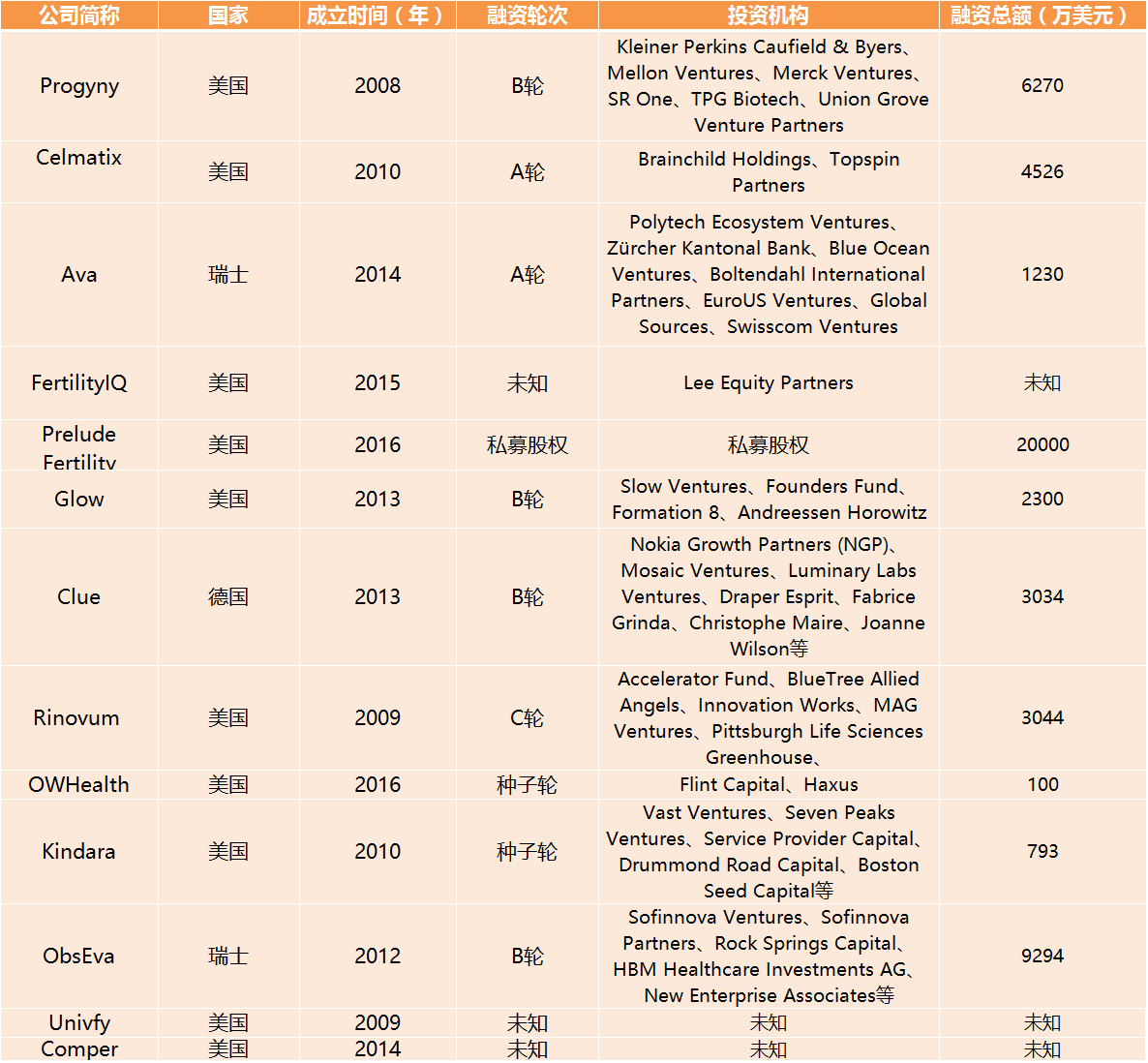
Progyny, founded in 2008 and headquartered in New York, provides comprehensive treatment plans for patients seeking fertility services, such as in vitro fertilization (IVF), egg freezing, and physician consultations, to help improve outcomes and shorten the time to pregnancy. It offers the Eeva Test, the first and only FDA-cleared early embryo viability assessment assay.
Progyny is a leading company in the field of assisted reproductive technology (ART). It has completed its Series B financing, with total funding reaching $62.7 million, backed by prominent healthcare investment firms such as KPCB. During treatment, Progyny assigns dedicated fertility nurses to provide patients with emotional support and companionship, and even helps them find suitable physicians.
In addition, Progyny has developed an algorithm embedded within its app that predicts the success rate of in vitro fertilization (IVF) by inputting factors such as blood type, partner’s semen parameters, weight, and body mass index (BMI), without relying on government big data. The average IVF pregnancy rate in the United States is 49% (www.cdc.gov), whereas patients using Progyny achieve an IVF pregnancy rate of 59%.
7.2 Celmatix
Celmatix, founded in 2009 and headquartered in New York, has completed its Series A financing round. The company collaborates with fertility clinics and specializes in big data analytics for reproductive health. Its inaugural product, Polaris, is built upon a database containing data from hundreds of thousands of patients. By comparing individual patient fertility metrics against similar cases within the database, fertility specialists can devise more targeted treatment plans and predict the conception methods with the highest likelihood of success, such as determining the optimal timing for in vitro fertilization (IVF).
Polaris has provided counseling services to approximately 30,000 female patients. The company has also developed Fertilome, a DNA-based fertility test that analyzes 49 variants across 32 genes. This test can be used to assess the risk of hereditary conditions such as endometriosis and polycystic ovary syndrome (PCOS), offering reference information for women’s preconception planning. In the future, Celmarix aims to pioneer a fertility genetics system that enables women to understand their fertility potential before becoming pregnant.
7.3 Ava
Ava, a Swiss manufacturer of wearable devices for women’s reproductive health, has completed its Series A financing. In July 2016, Ava officially launched its first product, the Ava Fertility Tracker bracelet. Priced at $199 and classified as a Class I medical device with FDA clearance, it can track women’s menstrual cycles in real time and accurately predict ovulation dates.
Unlike most conventional fertility-tracking hardware, which is largely limited to simple basal body temperature (BBT) measurements, the Ava sensor continuously measures and records nine physiological parameters—comprising 3 million data points—including pulse, respiratory rate, sleep quality, and temperature. These parameters accurately reflect the rise in hormones associated with ovulation.
7.4 FertilityIQ
FertilityIQ is a startup based in California, USA, founded by the married couple Jake Anderson and Deborah Anderson-Bialis. On its website, patients can search by location, specific physician, or clinic name to view detailed physician profiles, including metrics on communication quality, level of personal attention, responsiveness, and overall recommendations.
As a result, patients can gain a comprehensive understanding of the experience of physicians and clinics, ranging from doctors’ diagnostic and treatment plans and the quality of nursing care to clinic pricing. Naturally, physicians can also access patient information such as age, reproductive history, and even financial status. Currently, FertilityIQ has compiled data on 525 assisted reproductive technology (ART) clinics, laboratories, and other research institutions across the United States, indicating strong growth prospects.
7.5 Prelude Fertility
Prelude, founded in 2016 by serial entrepreneur Martín Varsavsky, has acquired a majority stake in Reproductive Biology Associates (RBA), the largest in vitro fertilization (IVF) provider in the southeastern United States. The transaction also includes RBA’s affiliate, My Egg Bank North America, the largest egg donation and cryopreservation bank in the U.S.
Compared with fragmented fertility services such as egg freezing, in vitro fertilization (IVF), and hormonal drug therapy, Prelude is more inclined to provide comprehensive medical fertility solutions. Its approach consists of four steps: cryopreservation and storage of eggs; embryo creation when clients are ready to conceive; comprehensive genetic screening for congenital diseases and chromosomal abnormalities; and single-embryo transfer, thereby integrating early-stage decision-making with the latest reproductive science technologies. In October 2016, it completed a $200 million private equity financing round.
7.6 Glow
Founded in California in 2013, Glow is a highly active community focused on assisted reproductive technology (ART) and maternal and child health. It is dedicated to leveraging big data to improve women’s health, including fertility outcomes, and has developed a fertility tracking application. The platform boasts 8 million users worldwide and has facilitated over 40 million health consultations.
On this platform, you can discuss popular topics related to women, such as pregnancy and parenting, read reviews of assisted reproductive technology (ART) clinics and physicians, receive professional fertility guidance from medical experts, and access discounted treatment prices. Glow operates offline clinics in California and New York, has successfully met the standards set by the Society for Assisted Reproductive Technology (SART), and employs family-certified physicians accredited by the American College of Obstetricians and Gynecologists (ACOG). The company has completed its Series B financing round, bringing its total funding to $23 million.
7.7 Clue
Glow is a German company headquartered in Berlin, Germany, founded in 2013. The company has a total team size of 45 employees and is dedicated to transforming complex data into scientific research and insights. Its app allows users to input data such as basal body temperature, enabling the program to accurately track menstrual cycles, set reminders, and help users understand their fertility status (including contraception). The company has successfully completed its Series B financing round.
7.8 Rinovum
Rinovum, a private women’s health company, has launched its flagship product, TheStork® OTC. This innovative at-home device supports reproductive health by enabling patients to facilitate natural conception and increase the likelihood of pregnancy from home. As an FDA-cleared therapy, this new treatment offers an over-the-counter, prescription-free solution for home-based preconception care.
7.9 OWHealth
Headquartered in San Francisco, OW Health raised $1 million in December 2016 to expand the reach of Flo, its menstrual cycle tracking application. Launched in October 2015, Flo is designed to help women track and accurately predict their menstrual cycles, ovulation days, and fertile windows. Users set up calendar-based cycle reminders and input extensive health data, including mood, contraceptive methods, PMS symptoms, and sexual activity. Currently, Flo has approximately 2 million monthly active users, with nearly half located in the United States and Canada. The remaining user base is distributed across countries such as Brazil, Germany, Italy, and Russia.
7.10 Kindara
Kindara is a women’s health company headquartered in Boulder, Colorado. The company’s app enables users to accurately track their menstrual cycles, monitor changes in basal body temperature, and record ovulation timing, while also facilitating connections with other users who are planning for pregnancy through its community feature. Tailored to different needs, Kindara helps women precisely capture and manage key data in preparation for conception.
7.11 ObsEva
ObsEva, founded in Switzerland in November 2012, is a clinical-stage biopharmaceutical company dedicated to the development and commercialization of novel drugs and therapeutics for female reproductive health disorders. ObsEva aims to address the needs of patients with reproductive health challenges, improve current standards of care, and reduce pregnancy-related complications through innovative treatments in reproductive health. Its team comprises trained obstetricians and gynecologists who possess an in-depth understanding of the needs of both patients and physicians.
7.12 Univfy
Univfy improves patients’ pregnancy rates and reduces the cost of IVF through accurate, personalized predictions of IVF treatment plans. VCBeat has learned that the company was founded in 2009 by a team of Stanford experts in reproductive medicine, embryo and uterine research, and biostatistics. Its scientifically validated, patent-protected predictive analytics have analyzed data from over 150,000 IVF cycles and 500,000 embryos, with the aim of developing big data prediction models for pregnancy success rates for top-tier IVF centers worldwide.
7.13 Comper
Founded in Silicon Valley in October 2014, Comper’s core product is a smart fertility monitor. Comper has maintained long-term collaborations with research teams from Germany, applying statistical prediction models to natural family planning. For instance, by integrating the TTS model into the Comper Female App and leveraging precise data collected by the fertility monitor, the accuracy of ovulation prediction can be significantly improved. Currently, with the continuous growth in sales of products such as its smart fetal heart rate monitor, Comper has established a strong reputation among mid-to-high-end female consumers.
Overseas medical care is gradually becoming a popular industry. Currently, major domestic providers offering end-to-end consultation and services for seeking medical treatment abroad include Hope Ark, Shengnuo Yijia, and Medray.
By partnering with renowned overseas medical institutions and hospitals, these companies provide comprehensive services—including airport pickup, accommodation arrangements, and interpretation—for patients seeking medical treatment abroad. They address a range of challenges associated with remote international consultations and overseas medical care, such as selecting and scheduling appointments with foreign hospitals and specialists, securing reductions in overseas medical costs, obtaining medical translation services, and arranging for overseas companionship and travel.
Among these, overseas IVF services are particularly popular. As consumption upgrades, patients with sufficient financial means are increasingly willing to seek medical treatment abroad. So, how high are the profit margins for assisted reproductive technologies overseas? An expert who has long been engaged in U.S. IVF services told reporters that, compared to top-tier tertiary hospitals in China, the net profit margin for surgical procedures in U.S. hospitals is approximately 40%. Due to the relatively higher costs of physicians and medical staff, this profit margin is slightly lower than that of domestic hospitals.
In November 2016, Ctrip announced a strategic investment in ZhiTe Medical, a U.S.-based IVF service provider. ZhiTe Medical facilitates medical travel for in vitro fertilization (IVF) and has established partnerships with seven renowned U.S. fertility centers, including the California Center for Reproductive Medicine, the Los Angeles Fertility Center, and the New England Fertility Center. To date, ZhiTe Medical has assisted nearly 1,000 families in traveling to the United States to undergo IVF treatment. On April 13, 2017, Ctrip launched its first egg-freezing tourism package on its app and website, priced at RMB 218,000 for a seven-day itinerary.
8.1 Overseas IVF Services Can Cater to Patients’ Personalized Needs
Before conducting this review, the reporter searched Weibo and Zhihu and found countless agencies and institutions offering overseas IVF services. It was easy to join a WeChat group dedicated to U.S.-based IVF treatment, where a 30-year-old woman who had undergone eight egg retrieval cycles in the United States finally achieved a successful pregnancy. She enthusiastically shared her arduous journey to conceive with the reporter.
During their information search, reporters identified several frequently mentioned overseas fertility clinics and hospitals, such as Jetanin, BNH Hospital, and iBaby in Thailand; Songzi Niao Hospital in Taiwan, China; and Kato Women’s Clinic and HANABUSA IVF Clinic in Japan. In terms of cost, the United States and Europe have the highest prices, ranging from $30,000 to $50,000.
For patients seeking IVF treatment overseas, in addition to considering technical expertise, physician-designed protocols, and laboratory standards, primary factors include the availability of services such as sex selection, genetic testing, surrogacy, and egg donation under local regulations, as well as differences in hospital environments and service quality. Certain regions have more open policies, such as Southern California in the United States.
Many users are unable to meet their personalized needs within China, a phenomenon that is likely to persist in the long term. With the significant improvement in living standards in China today, overseas travel has become increasingly popular, and overseas reproductive medical services have become affordable for average households.
This sector will continue to attract entrepreneurs. Currently, some domestic medical institutions, such as Haoyunbang, are also expanding into overseas reproductive health services to specifically cater to Chinese users.
Huang Xiaomei, founder of 51 Haoyun, which entered the assisted reproductive technology sector in 2016, stated that overseas IVF will not become mainstream in the future. However, due to policy-related factors, certain special needs of a small subset of patients—such as egg donation and surrogacy—cannot be addressed domestically and lack alternative clinical solutions, thereby necessitating recourse to services abroad.
8.2 Limited Number of Overseas IVF Cycles
Shi Qiong, Marketing Director at Elite YingIVF, told reporters that the company primarily provides IVF services in Japan and the United States. Since holding its first patient meetup in October 2013, the company has signed approximately 300 new clients annually. The patients’ birth years range from 1969 to 1992, representing a wide age span. Currently, the company collaborates with Kobe Ei Hospital in Japan and the Reproductive Center of San Diego Ei Hospital.
Due to geographical proximity and the absence of time difference, Japan primarily offers mild stimulation protocols for IVF patients, which are particularly suitable for women of advanced maternal age, those with elevated FSH levels, and those with diminished ovarian reserve. The cost is approximately 50% higher than in China.
Taishengbao offers assisted reproductive technology (ART) services in Thailand. Its founder, Chen Daren, told reporters that Peking University Third Hospital performs over 10,000 treatment cycles annually. In contrast, the entire country of Thailand serves only approximately 5,000–7,000 Chinese clients per year, with the total number of completed cycles falling short of the volume handled by a single hospital in China.
In contrast, Thailand’s policies are more liberal, with less stringent requirements for third-generation IVF. To achieve eugenic outcomes, patients are permitted to directly opt for third-generation IVF technology, thereby saving time costs. Compared with China, Thai Shengbao has integrated the medical components of treatment with ancillary services to create a comprehensive “medical service” product.
He believes that overseas medical services, whether in clinical care or patient support, are predominantly labor-intensive and require a stable, well-trained, and properly managed workforce.
The likelihood of a short-term relaxation of domestic policies is low, while overseas policies are unlikely to become abruptly stricter; therefore, the current risk associated with the overseas IVF business is minimal. However, reporters believe that this intermediary-based business model has low barriers to entry, theoretically allowing individuals to operate independently, which makes it considerably challenging to build a scaled enterprise.
Special thanks to Youjin Capital for their assistance with this article. Founded in 2015, Youjin Capital maintains offices in Beijing and Hong Kong and was established by professionals from renowned domestic and international financial institutions. Prior to founding Youjin Capital, the partners had cumulatively made outbound investments totaling $1.9 billion. In the healthcare services sector, the firm focuses on consumer-oriented subsectors, such as assisted reproduction, medical aesthetics, internet healthcare, and health management.
References:
"VBInsight - Assisted Reproductive Technology: Market Expansion Under License Liberalization, Sustained Growth Expected"
GF Securities - Pharmaceutical and Biological Industry: In-Depth Research on the Assisted Reproductive Technology Industry: Assisted Reproductive Drugs
"Huachuang Securities - In-Depth Research Report on the Pharmaceutical and Biotechnology Industry: Special Report on China's Assisted Reproductive Technology Sector"
In-Depth Discussion on Chronic Disease Entrepreneurship: Triple Challenges and Countermeasures Facing “Internet + Reproductive Medicine”
http://www.kpcb.com/blog/vcs-see-opportunity-in-growing-fertility-market