

Baidu's Return to Tech: The 'B' vs. 'AT' Battle in AI-Driven Healthcare Is Just Beginning
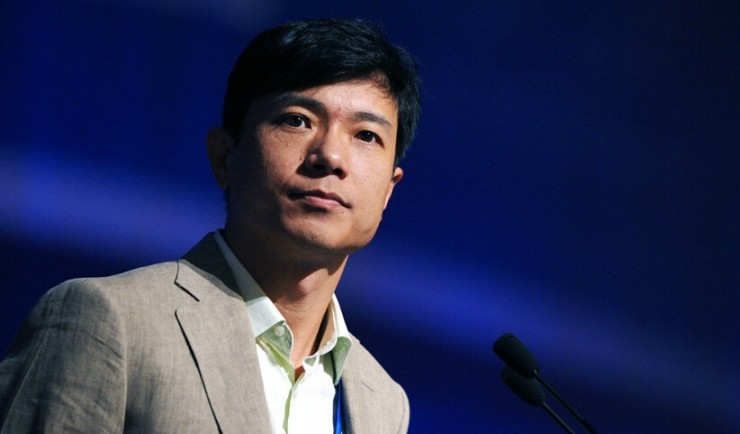
On May 27, 2017, in Wuzhen, Ke Jie rose from his seat after completing his 126th move as White. Confronted with the insurmountable gap in strength against AlphaGo, he broke down in tears on the spot.
In recent years, the rapid advancement of artificial intelligence has left its human creators increasingly apprehensive.
The Second Wave of Automation: Making Artificial Cognition, Low-Cost Sensors, Machine Learning, and Distributed Intelligence the Focus of Transformation.
With heavy investments from companies such as Google, IBM, and Baidu, the reach of artificial intelligence has begun to extend into elite professions. Programmers, lawyers, architects, journalists, and even doctors—once the darlings of their respective fields—now appear diminished in its glow.
Unemployment is the primary element of fear, but its root lies in the anxiety people feel toward things beyond their control.
Imagine a terrorist organization loading an autonomous vehicle with explosives and reprogramming it to serve as a lethal weapon. Such life-taking tools, akin to “executioners,” are referred to as “AI weapons.”
Yuval Noah Harari, the Israeli historian and author of *Sapiens: A Brief History of Humankind*, has made an even bolder prediction: in 300 years, humans will no longer be the dominant life form on Earth—if, that is, humans still exist at all.
Just as people were still worrying about whether Ke Jie could emerge from the shadow of his crushing defeat by AlphaGo, the Go player who was “inspired by a deity” unleashed an overwhelming force, subjecting the South Korean champion to a brutal “dimensional strike.”
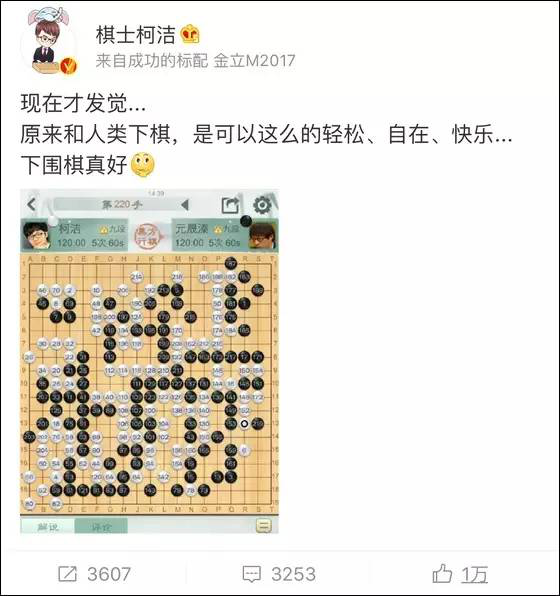
At the “2017 China International Big Data Industry Expo,” Baidu founder Robin Li also refuted public skepticism about artificial intelligence:
“The industry generally divides artificial intelligence into three stages: narrow AI (the current state of AI), general AI (where computers possess capabilities equivalent to the human brain), and superintelligence (where computers surpass the human brain). In reality, all AI technologies, no matter how advanced, fall under the category of narrow AI. In the future, machines may approach human capabilities infinitely closely, but they will not be able to surpass them. Human exploration, development, and evolution of artificial intelligence will bring about optimistic and controllable impacts…”
While these remarks express a positive attitude toward the application of technology, they fail to adequately address questions such as “Will superintelligent AI with independent consciousness destroy humanity?” and “Will superintelligent AI bring immortality or extinction?”
Baidu’s Aggressive Strategy in Artificial Intelligence
In 2015, China issued a total of 34 AI-related policies. By 2016, the number of such policies had exceeded 100.。
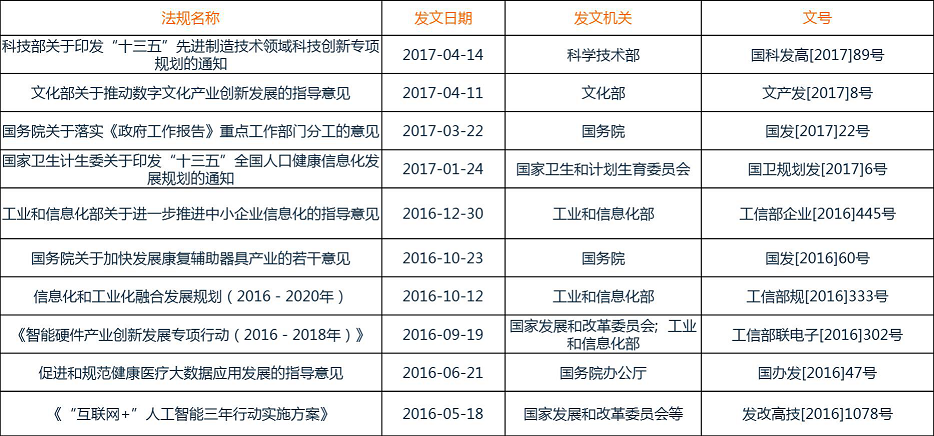
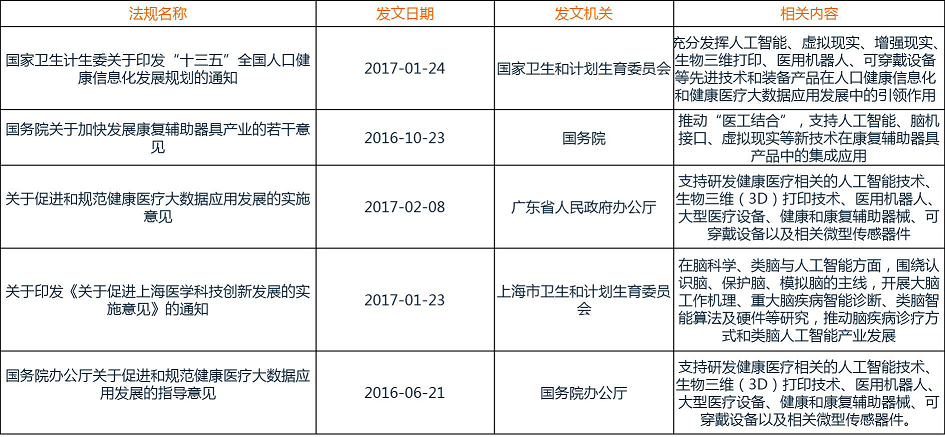
Under the new round of industrial transformation, the country'sPolicies have also been issued one after another.
On April 19, 2017, in a small conference room at the Shanghai Auto Show, Lu Qi, who had just completed his first 90 days as President and Chief Operating Officer of Baidu Group, announced a “nuclear-level” piece of news: the Baidu “Apollo” plan, which outsiders viewed as potentially transformative for both the artificial intelligence and traditional automotive sectors.
In fact, the early signs of Baidu’s “Apollo Project” were already evident as far back as 2016. At that time, in Wuzhen, Baidu joined forces with automotive partners such as BAIC, Chery, Changan, and BYD to jointly showcase 18 autonomous vehicles. Spanning multiple platforms and models, all of these vehicles exclusively adopted Baidu’s autonomous driving solution.
This solution encompasses four key components: a software platform, a hardware platform (including vehicle control and sensors), perception capabilities, and core services (such as high-definition maps). According to Baidu, the company aims not only to build a comprehensive solution but also to share services and advanced technologies, thereby establishing a unified technical platform.
Baidu'sDeep Speech2(Voice Recognition System), which was ranked second among the “Top 10 Breakthrough Technologies of 2016” by MIT Technology Review. Baidu’sCV(Computer vision), particularly in the field of autonomous driving, has also been ranked first globally by MIT Technology Review. Among the four AI giants listed by U.S. Fortune magazine, Baidu is the only Chinese company to make the list (the other three being Google, Microsoft, and Facebook).
"Discard the dross, retain the essence."
For a long time, Baidu Search has served as Baidu Healthcare’s “Vanguard” role. However, the 2016 Wei Zexi incident thoroughly turned Baidu into a target of public outrage. MedicalBid Ranking, this highly lucrative deal has finally come to an end amid widespread condemnation.
In 2017, the complete dissolution of Baidu’s Healthcare Division and the permanent shutdown of “Baidu Doctor” seemed to signal to the outside world that Baidu had ended its healthcare ventures in recent years with a resounding defeat.
Regarding healthcare, Robin Li once said, “Baidu is closely connected with certain industries, such as the healthcare sector. Initially, Baidu’s understanding of healthcare was centered on O2O (Online-to-Offline), aiming to address users’ questions about where to seek medical care and how to register for appointments…”
Perhaps Baidu initially oversimplified healthcare, leading to the ensuing chaos within its medical sector. Ultimately, this stems from the fact that scenarios such as O2O services or lightweight consultations cannot adequately bear the “weight” of healthcare through a “light” business model.
Before shutting down “Baidu Doctor,” the two-year-old medical service had been launched in 343 cities across China, covering 12,862 hospitals and serving more than 9 million users. With such an abrupt halt, does Baidu’s decisive move signal its firm intention to abandon the healthcare sector?
Certainly not! Destruction precedes creation; before the necrotic fruit tree was felled, it had already sown a seed. Now, that seed is poised to break through the soil.
At the Baidu Cloud Computing Strategy Conference in July 2016, Baidu Cloud proposed a trinity development strategy of “cloud computing + big data + artificial intelligence.” Subsequently, in September 2016, Baidu officially launched Baidu Medical Brain, built upon Baidu Brain.
As a specific application of Baidu Brain in the healthcare sector, Baidu Medical Brain leverages the collection and analysis of vast amounts of medical data and professional literature to design AI-driven products. It simulates the clinical consultation process, engages users in multi-turn dialogues, and provides final recommendations based on their symptoms through iterative verification. During this process, it collects, aggregates, categorizes, and organizes patients' symptom descriptions, alerts physicians to additional diagnostic possibilities, and assists primary care physicians in completing consultations.
In April this year, Baidu Medical Brain announced a partnership with Shequ 580. According to official statements from Shequ 580, as of now, the company hasSigned contracts with 2,000 urban community health centers,More than 25,000 family doctors provide services through the Community 580 platform.
Head of Technology, Baidu Medical BrainFan Wei"Dr., when discussing this collaboration,"stated: “The collaboration with Community 580 will further expand the possibilities of “AI + Healthcare,” providing intelligent solutions for traditional healthcare, whileBaidu Medical Brain will also be continuously optimized and enhanced in practical applications,Creating More for Patients, Doctors, and the Community 580 PlatformofNew Value, and in the futurePlaceTo Better PromoteTiered Medical CareNational policies are being implemented at the grassroots level,BetterServing the vast population of grassroots patients, to help address the difficulty citizens face in accessing medical care.”
Following closely on the heels of May, Baidu Medical Brain announced a partnership with Zhongkang Cloud Technology. By integrating Baidu Medical Brain’s intelligent consultation module into Zhongkang Cloud’s Home Cloud Hospital platform and tightly coupling it with health and medical cloud services, the collaboration leverages regional central hospitals to achieve deep integration of in-hospital clinical diagnosis and treatment with out-of-hospital health management.
From a technical perspective, offerings such as Baidu Cloud and Baidu Medical Brain can be categorized into three layers from the bottom up: IaaS (Infrastructure), PaaS (Platform), and SaaS (Software). Baidu Cloud handles the IaaS and PaaS components, while Baidu Medical Brain operates as a SaaS-level application and service.
What Baidu truly desires is the “data” and the ethereal cloud, which outsiders often dismiss as mere theoretical exercises. Through Baidu Cloud, it aims to fuel the big data computing capabilities of Baidu Medical Brain. Once medical data accumulates to a sufficient scale, its application scenarios will become highly imaginative, includingEpidemic Monitoring, Disease Prevention and Control, Clinical Research, Medical Diagnostic Decision-Making, Healthcare Resource Allocation, Home Telemedicineand other scenarios.
The Debate Between “B” and “AT” Is Far From Over
The BAT trio, hyped by the media for years, has seemingly devolved into a “duopoly” of Tencent and Alibaba due to Baidu’s sluggish performance in recent years.
However, this protracted “Battle of the Three Heroes,” asThe Arrival of the Age of Artificial Intelligence,It is far from a situation where either party has fallen behind. Baidu’s “first-mover” advantage in artificial intelligence is now coming to fruition. Even its competitor, Ma Huateng, could only humbly remark at the recent “Shenzhen IT Leaders Summit”: “In fact, Baidu is further ahead in artificial intelligence; Tencent is still lagging behind…”
Artificial intelligence has long become a fiercely contested battleground. The next round of competition will be not only a contest of “brains” but also a battle over application scenarios. Following Alibaba Cloud’s launch of ET, Tencent established an artificial intelligence laboratory in Seattle to strengthen its efforts in fundamental research. Amid intense rivalry among multiple tech giants, securing a share of the AI market is by no means easy for any player. The key lies in maximizing one’s competitive advantages.
Alibaba’s advantage lies in its early push into Alibaba Cloud. In April, “Tech Ten Points” released a ranking of revenue among China’s professional cloud computing providers. According to this list, Alibaba Cloud topped the chart in 2016 with revenue of RMB 5.56 billion, while Microsoft Azure, ranked second, generated only one-third of that amount.
It is precisely because of its early and in-depth strategic layout that Alibaba Cloud was able to participate in Guizhou as a builder of big data platforms. “Guizhou on the Cloud” is based on Alibaba Cloud’s Apsara large-scale distributed computing system. As of April 14, 2017, a total of 136 government users were on the “Guizhou-Cloud Big Data"Applied for cloud service resources and deployed 612 application systems."
Tencent’s strengths lie in its ecosystem and big data. According to Mary Meeker’s 2016 data, all of Tencent’s platforms combined—including WeChat, QQ, QQ Browser, Tencent Video, and Yingyongbao (App Store)—account for more than 50% of the time Chinese users spend on the internet. WeChat has surpassed 800 million users, while Mobile QQ and QQ Browser are also platforms with hundreds of millions of users.
The maturity of the ecosystem and the accumulation of multi-scenario data have enabled Tencent to achieve more precise user reach and more comprehensive user profiling capabilities. This allows Tencent to deliver precise, personalized services when addressing specialized sectors such as healthcare.
Baidu’s advantages lie more in its technology.
Public information indicates that Baidu has filed a total of 1,548 invention patents in artificial intelligence-related fields, including speech recognition, image recognition, natural language processing, autonomous driving, machine learning, and deep learning. It has also been granted multiple core AI patents, such as "Method and Apparatus for Processing Single-Channel and Multi-Channel Convolutional Layers" and "Training System for Backpropagation Neural Network (DNN)."