

SigTuple Files for IPO: Revolutionizing Disease Screening with AI in India and Beyond

Accel
Venture Capital Firms

sigtuple
Intelligent Diagnosis Solution Provider

SigTuple is a technology startup founded in Bangalore, India, known as the “Silicon Valley of Asia.” Its goal is to leverage machine learning, a subset of artificial intelligence, to provide hospitals with precise, safe, timely, and efficient blood screening solutions. In February 2017, Accel Partners led SigTuple’s $5.8 million Series A financing round, setting a record for the largest single funding round in India’s AI-driven healthcare sector to date.
What Makes SigTuple Unique? Let’s Take a Look.
Three Data Engineers’ Cross-Industry Venture: From Finance to Healthcare
Unlike most medical technology startups, none of SigTuple’s three founders had any prior experience in the healthcare industry.
Chief Executive Officer (CEO) Rohit Kumar Pandey is an outstanding graduate of the National Institute of Information Technology in India. He has been employed at American Express, where he rose from a regular programmer to department director over eight years.
Chief Technology Officer (CTO) Apurv Anand is a graduate of the Indian Institute of Technology, India’s premier institute of technology. Prior to founding SigTuple, he worked in the technology departments of several multinational corporations, including Qwest, Yahoo!, and American Express.
Chief Scientific Officer (CSO) Tathagato Rai Dastidar shares a remarkably similar background with Apurv Anand. He also graduated from the Indian Institute of Technology and has held positions at renowned companies such as National Semiconductor, Yahoo!, and American Express. A slight distinction is that Tathagato holds a Ph.D. in Computer Science and Engineering, making him the most highly educated among the three founders.
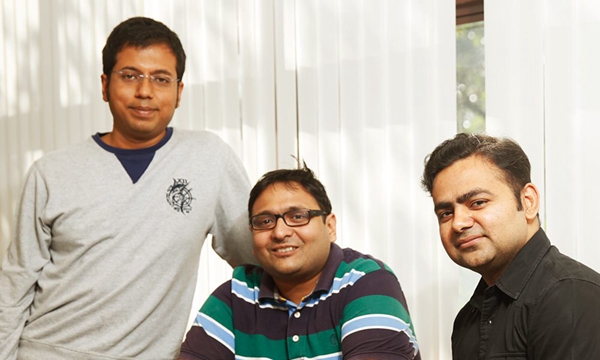
Figure 1: Founders Tathagato (left), Apurv (center), and Rohit (right)
The intersection of the three individuals stemmed from their work experience at the financial giant American Express. From 2012 to 2014, while working in the company’s big data laboratory, they were first exposed to artificial intelligence. Convinced that this technology would change the world, they conceived the idea of co-founding a startup.
Initially, they considered leveraging their technological expertise and experience in the financial industry to enter the promising field of fintech. However, upon further investigation, they discovered that the fintech sector had already become a fiercely competitive red ocean. Consequently, they shifted their focus to the digital health sector, which also held immense potential but had been developing slowly due to various constraints. In April 2015, the three founders established SigTuple in Bengaluru, beginning development of an artificial intelligence platform capable of applying machine learning to medical data.
AI + Healthcare Data = Intelligent Screening Solution
SigTuple’s AI platform, named Manthana, constructs algorithms by learning from existing medical data. Based on these algorithms, it analyzes visualized medical images to rapidly draw conclusions and assist physicians in diagnosis. Traditional disease screening methods are time-consuming, costly, and heavily influenced by subjective factors such as physicians’ experience levels and emotional states. SigTuple effectively addresses these pain points.
Taking blood tests as an example, let’s examine how SigTuple addresses the aforementioned issues:
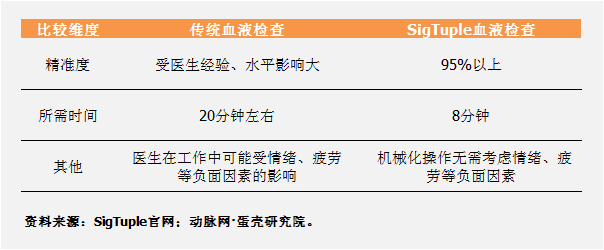
Figure 2: Comparison with Traditional Blood Testing Methods
In SigTuple’s roadmap, Manthana is designed to provide screening for five conditions: peripheral blood smear examination, urine microscopy, semen analysis, ophthalmic OCT imaging, and chest X-rays. However, only the peripheral blood smear service has been launched on a limited scale, while the other four remain in the research and development phase.
The Manthana platform functions by analyzing medical images on the backend for diagnostic purposes, so how are these images acquired at the frontend? SigTuple has developed five image acquisition systems tailored for screening different diseases. Currently, the most mature offering is the Shonit blood analyzer, designed for peripheral blood smear examination. This blood testing system can screen for parasitic infections such as malaria and anemia.
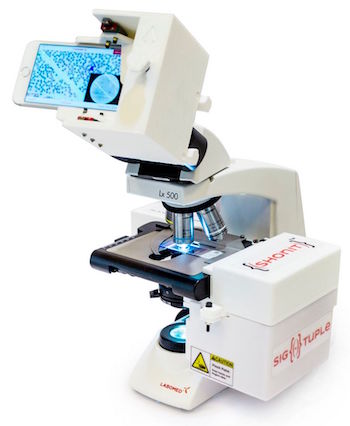
Figure 3: Shonit Blood Analyzer
The Shonit hematology analyzer represents an innovative integration of microscopy and smartphone technology. By placing a blood specimen on the stage, the microscope transmits images to a smartphone, which then connects to the Manthana platform via a dedicated app. An analysis report is generated within 8 minutes, whereas traditional blood tests typically take approximately 20 minutes and are subject to physician subjectivity.
To ensure equipment quality, all Shonit hematology analyzers are manufactured in-house by SigTuple. However, as the product line expands and the market grows, production may be outsourced to contract manufacturers in the future.
Integrated Partner-Customer Model, Binding a Community of Shared Interests
Data is key to training machine learning models and developing algorithms. SigTuple’s partners in the medical data space are also its customers—hospitals and pathology laboratories. Currently, it has established pilot collaborations with 17 medical institutions, which receive priority and discounted access to SigTuple’s new products on the condition that they provide de-identified medical data to SigTuple.
SigTuple adopts a hardware-enabled revenue model. It sells or leases medical devices to healthcare institutions and generates revenue by charging a service fee of $0.40 to $0.80 per test report.
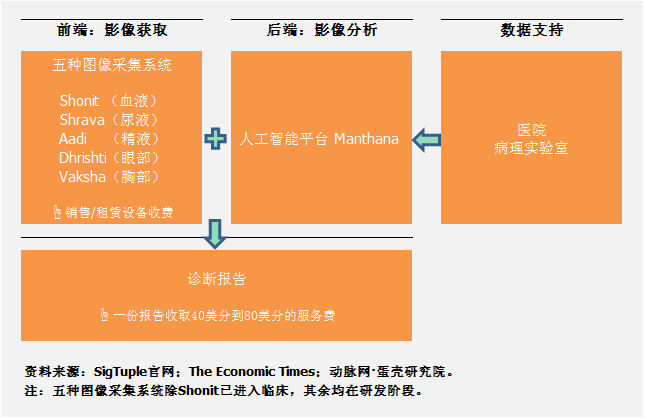
Figure 4: Disease screening solutions provided by SigTuple
Based in India, with a Global Outlook
Since its inception, SigTuple has completed two rounds of financing: a $740,000 seed round and a $5.8 million Series A round, with the latter setting a record for the largest single-round financing in India’s healthtech sector to date.
Accel Partners, SigTuple’s largest investor, has boasted an impressive track record in India over the past 12 years, having successfully backed niche unicorns such as the e-commerce platform Flipkart, the fashion portal Myntra, and the data analytics firm Mu Sigma. SigTuple may well become its first badge of honor in the healthcare sector.
Other investors included institutional investors such as IDG Ventures India and VH Capitals, as well as numerous prominent individual investors. Flipkart’s co-founders, Sachin Bansal and Binny Bansal, participated in both funding rounds. The investor roster also featured leading technology experts, including Amit Singhal, former Senior Vice President of Uber, and Debanjan Mukherjee, a hardware engineer at Google.
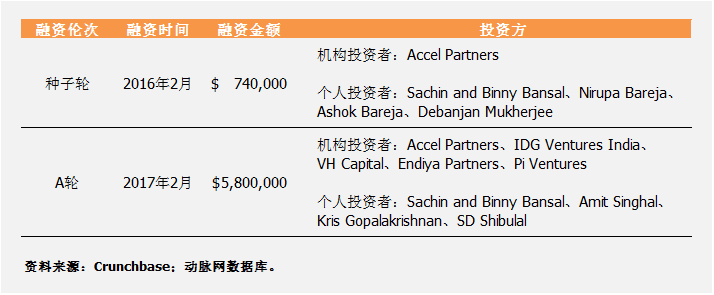
Figure 5: SigTuple’s Financing History
With such a robust support team, SigTuple is naturally confident about its future. It is reported that the new round of financing will be used for product development and talent acquisition. If all goes well, the team will expand from the current 21 members to around 50 by the end of the year, and the company will enter overseas markets. The Middle East and Southeast Asia are likely to be the first stops in SigTuple’s international expansion.
Industry Peer—Athelas
In recent years, with the maturation of artificial intelligence technology, its application in the medical field has been experiencing rapid growth. However, when narrowed down to startups applying machine learning to blood testing, there are very few.
VCBeat · VCBeat Institute, after screening similar companies in the industry, considers Athelas, a blood screening company based in Mountain View, USA, to be the most suitable benchmark for SigTuple. Let us now examine how Athelas has approached this space.
The company was founded in 2014 by Tanay Tandon, a teenage tech prodigy who rose to fame in Silicon Valley at the age of 17.
Athelas transmits blood images to a backend machine learning platform via a microscope paired with a smartphone. Within minutes, it can send the test results to patients. Currently, this system supports screening for blood disorders such as leukemia, dysentery, and inflammation. However, unlike SigTuple, whose customer base consists of medical institutions, Athelas targets patients directly who undergo blood testing services.
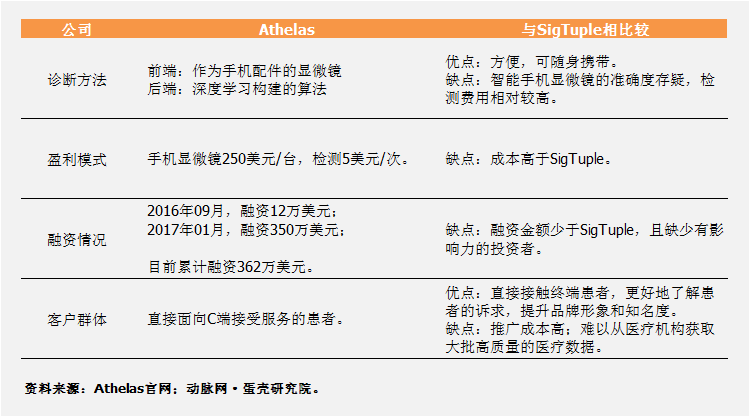
Figure 6: Comparison of Athelas and SigTuple
Reflections for Chinese Entrepreneurs
VCBeat • VBInsight intends to adopt the perspective of entrepreneurs and presents the following analysis and reflections on whether startup cases like SigTuple can be replicated and adapted in China, for readers’ reference:
1) Market Size: Is there demand for this in China? How intense is the competition in the domestic market?
Blood tests are the first step in diagnosing a variety of diseases. Currently, there are no specific figures on the market size of blood testing published by market research institutions in China. However, given the characteristics of “high base volume and low frequency,” the market potential should certainly not be overlooked.
According to data from the “Analysis of Market Share of Domestic Hematology Analyzers in 2015” published by LabMed Network, Sysmex Corporation (Japan) held a 65% market share, followed by Mindray with 10%, while all other players accounted for less than 3% each, resulting in a market dominated by a single major player. With the Chinese government’s strong promotion of the localization of medical devices during the 13th Five-Year Plan period, domestic brands are expected to receive significant support, which is likely to reshape the competitive landscape. Although Sysmex’s hematology analyzers are priced at a premium, they excel in stability. This indicates that accuracy remains a key consideration for hospitals when purchasing diagnostic equipment.
Against the backdrop of the localization of medical devices, domestically produced diagnostic equipment that matches the quality standards of foreign brands will have very broad prospects.
2) Data Source: Is it possible to obtain vast amounts of medical data from healthcare institutions?
High-volume, high-quality data form the foundation of machine learning; however, acquiring such medical data in China presents significant challenges. First, domestic healthcare institutions, particularly tertiary Grade A hospitals, hold substantial bargaining power. What incentive do they have to disrupt their existing revenue streams by collaborating with such companies? Yet without collaboration, how can sufficient data be collected to train artificial intelligence systems? This creates a classic “chicken-and-egg” dilemma. Second, hospital information systems and electronic medical records operate as isolated silos. Integrating data from disparate sources into a unified system may also pose considerable technical challenges.
3) Commercial Viability: Is the revenue model feasible in China?
According to current reports from foreign media, the average price of traditional blood tests in India is around $7. SigTuple’s blood testing service costs less than traditional blood tests, making it competitively priced.
In China, the cost of a complete blood count (CBC) test is approximately RMB 20. The procedure is widely accessible, and the testing fee itself is relatively low. Therefore, unless there are significant improvements in both turnaround time and analytical precision, manufacturers will find it difficult to persuade healthcare institutions to replace their existing traditional laboratory equipment with new hematology analysis systems. Furthermore, to replicate this model within the Chinese market, reducing equipment manufacturing costs and operational expenses represent two viable avenues for exploration.