

How Liu Kanglin, Senior Vice President of Health160, Drives the Implementation of Tiered Diagnosis and Treatment
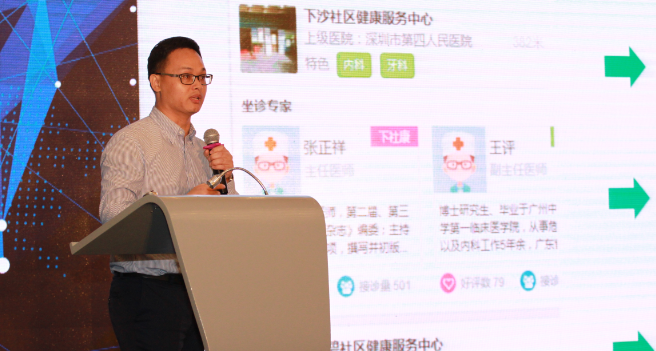
Liu Kanglin
Currently serves as CEO of Shenzhen 160 Network Technology Co., Ltd. and Senior Vice President of Shenzhen Ningyuan Technology Co., Ltd. Previously held senior executive positions at large enterprises including Yonyou Software, Kingdee Group, and Kingdee Medical.
Recently, the “2017 China Primary Healthcare Innovation Practice Forum,” jointly hosted by VCBeat (WeChat ID: vcbeat), Eggshell Research Institute, and the China Association for Promotion of Rehabilitation Technology Translation and Development, was held in Chengdu.
Liu Kanglin, Senior Vice President of Health 160, delivered a keynote speech titled “Health 160 Online Hospital Facilitates the Implementation of Tiered Diagnosis and Treatment.” He elaborated on how Health 160 leverages its online hospital platform to support tiered diagnosis and treatment, focusing on aspects such as the company overview, background, the Health 160 Online Hospital, and core competitive advantages.
Health 160 (www.91160.com) is China’s leading internet healthcare service platform, with the vision of “building an online hospital for the Chinese people” and a commitment to helping the public improve their medical care experience. It provides patients with services such as appointment registration, tiered diagnosis and treatment, medical guidance consultations, internet-based payments, waiting reminders, delivery of test reports, out-of-hospital follow-ups, doctor-patient communities, and health management.
Health 160 primarily serves three categories of clients: large public hospitals, primary healthcare institutions, and the integrated health industry chain, thereby realizing its profit model. To date, among all mobile internet healthcare companies, Health 160’s core competitiveness lies in data, which also serves as the driving force behind its development. Currently, the Health 160 platform has 100 million real-name registered users, handles 200,000 appointment registrations per day, has cumulatively served 250 million patient visits, and has generated a total transaction value exceeding RMB 1 billion.
What initiatives has Health 160 implemented for primary healthcare? How does it facilitate the implementation of tiered diagnosis and treatment?
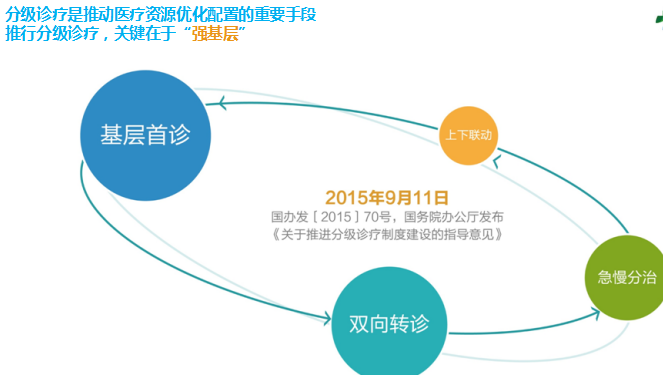
At the 2016 National Conference on Health and Wellness, Xi Jinping, General Secretary of the Central Committee of the Communist Party of China, President of the State, and Chairman of the Central Military Commission, attended the meeting and delivered an important speech. President Xi explicitly instructed that healthcare reform should focus on advancing the development of basic medical and health systems. Tiered diagnosis and treatment, modern hospital management, universal health insurance, pharmaceutical supply assurance, and comprehensive regulation are recognized as China’s five fundamental medical and health systems.
Meanwhile, seven departments, including the State Council Office of Healthcare Reform, issued the Guiding Opinions on Promoting Family Doctor Contract Services, requiring the launch of family doctor contract services in 200 pilot cities for comprehensive public hospital reform in 2016. Priority coverage was to be given to the elderly, pregnant and postpartum women, children, persons with disabilities, as well as patients with chronic diseases such as hypertension, diabetes, and tuberculosis, and those with severe mental disorders. By 2017, the coverage rate of family doctor contract services was to reach over 30%, with the coverage rate for key populations exceeding 60%. By 2020, efforts were to be made to expand contract services to the entire population, establish long-term and stable contractual service relationships, and basically achieve full coverage of the family doctor contract service system.
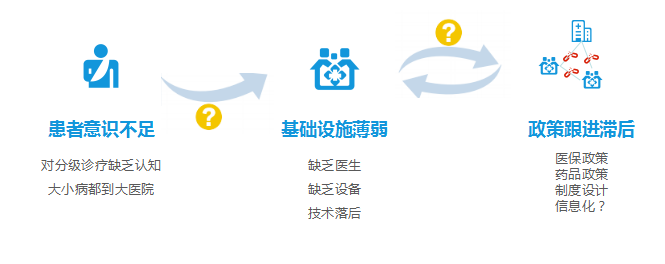
Despite Policy Guidance, Primary Healthcare Still Faces an Awkward Predicament: Mainly Reflected in the Following Three Aspects:
1) Primary healthcare institutions: limited brand influence, insufficient physician resources, inadequate investment (in personnel, funding, and materials), and low patient volume;
2) Primary care physicians: low income, heavy workload; family doctor services are merely perfunctory; lack of motivation for health management; insufficient justification for upward referrals; shortage of general practitioners;
3) Community residents: What do community health centers actually do? Do they perceive general practitioners as unprofessional and offering no tangible services, thus considering it more reliable to seek care at large hospitals?
In the face of the challenges facing primary healthcare, what are the advantages of Health 160? How does it support primary healthcare and tiered diagnosis and treatment?
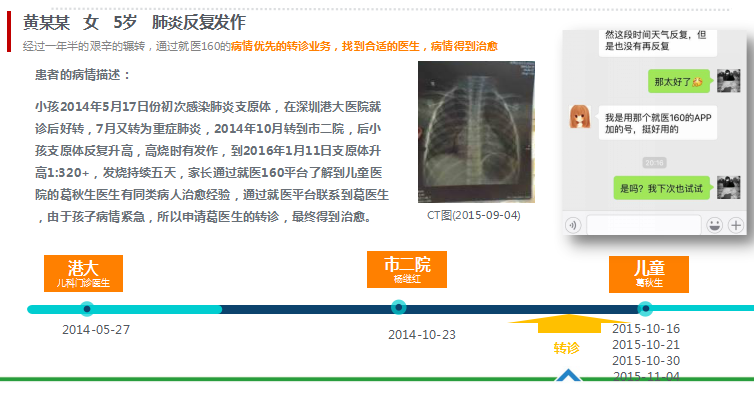
The first is operations., the internet emphasizes a patient-centric approach, ensuring users have an ultimate experience. The medical services provided by Health 160 are the fastest to reach users. For example, there was a five-year-old girl who suffered from recurrent pneumonia and frequently visited hospitals. To ensure she received better care, her parents used the Health 160 platform to facilitate her transfer from a community hospital to a larger hospital, where she received excellent treatment;
The second is specialty, particularly in the area of doctor-patient communication, by conducting live broadcasts and promoting community physicians. Focusing primarily on community doctors in the Luohu District, a number of them have gained online celebrity status. For instance, a traditional Chinese medicine (TCM) practitioner at a community health center has attracted patients who travel specifically from Shanghai to seek his medical care.
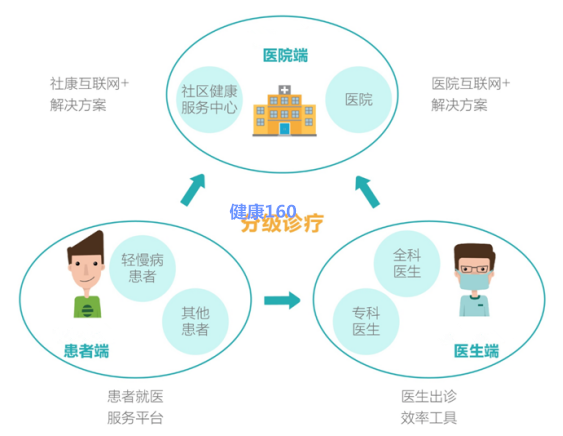
The third advantage is the product's tripartite linkage.Currently, most mobile internet products focus on only one end—serving either healthcare institutions, patients, or physicians. In contrast, Health 160’s product ecosystem encompasses all three ends, establishing effective tripartite integration to deliver greater value.
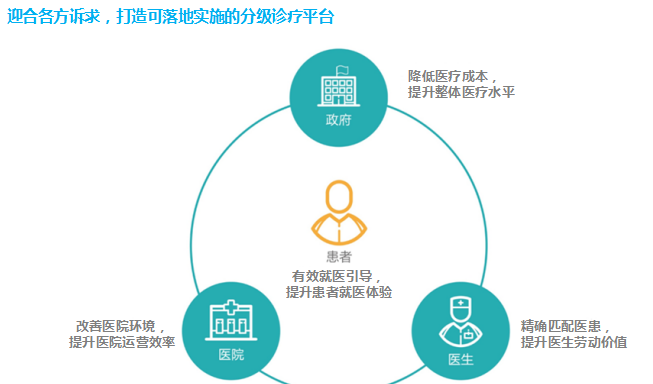
To realize mobile internet healthcare and promote the implementation of tiered diagnosis and treatment, recognition from multiple stakeholders is required. First, patient acceptance is essential; this involves improving patients’ healthcare experience and making it more convenient for them to seek care at community-level facilities. Second, community healthcare institutions must gain recognition. While patients may be willing, these institutions must meet patient needs and enhance operational efficiency. Finally, physician acceptance is crucial. It is necessary to motivate physicians and help users better match with appropriate doctors. The key lies in leveraging internet technologies to connect suitable patients with suitable physicians, thereby enhancing physicians’ professional value and demonstrating the value of their clinical outcomes.
In the future, medical care and health management will be inextricably linked, necessitating an integrated online-offline approach. Whether through internet hospitals or tiered diagnosis and treatment systems, collaboration with physical hospitals is essential. Health 160 has always adhered to partnering with medical institutions to jointly serve patients, aiming to extend this medical service platform to cover pre-diagnosis prevention and post-diagnosis rehabilitation.
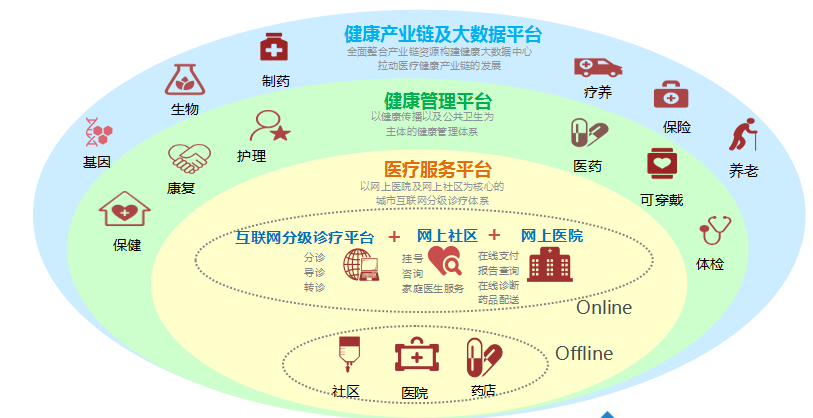
Meanwhile, Health 160 will also integrate pharmaceuticals and insurance to create a big data platform for the health industry. Through this platform, it will better serve patients, provide stronger support for their health, and contribute to the national “Healthy China” strategy.
Although many people question mobile internet healthcare, Health 160’s strategy is very clear. At this stage, Health 160 collaborates with physical medical institutions, including hospitals, community health centers, and government entities. As mobile internet technology continues to advance, the integration of the internet and healthcare is an irreversible trend that will undoubtedly experience rapid development.
“Although we have encountered many difficulties, I believe that as long as we respect life and health and remain true to our original aspiration, nothing can hinder our pursuit of health,” said Liu Kanglin.