

Liu Bo, CEO of Shequ580: Family Doctor Contracting Isn't Failing—It's Just Using the Wrong Approach
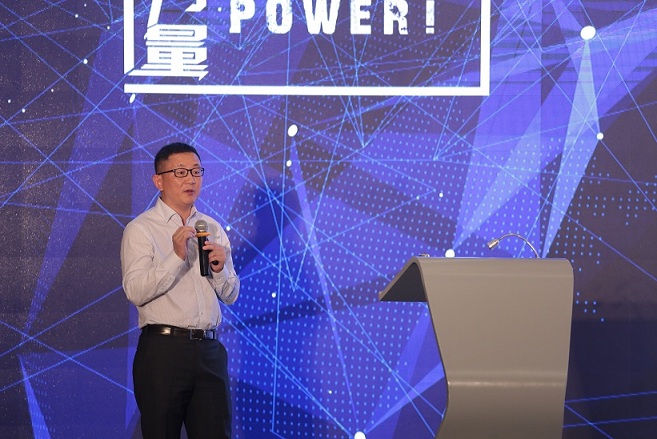
Founder & CEO of Community 580Liu Bo
Highlights
I.The family doctor system can standardizeMedical information technology services, health monitoring services, third-party pharmaceutical delivery services, and medical laboratory testing services;
II. Free “Capability Cloud"+ Paid physical services are the profit model for SaaS companies;"
III. The key to family doctor contracting lies in creating VIP services.
Highlights
Family doctors are not a new concept. Pilot programs for family doctor contract services have been implemented in certain regions of China for several years, yet they have received public acclaim without achieving substantial uptake. First, residents’ healthcare-seeking habits cannot be changed overnight, and the full implementation of the family doctor model will require time. Second, there is a severe shortage of general practitioners in China, particularly experienced senior general practitioners, making “signed but not serviced” a widespread phenomenon.
The "Notice on Issuing the Guiding Opinions on Promoting Family Doctor Contract Services" issued by the state in June 2016 provided policy support for the family doctor contract model, elevated family doctor services to a national strategy, and set forth specific implementation targets. It required that the coverage rate of family doctor contract services reach over 30% by 2017.
At the “2017 China Primary Healthcare Innovation Practice Forum” hosted by VCBeat, Mr. Liu Bo, Founder and CEO of Shequ 580, delivered an insightful speech titled “Win-Win Cooperation in Community Healthcare 3.0,” addressing issues related to family doctor contracting and informatization in primary healthcare. The following is a verbatim transcript of the guest’s speech:
Healthcare is a vast market. The new healthcare reform will change patient behavior, and this shift in patient behavior will reshape the entire landscape of the healthcare industry.
The guiding principles of China’s medical insurance system are to ensure basic coverage, strengthen primary care, and establish robust mechanisms. In 2015, the most widely discussed topic was family physicians. In 2016, the focus shifted to tiered diagnosis and treatment. By 2017, the conversation centered on medical consortia. All these initiatives revolve around a key component: community hospitals.
Prior to 2009, community healthcare was predominantly outpatient-based. After 2009, the state promoted basic public health services, investing substantial human, financial, and material resources to establish standardized community health service centers. These national initiatives were all aimed at laying the groundwork for a tiered diagnosis and treatment system.
The Greatest Function Assigned to Community Healthcare by Healthcare Reform,The goal is to establish a service system centered on family doctors, encompassing basic clinical care, basic public health services, and health management services. Specific services include:Initial Consultation, Referral, Health Insurance Cost Control, Health Management, Home-Based Hospital Beds, and Integration of Medical and Elderly Care, etc.。
I. The Key to Family Doctor Contracting Lies in Creating VIP Services
Whether Physicians Are Willing to ImplementFamily Doctor Contract Services depend on two factors: first, whether they can generate revenue; and second, whether they can gain psychological recognition.
By the end of 2016, two significant changes emerged.
First, subsidies for family doctor contract services are gradually being disbursed. Many cities have diligently issued contract service subsidies to physicians. In cities where payments have not yet been made, applications are currently underway. According to market insights gathered by Shequ 580, it is expected that within the next six months, family doctor subsidies will be implemented in most cities.
The second change is the transformation of services provided to enrolled residents. Residents’ sense of gain stems from multiple aspects, such as whether their diagnostic and treatment needs can be met; whether they can save money and time during medical consultations or medication procurement; and whether physicians can proactively provide health management services. Therefore, family doctor contracting should first prioritize preferential policies for diagnostic and treatment services, with health management as a secondary focus.
In the past, family doctor contract enrollments were often completed by physicians enlisting their long-term patients to help meet enrollment targets. This formality-driven approach not only resulted in low patient satisfaction and inadequate physician incentives, but also failed to establish genuine trust between doctors and patients.
From the perspective of Community 580, family doctor services should be a VIP service. It is essential to make users feel the distinct status that comes with signing up.
In response, Community 580 has co-established an offline Family Doctor Contract Service Center with community hospitals, modeled after bank VIP lounges. The center provides residents with a range of differentiated services, encompassing interior design, identity verification, green channels, health kiosks, free screenings, and discounted consultation and treatment fees.
In addition, the Family Doctor Contract Service Center offers various customized service packages tailored to specific populations, such as the elderly, individuals with chronic diseases, and stroke survivors. These measures have significantly enhanced residents’ willingness to enroll in the contract services.
The greatest advantage of family doctors providing services through the Community 580 Platform is that every action taken by the doctor leaves a digital trace. All activities, including appointment scheduling, consultations, diagnosis and treatment, and examinations, are recorded in the system. This constitutes the essential information required by the National Health and Family Planning Commission for assessing the effectiveness of signed service contracts.
II. Four Major Services Leveraged by the Family Doctor System
According to public data, the market size of community healthcare was RMB 460 billion in 2016 and is projected to reach RMB 1 trillion by 2020. This RMB 1 trillion figure includes extended services derived from family physician-led health management.
Based on factors such as market size, business pain points, and national policies, Community 580 has identified four key business areas for market entry:
1. Digitalization. The state conducts performance evaluations and provides subsidies for family doctors, necessitating the management of subsidy funds. Community hospitals require performance management systems, physicians need digital tools, and residents require health management solutions. These needs all correspond to investments in the field of digitalization.
2. Medical Devices. As family physicians’ practice settings gradually extend into residential communities and patients’ homes, this will drive the growth of the market for compact, rapid diagnostic testing devices. Meanwhile, health management services will also stimulate the expansion of the wearable health device market.
3. Pharmaceuticals. The shortage of medications at community hospitals and the consumer demand for home delivery of medicines will drive the lawful outflow of prescriptions and the emergence of a pharmaceutical services market.
4. Laboratory and Diagnostic Testing. The promotion of tiered diagnosis and treatment will shift primary diagnostic services to the grassroots level, thereby stimulating the market for health check-ups and laboratory testing in community healthcare settings.
III. Provide community hospitals with a simple and fast "Capability Cloud"
The starting point of Community 580 is to provide internet-based tools for family doctors, leveraging these tools to establish close connections between family doctors and residents.
Phase I: Establishing a doctor-patient interaction platform;
Phase II involves the integration of smart hardware, which assists physicians in managing patients’ health.
Phase III is Community 580 “Capability Cloud”. It encompasses extensive access to medical data and healthcare services, such as intelligent diagnostics, medication delivery, and laboratory testing. Once these third-party services are integrated into the Community 580 platform, they can rapidly empower community hospitals and family doctors. Furthermore, various types of medical data from healthcare institutions, when connected to the Community 580 platform, can be quickly made available to physicians and residents, thereby generating substantial value.
For many community hospitals, building their own systems to integrate various services is often hindered by insufficient funding and maintenance capabilities. Through the “Capability Cloud” platform of Community 580, services such as patient enrollment, health management, medication delivery, and remote diagnosis and treatment can be provided to community hospitals within one to two weeks, thereby tightly integrating patients, medical data, healthcare services, and the Internet of Things (IoT).
How Should Internet Healthcare Achieve Profitability? Shequ 580 Has Its Own Judgment.
The internet has evolved for nearly two decades. Revenue streams generated purely through the internet,Primarily limited to advertising, memberships, live-streaming tips, and virtual itemsThese categories.
The immense value of the internet lies in enabling enterprises to generate revenue by connecting consumers with offline services and optimizing physical industries. Therefore, the essence of “Internet Plus” is that the internet empowers traditional industries, with revenue sources stemming from cost optimization and service enhancement in traditional business operations.
The Internet, the Internet of Things (IoT), converged communications, and artificial intelligence have gradually become core competencies for enterprises. Platforms should rapidly deliver these capabilities to customers through componentization and cloud services. This constitutes the core value of Community 580: leveraging new technologies to quickly empower community hospitals.
The ways in which Community 580 rapidly empowers community hospitals include:
1. Rapidly Enhance the Service Capacity of Family Doctor Contractual Services
Community 580 provides community hospitals with a suite of tools, including physician utilities, resident mobile apps, enrollment kiosks, and contracted service management systems. Delivered via a cloud-based platform, these solutions enable Community 580 to rapidly establish a family doctor contracting center for a community hospital within just one to two weeks.
According to statistics, the daily number of family doctor contract sign-ups at community hospitals has more than doubled since the launch of the Family Doctor Contract Signing Center.
2. Cloud Platform Integration with Rapid Testing Devices to Enhance Family Physicians’ Laboratory Testing and Health Management Capabilities
The Community 580 platform enables seamless interconnectivity among patients, physicians, and hospital systems. Once any medical device, clinical tool, or resident health wearable is integrated into the Community 580 platform, it automatically generates continuous monitoring reports, which are distributed to patients, their family members, and their assigned physicians. By integrating with hospitals’ Hospital Information Systems (HIS), Laboratory Information Systems (LIS), and public health systems, the platform revitalizes test results, thereby rapidly empowering family doctors with enhanced health management capabilities.
3. Community 580 Platform Leverages Artificial Intelligence to Enhance the Diagnostic and Treatment Capabilities of Family Doctors
Currently, AI-based diagnosis for common and chronic diseases has become relatively mature. The intelligent medical services provided by Shequ 580 to primary healthcare institutions mainly include AI-assisted diagnosis, rational drug use, and TCM syndrome differentiation.
Community 580 has integrated Baidu Medical Brain into its SaaS system. Through this partnership, Baidu Medical Brain has gained access to the 2,000 community hospitals served by Community 580. These community hospitals are rapidly equipping family doctors with intelligent diagnostic support capabilities, thereby significantly reducing rates of missed and misdiagnoses among family physicians.
4. Shequ 580 provides comprehensive information technology product support for tiered diagnosis and treatment and family doctor services
The success of the family doctor system relies on the external environment of tiered diagnosis and treatment. Community 580 provides three comprehensive informatics solutions tailored for tiered diagnosis and treatment, family doctors, and community hospitals:
First, to establish a regional family doctor service platform for the Health and Family Planning Commission;
Second, to provide an application integration platform for large community hospitals;
Third, provide a tiered diagnosis and treatment platform for medical consortia/medical communities to the National Health and Family Planning Commission and superior hospitals.
Cloud computing comprises three layers: IaaS (Infrastructure as a Service), PaaS (Platform as a Service), and SaaS (Software as a Service). Community 580 operates at the application layer, namely the SaaS layer. The relationship between Community 580’s SaaS system and hospital internal systems is one of partnership and upstream-downstream collaboration.
5. Rapidly enhance the pharmaceutical service capabilities of community hospitals
At present, pharmaceutical distribution encompasses three models: the first is through pharmaceutical e-commerce platforms, the second is through retail pharmacies, and the third is through hospital-affiliated drug distributors. Shequ 580 collaborates with all three channels.
Community 580 establishes a dedicated pharmaceutical distribution system for community hospitals on a city-by-city basis, creating a virtual drug inventory for each community hospital. This virtual drug inventory is named the “580 Air Pharmacy.”
Community 580’s “580 Sky Pharmacy” connects to the Hospital Information System (HIS) of community hospitals to submit delivery requests to pharmaceutical distributors. Through services such as prescription integration, centralized warehousing, and order fulfillment, the “580 Sky Pharmacy” delivers medications directly to patients. This approach addresses the issues of insufficient drug inventory in community hospitals and the lack of medication delivery services for patients. Furthermore, this service operates within the hospital billing and medical insurance systems.
Summary
Where Exactly Lie the Core Pain Points of Community Healthcare? In Summary, There Are Four Aspects:
First, family doctors face a heavy workload in signing up patients, yet there is no reasonable incentive mechanism;
Second, tiered diagnosis and treatment require coordination between higher- and lower-level medical institutions; however, coordination mechanisms and tools have not been established;
Third, family doctors lack effective payment systems, management frameworks, and tools for delivering health management services;
Fourth, medical resources are being decentralized, yet patients still cannot access the diagnostic and treatment services and medications they need.
If enterprises can help community healthcare address these four issues, they will surely reap benefits.