

Internet Trends 2017: Healthcare at a Digital Inflection Point – A 31-Page Deep Dive into Medical Data, Genomics, and Digital Health Innovation
2017 may have been an extraordinary year for healthcare professionals in the new era. Internet Queen Mary Meeker released her 22nd “Super PowerPoint Presentation on Internet Industry Analysis”—Internet Trends. This time, breaking from her previous practice of glossing over the healthcare sector in just a few pages, she devoted an unprecedented 31 pages to a detailed exposition.
Mikkel’s emphasis did not come out of nowhere. Over the past year, internet healthcare has become a critical strategic focus for many companies and investors. In 2016, venture capital firms and Silicon Valley tech companies increasingly hired medical professionals to support investment decisions and R&D efforts; healthcare technology startups attracted a total of $4.2 billion in investment (data from Rock Health).
Here, VCBeat (WeChat ID: vcbeat) has highlighted key insights from the 31-page healthcare industry analysis in this report for sharing.
The Rapid Evolution of Medical Big Data
The guiding principle throughout the entire medical section isData:
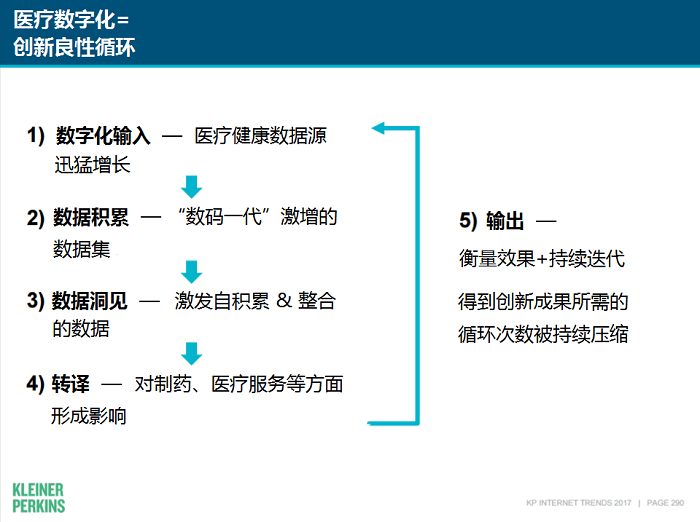
Today's digital healthcare exhibits a specific evolutionary cycle:Medical Data SourcesThe rapid growth of (medical devices and electronic medical records) has directly promoted the digitalization of healthcare information; after accumulating to a certain level, insights can be derived from the integrated dataMedical Insights; Medical insights are applied to pharmaceuticals and healthcare services, generating larger volumes of medical data for continuous iteration and improvement.
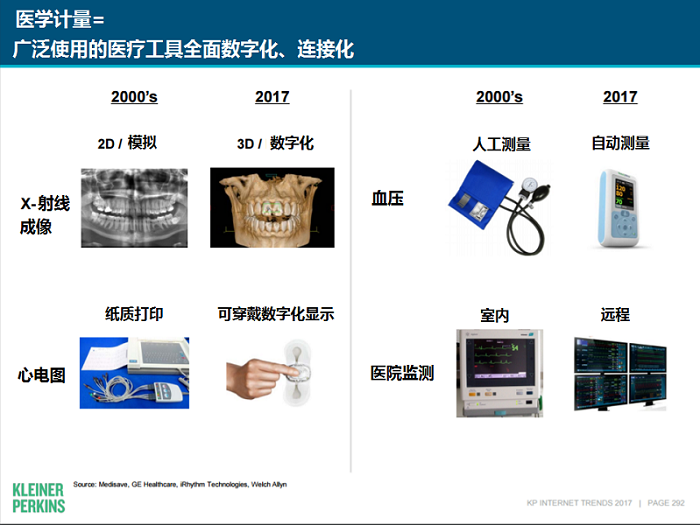
From 2000 to 2017, medical technology achieved comprehensive breakthroughs. Medical X-ray imaging evolved from 2D analog to 3D digital systems, blood pressure monitors transitioned from manual to automatic operation, electrocardiograms (ECGs) moved from paper-based records to wearable devices, and hospital monitoring shifted from in-room surveillance to remote monitoring.
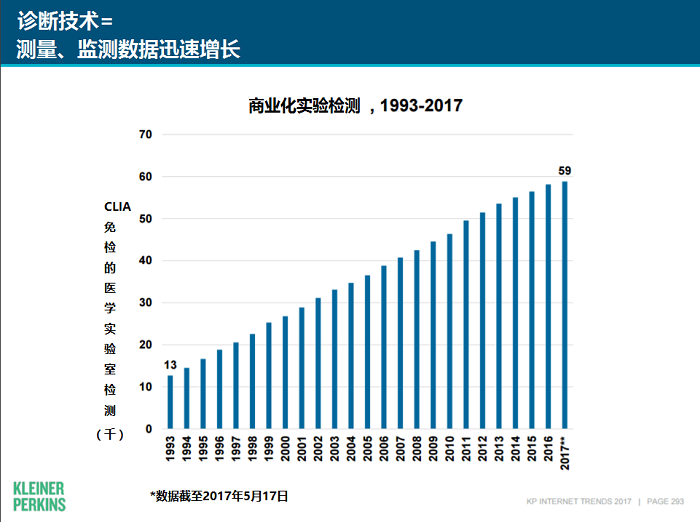
From the perspective of professional diagnostic technologies, medical laboratory data are increasing rapidly. From 1993 to May 2017, the number of commercially available CLIA-waived (simple to perform and harmless) medical tests grew from 13,000 to 59,000.
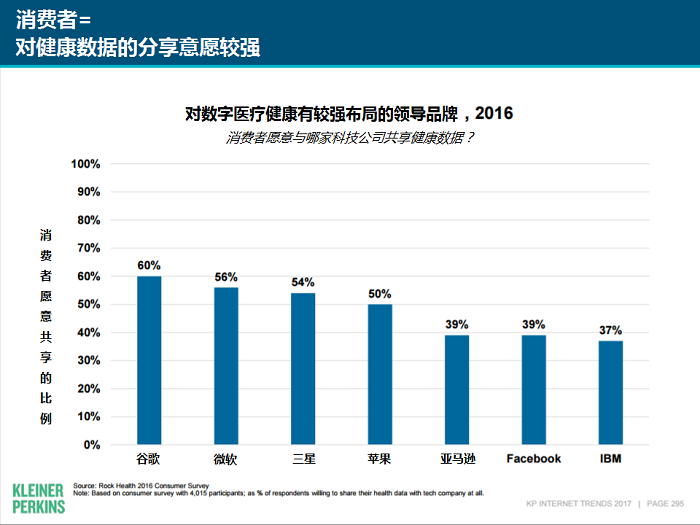
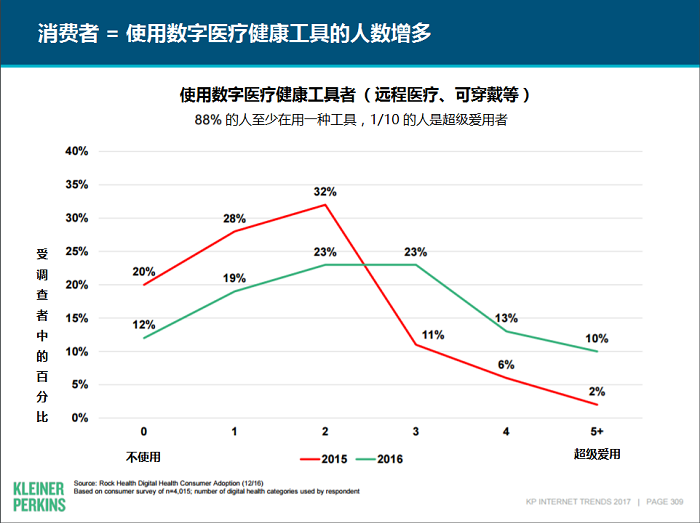
The use of consumer-facing medical and health data warrants deeper consideration. Consumers demonstrate a strong willingness to share their medical and health data, with 60%, 56%, 54%, and 50% of users having shared their personal health information on platforms provided by Google, Microsoft, Samsung, and Apple, respectively. Furthermore, sample surveys conducted in 2015 and 2016 revealed that 88% of respondents had used at least one type of digital health tool (such as telemedicine or wearable devices). This may indicate that complex and abstruse medical data is becoming increasingly mainstream, evolving into a vivid and accessible concept in people’s daily lives.
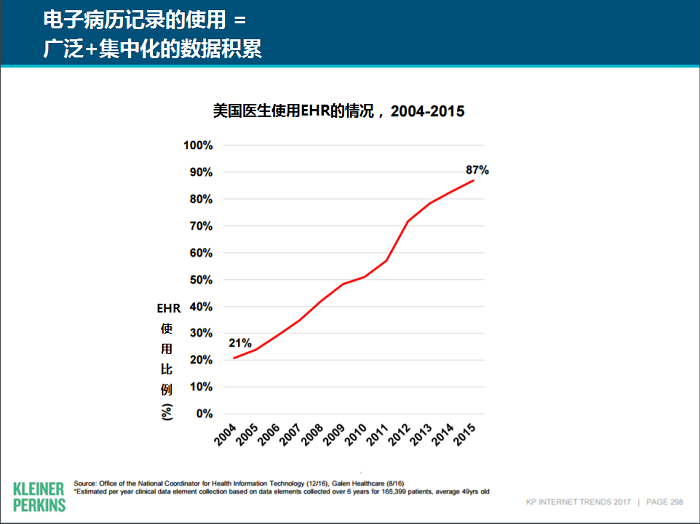
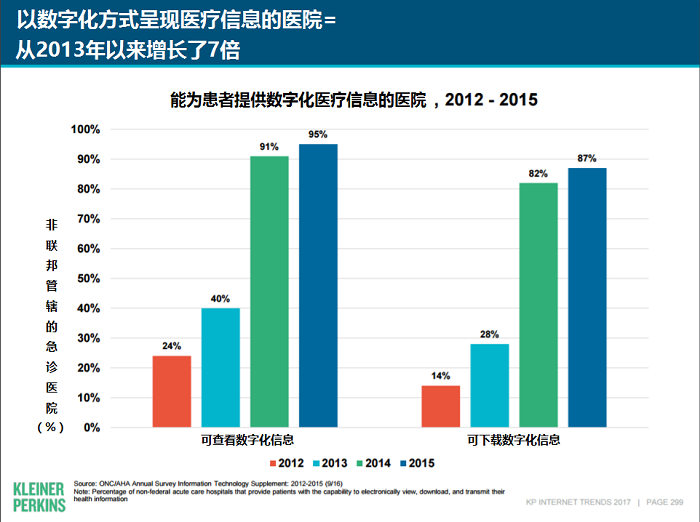
withElectronic Medical Record DocumentationThe surge in centralized medical data, represented by this trend, is the core driver behind the big data movement in healthcare. The proportion of U.S. healthcare providers using electronic health records (EHRs) increased from 21% in 2004 to 87% in 2015; hospitals’ capacity to deliver digital health information has also grown significantly, increasing sevenfold since 2013.
In summary, the global volume of medical data has grown at an annual rate of 48% since 2013. The total body of medical knowledge is also expanding: in the 1950s, it took 50 years for medical knowledge to double; in the 1980s, the doubling time was seven years; and since 2010, it has taken only 3.5 years.
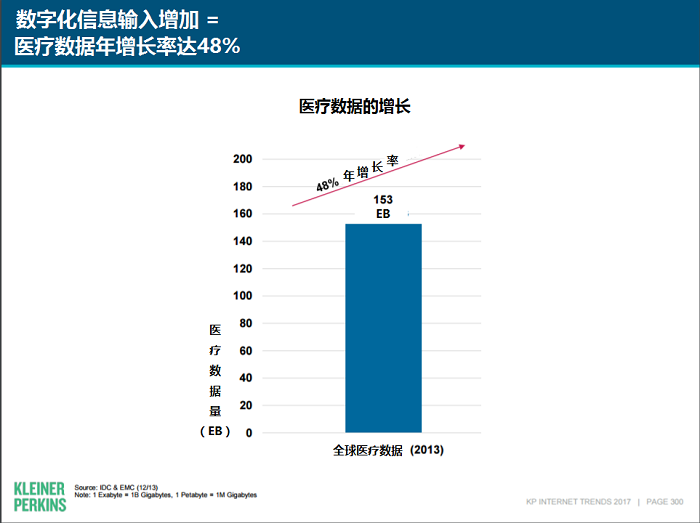
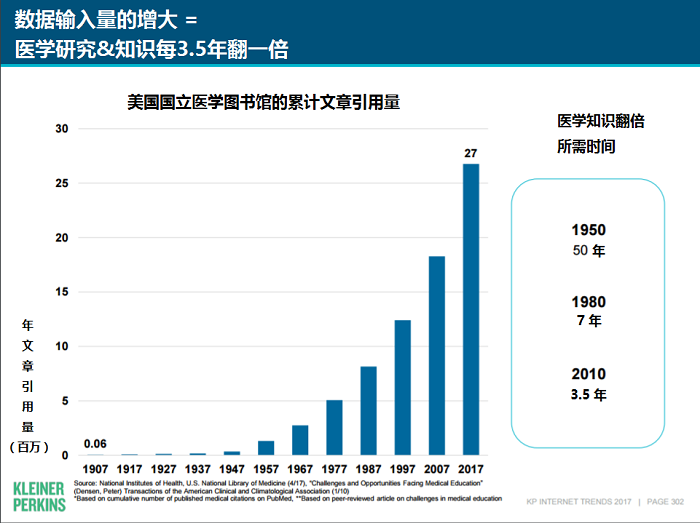
Mikkel’s presentation on the current state and trends of healthcare data reveals a critical insight: data itself possesses the capacity to inform, educate, and guide both the entire healthcare system and consumer populations.
Genetic Testing Defies Moore's Law
The report indicates that as the digitization of genetic information advances, genetic testing will become faster, more accurate, and more affordable. High-throughput sequencing technology has reduced the time required for genetic testing from 10 months in 2007 to just 27 hours in 2015, with costs declining at a rate even faster than Moore’s Law.
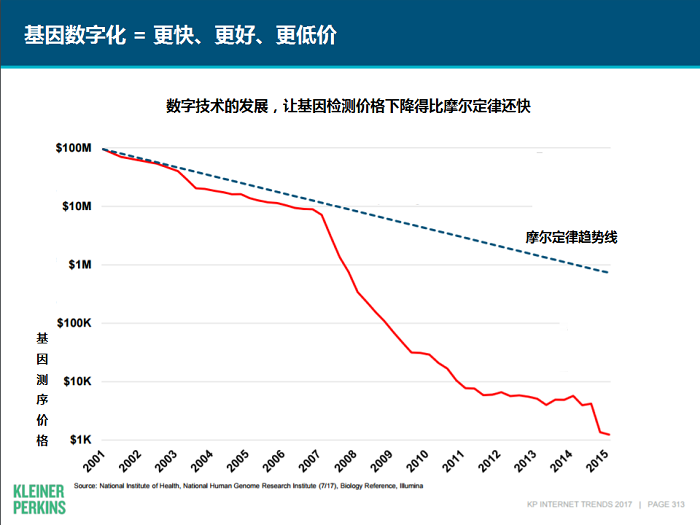
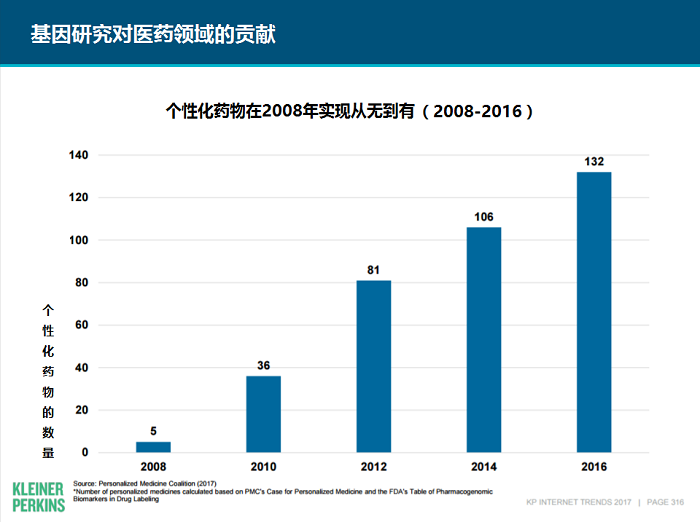
The surge in gene data available for scientific research has driven rapid advancements in genetic studies over the past few years. From 1993 to 2017, the number of detectable genetic disorder types increased from 114 to 5,007. Personalized medicine, built upon genetic research, has also evolved from merely a handful of options in 2008 to more than 100 today.
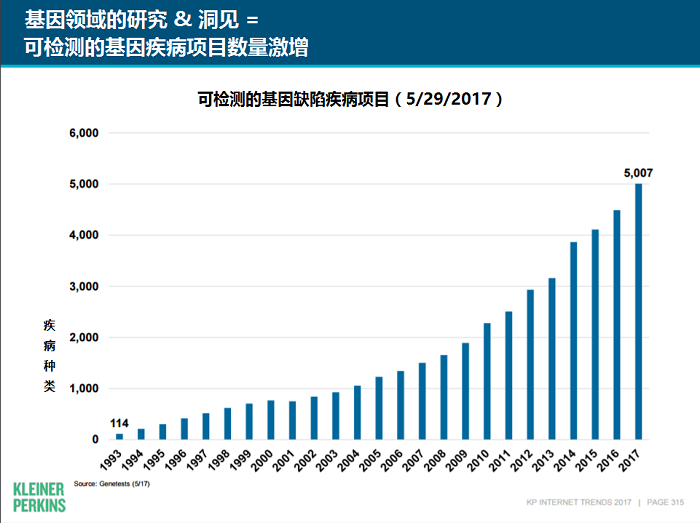
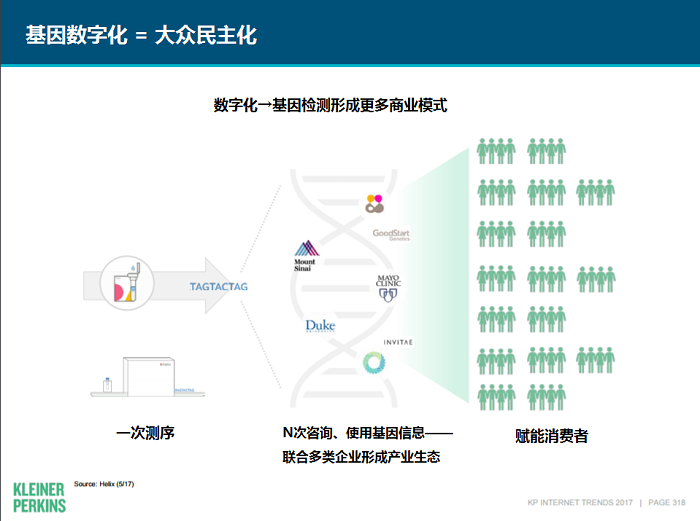
In the public’s general perception, direct-to-consumer (DTC) genetic testing is merely an entertainment-oriented and superficial application. However, as the volume of gene sequencing data expands, DTC genetic companies such as 23andMe have begun to align more closely with scientific research, publishing numerous research papers. Furthermore, with the digital evolution of the genetics industry, new business models have emerged, such asHelix's App Store Model for Genetic Testingetc.
Medical Innovation Practices and Cases
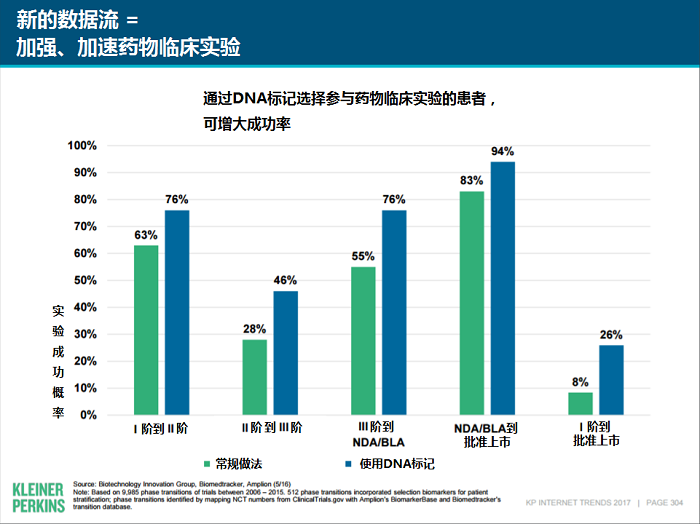
This report reveals a considerable number of innovative practices across the industry. For instance, a novel approach in pharmaceutical clinical research isScreening Patients for Clinical Trials Using Specific Genetic Markers, the data presented in the figure also demonstrate that this approach can effectively increase the success rate of experiments and accelerate the drug approval process.
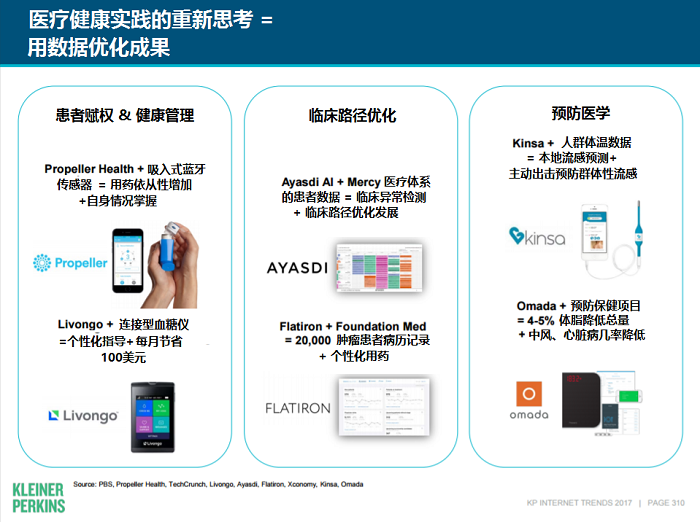
The report also provides examples of innovative medical products:
· Propeller Health’s inhaler-mounted Bluetooth sensor helps patients improve medication adherence;
· The Livongo connected glucose meter provides personalized guidance for patients with diabetes;
· Ayasdi's medical AI is used to optimize clinical pathways at Renhui Medical Center;
· Healthcare big data company Flatiron Health partnered with cancer genomic sequencing company Foundation Medicine to conduct medical record analysis and provide personalized treatment for 20,000 cancer patients;
· Kinsa Smart ThermometerMonitor regional influenza;
· Chronic disease management company Omada reduces body fat and the risk of heart disease and stroke through preventive care programs.
2017"Internet Trends": A Collection of Fascinating Data and Insights
· A century ago, medical diagnosis relied on physicians’ tactile and physical assessments; 25 years ago, medical devices began to quantify patient conditions in place of physicians; today, it isEvery action generates medical datathe era.
· The Future of the Healthcare Industry IsOpen-Source Data TypeIn the future, more information barriers will be broken down, and joint efforts will drive innovation on a global scale;
· Healthcare institutions’ demands for data storage and security are expanding. A typical hospital with 500 beds needs to process 50 PB, i.e., 50×220Data volume in GB;
· The proportions of individuals willing to share their personal health data on platforms operated by Google, Microsoft, Samsung, Apple, Amazon, Facebook, and IBM were 60%, 56%, 54%, 50%, 39%, 39%, and 37%, respectively;
· The category distribution of healthcare apps is as follows: fitness apps account for 36%, disease treatment and management apps for 24%, lifestyle and stress relief apps for 17%, diet and nutrition apps for 12%, and other categories for 11%;
· A comparison between the traditional experimental methods of the UK’s medical and health research sector and the “Archimedes Data Simulation Experiment” approach leveraging medical big data: patient sample sizes were 2,838 and 50,000, respectively; accessible data spanned 7 years and 20 years, respectively; and study durations were 7 years and 2 months, respectively.
Empress’s Five-Year Discourse on Healthcare and the Evolution of China’s Medical Industry
Here, VCBeat has compiled the “Internet Trends Report” published by the “Queen of the Internet” since 2012 and analyzed the healthcare section of each year’s report. Mary Meeker’s observations on healthcare have evolved year by year, while VCBeat has also witnessed the gradual rise and prosperity of China’s internet healthcare industry over these three years.
2012, 2013: The State of Healthcare in the United StatesYan Jun, ChinaThe Dawn of the Internet Healthcare Wave
In the 88-page report of 2012 and the 117-page Internet Trends report of 2013, the keyword “healthcare” appeared only twice in each, providing a brief overview of several data points and facts:
· Annual healthcare expenditure in the United States exceeds $2.6 trillion, reaching 18% of GDP in 2010—twice the average level of OECD member countries; whereas in 1960, healthcare spending accounted for only 5% of GDP.
· In 2012, 100 million Americans were overweight, accounting for 30% of the total population; in 1990, the overweight population accounted for 15%.
· It is estimated that medical costs attributable to overweight reached $147 billion in 2008, compared with $79 billion in 1998.
In China, the situation was that various "Internet + Healthcare" platforms, such as Haodf Online, Guahao.com, and Chunyu Doctors, emerged successively before 2012. FromSecond Half of 2013Initially, internet healthcare evolved from isolated investment cases into an unstoppable, positive development trend, with increasingly dense deployment of capital, resources, and other key components across the value chain.
It was from this period onward that a series of favorable policies in the medical sector laid the groundwork for the industry’s subsequent leapfrog development.In September 2013, the “Several Opinions of the State Council on Promoting the Development of the Health Service Industry”Point outAll sectors not explicitly prohibited by laws and regulations shall be opened to private capital;In February 2014, the national government solicited public opinions on physicians’ multi-site practice, further liberalizing the policy;May 2014,"Measures for the Supervision and Administration of Online Food and Drug Operations (Draft for Comment)" has begun to implement new practices, including the online sale of prescription drugs.
2014: Healthcare “May” Reach an Inflection Point
Interestingly, MikelThe concept of the “healthcare inflection point” was first proposed in 2014.. But unlike the certainty of 2017, her wording suggests that healthcare may have reached a turning point.
This year, Meeker’s “Internet Trends Report” spans 164 pages in total, with three pages dedicated to healthcare. The report begins by analyzing the severe challenges facing the healthcare sector: 27% of healthcare spending is wasted, businesses incur high medical costs for their employees, and chronic diseases account for 75% of total expenditures.
The report then points out that healthcare'sThe Digital Transformation Begins— The number of healthcare institutions adopting electronic medical record (EMR) systems has increased. The U.S. government’s HITECH Act has spurred the growth of the health informatics market, while venture capital investment in digital health has intensified. Consequently, healthcare is becoming increasingly consumer-oriented, with 52% of consumers using online tools to read reviews of hospitals and physicians.
Digital Health Companies, including Redbrick Health for lifestyle customization, the telemedicine platform Teladoc, Mango Health for improving medication adherence, and the diabetes management platform WellDoc, alsoFirst appearance in Mikel's report。
2014 was a year of comprehensive acceleration for China’s healthcare industry. In that year, the number of newly established “Internet + Healthcare” enterprises reached its peak, while both the number of invested companies and the total investment amount hit unprecedented highs, with the total financing volume increasing nearly fivefold compared to 2013. At this time, mainstream healthcare enterprise groups in China began to take shape,Internet healthcare institutions such as WeDoctor, DXY, Haodf Online, and Chunyu DoctorsStand out.
In April of the same year,VCBeat Was Founded。
2015: Consumer-Driven, Technology-Led
In 2015, health and medical care-related content accounted for 2 pages out of a total of 196 pages. The themes covered two aspects:
One aspect is to point out the medical"Consumer-Oriented"—Consumer-oriented health insurance is gaining prominence, and Medicare has specifically created a reimbursement category for “non-face-to-face medical services” dedicated to chronic disease management;
On the other hand, it affirmsImproving Healthcare with Technologythe feasibility, stating that smart health devices, disease management apps, and genetic testing are expected to reduce the costs associated with cardiovascular diseases, diabetes, overweight, and cancer, while companies with medical big data businesses, such as Google, IBM, and Zephyr Health, are also playing a role.
In China in 2015, technology was also further driving healthcare—VR、ARAs new technologies are applied to the healthcare sector, tech giants such as BAT have deepened their penetration into the industry. Furthermore,Specialty services and the medical consultation sector continue to maintain high growth, with enthusiasm gradually shifting from the platform level to product refinement in niche segments.
2016: Gradual Maturation
2016 Internet Trends Report, page 213》Although “healthcare” was not mentioned, the fervor surrounding internet-based healthcare has not waned.
VCBeat in 2016In the “Internet Healthcare Survival Report” published by VBInsight, it points out this fact: “the capital winter“On the Prevalence of the 20”In 2016, investment in the healthcare industry did not show signs of weakening; however, capital increasingly flowed toward larger enterprises with more mature business models.
AndPwC China’s Healthcare and Pharmaceutical Industry Team’s “2016 China Healthcare, Medical and Pharmaceutical"Top Ten Hot Trends in the Life Sciences Industry" report, pointing out that China's healthcare industry in 2016 exhibitedFurther Development of High-Tech Databases、The Era of Mobile Healthcare Has Arrived、Commercial Health Insurance Is Growing Rapidlysuch characteristics. Meanwhile, we have also observed that medical technology continued to gain further momentum in 2016,Artificial IntelligenceThe surge in popularity has amplified the role of medical big data.