

How Can Medical Aesthetic Clinics Achieve a 1:10 ROI in Online Marketing? — Insights from Jin Xing, CEO of SoYoung
MPCi
Venture Capital Institutions in High-Tech Startup Fields
Guest Introduction:
Jin Xing, CEO of SoYoung. During his university years, Jin Xing joined TOM.com, one of the four major portal websites at the time, as a technical developer, and later served as the Director of Community Operations for Mop.com. Jin Xing has embarked on three entrepreneurial ventures. In 2007, he began planning his first startup, Meili Jiazu (Beautiful Family). His second venture was Zhimei, a shopping guide community, which was subsequently acquired. SoYoung is his third entrepreneurial endeavor.
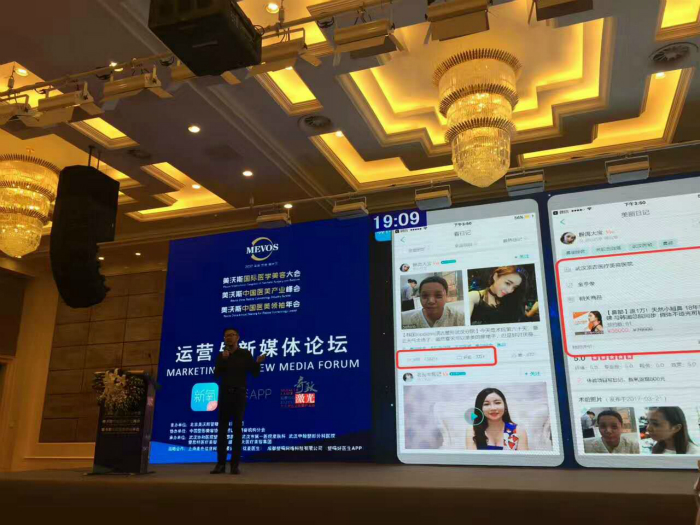
From June 2 to June 4, the 2017 Meivos International Medical Aesthetics Conference was held at the Wuhan International Expo Center. Jin Xing, founder and CEO of SoYoung, was invited to attend the special session on “Operations and New Media,” where he delivered a keynote presentation titled “How to Achieve a 1:10 ROI in Online Marketing for Medical Aesthetics.” The speech primarily focused on the following aspects and proposed corresponding solutions:
1. How should medical aesthetic institutions advertise? By advertising on leading medical aesthetic apps;
2. How can medical aesthetics institutions find precise users with minimal spending? By launching campaigns early to capitalize on the platform’s bonus period and leveraging earned media;
3. How can medical aesthetics institutions improve efficiency? By leveraging big data from medical aesthetics platforms to anticipate customer needs, among other strategies;
4. How Can Aesthetic Medicine Clinics Ensure ROI on Their Spending? Become a Category Leader, Select Niche Markets Based on Data, and Establish an Efficient Operational System.
As a highly mature consumer healthcare sector, medical aesthetics places significant emphasis on ROI (Return on Investment). Generally, an ROI of 1:4 is considered quite favorable for medical aesthetics institutions. However, leading medical aesthetics platforms enable high-quality partner institutions to achieve ROIs as high as 1:10, while even ordinary institutions can readily attain ratios of 1:4 or 1:5.
How Can Aesthetic Medicine Clinics Leverage New Media to Achieve Systematic Operations Amidst Significant Inter-Institutional Variability?
Where Is the Money Spent? The Value of Top-Tier Content Gateways in Medical Aesthetics Apps Is Significant
Looking back at historical patterns, the mobile internet experienced rapid development over a few years. In the early stages of each sector, a multitude of apps with similar functionalities would emerge. After several years, it became evident that the vast majority were eliminated, leaving only a handful of survivors. This precisely highlights the brutal nature of the internet industry, where the Matthew effect is particularly pronounced.
As customer acquisition costs for medical aesthetic institutions continue to rise, the value of gateway platforms will become increasingly significant, particularly those centered on premium content. After all, gateways represent traffic.
Where the money is spent depends on where the traffic is, as traffic determines where the customers are.
Currently, internet traffic is clearly shifting from PCs to mobile devices. Correspondingly, advertising spending is also trending toward mobile platforms. According to the "2017 Internet Trends Report" released by Mary Meeker, partner at Kleiner Perkins and known as the "Queen of the Internet," U.S. internet advertising revenue reached $73 billion in 2016, with mobile advertising accounting for more than half and surpassing PC advertising for the first time. In this context, continuing to allocate substantial budgets to PC-based bidding is evidently not the wisest choice.
Another trend is that various vertical apps and communities are competing for traffic. Entry-level platforms target users with greater precision. Taking So-Young as an example, its mobile app attracts 600,000 precise users daily. When other medical aesthetics apps are included, the total daily number of visitors across all such apps is comparable to that on the PC end.
For medical aesthetics apps, two metrics are particularly important. One is “number of launches,” referring to how many times the app is opened within a month. According to Analysys data, SoYoung recorded 7.5086 million launches in April. The other metric is “usage duration,” which represents the total time spent by all users on the app in a month. Analysys data shows that SoYoung’s usage duration in April amounted to 1.36 million hours. These striking figures indicate that SoYoung boasts a substantial total user base.
Medical aesthetic institutions should naturally direct their advertising spend to where the traffic flows.
How to Find Precise Users with Minimal Cost? Directly Facilitate Transactions Through the Word-of-Mouth Effect of User Diaries
The advertising rates for premium media outlets have, in fact, never decreased over the past years. As long as they deliver results, advertisers will continue to invest. The free business model may have existed briefly in the early stages of the medical aesthetics industry to attract users, but this does not align with fundamental commercial principles. Once a platform accumulates a certain user base, it will inevitably begin to charge fees. However, for advertisers, entering the market earlier allows them to benefit from the platform’s growth dividend for a longer period.
Media channels used in advertising campaigns can be categorized into three types.
The first category is “Owned Media.” These are channels controlled by the brand itself, including the brand’s official website, official WeChat public account, official Weibo account, and other self-owned media platforms.
The second category is “Paid Media,” or brand-paid media. Television and paid search fall into this category;
The third category is “Earned Media.” With the advent of social media, it literally refers to “media earned for free,” turning consumers into distribution channels.
In the era of social media, earned media is arguably the most critical channel, as proactive and spontaneous sharing by users can generate powerful word-of-mouth effects. Not long ago, the “Internet Trends 2017” report released by the “Queen of the Internet” showed that user-generated advertising content delivers 6.9 times greater effectiveness than brand-created content.
Therefore, media outlets place significant emphasis on generating such content. By engaging celebrities and influencers to evaluate the effectiveness of a service, they can achieve substantially higher conversion rates.
For SoYoung, user diaries on its app constitute earned media. Currently, a single diary entry by a plastic surgery influencer on the SoYoung app can accumulate up to 4.3 million views and over 30,000 comments. These diaries document patients’ surgical experiences, including before-and-after photos with descriptive text. Readers interested in specific details about hospitals, doctors, and procedures can directly access the detailed information pages by clicking through from the diary entries.
Influencer Diaries: How Much Can They Boost Order Conversion? On the NewOxygen platform, a medical aesthetics clinic in Chongqing once sought to add a rhinoplasty service to its offerings on the NewOxygen app. The project was initiated in May 2016, with intensive promotion scheduled to begin in July. During the two-month period reserved for accumulating case studies, the clinic selected three women with appealing appearances and comprehensively documented their actual surgical experiences. As a result, in July alone, the clinic closed 34 deals for comprehensive rhinoplasty procedures priced at RMB 35,800 each. Moreover, these customers were not exclusively from Chongqing but were distributed across China.
It is evident that with effective online diary management, the word-of-mouth effect can attract users from across China. Information dissemination on the internet exhibits a distinct network structure, characterized by three key elements: first, identifying individuals who facilitate efficient propagation; second, ensuring the content is persuasive; and third, leveraging environmental factors to minimize resistance to dissemination.
On the So-Young app platform, there is a large number of key opinion leaders (KOLs). These influencers already have hundreds of thousands of followers each, and their user diaries achieve high dissemination efficiency, driving organic secondary sharing.
The persuasiveness of disseminated information is also crucial. Editors at New Oxygen have coined and refined numerous viral terms, such as “virgin face,” “ethereal yet assertive look,” “straight-man slayer,” and “swan neck.” These terms have been widely adopted by hospitals, consultants, and media outlets alike, demonstrating strong communicative power and distinct recognizability.
Precisely because these terms are highly refined and have been reinforced through long-term user education, they have firmly occupied users’ mindshare. Leveraging SoYoung’s large base of precisely targeted users, this can drive efficient, explosive dissemination, naturally resulting in a favorable return on investment.
How to Improve Institutional Operational Efficiency? Leverage the Advanced Management Features of the So-Young Backend
Fully leveraging the advanced features of the SoYoung backend is an effective strategy for improving efficiency and conversion rates. Although the SoYoung backend offers a wide array of functions, the vast majority of institutions utilize less than 20% of them.
Currently, the New Oxygen backend features multiple modules, including New Oxygen Direct Connect, Transaction Management, Private Message Management, Product Management, Marketing Management, Case Management, Physician Management, and Fund Management. Owners of medical aesthetic institutions can gain intuitive insights into real-time data on page views, effective private messages and phone calls, online orders, online payments, and in-store consumption.
The newly added CRM (Customer Relationship Management) module enables institutional administrators to view not only users’ basic information but also various consumption data, such as spending at hospitals and across the entire SoYoung platform, as well as recent payments and consultations. This provides a relatively comprehensive and precise user profile segmented by region. Additionally, the appointment management module allows patients to schedule appointments with doctors online.
SoYoung has also launched the “Profile Visitors” feature. Previously, the app only allowed clinic administrators to see which users had sent private messages to the platform. For instance, if 100 users viewed a clinic’s profile, but only 10 sent direct messages, administrators could only access the information of those 10 individuals. On SoYoung’s platform, data on profile visitors is being gradually made available, enabling medical aesthetic clinics to engage in proactive reverse marketing, communicate directly with users online, and follow up on conversion plans.
Finally, by leveraging big data mining from the New Oxygen backend and extracting tagged insights, it is possible to anticipate customer needs. For instance, based on a user’s complete browsing history, the system can accurately identify the procedures, hospitals, physicians, and products of interest to that user. Furthermore, as this data is real-time and dynamically updated, it enables medical aesthetic institutions to proactively analyze and assess customer demands. Specifically, it helps these institutions achieve the following four functions:
1. Personalized content distribution, with tailored information push for each individual user;
2. Industry Insights: Identifying Trends in Medical Aesthetics;
3. Precision marketing, targeted resource allocation, and improved operational efficiency;
4. Financial risk control: Assessing personal credit limits to serve consumers using installment payment plans.
How to Ensure Investment Effectiveness? Identify Differentiated Positioning and Optimize Pricing Strategies
The Matthew Effect on the internet is highly pronounced. For medical aesthetic institutions, it is better to be a leader in a niche market than a minor player in a broader one; in other words, they must strive to become leaders within specific categories. The approach to achieving this is straightforward: by combining various elements such as target demographics, pricing, product categories, procedures, geographic regions, and even design, service, packaging, and business models, institutions can identify their unique advantages, select niche markets, and establish differentiated positioning. For instance, on the New Oxygen platform, a hospital in Dalian specializes exclusively in a popular Korean-style upturned nose procedure, enjoying remarkable business success.
Pricing in the medical aesthetics industry is also a topic worthy of in-depth discussion. The demand-price curve adheres to fundamental business realities: for the same product, as the price increases, demand correspondingly decreases. High-quality content and guided shopping experiences can slightly flatten the demand-price curve; however, it is important to note that this does not fundamentally alter the curve itself. Its primary effect lies in enabling marketing efforts to reach a broader audience, thereby expanding the user base.
Price elasticity of demand varies significantly across different products. The first step is to categorize product types. For high-frequency, easily standardized commodities such as toothpaste, soap, and shampoo, demand is highly sensitive to price. The appropriate strategy is to maintain a competitive market position by minimizing costs.
In contrast, for customized products, low-frequency purchase items, products with high competitive barriers, and those with few direct competitors, the strategy is to leverage content, marketing, packaging, and other means to persuade users to pay a premium for their complexity.
In the medical aesthetics industry, certain procedures are highly standardized, such as micro-plastic surgery treatments like “three injections and one hair” (referring to common injectables and hair removal) and aesthetic therapies. Due to their low access barriers and affordable pricing, these services attract a large customer base. In contrast, other procedures rely heavily on individual practitioner skill and are non-standardized, such as surgical interventions including buried suture double eyelid surgery, simple rhinoplasty, and autologous fat grafting. Customers are less price-sensitive for these offerings. Consequently, different pricing strategies are naturally adopted for different types of services. In summary, the overarching strategy is to use low-priced items for customer acquisition and high-priced items for generating profit.
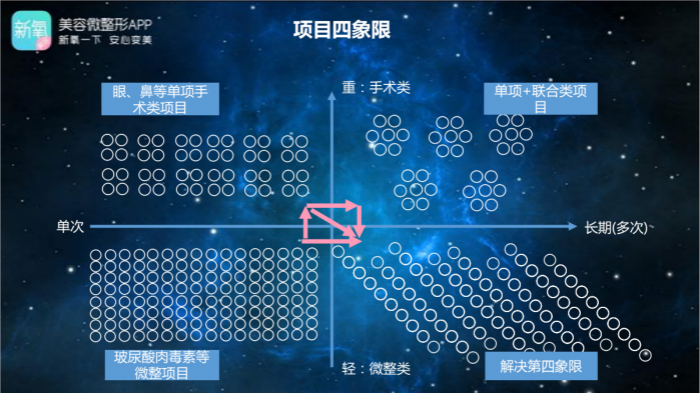
Effective category portfolio design is required.
However, this boundary is also in a state of dynamic change. For instance, autologous fat grafting is now widely used by many hospitals as a customer acquisition tool; if some institutions continue to position it as a high-margin service, they will lack competitiveness. Therefore, it is essential to optimize the portfolio design of service offerings.
Beyond pricing, a robust operational system is essential. The SoYoung platform employs a funnel model comprising five key stages and four types of conversions. For data at each stage, if any anomalies are detected, the system provides intelligent alerts, enabling healthcare institution managers to pinpoint the source of the issue. For instance, if the conversion rate for in-person visits is lower than that of peer institutions, the system will identify and highlight the specific underlying causes.
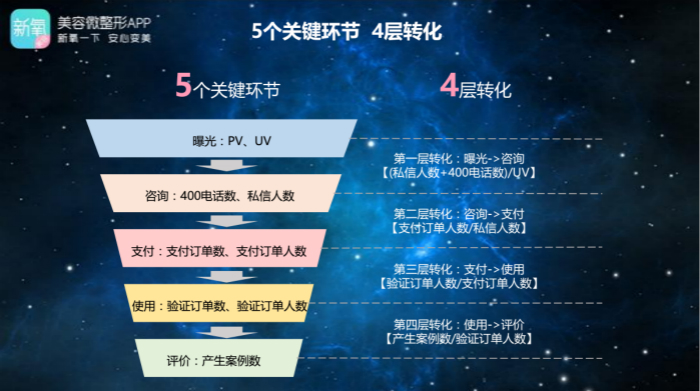
New Oxygen's Funnel Model
SoYoung has always positioned itself as a medical aesthetics tool, encompassing business models such as e-commerce, community, financial services, and offline cloud clinics. It is committed to helping medical aesthetics institutions achieve effective commercial operations while providing beauty seekers with access to legitimate hospitals and licensed practitioners. Furthermore, by leveraging authentic plastic surgery diaries posted by users, it assists beauty seekers in making informed decisions. Currently, the SoYoung platform hosts over 6,600 hospitals and 15,000 doctors. Over four years of development, SoYoung has continuously strengthened its core competitiveness, firmly establishing itself as a leading entry point in the medical aesthetics industry.