

Mingyi Zhonghe Files IPO Prospectus: Serves Over 17,000 Clinics Across 290 Counties with More Than 5 Million Consultations in Two Years
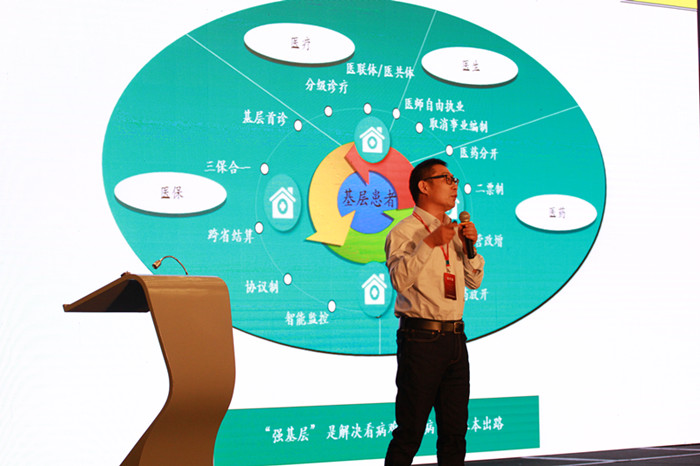
Jiang Qiang, Founder of Mingyi Zhonghe
“In fact, primary healthcare comprises two segments: urban primary healthcare and rural primary healthcare. The most severe shortages of medical personnel and medications occur in rural areas, whereas urban residents can access medicines through various channels, including tertiary hospitals, pharmacies, e-commerce platforms, and overseas purchases,” stated Jiang Qiang, CEO of Mingyi Zhonghe, in his opening remarks at the Primary Healthcare Forum.
Jiang Qiang, a former university professor and one-time CFO of a publicly listed company with a market capitalization of RMB 27.6 billion, told VCBeat, “After achieving financial freedom, I decided to do something meaningful that I am passionate about—rural healthcare.””
At the time, his wife even complained to him, “You loved chasing ambitious ventures in your youth. Now that we’ve achieved financial freedom, we could have traveled the world, yet you insist on staying in the countryside, enduring hardship and toil…”
On August 6, 2015, he co-founded Mingyi Zhonghe Technology with a group of like-minded partners. What fills him with pride is that within just two years, he has become good friends with numerous village doctors. “Every time they see me, village doctors insist on treating me to the freshest vegetables, fruits, chickens, and ducks from their homes.”
His approachability was not limited to his interactions with village doctors. Recently, at the “2017 China Grassroots Medical Innovation Practice Forum,” hosted by VCBeat (WeChat ID: vcbeat) and Eggshell Research Institute in Chengdu, many grassroots healthcare entrepreneurs gathered around him after his speech to seek advice on products, gain insights into the current state of the rural healthcare market, explore collaboration opportunities, and exchange business cards.
Over the two years since establishing its roots in rural areas, Jiang Qiang and his team have covered 290 districts and counties, connected more than 17,000 clinics, and facilitated over 5 million medical consultations through their Yidebang platform... Currently, Mingyi Zhonghe has set up offices in multiple cities, including Shijiazhuang, Qingdao, Zhengzhou, and Guangzhou, with its team expanding to more than 70 members.
What has empowered Jiang Qiang and his company, Mingyi Zhonghe, with such strong capabilities to rapidly empower rural clinics? Let’s listen to Jiang Qiang share his insights openly and thoroughly.
Clinics serve as the primary point of first contact for medical care among the general population, with first-visit rates of 48.9% for urban residents and 68.2% for rural residents. As the true “entry point” to healthcare services, clinics handle 32.3% of all clinical consultations and treatments.Jiang Qiang told VCBeat, “Primary care clinics (including village health stations, outpatient departments, and private clinics), as the foundational layer of the healthcare service system, are the closest to grassroots patients and serve as the first guardians of public health within familiar doctor-patient relationships.”
Walking along the country lanes, a gentle breeze carrying a fresh, sweet scent brushes against my face, leaving me feeling refreshed and invigorated. “As soon as I arrive in the village, I feel completely rejuvenated,” said Jiang Qiang.
However, he has visited many such village clinics in rural areas: a 30-square-meter room furnished with beds, dining tables, workstations for village doctors, first-aid kits, and other essentials. The interior suffers from extremely poor natural lighting, requiring lights to be turned on even during daytime. This makes it all the more impractical for village doctors to use computers for patient consultations and diagnosis, thereby hindering improvements in their clinical efficiency.
“In addition to poor working conditions, village doctors frequently face the dilemma of an overly narrow range of medication options. “The majority of residents in rural areas are elderly individuals and children, resulting in substantial demand for pediatric and chronic disease medications. However, many new specialty drugs with proven efficacy struggle to reach primary care settings, leaving a large number of patients unable to access the most effective treatments,” said Jiang Qiang.”
How to Effectively and Efficiently Provide Services to Village Doctors in the Face of Vast Grassroots Healthcare Demand?
Jiang Qiang and his team believe that it is possible to leverage internet technology, using clinic informatization as an entry point, to comprehensively enhance clinic operational capabilities. By systematically streamlining the needs of village doctors into standardized processes, they aim to achieve sharing of medical resources and address the practical challenges of insufficient medical personnel and drug shortages in primary healthcare.
He built a system service platform called Yidebang, which mainly consists of four parts: Cloud Clinic, Cloud Pharmacy, Cloud Healthcare, and Cloud Education:
1. Cloud Clinic: Enhancing the Daily Management Capabilities of Village Doctors.By integrating cloud-based systems (iHIS + iERP + iCRM), it provides modules for electronic prescriptions, electronic medical records, patient management, and financial management, while also offering cloud-based interfaces for health insurance integration to enable real-time reimbursement and settlement.
2. Cloud Pharmacy:Leveraging its extensive user base, it collaborates with regional partners to integrate pharmaceutical resources, creating a virtual cloud pharmacy that optimizes the drug supply chain and provides a one-stop solution for drug procurement or shortage issues at primary healthcare institutions.
3. Cloud Healthcare:Aiming to establish specialized departments with distinctive features, this integrated cloud healthcare model helps clinics connect with high-end professional hospitals and renowned specialists, forming a consortium that enables consultation and referral services, vertical collaboration, information sharing, and operational synergy, thereby building the brand and reputation of primary care institutions locally.
4. Cloud Education,Help clinics enhance their diagnostic and treatment capabilities by providing rural doctors with a remote medical education platform, continuously improving the clinical competence of these facilities. Meanwhile, by integrating intelligent clinical decision support systems and knowledge bases, standardize diagnostic and treatment pathways to reduce misdiagnosis rates.
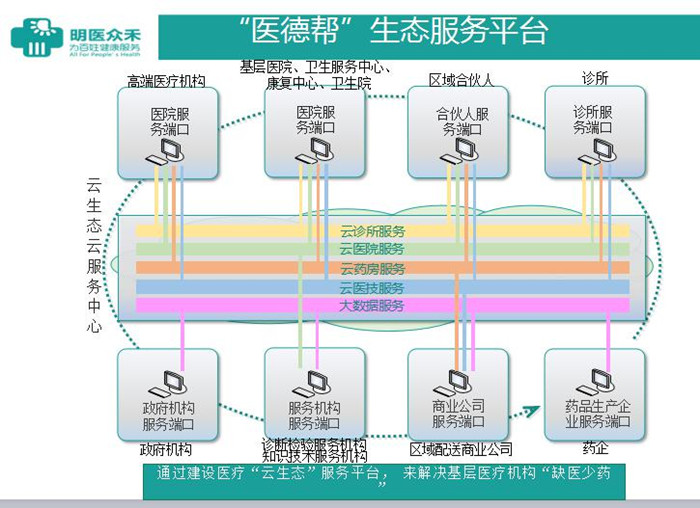
Jiang Qiang aims to “strengthen primary care” with the clinic as the hub, enabling residents to access reliable medical services right at their doorstep and serving the public’s health needs. So, how has this initiative performed in practice?
For example, in rural clinics, Jiang Qiang focuses on standardizing and intelligent clinical practices, helping primary care physicians quickly generate fully structured, point-and-click electronic health records (EHRs) for patients; integrating laboratory and diagnostic hardware to automatically import test results into EHRs; and incorporating intelligent clinical decision support systems to enhance the diagnostic and treatment capabilities of primary care physicians.
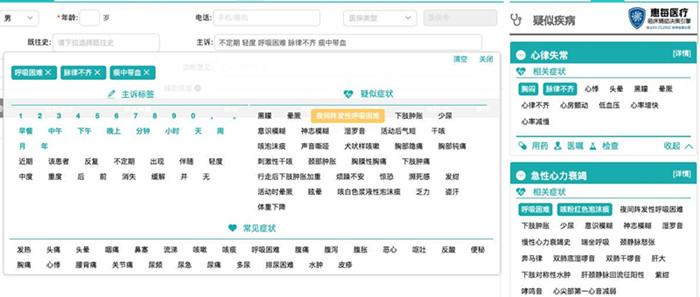 Figure: User Interface of the Cloud Clinic Platform
While helping village doctors improve their work efficiency, he also built a one-stop cloud pharmacy to address the shortage of medications at the grassroots level. “Many pharmaceutical companies are eager to collaborate with me.”
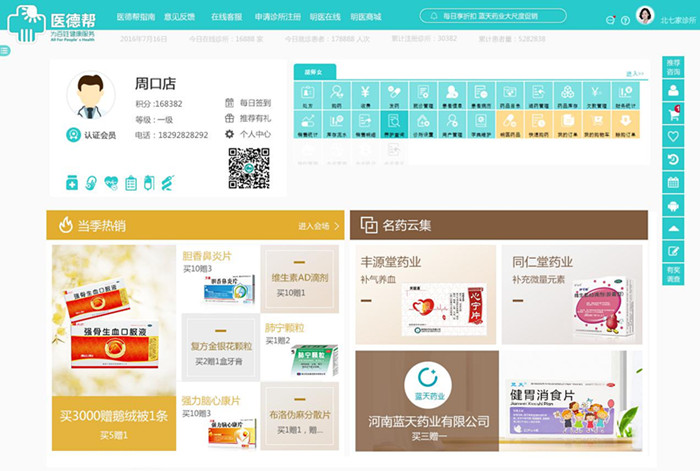
Currently, Jiang Qiang’s Cloud Clinic has expanded its user base to cover four provinces—Hebei, Shandong, Henan, and Guangdong—spanning 290 districts and counties. The platform has registered over 17,000 clinics and facilitated more than 5 million medical consultations.
“This is merely a product of Yidebang 2.0,” Jiang Qiang added, “Our business expansion model follows a four-step approach.”
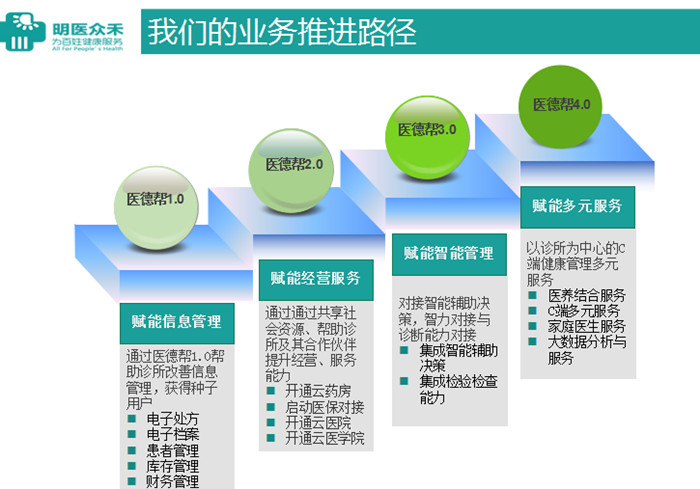
By 2020, Jiang Qiang aims to cover 300,000 clinics, a population of 400 million, and 2 billion patient visits through the initial phase of infrastructure development—namely, the establishment of basic informatization. Furthermore, he intends to complete the subsequent “street-vending” business operations, which include B2B pharmaceutical and medical device sales totaling RMB 30 billion, remote healthcare services worth RMB 10 billion, and other medical services amounting to RMB 1 billion.
“Therefore, we welcome pharmaceutical manufacturers, healthcare institutions, physician groups, individual physicians, exclusive clinic drug distributors, agents, intelligent medical decision support system providers, financial and insurance institutions, and other parties interested in serving primary care clinics to contact us for mutually beneficial cooperation,” said Jiang Qiang.