

EarlySense Files for IPO: Pioneering Contactless Patient Monitoring Attracts Samsung, iFit and Global Healthcare Leaders

EarlySense
Provider of Non-Contact Sensors Embeddable in Hospital Beds
Here are two stories:
Leah Coufal, 11, underwent corrective surgery for pectus carinatum at a renowned hospital in Southern California, United States, but tragically passed away at 2:00 a.m. on the second night after the operation due to anesthesia-induced respiratory arrest.
Lewis Blackman, a 15-year-old, underwent tumor surgery at MUSC (one of the most advanced hospitals in South Carolina). After the surgery, he bled continuously for 30 hours, yet his caregivers failed to detect any abnormalities.
Does a successful surgery mean the patient is out of life-threatening danger? How many deaths occur during the transfer from the intensive care unit to a general ward? Hospital resources are limited, making it impossible to assign a dedicated nurse to every patient. According to international standards, one nurse typically cares for 4–6 patients on average. However, in China, night-shift nurses in some large hospitals are even required to simultaneously monitor 40–60 patients.
Therefore, many inpatients transferred to general wards and chronic disease patients requiring long-term bed rest lack real-time, continuous monitoring. This means that when they experience a medical emergency, such as a myocardial infarction, it is difficult for physicians to provide immediate resuscitation.
To address this issue, EarlySense, a renowned Israeli medical device company and sensor supplier, has launched a contactless, continuous patient monitoring solution. Its proprietary non-contact monitoring sensors help clinicians detect early signs of patient deterioration by tracking data such as heart rate, respiration, and movement, thereby preventing adverse events including emergency interventions, ICU transfers, patient falls, and pressure ulcers.
The Entrepreneurial Journey of Three Fathers of Children with Asthma
EarlySense was founded in 2004 by a team with extensive experience in the healthcare industry. Interestingly, three of the four founders had children suffering from asthma. Therefore, their initial purpose in establishing the company was to help parents and physicians early identify deterioration in their children’s condition through an intelligent, contactless respiratory monitoring system, thereby preventing adverse events.
Approximately 5,000 children die from asthma each year in the United States. Avner Halperin, CEO and co-founder of EarlySense, believes that early intervention can prevent these fatalities. Along their entrepreneurial journey, Halperin and his fellow founders discovered that the device they marketed in the U.S. in 2008 was not only applicable to asthma but also beneficial for patients with other respiratory and cardiac conditions, such as congestive heart failure and chronic obstructive pulmonary disease (COPD). This realization led them to understand that the device was suitable not just for home use, but also for clinics, hospitals, and nursing homes.
EarlySense’s monitoring system has undergone extensive clinical trials and received U.S. FDA clearance. In 2016, the EarlySense monitoring system was used to monitor more than 100,000 patients and was deployed in 60 hospitals and nursing homes across the United States, including Veterans Health Administration facilities. Hospital studies have shown that over 90% of staff members consider the system highly effective in preventing and mitigating patient deterioration.
Currently, the EarlySense system is being used in thousands of hospitals, private nursing homes, and households worldwide, gradually gaining industry recognition and numerous awards:
In 2015, EarlySense was named one of the “Fierce 15” medical technology companies by Fierce Medical Device, positioning it as one of the most promising private medtech companies in the industry; in 2016, Early Sense was recognized as one of Deloitte’s Fast 500™ Technology Fast for 2016; in 2017, EarlySense was selected by Fast Company as one of the World’s Most Innovative Companies of 2017.
Integrated System for Building Smart Hospitals
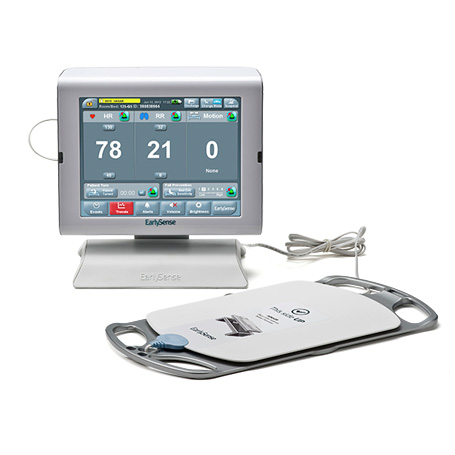
The EarlySense system is a comprehensive, integrated patient monitoring platform that provides continuous monitoring of vital signs and movement for general care patients, aiming to enhance patient safety and minimize false alarm rates. The entire system comprises four components: sensors, bedside monitors, data transmission systems, and EMR integration systems.
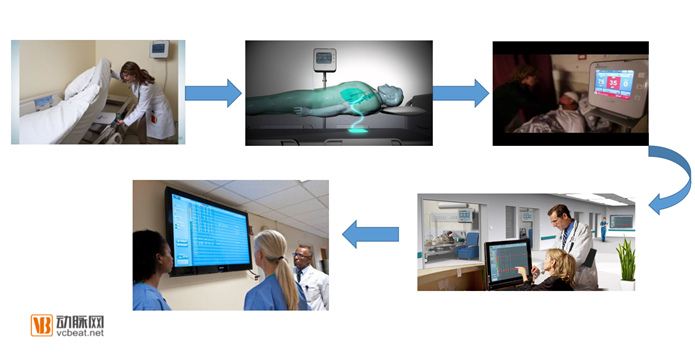
How the EarlySense System Works:
First, place a sensing board with a built-in integrated voltage sensor (patent pending) under the mattress of the hospital bed, utilizing piezoelectric sensing technology integrated into the diaphragm to detect mechanical vibrations from the patient’s heartbeat, respiration, and movement.
Then, the system automatically transmits the signals to the bedside monitor, which analyzes the data using complex signal processing algorithms to accurately measure the patient’s heart rate and respiratory rate.
Finally, the processed data is transmitted via wireless or wired connections to the Central Display Station (CDS) located at the nurses’ station. In the event of an emergency, the system sends alerts to the on-duty nurse’s personal handheld device, as well as to remote displays in departmental corridors and offices.
By design, although the EarlySense system operates on an independent network, it has been integrated with hospital information systems and medical dashboards from the outset. Interface and integration between the EarlySense system and the hospital EMR network are achieved via a gateway computer using HL7, XML, or Cerner CCM client protocols. Meanwhile, the system is also compatible with ADT and alert IT systems.
B2B-focused, B2C-supplementary Revenue Model
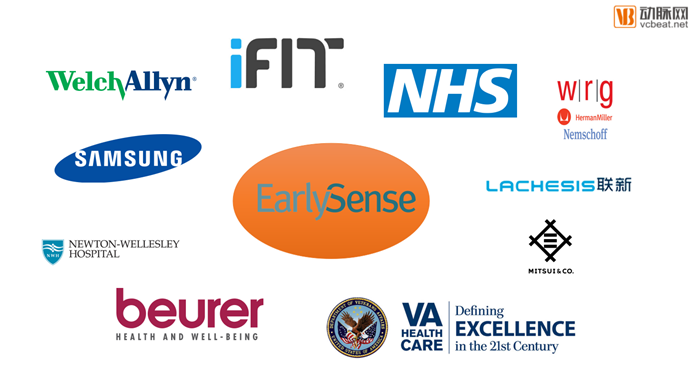
EarlySense's Key Partners
1. Provide OEM solutions
As a startup, EarlySense’s initial strategy was not to directly manufacture its own consumer-grade medical devices, but rather to serve solely as a sensor supplier.
Leveraging its advanced sensor technology, EarlySense partners with numerous internationally renowned healthcare and technology companies to provide OEM solutions. These companies include South Korea’sSamsung, JapanMitsuiGermanyBorle(Beurer)、iFitand Icon Fitness, among others. Currently, EarlySense’s technology has been applied in various clinical and health settings. For example:
In January 2015, EarlySense partnered with South Korea’s Samsung and secured a $20 million investment from Samsung. Samsung’s SleepSense, which integrates EarlySense’s sensing technology, won the CES Innovation Award in 2015.
In September 2015, EarlySense partnered with Germany’s Beurer to launch the “SE 80 SleepExpert” contactless sleep monitor. Through Beurer’s distribution channels, EarlySense introduced its contactless sleep and health monitoring sensors to the European market.
In November 2015, partnered with the renowned healthcare furniture company Herman Miller-Nemschoff to launch advancedContactless Health Monitoring Chair. This innovative chair, integrated with a monitoring platform featuring embedded sensors, is particularly useful in infusion therapy centers and dialysis treatment areas.
In 2016, EarlySense partnered with iFit to create a comprehensive health monitoring system. EarlySense’s technological devices are embedded in mattresses or mattress covers promoted by iFit, enabling users to monitor sleep quality and vital signs data, and receive personalized recommendations for improving sleep and overall health.
2. Establish Strategic Partnerships
As its business volume expanded, EarlySense transitioned from being a pure sensor supplier to developing its flagship product, the EarlySense System. This system is suitable for major hospitals, medical institutions, nursing homes, and even home care settings, helping healthcare professionals monitor patients in real time, ensure patient safety, improve work efficiency, and reduce medical costs. In promoting this system, EarlySense adopted a business model centered on establishing strategic partnerships, leveraging partners’ distribution channels to expand its market reach.
In 2014, EarlySense established a strategic partnership with Welch Allyn, a well-known U.S. medical diagnostic equipment company, to promote the EarlySense system through Welch Allyn’s distribution channels in the United States and Australia.
In 2017, EarlySense andShenzhen Lianxin Mobile Healthcare Technology Co., Ltd.Established a strategic partnership and officially announced its entry into the Chinese market, integrating its intelligent non-contact vital signs monitoring technology into the research and development of China’s medical monitoring systems.
InLianxin Smart WardIt integrates EarlySense InSight™ patented contactless sensing technology with advanced algorithms to jointly develop an intelligent patient bed monitoring system, enabling real-time remote monitoring. Currently, Lianxin’s smart ward product series has been widely adopted by renowned Grade A tertiary hospitals in China, including Huashan Hospital Affiliated to Fudan University, Ruijin Hospital Affiliated to Shanghai Jiao Tong University School of Medicine, Shengjing Hospital Affiliated to China Medical University, and Peking University Shenzhen Hospital.
3. B2B-Oriented Profit Model
In addition to providing OEM services and establishing strategic partnerships, EarlySense also sells the EarlySense System directly to major hospitals and healthcare institutions. Currently, the EarlySense System has been installed in hospitals and rehabilitation centers across the United States, Australia, Europe, and Asia.
In 2013, Newton-Wellesley Hospital became the first hospital in the United States to install the EarlySense system in general wards, implementing continuous, contact-free monitoring for patients. In March 2017, Newton-Wellesley Hospital announced that the system had significantly improved early detection and diagnosis of patient deterioration, while reducing nurses’ average response time to alerts by 59%. Newton-Wellesley Hospital stated that it would continue to use the EarlySense system for continuous monitoring of non-ICU patients.
In 2014, NHS (National Health Service) hospitals selected the EarlySense system to enhance patient safety. EarlySense has been installed in 34 NHS hospitals across more than 6,000 beds to prevent patient falls, reduce the incidence of pressure ulcers, enable early detection of clinical deterioration, and lower readmission rates. According to a 2007 report by the Patient Safety Observatory of the UK National Patient Safety Agency, patient safety incidents in NHS hospitals decreased by 40%.
In 2015, the U.S. Department of Veterans Affairs (VA) Medical Center reported that since purchasing the EarlySense system in 2014, the hospital had monitored 1,250 patients with spinal cord injury within one year. Code blue events at the VA Spinal Cord Injury (SCI) Centers decreased by 50%, ICU transfers decreased by 40%, and mortality following medical rapid response team (MRT) interventions or resuscitation efforts decreased by 83%, demonstrating significant improvements in clinical outcomes.
4. Supplement with the consumer segment to expand the market
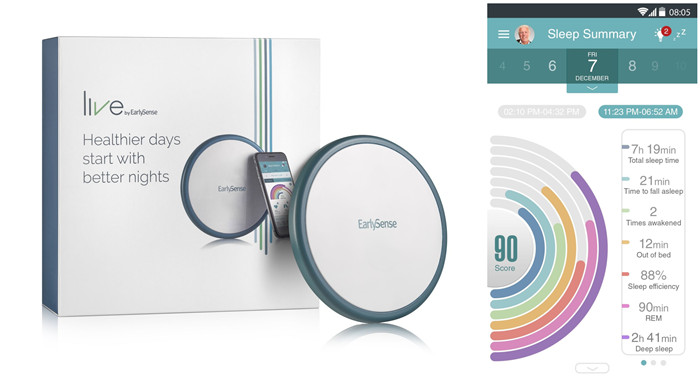
In addition to hospitals and medical institutions, there is also significant demand for health monitoring in home settings. In January 2017, EarlySense launched its first clinically validatedContactless Home Health and Sleep Monitor LIVE, bringing its contactless monitoring technology, used in U.S. hospitals and clinics over the past decade, into users’ homes.
LIVE integrates hardware and software to provide users with real-time health data through underlying piezoelectric sensor disks and the LIVE+ mobile app with remote access capabilities, delivering daily sleep and health reports. In case of emergencies, LIVE also sends alerts to the patient’s family members or caregivers.
Compared to other fitness and health trackers on the market, the greatest advantage of EarlySense LIVE is its superior accuracy. LIVE has undergone rigorous clinical research and testing, achieving an accuracy rate of up to 92.5%, comparable to polysomnography (PSG), the current gold standard for detecting sleep patterns and potential disorders. Additionally, the EarlySense LIVE sleep monitor is affordably priced at $199.
EarlySense is highly favored by investors
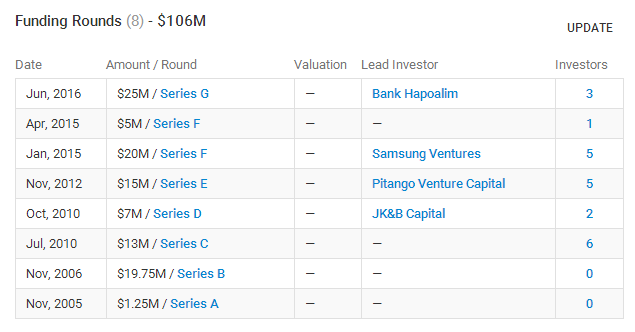
EarlySense Historical Funding Overview (Source: Crunchbase)
With its powerful sensor technology and highly innovative products, EarlySense has attracted significant attention from a large number of investors. Since its inception, EarlySense has completed eight rounds of financing, raising a total of $106 million. Its investors are also prominent entities, including Welch Allyn (US), Samsung (South Korea), Mitsui (Japan), Bank Hapoalim (Israel’s largest commercial bank), JK&B Capital (US), and Pitango Venture Capital (Israel). The most recent funding round occurred in June 2016, when EarlySense closed a $25 million Series G round led by Bank Hapoalim, with participation from JK&B Capital and Pitango Venture Capital.
The Medical IoT Market Is Fiercely Competitive: How Does EarlySense Win?
In recent years, the Internet of Medical Things (IoMT) has gained significant momentum, with smart hospitals, telemedicine, and mobile health emerging as the most prominent application areas in the healthcare industry.While some are still blindly rushing into the wearable medical device market, the era of contactless patient monitoring has arrived. It is now possible to easily monitor various health metrics without physical contact with the patient. In this regard, EarlySense can be considered a leader in the field.
In the era of the Internet of Medical Things (IoMT), real-time monitoring of patients’ conditions is no longer a novelty. For instance, one of EarlySense’s competitorsSotera WirelessIt is a company that also develops mobile vital signs monitoring systems. Sotera Wireless’s ViSi Mobile System provides real-time patient monitoring to detect early signs of clinical deterioration, thereby preventing complications and reducing life-threatening risks.
Meanwhile, the system integrates monitoring data into patients’ electronic medical records (EMRs) to streamline clinical workflows, improve healthcare providers’ efficiency, and reduce errors associated with manual transcription of vital signs. However, the key distinction between this system and EarlySense is that it relies on a wrist-worn wearable device for vital signs monitoring. Consequently, implementation may be challenging for patients who are reluctant to wear such devices.
However, in the non-contact monitoring equipment market, EarlySense once encountered a formidable competitor. That was a company namedSensiotecofA U.S. healthcare technology company has launched its Virtual Medical Assistant (VMA) product, which leverages ultra-wideband (UWB) wireless technology developed by the U.S. military to capture patients’ vital signs and activity indicators.
Sensiotec bore strong similarities to EarlySense in both its products and operational model. By leveraging non-contact remote vital signs monitoring devices, it helped healthcare providers reduce administrative costs, mitigate risks, and improve care quality and patient satisfaction. Unfortunately, due to technological limitations and insufficient post-launch operational capabilities, Sensiotec failed to withstand market pressures and declared bankruptcy in 2016.
Entrepreneurship Requires Technology, but Even More So, Perseverance
EarlySense has withstood market tests, survived, and grown to its current scale, thanks to its investment in technology and confidence in its products. What insights does this offer to entrepreneurs in China?
1. Technology is the core competitiveness. EarlySense's core competitiveness lies in its powerful sensor technology. Sensors are at the heart of smart healthcare, and indeed the entire Internet of Things (IoT). In recent years,The global sensor market has expanded year by year, reaching $126 billion in 2014, approximately $158.7 billion in 2015, and soaring to $174.1 billion in 2016, with a growth rate of about 28.18%. Within the overall sensor market, the medical services application segment is experiencing the fastest growth. Meanwhile, the domestic sensor market in China is also witnessing sustained rapid expansion, with an annual growth rate exceeding 20%. Evidently, increasing investment in the research and development of sensing technology is the key to success for entrepreneurs in the field of novel medical devices.
2. Avoid blind conformity; instead, cultivate unique products and business models. In an era where innovation is universally pursued, distinctive products are more likely to capture public attention. Leveraging its advanced sensor technology, EarlySense could have followed the trend by developing wearable devices. However, it chose a different path, focusing on the research and development of contactless devices and launching a novel patient monitoring system.
3. Persistence + Focus = Victory. Although entrepreneurship is challenging, if you consistently dedicate yourself to one endeavor, you will inevitably reap rewards. The greatest pitfalls are abrupt abandonment and unchecked ambition. Startups must withstand temptations along their entrepreneurial journey; rather than chasing every trending opportunity, they should focus on their core competencies and persevere.