

National Draft Standard for Radiotherapy Quality Control Unveiled, Innovative Service Model Supports Standardized Cancer Care
Due to factors such as population aging, unhealthy lifestyles, environmental pollution, and the low cure rates of traditional treatments, China has become a country with high cancer incidence and mortality. According to statistics from the National Cancer Registry Center, there were 4.2916 million new cancer cases and 2.8142 million cancer-related deaths in China in 2015. The cancer incidence rate in China is close to the global average, but its mortality rate exceeds the global level.
As one of the three major modalities in cancer treatment, radiotherapy has been gaining increasing attention in recent years due to its advantages, including high precision, broad applicability, minimal side effects, and reduced invasiveness. Radiation therapy is a complex process; any slight oversight in any stage—from patient positioning and target volume delineation to treatment planning and plan implementation—can lead to serious consequences.
Over the past 30 years, approximately 3,000 patients worldwide have suffered varying degrees of injury due to operational errors, non-compliant practices, or inadequate quality control during radiotherapy. Therefore, strict quality control plays a crucial role in ensuring effective treatment for patients. To further standardize China’s oncology radiotherapy system and benefit the broader patient population, there is an urgent need to establish quality control standards for radiotherapy in China.
On June 10, 2017, the meeting of the Radiotherapy Quality Control Expert Committee under the National Center for Standardized Diagnosis and Treatment Quality Control in Oncology was successfully held in Beijing. Co-hosted by the National Cancer Center, the Cancer Hospital of the Chinese Academy of Medical Sciences, and the National Center for Oncology Quality Control, among others, the conference featured thorough discussions on the Basic Standards for Quality Control in Radiotherapy in China, which were unanimously approved. This milestone has played an irreplaceable and positive role in promoting standardized diagnosis and treatment in oncology radiotherapy.
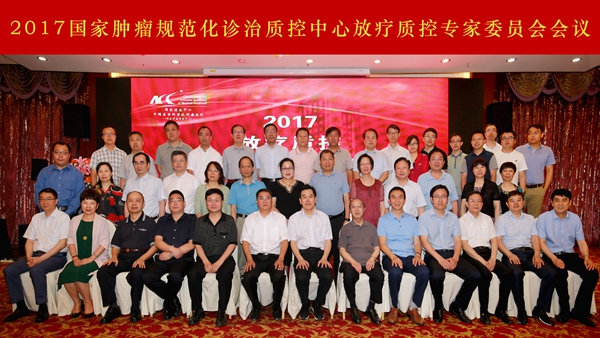
Group Photo of Experts at the 2017 Meeting of the Expert Committee on Quality Control in Radiation Therapy
In their opening remarks at the conference, Academician He Jie, Director of the National Cancer Center, and Deputy Director Zhou Changqiang of the Bureau of Medical Administration and Hospital Management under the National Health and Family Planning Commission, emphasized the importance of quality control in standardized diagnosis and treatment of tumors, as well as the significance and urgency of radiotherapy quality control in China. Professor Ye Xiong Li, Director of the Department of Radiation Oncology at the Cancer Hospital of the Chinese Academy of Medical Sciences and Chairman of the National Radiotherapy Quality Control Expert Committee, pointed out in the committee’s annual work report that the committee has been committed to establishing quality control standards for oncology in China and has initially developed a series of normative standards for quality control in tumor radiotherapy.
In his opening remarks, Deputy Director Zhou Changqiang of the Bureau of Medical Administration and Hospital Management under the National Health and Family Planning Commission stated, “The State Council and the National Health and Family Planning Commission have always attached great importance to the standardized diagnosis and treatment of malignant tumors. In February this year, the General Office of the State Council issued the Medium- and Long-Term Plan for the Prevention and Control of Chronic Diseases in China (2017–2025). The notice clearly specifies that by 2020, the five-year survival rate for malignant tumors should increase by 5 percentage points from the current baseline of 30%, and by 10 percentage points by 2025. This is a formidable task, making it crucial to strengthen quality control in tumor diagnosis and treatment and to enhance the standardization of oncology care.” This fully underscores the importance of quality control in radiation therapy. The conference invited domestic and international experts to deliver thematic presentations and report on research projects related to quality control standards.
During the conference, all attending experts engaged in vigorous discussion and deliberation on the Basic Standards for Quality Control of Radiotherapy in China, sharing their insights and ultimately approving the draft standards unanimously. The development of these standards was achieved through the collaborative efforts of outstanding hospitals across China and joint research by leading industry experts. By working together, the participating institutions and experts provided valuable recommendations for quality control in standardized tumor diagnosis and treatment, culminating in the collaborative compilation that marks the initial establishment of national-level radiotherapy quality control standards in China.
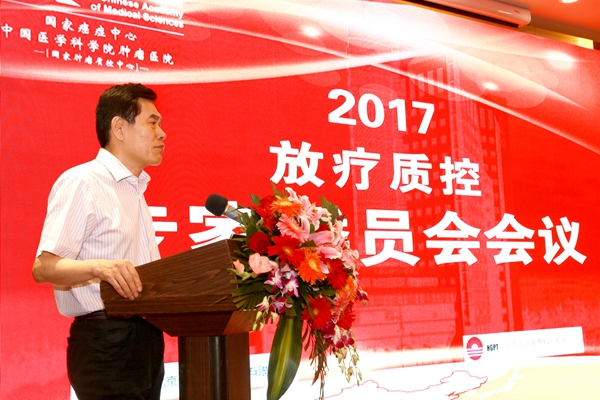
Address by Academician He Jie, Director of the National Cancer Center
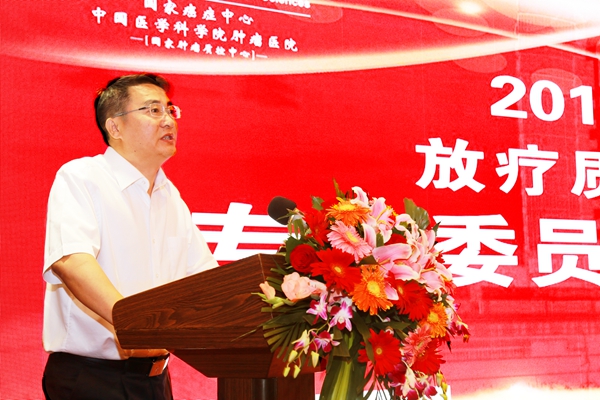
Address by Deputy Director Zhou Changqiang of the Bureau of Medical Administration and Hospital Management, National Health and Family Planning Commission
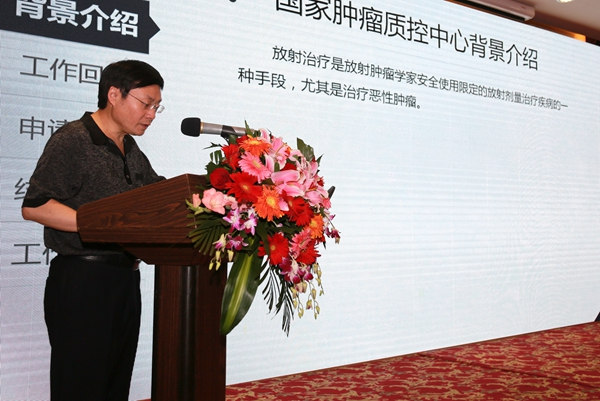
Professor Li Yexiong, Director of the Department of Radiation Oncology at the Cancer Hospital of the Chinese Academy of Medical Sciences and Chairman of the National Expert Committee on Radiotherapy Quality Control, delivered the committee’s annual work report.
In addition to presentations by domestic and international experts, All-Region Medical, at the invitation of the Radiation Therapy Quality Control Expert Committee, showcased a novel cloud-based service model for radiation therapy quality control. Since the conclusion of the National Quality Control Conference in 2016, All-Region Medical has designed and developed fully automated connectivity features compatible with commonly used quality control devices on the market. The company has assisted in promoting pilot programs for cloud-based quality control management across various provinces, municipalities, and autonomous regions. It has introduced functionalities that combine automatic data acquisition from quality control devices with multi-terminal offline reporting. Meanwhile, it has continuously enriched peripheral quality control services and training and science popularization initiatives, providing one-stop comprehensive solutions that include integrated hardware and software support. These efforts aim to comprehensively, systematically, and standardize the improvement of oncology treatment standards at partner hospitals, ultimately ensuring effective quality assurance for patient care.
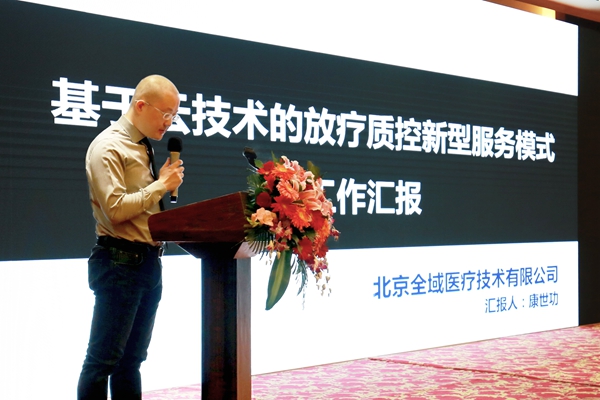
Manufacturer's Technical Progress Report
This conference will play a positive and significant role in promoting quality control for standardized diagnosis and treatment of cancer, as well as the standardization and normalization of radiation therapy in China. It is believed that, under the leadership of the experts present, radiotherapy technology in China will advance toward an even brighter future.