

Chunyu Doctor's New CEO Zhang Kun Unveils 3EP Strategy to Truly Solve Health Issues
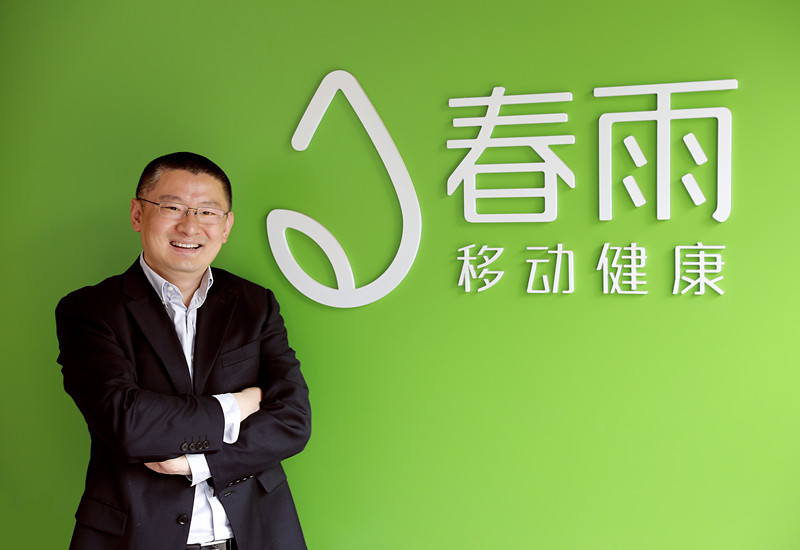
Zhang Kun, New CEO of Chunyu Doctor
More than a month after joining Chunyu, Zhang Kun, the new CEO of Chunyu Doctor, made his first official public statement by granting an exclusive interview to VCBeat.
As the college entrance examination season arrives, Zhang Kun has also submitted his first “report card” since taking office: the 3EP strategy for the future development of Chunyu Doctors.
How Is Chunyu Doctor Faring Without Zhang Rui?
Has Chunyu Yisheng, with Zhang Kun on board, changed?
The topic began 17 years ago.
In 2000, after graduating with a degree in Clinical Medicine from Peking University Health Science Center, Zhang Kun did not immediately pursue a career as a physician. Instead, he chose to become one of the first-generation internet entrepreneurs. That year, Zhang Kun founded “China Medical Network.” According to his recollection, this decision was driven by his early recognition of the limitations inherent in the service capacity and coverage radius of in-hospital medical care.
Zhang Kun’s China Medical Network primarily offers three products: First, drawing on the UK’s NHS Direct (National Health Service Direct) model, it provides users with self-diagnosis guidance. Second, it uploads textbooks and courseware used by medical students in departments such as internal medicine, surgery, obstetrics and gynecology, and pediatrics to the platform for medical science popularization and health education. Third, it has established a medical consultation BBS (bulletin board system), where patients can post health-related questions and the platform invites renowned physicians to provide answers.
China Medical Network failed to sustain its operations for long and soon shut down due to the first dot-com bubble. Zhang Kun chose to return to academia to specialize in medical informatics, and later founded the Information Management Department at China Resources Healthcare, dedicating himself to hospital quality management and efficiency improvement.
In the same year that Zhang Kun graduated from university, Zhang Rui also just completed his postgraduate studies at Renmin University of China. His first job was as a journalism lecturer at Beijing Sport University; he subsequently rose to prominence as a media mogul and later became a pioneer in the mobile healthcare industry.
Eleven years later, as the mobile internet was just emerging, Zhang Rui founded “Chunyu Doctor.” The services initially offered were nearly identical to those of the earlier “Zhonghua Medical Network,” focusing on online self-diagnosis, online medical education, and online consultations. Born into a family of physicians and with a background as a seasoned media professional, Zhang Rui recognized early on that mobile internet technology held great promise in the healthcare sector.
When Chunyu Yisheng was founded in 2011, Zhang Kun, a senior expert in health informatics and medical quality management, took notice of the company. As he observed Chunyu Yisheng gradually transform the BBS-era health consultation model of “online inquiry–offline consultation–online feedback” (as few experts were online at the time) into a mobile-era paradigm enabling real-time interaction between licensed physicians and patients, he began to recognize the disruptive potential of Chunyu Yisheng and has since maintained close attention to its development.
A major reason Zhang Rui founded Chunyu Yisheng was his concern that high-quality medical resources were confined within hospital walls, significantly reducing the efficiency and reach of healthcare services. He aimed to leverage mobile internet technologies to enhance the supply of medical resources, improve the operational efficiency of healthcare institutions, and elevate the quality of medical care, ultimately achieving dignified, rational, and patient-centered healthcare.
Zhang Kun’s ambitions align more closely with the academic tradition. He expressed his admiration for a motto of Johns Hopkins University: “Saving Lives Millions at a Time.” Zhang believes that the internet has made it possible to turn this concept into reality.
Therefore, Zhang Kun stated in an interview with VCBeat, “Chunyu Doctor and I share the same original aspiration.”
During the National Day holiday in 2016, Zhang Rui passed away, sending shockwaves through the industry.
At the time, Zhang Kun was pursuing a joint Doctoral Degree in Healthcare Management from Tsinghua University and Johns Hopkins University, with “Uber Health” model being a key focus of his research.
To study this model, it is necessary to conduct in-depth research on representative companies in China. Among the mobile health companies that emerged at that time, Chunyu Doctor was the only optimal choice.It was this opportunity that finally allowed Zhang Kun to connect with Chunyu Doctor.
During a critical period for the company, Li Guanghui and Zeng Boyi, co-founders of Chunyu Doctors, provided strong support for Zhang Kun’s research, and their interactions sparked fruitful collaboration.
It was precisely the favorable mutual impressions formed during communications that led to Zhang Kun becoming a candidate for evaluation as the new CEO of Chunyu Doctor. This followed the Board of Directors’ establishment of relevant criteria for the position and recommendations from board members, including Zeng Boyi and Li Guanghui.
“After in-depth and detailed discussions with members of Chunyu Yisheng’s board of directors regarding the company’s future direction and strategy, the board approved my appointment as the new CEO of Chunyu Yisheng,” Zhang Kun briefly recounted to VCBeat the process by which he became the new CEO of Chunyu Yisheng.
On May 8, 2017, at a cinema near the company’s office, Zhang Kun held his first meet-and-greet with Chunyu Doctor’s team of more than 200 employees, conducting the event in the format of a “Town Hall Meeting.”
“Holding a meeting in a movie theater, you’ll find it quite interesting. It is a more egalitarian approach to communication that bridges the gap between leadership and employees. From this setting, the audience looks down from an elevated perspective. When you are looked down upon by your entire staff, you can more genuinely feel their enthusiasm. At that moment, I had two feelings. First, with the core backbone team of Chunyu Doctor all present, I was very confident in leading everyone forward. Second, being trusted by so many people, I felt a tremendous sense of responsibility and pressure.“Zhang Kun said.
Many people wonder: With Zhang Rui’s distinct personality and strong charisma, how did Zhang Kun integrate into the team?
Attending meetings at the cinema is one way for Zhang Kun to integrate into the team. More often, however, Zhang Kun takes the initiative to integrate with the team in a highly structured manner.
For instance, every Monday, Zhang Kun dines with the management team to discuss work matters. On other days, whenever he has time, he makes it a point to have lunch with his colleagues at noon.
However, deeper integration hinges on a thorough understanding of Chunyu Doctor’s business operations.
Zhang Kun is candid: his decision to join Chunyu Doctor was driven not only by shared original aspirations and similar ideals, but also by practical considerations:
First: Chunyu Doctor boasts a mature team, stable business operations, leading-edge technology, and a well-known brand, with substantial early-stage accumulation. Among top-tier mobile health companies, few possess a combination of technological, internet, and consumer-facing service DNA.
Second: Despite the blow of Mr. Zhang Rui’s untimely passing, Li Guanghui and Zeng Boyi played a crucial role in the aftermath. They stabilized the team, implemented strategic contraction and focus, ensuring that Chunyu Doctor’s core business not only avoided decline but achieved growth.
Third: Chunyu Doctor is indeed facing challenges. On one hand, the departure of Zhang Rui has increased uncertainty surrounding Chunyu Doctor, leading some institutions to underestimate its strength and value; on the other hand, the company needs to formulate a clearer strategy for its next phase of development.
“The reason I joined Chunyu, beyond trust and familiarity, is that I believe in my own capabilities and past experience,”Leveraging Chunyu Yisheng’s existing strong foundation will enable the company to reach new heights in a short period of time—“I am confident about this,” said Zhang Kun.
The ideals are similar, but the paths are vastly different.
Not long after Zhang Kun took the helm at Chunyu, he proposed that Chunyu Doctor should shift from “disrupting healthcare” to “embracing healthcare.”
From disruption to embrace, the difference is far more than just two words; it represents two distinct mindsets and logics.
“Disrupting healthcare,” the concept early proposed by Chunyu Doctor, was more of a vision. In contrast, “embracing healthcare,” as advocated by Zhang Kun, represents both a methodology and a pathway.
More than a month after taking the helm at Chunyu Yisheng, Zhang Kun officially unveiled the new “3EP” strategy: Enable Providers (empowering hospitals), Engage Patients (serving patients), and Empower Partners (supporting partners).

The core change is the proposal to empower hospitals. This represents a qualitative shift from Chunyu Doctor’s previous focus solely on consumer-facing (C-end) services.
Zhang Kun’s interpretation is that the three strategies correspond to three major business segments: hospital internet operational system services for hospitals, value-added medical services for patients, and an open service ecosystem fostering win-win collaboration with business partners.
“In the future, Chunyu Doctor will integrate its capabilities into those of healthcare service providers, and, while ensuring safety and quality, further enhance patient satisfaction and experience with online services. By forging closer collaborations with partners across all segments, we aim to achieve win-win outcomes in service delivery, value creation, and other key areas.”
Zhang Kun further explained, “Disrupting healthcare” is not in Chunyu’s DNA; Chunyu’s DNA consists of technological, service-oriented, and internet-based genes.
Therefore, Chunyu Doctor’s strategy is to embrace the healthcare sector by partnering with medical service providers such as hospitals and physician groups, thereby enhancing patient care and strengthening its direct-to-consumer (To C) service capabilities.
Zhang Kun used his experience to demonstrate this possibility: “Over the past few years, Chunyu has accumulated substantial technological and operational assets, along with deep operational insights. When I was working in hospitals, I greatly envied and aspired to possess such capabilities. Now at Chunyu Doctor, I am able to transform these capabilities into tangible products and services, providing them to hospitals to help them build their own internet-based service capabilities.”
So, what is Zhang Kun’s logic for serving physical medical institutions?
The interaction model of traditional medical services is as follows: hospitals focus on the diagnosis and treatment of patients, with core scenarios being in-hospital examinations and consultations. There is little incentive to track patients’ pre-consultation and post-consultation phases. This model does not require the internet.
However, the mindset of many hospitals has shifted. They now aim to transform themselves into platforms centered on patient care, striving to establish a fully operational closed-loop system that spans pre-consultation, during-consultation, and post-consultation phases. This requires leveraging internet technologies and thinking to enhance efficiency.
“It is evident that hospitals that have effectively leveraged internet technology in recent years have experienced rapid growth,” said Zhang Kun.
This is the value of Chunyu Doctor: leveraging its own technology, experience, and resources to empower healthcare, primarily in three aspects:
First, empower hospitals and medical institutions.Leverage Chunyu Doctor’s technology and services to help hospitals and medical institutions expand into incremental service markets.
Second, empowering physicians.Chunyu Doctor will develop a wide range of tools to help improve the diagnostic and treatment capabilities of primary care physicians.
Third, empower patients.Help patients find the most suitable online medical consultation institutions and doctors.
Bridging the online and offline worlds, and building partnerships with medical institutions—this, Zhang Kun believes, is the path Chunyu Doctor must take.
Regarding the recent controversy surrounding the “Draft for Comments” on internet-based diagnosis and treatment, Zhang Kun believes this development is beneficial for both the mobile healthcare industry and Chunyu Yisheng. First, the healthcare sector must be subject to regulation. Second, rather than operating an independent internet hospital, Chunyu Yisheng partners with physical medical institutions to help them build online capabilities—a model explicitly supported by policy.
During the interview with Zhang Kun, the reporter raised the concept of a "national-level" mobile health app.Over the past few years, in terms of popularizing the concept of mobile health, expanding the mobile health market, and innovating mobile health services,Chunyu Doctor is perhaps the most typical representative, but it still falls significantly short of the concept of a nationwide app.
Zhang Kun found this reaction quite interesting, but he placed greater emphasis on the actual value generated.
“Judging by several key KPIs of Chunyu Yisheng (Spring Rain Doctor), it has already become a “national-level mobile healthcare app.” However, we have moved beyond defining our corporate vision in terms of volume and scale, and are now focusing more on the core of our business. We aim to describe our mission from the perspective of creating greater value; thus, Chunyu Yisheng is committed to becoming an enterprise that truly resolves health issues.”
Zhang Kun stated that he would carry forward Zhang Rui’s vision and resolve, but would adopt different approaches and pathways. HeIt requires a clear top-level design, well-defined strategic planning, and robust execution capabilities.
When the reporter entered Zhang Kun’s office, the most prominent feature was a KT board mounted on the wall, densely filled with Chunyu Doctor’s strategic plans and progress updates, presented in a remarkably neat, clean, and well-organized manner.
Zhang Kun said, “I particularly favor this management style. It stems from my early years as a strategic consulting advisor, when I preferred using visual aids—such as diagrams and text—to communicate with clients and teams. I would often sketch strategic blueprints on the blackboard and employ various tools and methodologies to conduct business-level analyses.”
Zhang Kun believes that the benefit of this habit is having a systematic plan in place, regardless of the time or activity. “This may be the most important gene I have brought to Chunyu Doctor: strategic planning and top-level design.”
Zhang Kun places particular emphasis on strategic-level planning.“At Chunyu Yisheng’s current scale and magnitude, strategic missteps are impermissible. As a company of our size, a single decision may entail capital investments of tens of millions of yuan or the allocation of dozens of personnel. Therefore, when making all major decisions, we conduct extensive analysis and deliberation, taking into account factors such as the external environment, internal capabilities, partners, and phase-specific feasibility.”
On the other hand, Zhang Kun also hopes to introduce more modern corporate management practices to Chunyu Doctor. For instance, he aims to institutionalize some of Chunyu Doctor’s past habits, integrate them into the company culture, and transform them into automatic and spontaneous behaviors and practices among employees.
Such a Chunyu Doctor may be more worthy of aspiration.
Information revealed through interviews indicates that Zhang Kun has been very busy recently.
“I’ve completed so much work these days,” Zhang Kun also admitted.
This primarily includes:
1. Meet with the company's team and employees;
2. Meet with representatives of physical hospitals and medical institutions;
3. Meet with strategic partners.