

VR Dental Pioneer Weier Vision Files IPO Prospectus, Revolutionizing Oral Surgery Planning and Simulation in Virtual Reality
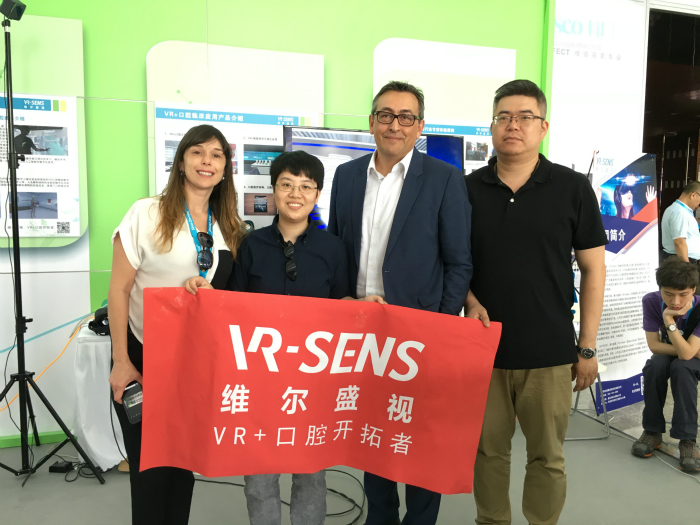
At the 22nd China International Dental Equipment and Materials Exhibition,Mr. Rolf, Vice President of Henry Schein China (third from left), visits and experiences the new VR+ dental technology, and withPhoto of Dai Jun (second from left), Founder of Weiershengshi
As a devoted gaming enthusiast, Dai Jun, founder of Weisheng Vision, candidly admitted that his entrepreneurial journey actually stemmed from his passion for games.
From the Nintendo Entertainment System (NES) and arcade games to the PlayStation 2, and finally to the booming VR gaming sector, it was precisely his attention to VR games that motivated Dai Jun to introduce VR technology into dentistry. As a field heavily reliant on display technologies and manual dexterity, dentistry should be at the forefront of technological innovation.
The Origin of the Startup: Leveraging VR for Technological Iteration
During the interview, the reporter learned that Dai Jun holds a Master’s degree in Journalism and Communication from Capital Normal University, as well as a Master’s degree in Marketing from the University of Warsaw in Poland. Before founding WellSight, she was a co-founder of Born Dental, a well-known domestic dental group. The company secured Series A, B, and C financing from prominent investment firms including IDG Capital, LYFE Capital, and Qiming Venture Partners.
Years of experience in the oral healthcare industry have equipped the Wellshining team with extensive expertise in building academic systems, brand operations, and medical brand communication. During its tenure leading the renowned Bone Forum, the “Bone Forum Public Welfare Micro-Class” persisted in delivering weekly live broadcasts of diverse dental specialty courses to hundreds of dentists’ WeChat groups across China. By inviting top-tier domestic expert teams to translate and elucidate multiple classic foreign textbooks, it established a non-profit learning and exchange platform for 100,000 dentist users in China.
Over the years, the core team of Weier Shengshi has been dedicated to introducing new products and technologies to China’s dental industry, as well as promoting high-end academic systems and courses both domestically and internationally. With an in-depth understanding of the dental sector, they recognize that its development relies heavily on novel clinical techniques as well as advanced equipment and instruments. Consequently, they have maintained a high level of sensitivity to cutting-edge technologies and products within the industry.
At the 2015 EAO (European Association for Osseointegration) Annual Conference held in Sweden, Dai Jun encountered VR panoramic display technology in dentistry for the first time. “The application of VR in dentistry left a deep impression on me and sparked my strong interest; I believed at the time that this was the future.”
In September 2016, during an academic training session led by Professor Wang Honglie at the University of Michigan, Dai Jun met his current co-founder, Lao Han, a dentist obsessed with VR. The two instantly clicked and embarked on an entrepreneurial venture aimed at revolutionizing dentistry through VR technology.
Weier Shengshi's innovative achievements can be applied to clinical aesthetic prosthodontics, the clinical outcomes of clear aligner therapy, and VR visualization for the design of surgical guides and treatment planning in implant surgery.
The clinical benefits of this application enable physicians to design treatment plans and conduct simulated procedures using real patient case data within a virtual reality environment, significantly enhancing the precision and success rates of treatments and surgeries. Furthermore, by donning VR headsets together with patients to enter shared virtual demonstration scenarios, physicians can transform complex doctor-patient communication into an experience that is simple, clear, and readily accessible.
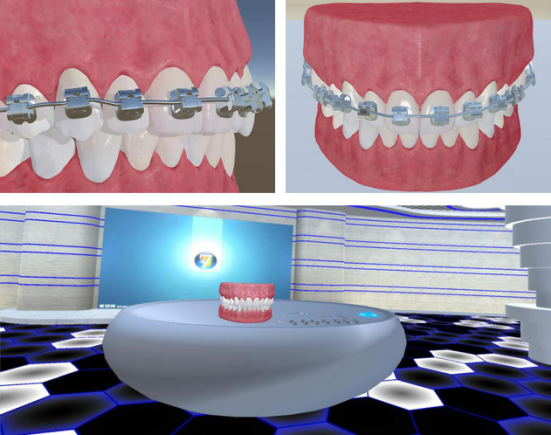
Weier Vision's VR+ Orthodontic Applications in Dentistry
Dai Jun told reporters that the core partner team of Weier Shengshi includes internationally renowned academic experts, domestic dental clinicians, laboratory technicians, VR technology specialists, medical imaging professionals, 3D printing experts, and marketing talents in the oral health industry.
Solving the Challenges in Dentist Training
Throughout years of organizing specialized technical training in stomatology, the VCBeat team has observed that the efficiency and effectiveness of dental education—from foundational instruction during student years to continuing clinical education—have been far from ideal. Specifically, foundational teaching places excessive emphasis on theory, while resources for clinical practical training are scarce. Furthermore, continuing education suffers from low efficiency and limited coverage, leaving a large number of primary-care dentists without access to standardized clinical training or high-quality international academic courses.
This issue has yet to find a satisfactory solution.
Currently, dental training is primarily divided into two forms: advanced clinical fellowships and various short-term workshops. Advanced fellowships typically last three to six months; however, participants are unable to follow cases through their complete lifecycle, resulting in moderate efficacy. These programs involve high financial costs and significant time commitments, and candidates often face waiting lists for placement. In contrast, most short-term workshops are predominantly commercial showcases. Characterized by their brevity (measured in hours) and fragmented structure, these courses focus almost exclusively on theoretical instruction, lacking integration with hands-on practical operation.
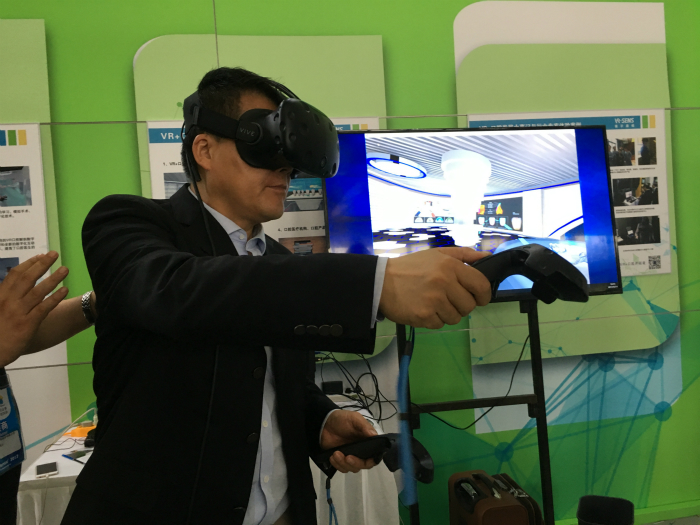
Professor Xu Baohua, Chairman of the General Practice Committee of the Chinese Stomatological Association and Chairman of the Dental and Maxillofacial Branch of the Chinese Association of Plastics and Aesthetics, Experiences VR Orthodontic Visualization Technology
Therefore, Weisheng Vision’s core target audience primarily consists of dentists in China and dental healthcare institutions (including specialized dental hospitals, universities, public hospital dental departments, and private clinics), addressing their practical needs. Compared with traditional methods such as phantom head models, 3D animations, videos, offline training, and hands-on practice, Weisheng Vision offers three major advantages:
1. Academic Advantages. The advisory team comprises authoritative experts from the top three dental schools globally, as well as renowned domestic industry experts and chairpersons of professional societies;
2. Technical Advantages. Possesses a VR technology team that was exceptionally difficult to assemble;
3. Sales Channel Advantages. With years of industry resources and channels, the company has adopted a market-first, R&D-later strategy, possessing inherent advantages in vertical applications and market commercialization.
Not a Smooth Ride: Young Tech Team Quickly Steps In
Due to the unique nature of VR in dentistry, there are few comparable companies on the market. As a result, Weier Shengshi has received support from the government, incubators, and investors since its inception. Coupled with years of accumulated industry resources, its overall progress has been relatively smooth.
However, during the roadshow, the Weiershengshi team revealed that early partners held differing views on the company’s strategy and business model. Coupled with the fact that initial R&D efforts were funded entirely out of their own savings, the journey was arduous, leading some key technical personnel to give up and depart.
“Although we approached the matter with a mindset of respecting choices and offering our best wishes, the lack of core technical personnel nearly brought our projects to a standstill. I felt deeply discouraged myself, and the situation had a significant impact on the entire team. Fortunately, the young professionals in our second-tier technical team stepped up remarkably, quickly filling the gaps and shouldering the heavy responsibility of leading our technical efforts. As a result, multiple critical projects were completed step by step, albeit through considerable hardship,” recalled Dai Jun, reflecting on a minor episode encountered during the startup journey.
To thoroughly address talent-related challenges, Weiershengshi has established a strategic partnership with AR China, a training institution in the VR industry. This partner provides opportunities for technical staff to undergo retraining and continuously supplies the team with skilled professionals, ensuring a steady influx of fresh talent.
In terms of hardware, Weier Shengshi also adopts a collaborative approach, primarily engaging in strategic partnerships with peripheral manufacturers such as HTC for head-mounted displays and haptic gloves. This has allowed the company to focus on developing content for vertical applications during R&D, thereby avoiding significant detours.
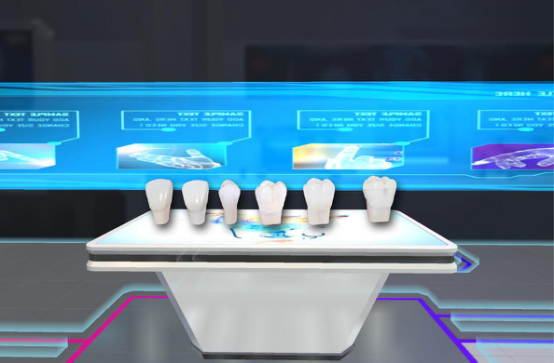
VR+ Dentistry: Restorative Applications by Weiersheng Vision
No entrepreneurial journey is smooth sailing. Every team must navigate the initial surge of enthusiasm as well as the gray episodes that arise during the venture-building process. Following a round of strategic adjustments, Weier Shengshi’s core team has curated a group of like-minded and resolute partners. More importantly, the rapid growth of its young technical team has yielded a revitalized workforce, which is particularly gratifying.
Four Revenue Streams
The dental industry is a relatively independent niche market within the healthcare sector, characterized by a high degree of marketization.
Currently, China has more than 200 dental education institutions, 370 public specialized dental hospitals, 2,500 registered dental laboratories, 24,000 hospital-based dental departments, and 65,000 private dental clinics. Together with 130,000 registered dentists, 800 million dental patients, and a dental industry valued at RMB 200 billion, these constitute substantial potential customers and market opportunities.
Weier Shishi aims to promote and popularize VR-enabled oral visualization technology among major dental healthcare institutions and individual dentists within three years, while simultaneously building an internet-based visualization platform for VR in dentistry.
Currently, the company’s primary revenue streams are derived from providing comprehensive VR teaching solutions to dental education institutions, offering hands-on VR training for dentists, delivering customized VR visualization solutions for training, patient education, and doctor-patient communication to dental healthcare providers, as well as creating VR-based promotional videos and training systems for dental manufacturers.
The Weisheng Shishi team revealed that while there are some benchmark products and companies in the VR+ healthcare sector, most are still in the R&D phase. Currently, the application of VR technology in the dental industry is an innovative field globally; there are no direct competitors in the dental sector, let alone companies that combine both technological expertise and marketing sales resources.
“Some manufacturers in the industry have invested heavily in engaging gaming companies to develop simple VR-based product demonstrations. However, due to the lack of specialized, vertically focused development teams, these efforts lacked systematicity and sustainability, thus posing little impact or threat to us.” The core team at Weier Shishi holds high expectations for the future market and believes they have accurately seized the window of opportunity for “VR + Dentistry.”
Establish a User "Dental Full Lifecycle" Profile Database
So, which representative enterprises and dental medical institutions has Weiershengshi currently partnered with? Dai Jun revealed that the company is jointly developing a VR teaching program for cranial anatomy with the University of Michigan in the United States. Additionally, it has reached cooperation intentions with dental medical teaching institutions and affiliated stomatological hospitals, including Peking University, China-Japan Friendship Hospital, Fourth Military Medical University, Xi’an Jiaotong University, Wuhan University, Shandong Provincial Hospital, and Xiamen Stomatological Hospital, to jointly develop VR-based educational training and clinical applications in dentistry, striving to achieve excellence in the vertical application of VR technology.
In the future, Weier Shengshi plans to segment its products into three major categories: education, training, and clinical applications. It will particularly focus on developing practical projects in areas such as doctor-patient communication, targeting end-user patients as potential customers and leveraging customer word-of-mouth as its most effective marketing strategy.
Once a client base reaches a certain scale, the value of data becomes prominent. The dental industry primarily deals with three types of data: intraoral scans, dental CT or panoramic radiographs, and lateral cephalometric radiographs.
All Weisheng Vision’s “VR + Dentistry” projects are based on real-world clinical case data, and the company has filed multiple invention patents for its VR initiatives, with the core patent covering its VR medical imaging system. By receiving, transmitting, storing, and categorizing outpatient medical data along with preoperative CT scans and intraoral scanning information, Weisheng Vision aims to build a comprehensive “full lifecycle dental care” patient database. This database can support follow-up services and ongoing management across various dental specialties, facilitate clinical application and analysis of dental materials, and advance research on oral diseases.
Regarding the 2017 roadmap, Dai Jun stated, “We plan to raise over RMB 20 million in Series A financing to develop our medical imaging and VR translation system, as well as our cloud platform. We will leverage the actual business operations of our existing digital products—such as clear aligners, surgical guides for dental implants, and digital restorations—to integrate VR visualization technology and VR live-streaming training. Meanwhile, we will promote our products and accumulate data through the sales channels of our nationwide network of digital processing centers, ultimately building a VR-based oral health data visualization platform powered by big data and artificial intelligence.”