

Traditional Chinese Medicine Innovation Alliance Officially Launched to Explore TCM Inheritance and Innovation in the Internet Era
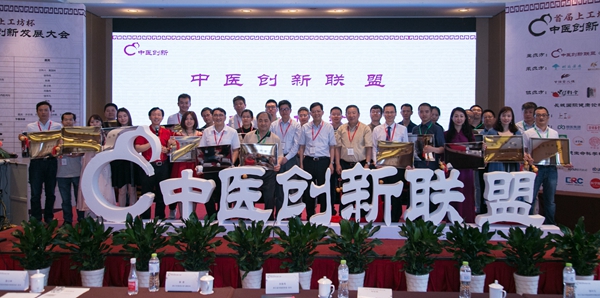
On June 11, 2017, the inaugural “Innovation · Inheritance” Conference on Innovative Development of Traditional Chinese Medicine, hosted by the TCM Innovation Alliance and co-organized by Shulan Medical, Shanghai Shang Gong Fang, Qi Yi Maker, Ziyutang Pediatric Massage, and Unicorn Studio, was successfully held in Hangzhou.
The “Traditional Chinese Medicine Innovation and Development Conference” aims to establish an open platform for exchange and dialogue among experts, scholars, entrepreneurs, and investment institutions in TCM-related fields, to jointly explore models for the inheritance and innovative development of Traditional Chinese Medicine (TCM) in the internet era. This initiative seeks to promote the preservation and innovation of TCM and accelerate cross-industry industrial integration within the TCM sector.
On the day of the conference, more than 20 distinguished experts in the field of Traditional Chinese Medicine (TCM) gathered to engage in a full day of insightful presentations and discussions centered on topics such as “Standardization and Modernization of TCM,” “Inheritance and Innovation in TCM Development,” “TCM Medical Services,” and “The Role of TCM in Chronic Disease Management.” Xu Weiwei, Director of the Zhejiang Provincial Administration of Traditional Chinese Medicine, delivered the opening address. Other notable speakers included Xiao Luwei, President of the Zhejiang Association of Traditional Chinese Medicine and former President of Zhejiang Chinese Medical University; Guo Qing, Vice President of Zhejiang Chinese Medical University; Rao Pingfan, Director of the Joint Research Center for Food and Nutritional Sciences at Zhejiang Gongshang University; and Chen Shilin, Director of the Institute of Chinese Materia Medica at the China Academy of Chinese Medical Sciences, among other leaders from academic and research institutions. Nearly 400 TCM industry practitioners attended the event, representing a diverse range of sectors including TCM pharmaceutical companies, TCM practitioners, TCM clinics, licensed TCM physicians, investors in the TCM industry, and internet-based TCM entrepreneurs.
From late 2016 to 2017, the field of Traditional Chinese Medicine (TCM) witnessed a surge in innovation and transformation. Bolstered by robust national policy support, TCM development has encountered unprecedented favorable conditions, while simultaneously facing numerous challenges. Focusing on the innovation, inheritance, and development of TCM under these new circumstances, this conference features several noteworthy discussion highlights.
Leveraging the Role of Traditional Chinese Medicine in Chronic Disease Management
On February 14, the General Office of the State Council issued the Medium- and Long-Term Plan for the Prevention and Control of Chronic Diseases in China (2017–2025), which emphasizes leveraging the advantages and role of Traditional Chinese Medicine (TCM) in chronic disease prevention and control. The plan aims to reduce the disease burden, increase residents’ healthy life expectancy, and strive to safeguard people’s health in a comprehensive and full-cycle manner. At this conference, Guo Qing, Vice President of Zhejiang Chinese Medical University and member of the Expert Advisory Committee on TCM Reform and Development under the National Administration of Traditional Chinese Medicine, delivered an important address on how to harness the role of TCM in the prevention and control of chronic diseases.
A Multidimensional Exploration of TCM Standardization: IT Technology Promotes the Modernization of Traditional Chinese Medicine
Does Traditional Chinese Medicine (TCM) Need Standardization? More Importantly, Can It Be Standardized? This challenging question faces TCM practitioners and has long been a hotly debated topic within the industry. During the morning roundtable forum at this conference, several industry experts deeply engaged in the field of TCM—including Wang Xiangrui, Director of the Pain Department at Shanghai Renji Hospital; Shao Junjie, Founder of Shanghai Shang Gong Fang; Xu Zhiliang, Founder of Gancao Doctor; Cheng Kai, Founder of Dacheng TCM Chain Institutions; Kong Biao, Chairman of Zhongyijia; and Chen Yuliang, Researcher at the Xingzhitang TCM Research Institute—engaged in a multidimensional discussion on the heated topic of TCM standardization.
Furthermore, the revitalization and development of Traditional Chinese Medicine (TCM) are currently enjoying a favorable convergence of timing, geographical advantages, and human harmony. How to deeply explore the essence of the TCM treasure trove, fully leverage its unique advantages, and promote the modernization of TCM constitutes a significant proposition for its development. With the continuous advancement of information technology (IT), the modernization of TCM is becoming increasingly feasible. At this conference, Ge Hang, Chairman of B-Soft Co., Ltd., a company dedicated to the healthcare informatics industry for over two decades, shared his insights on how IT can facilitate the modernization of TCM.
How to Enhance the Service Capacity of Traditional Chinese Medicine Under New Circumstances
During the afternoon roundtable discussion at the conference, moderator Shao Junjie, founder of Shanghai Shang Gong Fang, led a panel of industry experts—including Fan Xuehong, Dean of Beijing Yuanben Traditional Chinese Medicine (TCM) Research Institute; Ye Weitao, Partner at CCB Capital; Lin Bo, founder of Ziyutang Pediatric Tuina; Chen Yalong, Dean of the School of Continuing Education at Shaanxi University of Chinese Medicine; and Wei Wei, Senior Analyst in the Pharmaceutical Sector at Ping An Securities—in a discussion centered on optimizing the operation and service delivery of TCM clinics under the newly implemented Pharmaceutical Administration Law. Additionally, several guests delivered keynote addresses in the afternoon on the topic of TCM clinic operations, sharing insights and lessons learned from their practical experiences in providing TCM medical services.
The Traditional Chinese Medicine Innovation Alliance Is Officially Established
Of particular note, the Traditional Chinese Medicine (TCM) Innovation Alliance, a non-governmental, non-profit organization jointly initiated by Shulan Healthcare, Shanghai Shanggongfang, and Qiyi Maker, was officially established at this conference. Zheng Jie, President of Shulan Healthcare and one of the alliance’s founders, outlined the background of its establishment during the launch ceremony. The domestic TCM sector is currently entering a new phase of development, characterized not only by a resurgence of TCM culture and philosophy but also by a surge in innovation and entrepreneurship in TCM technologies, informatization, and service models.
On the other hand, amid the collision of diverse perspectives and intellectual trends, there is an urgent need in this field for an open platform that facilitates dialogue, integrates the industry chain, and combines startup incubation with investment and financing. Such a platform would address critical questions, including how to advance Traditional Chinese Medicine (TCM), how to foster future collaboration between TCM and Western medicine, and how to effectively realize the preventive role of “treating disease before it arises.” It is against this backdrop that the TCM Innovation Alliance was established, guided by the vision of “Discovery, Inheritance, Innovation, and Sharing.” At its inception, the alliance already comprised nearly 30 member organizations.
The TCM Innovation and Development Conference is an annual national gathering for the traditional Chinese medicine (TCM) community, organized by the Alliance. The inaugural event was held in Hangzhou, a sacred site for TCM and the main venue of the G20 Summit, with the second edition scheduled to take place in Shanghai next year.