Rehabilitation Medical Services Industry: A Young Billion-Dollar Market with Vast Potential in Niche Segments
VCBeat (WeChat ID: vcbeat) obtained a thought-provoking perspective from a rehabilitation practitioner while gathering information for this article: “The completeness of a country’s rehabilitation industry often reflects its level of development.”
Rehabilitation medicine is known as the "third branch of medicine," following clinical medicine and preventive medicine. It takes a more gentle approach compared to disease treatment, with its primary role being to restore bodily functions and improve quality of life. From this perspective, the rehabilitation healthcare sector completes the downstream segment of medical care and inherently embodies a stronger humanistic touch. Therefore, the viewpoints of the aforementioned practitioners are easy to understand.
More importantly, it facilitates the rational allocation of medical resources. According to statistics from the National Health and Family Planning Commission, only 36.6% of general hospitals had established rehabilitation departments by the end of 2012. As a result, many patients were unable to receive rehabilitative care in hospitals after completing acute treatment. Furthermore, some patients and elderly individuals require long-term rehabilitation training. Relying solely on hospitals would not only strain medical resources but also make it difficult for these individuals to access targeted rehabilitative services. Rehabilitation medicine addresses this demand and helps alleviate the burden on overcrowded hospital systems.
In China, modern rehabilitation medicine is a very young discipline, formally introduced in the 1980s. It was not until 2012 that China issued its first specific policy document on rehabilitation services—the “Guiding Opinions on Rehabilitation Medical Work During the 12th Five-Year Plan Period”—elevating rehabilitation to a national priority.
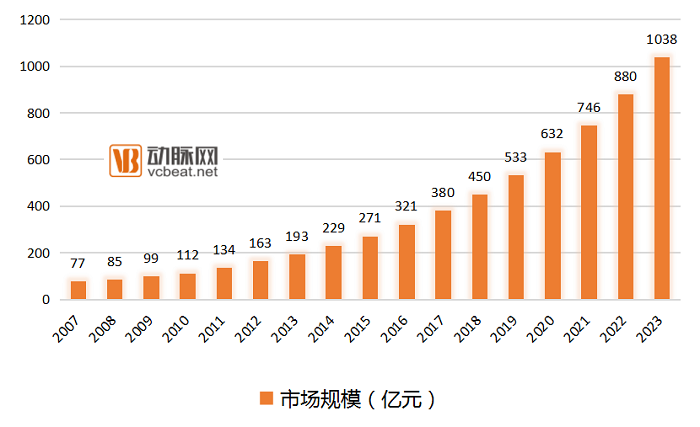
We can gauge the gap between China’s rehabilitation industry and that of developed countries by examining several key figures: according to AskCI Consulting, China’s rehabilitation medical market size was approximately RMB 20 billion in 2013, compared with USD 20 billion in the United States (excluding long-term care). Per capita rehabilitation spending stood at RMB 15 in China versus USD 80 in the United States. Given such low expenditure on rehabilitation, it is hardly surprising that every relevant entrepreneur interviewed by VCBeat to date has emphasized that China’s rehabilitation sector remains highly immature, with public awareness, equipment, talent, and the industrial supply chain all at a nascent stage.
However, some experts have pointed out that as the domestic middle class expands, a growing number of highly educated individuals will recognize the importance of rehabilitation, indicating substantial potential for market development. China Industry Development Research Network has made the following estimate: if approximately 200 million middle- and high-income individuals in China were to reach the U.S. level of rehabilitation spending (USD 80 per capita), the future market size could exceed RMB 100 billion.
Overview of Rehabilitation Medical Service Enterprises
Here, VCBeat has compiled information on 42 companies in China that focus on rehabilitation medicine (covering only professional rehabilitation services and rehabilitation informatics enterprises, excluding rehabilitation equipment manufacturers), reviewing their business models and current status, and drawing comparisons with overseas rehabilitation company cases. We hope that more relevant companies not listed here will reach out to us. VCBeat will continue to monitor this sector in its future reports.
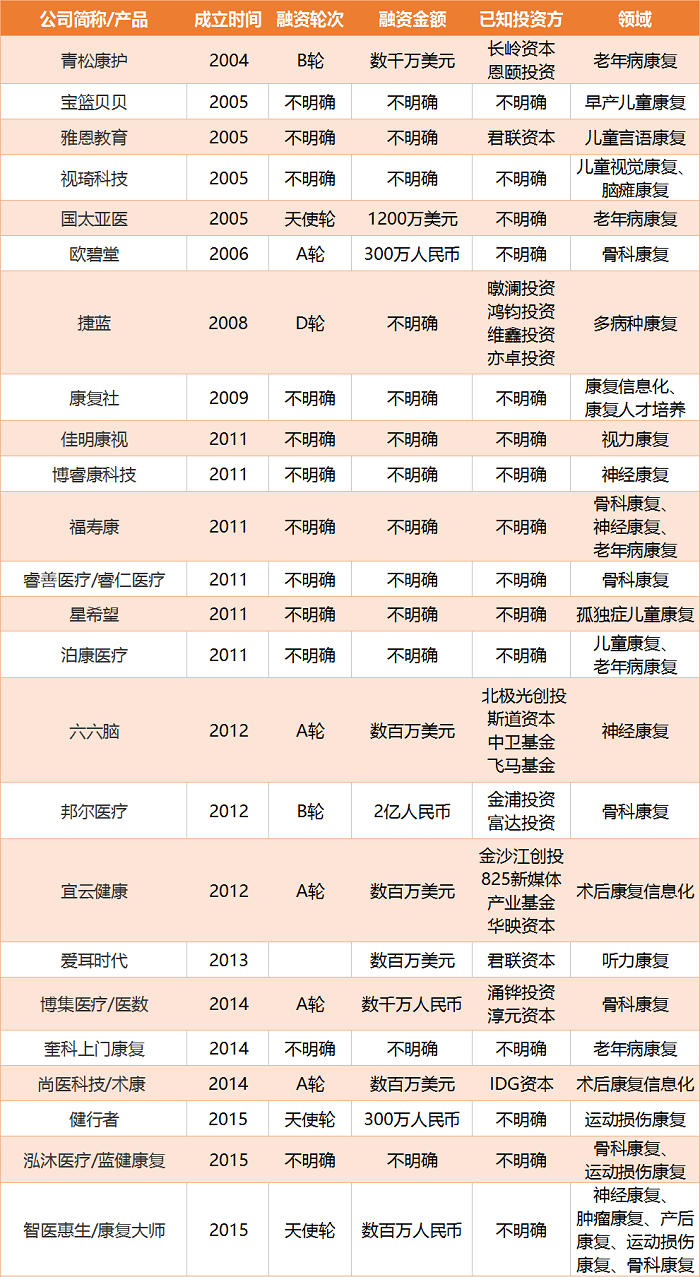
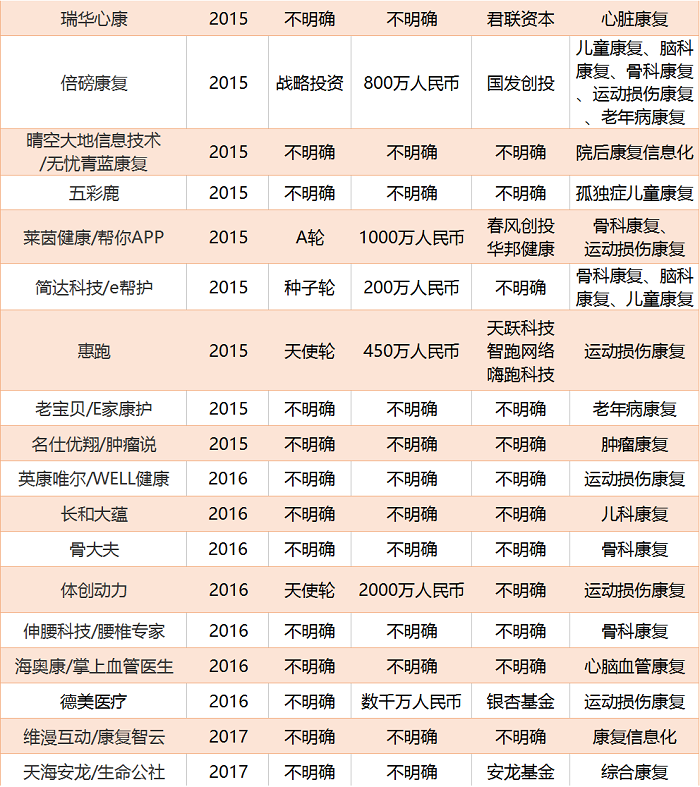
(Correction Statement: "Keeko Home Rehabilitation" is corrected to "Keeko Rehabilitation," with its business scope including geriatric rehabilitation and sports rehabilitation.)
Among the public financing information of all enterprises, the highest single financing amount was RMB 200 million, which was the Series B financing of Boner Medical (a chain investment and operator of orthopedic rehabilitation hospitals). The highest financing round among all enterprises was Series D, achieved by Jielan, a company engaged in the conditioning and rehabilitation for various diseases (with a greater focus on the broader health sector).Most companies secure funding at Series B or earlier stages., which indicates that the overall maturity of the rehabilitation industry remains relatively low, leaving substantial room for capital investment. A total of 27 investors were involved, with a total investment amount exceeding RMB 500 million.
By examining the patterns across years, we can also draw many interesting conclusions: as many as 12 companies were founded in2015, accounting for 30.8% of the total;Between 2015 and 2016, companies specializing in sports injury rehabilitation emerged in large numbers., which indirectly reflects that the nationwide fitness boom in recent years has heightened public awareness of sports-related injuries; according to publicly available information, 75% of companies secured their latest round of financing after 2016, underscoring the surge in financing activity within the rehabilitation medical industry in recent years.
Subsectors of Rehabilitation Medical Services
The rehabilitation medical industry can be categorized by disease type into multiple specialty areas, including orthopedics, neurology, cardiology, pediatrics, geriatrics, oncology, and psychiatry. Some of these rehabilitation specialties can be further subdivided; for example, pediatric rehabilitation includes cerebral palsy, vision, hearing, and speech rehabilitation; geriatric rehabilitation covers stroke, chronic diseases, and bedridden care; and orthopedic rehabilitation encompasses joint, trauma, and spinal conditions.
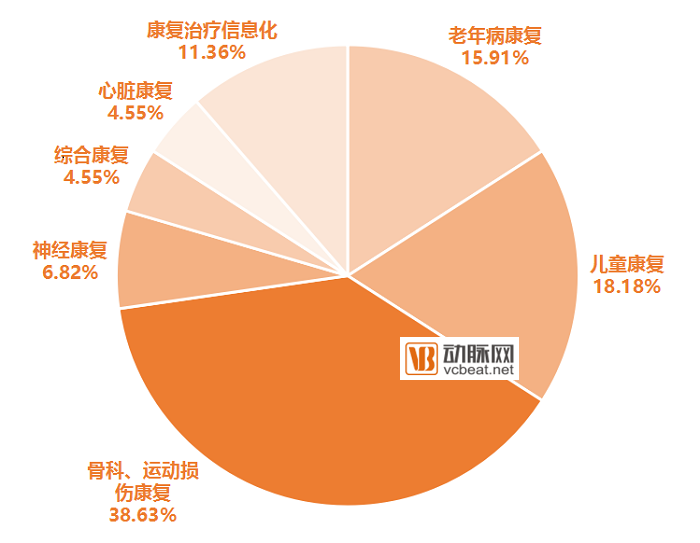
Among all rehabilitation business sectors tracked by VCBeat, orthopedic and sports injury rehabilitation accounts for the largest share, at nearly 40%, and also ranks first in terms of public financing volume. Close behind in terms of attention are pediatric rehabilitation and geriatric rehabilitation. Below, we review the current status of rehabilitation medicine for various conditions and the companies involved, and provide separate analyses of selected rehabilitation informatics products and comprehensive rehabilitation hospital case studies.
Orthopedics, Sports Rehabilitation
Orthopedic Rehabilitation and Sports Rehabilitation Have Emerged as Booming Fields in Recent YearsThe surge in popularity can be attributed to two main factors. First, the increasing prevalence of sedentary lifestyles has led to a prominent rise in spinal disorders. Second, while public awareness of exercise and fitness has strengthened, the scientific rigor of training methods has not kept pace, resulting in numerous joint and ligament injuries.
A typical orthopedic and sports rehabilitation company, Rhein Health, has drawn our attention with its strategic direction. The company brings experience in operating renowned rehabilitation hospitals in Germany and Switzerland, and has now launched a mobile app called “Bang Ni” (Help You) for sports injury rehabilitation. The app allows users to measure joint angles by taking photos, facilitating both the tracking of rehabilitation progress and peer-to-peer exchange of experiences. Yu Yang, CEO of “Bang Ni,” told VCBeat: “We have always aimed to make rehabilitation easier and more engaging. Many people lack the time and financial resources to seek professional sports rehabilitation services at specialized institutions. Moreover, the primary demographic in need of such services is young people, who tend to have higher acceptance of simplified, internet-based rehabilitation approaches.” Reportedly, “Bang Ni” has piloted paid rehabilitation services and products for individual consumers, achieving results that exceeded expectations.
Case Studies of Overseas Orthopedic Rehabilitation Apps
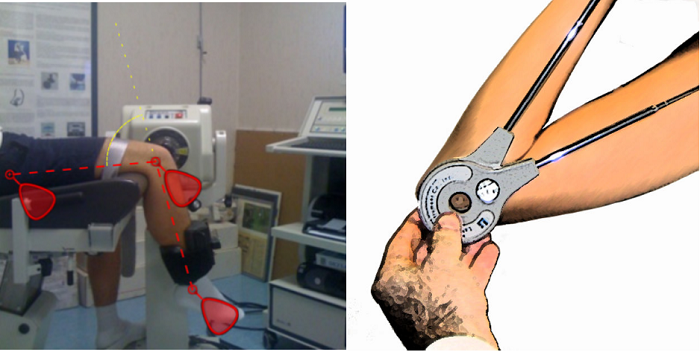
There are already examples overseas of smartphones being used as measurement tools for orthopedics and sports rehabilitation. One such application, DrGoniometer, captures joint angles through photography; for instance, by selecting three points at the hip, knee, and ankle, it can determine the range of motion of the knee joint. According to the app’s operators, experiments have demonstrated that DrGoniometer offers accuracy comparable to that of professional goniometers.
VCBeat has reported on Yishu, a doctor-patient orthopedic rehabilitation process management platform. It provides physicians with end-to-end management solutions and offers patients comprehensive rehabilitation recommendations. Leveraging its expertise in orthopedics, Yishu rapidly established the industry’s largest library of orthopedic rehabilitation protocols, assessment scales, and educational materials on its platform.
Companies such as Hui Pao, WELL Health, Demei Medical, and Tichuang Dongli are all enterprises specializing in sports rehabilitation. WELL Health is an app that leverages artificial intelligence for musculoskeletal sports rehabilitation, providing rehabilitation guidance through video content. Hui Pao and Demei Medical both integrate online and offline sports instruction with rehabilitation services, while Tichuang Dongli operates as a brick-and-mortar sports rehabilitation clinic. According to the latest information from VCBeat, Demei Medical will soon complete its latest round of financing, with a post-money valuation exceeding RMB 100 million.
Pediatric Rehabilitation
The pediatric rehabilitation companies we have surveyed offer a diverse range of core services, including developmental rehabilitation for preterm infants, hearing and speech rehabilitation, visual rehabilitation, autism spectrum disorder (ASD) rehabilitation, and cerebral palsy rehabilitation in children.
Among them, Yaan Education is a company specializing in the rehabilitation of children with speech disorders. Since 2007, its founder, Ms. Bian Qiongxia, has been cultivating professional talent, developing training curricula, and introducing advanced foreign speech rehabilitation technologies in this industry, which started from scratch. To date, Yaan Education has accumulated over a decade of experience in the speech rehabilitation sector and has established eleven training centers across five cities in China. When asked why she is optimistic about the speech rehabilitation market, Ms. Bian Qiongxia stated, “While some hospitals also provide speech rehabilitation services, medical resources are often scarce, making it difficult to meet the long-term rehabilitation needs of pediatric patients. Professional speech rehabilitation institutions can address this issue.”
Ai Er Shi Dai is a specialized third-party hearing institution focused on pediatric auditory rehabilitation. Its business segments include online hearing education videos, offline one-stop hearing centers, and training for hearing-related professionals, thereby addressing several major challenges in the hearing industry, ranging from knowledge dissemination and professional diagnostic intervention to talent supply. Liang Qi, the founder, told VCBeat that China’s hearing rehabilitation sector has moved beyond its initial stage and is attracting significant attention from social capital; it is poised to enter a phase of rapid development over the next three to five years.
In the realm of rehabilitative services, such as the treatment of pediatric cerebral palsy and autism, Bokang Medical is establishing a three-tiered chain rehabilitation medical system. It is setting up primary healthcare institutions in first-tier cities like Beijing, Shanghai, Guangzhou, and Shenzhen, and expanding its reach to second- and third-tier cities across China through various models, including self-construction, acquisitions, and trusteeship. Additionally, the company will develop an internet-based cloud platform for rehabilitative medicine and a mobile app, creating a smart O2O (Online-to-Offline) rehabilitation platform.“The scarcity of pediatric rehabilitation resources in non-first-tier cities remains a severe problem. For instance, among the 6 million cerebral palsy patients in China, 60%–70% could basically regain normal function with early rehabilitative intervention, but their conditions have been aggravated due to the lack of access to treatment,” said Cheng Jiayuan, Chairman of Bokang Medical. He stated that the establishment of an online platform and a three-tiered rehabilitation chain aims to reduce disparities in the distribution of rehabilitation resources.
In summary, each subsector of pediatric rehabilitation serves a substantial patient population, indicating that the market potential remains largely untapped. A common characteristic across these segments is the high entry barrier, which requires years of accumulated experience in specialized professional fields. However, once a company achieves deep industry penetration and establishes a scalable operational system, these entry barriers transform into competitive moats, unlocking significant growth potential.
Case Studies of Overseas Pediatric Rehabilitation Institutions
There are comprehensive pediatric rehabilitation institutions overseas, such as the RehabForAll Rehabilitation Center in Colorado, USA, which employs Applied Behavior Analysis (ABA)—a structured therapeutic approach with positive reinforcement effects—to provide rehabilitative therapy for minors with a wide range of conditions. The spectrum of disorders treatable at such an institution is extensive and includes Down syndrome, Attention Deficit Disorder, autism, cerebral palsy, developmental delays, intellectual disabilities, Fetal Alcohol Syndrome, pediatric orthopedic issues, apraxia, dysarthria, dysphagia, traumatic brain injury, psychological impairments, spinal cord injuries, learning disabilities, musculoskeletal disorders, and conditions associated with prematurity.
Geriatric Rehabilitation
Yang Jinyu, Director of the Three Kingdoms Think Tank, former Senior Healthcare Consultant at IBM Global Business Consulting Services, and Chief Consultant in the Strategic Consulting Department of Neusoft Group, told VCBeat: Statistics show that when comparing individuals who participated in preventive rehabilitation for frailty with those who did not, the former group incurred lower long-term medical care costs. While rehabilitative medicine can significantly improve the quality of life for the elderly population, the level of attention it receives remains far from ideal.
In VCBeat’s previous article, “The Most Dominant Segment in the Elderly Care Industry: Elderly Care Services—Market Size to Exceed RMB 500 Billion, with Positioning Shifting Toward the Mid-to-High End and Capital Favoring Home-Based Care,” we noted that geriatric rehabilitation has received limited attention in China but could emerge as a new profit center for the elderly care services industry. According to research by the Houpu Elderly Care Industry Research Center, although the average daily treatment cost for geriatric rehabilitation is lower than that of comprehensive hospitals, its costs are also relatively low, enabling net profit margins to reach approximately 15%–20%. Moreover, economies of scale driven by business expansion offer further potential to unlock profitability.
Among the elderly rehabilitation enterprises we have compiled, Qingsong Kanghu, Guotai Yiyi, Fushoukang, Kuike Home Rehabilitation, and E-Jia Kanghu all provide home-based elderly rehabilitation services. In contrast, institutional elderly rehabilitation is often integrated with elderly care providers, such as the rehabilitation hospitals under comprehensive elderly care groups like Qiaoya Group and Yada International.
Case Studies of Overseas Geriatric Rehabilitation Institutions
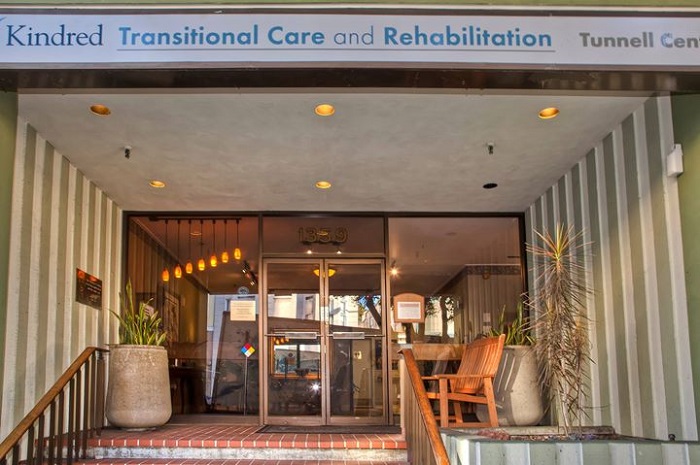
Founded in 1985, Kindred Healthcare is a hospital and skilled nursing operator, as well as one of the largest providers of rehabilitation services in the United States. It operates more than 1,000 rehabilitation service locations nationwide, offering comprehensive geriatric rehabilitation services that cover cardiovascular rehabilitation, short-term post-discharge rehabilitation, geriatric orthopedic rehabilitation, and stroke rehabilitation, among others. Kindred Healthcare’s rehabilitation facilities fall into two categories: one consists of relatively independent and dispersed skilled nursing centers, which prioritize nursing care with rehabilitation as a supplementary service; the other comprises inpatient rehabilitation hospitals, where patients receive rehabilitation training for at least three hours per day, five days a week.
Cardiac Rehabilitation
Sharonne Hayes, founder of the Women’s Heart Clinic at Mayo Clinic, advises all patients who have undergone cardiac surgery: “If your doctor recommends cardiac rehabilitation, be sure to participate; if they don’t mention it, be sure to ask.”
Cardiac rehabilitation, held in such high regard by this leading cardiologist, has long been underemphasized in China. Ruihua Cardiac Rehabilitation is one of the few companies in China dedicated to cardiac rehab. Its founder, Lu Ji’en, told us, “Germany’s statutory health insurance system even mandates that patients undergoing cardiac surgery must participate in follow-up cardiac rehabilitation; otherwise, their expenses will not be reimbursed. This clearly underscores the importance of cardiac rehabilitation in preventing hospital readmissions and reducing healthcare costs.”
In addition to reducing medical costs, cardiac rehabilitation centers can help alleviate the burden on hospitals with excessive volumes of cardiac surgeries, thereby decreasing the need for prolonged hospitalizations at large medical institutions.
In April 2017, the Beijing Ruihua Xinkang Clinic and the Beijing Ruihua Cardiac Rehabilitation Research Center were officially unveiled. Prior to this, they had spent nearly two years developing China’s first personal cardiac rehabilitation mobile app and a hospital management system for cardiac rehabilitation. Shortly thereafter, they will release a report on the cardiac rehabilitation industry, aiming to garner greater attention from all sectors of society.
Another company specializing in cardiovascular rehabilitation is Haiaokang, which has developed a “Pocket Vascular Doctor.” The company’s independently developed smart hardware devices can monitor vascular elasticity, blood viscosity, pulse pressure, and heart rhythm data, while the platform also integrates remote physician consultation services.
Overseas Cardiac Rehabilitation Cases
Leveraging its own clinical experience and the American Heart Association’s guidelines for secondary prevention of heart disease, the Mayo Clinic developed a cardiac rehabilitation mobile application. During initial registration, patients undergo approximately 15 minutes of rehabilitation education and then input personal cardiovascular-related metrics, such as blood pressure and body weight. Subsequently, the app prompts patients to daily record their metrics and complete rehabilitation education tasks. The development of this app was driven by a significant logistical challenge at the Mayo Clinic: inconvenient parking for patients attending cardiac rehabilitation programs. In response, physicians experimentally designed this app to delegate certain components of cardiac rehabilitation and lifestyle modification to patients themselves and nearby community-based rehabilitation facilities. This approach ultimately demonstrated remarkably favorable outcomes.
VCBeat has learned that a major challenge currently facing the cardiac rehabilitation industry in China is the low level of attention it receives, as treatment costs are not yet covered by medical insurance. However, since 2012, deputies to the National People’s Congress have called nearly every year for the inclusion of cardiac rehabilitation in the national medical insurance scheme. It is believed that the reimbursement issue for this sector will be resolved in the near future, giving early-moving companies a significant competitive advantage.
Other Types of Rehabilitation
Other types of rehabilitation include neurological rehabilitation and oncology rehabilitation, as well as comprehensive rehabilitative physiotherapy services for various diseases.
In rehabilitation medicine, neurological rehabilitation covers the widest range of functional impairments. China has the largest number of patients with various neurological disorders and injuries in the world. On the other hand, neurological conditions such as Alzheimer’s disease and Parkinson’s disease are prevalent among the elderly. As population aging intensifies, the market for neurological rehabilitation will become increasingly promising. The neurological rehabilitation companies included in this statistics comprise Neuracle, which leverages brain-computer interface (BCI) “cutting-edge technology” for neuroscience research and the diagnosis and rehabilitation of neurological diseases; 66 Brain, which conducts cognitive assessments and rehabilitation training through gamified approaches; as well as other institutions providing rehabilitative therapies.
Among the companies listed, several have developed specialized digital tools tailored for postoperative rehabilitation in conditions such as cancer, targeting the recovery period after surgery and providing disease-specific rehabilitation guidelines covering aspects like diet and exercise.
Some companies offer a diverse range of rehabilitation services, including Beibang Rehabilitation (facility-based), Zhiyi Huisheng (home-based rehabilitation), and e-Banghu (home-based rehabilitation). Additionally, there is a category of comprehensive rehabilitation enterprises that focus more on sub-health management. Examples include Jielan Grand Health and Tianhai Anlong, which integrate health data monitoring services with offline rehabilitation and convalescent care.
Summary of the Rehabilitation Medical Services Industry