

Babylon Health Files IPO Prospectus: Bringing AI-Powered Healthcare to Every Smartphone
“Hi! Babylon, I have a terrible headache.”
“Ah, I’m sorry you’re in pain. When did the pain start?”
“This morning, when I got up.”
“OK, how painful is it? On a scale of 1 to 10, what would you rate it?”
“5 minutes”
“Any dizziness, nausea, or fever?”
“Hmm, yes.”
“In my opinion, it’s nothing serious. You likely caught a cold due to the sudden drop in temperature last night. Drink plenty of water, get ample rest, and take some cold medication. If you don’t have any cold medicine at home, you can try this pharmacy.”
At this point, you might think that a doctor is examining a patient, but in fact, it is an AI robot named Babylon that is helping the patient analyze their symptoms. A few years ago, people could hardly have imagined such a scenario. How could robots replace doctors in diagnosing and treating patients? But now, this has become a reality—artificial intelligence is indeed involved in medical diagnosis!
With the rapid commercialization of machine learning and big data, AI has taken a leading position in healthcare and life sciences, poised to transform the way medical diagnoses are made and diseases are treated. Traditionally, physicians might spend 10 minutes understanding a patient’s symptoms. Today, an AI-powered system can grasp a patient’s medical history, living environment, and climatic conditions within just a few minutes, leveraging billions of underlying data points to analyze their condition.
Babylon’s AI Doctor is a telemedicine app launched by the UK-based digital health company Babylon Health, designed to provide users with 24/7 medical consultation services through AI technology. Users can seek medical care anytime and anywhere via the app, such as by querying symptoms through chats with an AI bot or obtaining medical advice from online professional doctors via video or text. Additionally, the app offers services including health tracking and medication delivery.
Babylon Health is a digital health startup based in London, UK, founded in 2013. The company’s primary mission is to democratize healthcare by leveraging artificial intelligence to make convenient and affordable medical services accessible to everyone. Babylon’s consultation app was launched in 2014 and currently serves over 800,000 users worldwide, with operations spanning Europe and Africa. In 2016, Babylon expanded into Rwanda, one of the world’s poorest countries, where it registered 250,000 users and conducted 60,000 consultations within just six months of its pilot launch.
Since its inception, Babylon Health has attracted significant attention, receiving consistent acclaim from major technology media outlets. In 2016, it was named one of “Europe’s Hottest Startups of 2016” by the renowned tech publication Wired. The company was also shortlisted for the Meffy Awards and won the BT (British Telecom) Public Sector Innovation Award. Furthermore, Babylon Health has been recognized as one of the Top 100 Hottest Health Tech Companies.
Iranians in the UK: Transforming Traditional Healthcare Service Models
Ali Parsa, Founder and CEO of Babylon Health, is a UK-based healthcare entrepreneur from Iran and holds a PhD in Engineering Physics from University College London. He was named one of the “Top 100 Most Successful People Worldwide” by The Times of the United Kingdom.
An Iranian student in London, with no family support, founded his first company, V&G, in 1990 to cover his modest academic research expenses. He went on to win the Royal Award for Young Entrepreneurs. Five years later, he sold V&G and transitioned into investment banking, working for two years each at Credit Suisse and Goldman Sachs.

Babylon Health CEO and Founder Ali Parsa
In 2004, when Ali’s first child was born, he experienced a midlife crisis for the first time and decided to embark on entrepreneurship once again. This time, he founded Circle, the largest clinician partnership network in Europe, which primarily provides medical, rehabilitation, and health management services. Ali later adopted this model of establishing physician partnerships when he created Babylon. Even during the most severe economic downturn in the UK, Circle generated annual revenues exceeding £200 million, employed 3,000 people, and became a publicly listed company.
During his years of operating Circle, Ali gradually came to realize that the majority of people’s healthcare needs are not correlated with the duration of clinical consultations; rather, the most significant needs often arise before and after medical visits. He believes that while developed countries such as the United Kingdom and the United States have abundant healthcare resources, making it relatively easy for patients to access care, difficulty in accessing medical services remains a widespread phenomenon in developing countries.
With a global shortage of doctors, entrepreneurs must consider how to enhance physician efficiency and allocate medical resources rationally. Ali observed that while nearly half of the world’s population lacks access to basic healthcare services, almost everyone owns a mobile phone. This insight sparked an idea: embed healthcare services into people’s phones and integrate health management into daily life. Thus, the Babylon app was born—an AI doctor in your pocket.
The AI Doctor in Your Pocket
The Babylon APP provides users with 24/7 medical consultation services, covering five key areas.
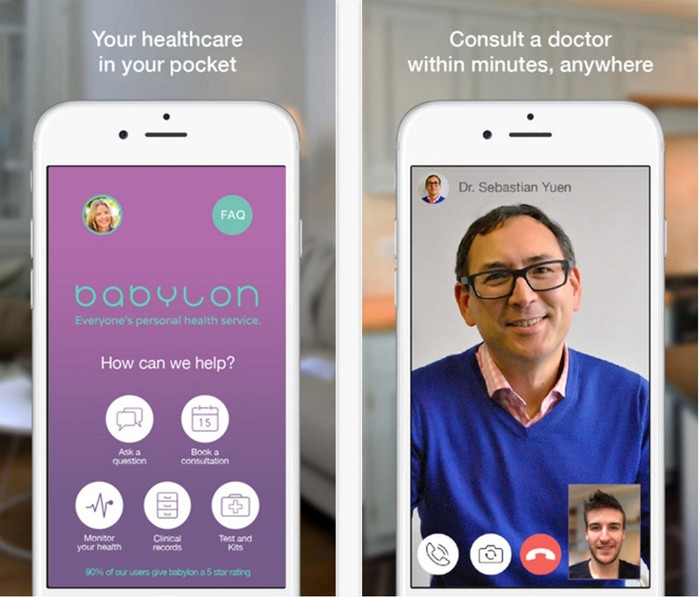
1. AI Symptom Inquiry
The Babylon app incorporates cutting-edge artificial intelligence technology, engaging in dialogue with patients to understand their specific symptoms and then providing a diagnosis. According to official statements, Babylon can accurately diagnose 80% of common illnesses. These routine conditions, which typically require consultation with an outpatient physician, can now be managed through AI, thereby reducing healthcare costs to some extent.
2. General Practitioner Telemedicine
When faced with severe and complex medical conditions, users can also opt for Babylon’s remote consultation services. Babylon has contracted with over 100 specialized physicians—including general practitioners (GPs), specialists, and mental health professionals—to enable patients to receive remote medical care. GPs typically manage common ailments, while specialists address complex or challenging conditions (such as dermatological, gynecological, and cosmetic issues). Mental health professionals help users alleviate negative emotions associated with stress, anxiety, bereavement, and depression.
3. Pharmaceutical Distribution Services
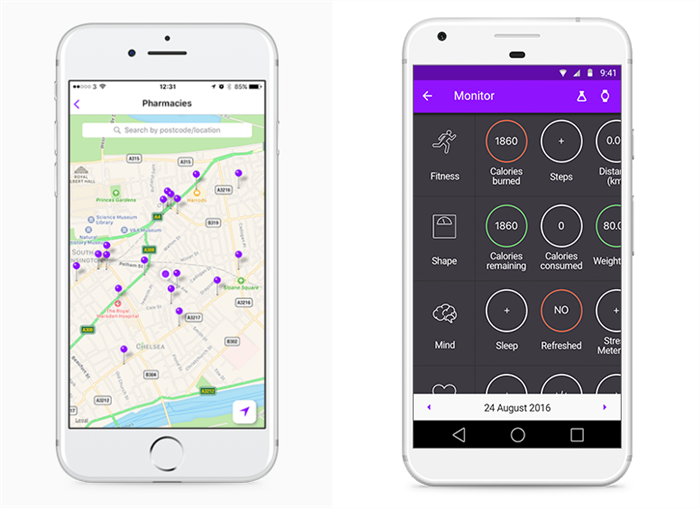
Babylon has signed agreements with multiple pharmacies. After a patient completes a consultation, if medication is required, Babylon will transmit the physician’s prescription to the pharmacy nearest to the patient or arrange for direct home delivery by the pharmacy. Currently, Babylon offers same-day or next-day delivery across all of London. For patients abroad, Babylon also facilitates medication delivery through alternative arrangements.
4. Health Tracking and Testing
Health-tracking apps appear to have become a trend. Babylon can also monitor users’ health data and activity levels in real time, enabling them to stay informed about their physical well-being. This feature includes step counting, calorie burn tracking, weight measurement, and sleep monitoring.
5. Family Account
Additionally, every registered Babylon user can create a family account, enabling each member of the household to access the same health consultation services.
Operational Model of Individual and Group Health Management
It is often said that “an apple a day keeps the doctor away.” Babylon is like this apple: accessing it daily helps you stay healthier. So, how does Babylon generate revenue? Currently, the Babylon app is available for free download worldwide on both iOS and Android platforms, with cumulative downloads exceeding 1 million. The AI doctor service provided by the Babylon app is free upon download; however, users must pay to receive medical advice from professional physicians.
Three Payment Plans
Babylon currently offers three payment plans: a single consultation for £25; an unlimited monthly subscription at £5 per month, with a minimum commitment of three months; and an annual subscription for £25, which includes two extra months free, with unlimited consultations.
Paid consultations should currently be the primary revenue model for telemedicine platforms. Compared with other online consultation platforms, Babylon primarily adopts a low-price strategy. Several other telemedicine platforms offering video or telephone appointments charge significantly higher fees than Babylon. For instance, Doctor on Demand, a telemedicine platform based in San Francisco, charges $40 for a 15-minute consultation; HealthTap charges $99 per month for its subscription package; American Well charges $49 per video consultation; and Teladoc charges $40 per video or telephone appointment.
From this perspective, Babylon’s primary competitive advantage lies in its pricing. Why, then, is Babylon so bold in adopting a low-price model? Does the company not make profits? And how do physicians on the platform earn their income? In fact, all of this is made possible by another unique business model employed by Babylon.
Collaborate with hospitals to complete online “triage”
There are currently over 100 professional doctors on the Babylon platform, including general practitioners, specialists, and psychiatrists. All of them are from NHS public hospitals in the UK, holding professional qualifications and possessing more than 10 years of clinical experience. Doctors from NHS public hospitals provide online consultation services on the Babylon platform and receive compensation equivalent to their salaries in hospitals. Meanwhile, patients seeking medical care on the Babylon platform have, to some extent, alleviated the patient intake pressure on NHS hospitals.
In February 2017, Babylon Health signed a partnership agreement with the NHS (National Health Service) to supplement the NHS 111 medical helpline, achieving effective triage. According to the Financial Times, the UK’s non-emergency medical helpline, NHS 111, has long faced patient complaints due to busy lines and inaccessible service. Compounded by staff shortages and the fact that call handlers are not healthcare professionals, the service has been unable to provide effective clinical advice, leaving NHS 111 mired in controversy. The collaboration with Babylon Health helps alleviate pressure on the NHS 111 hotline and enables more rational utilization of healthcare resources.
Additionally, for patients, each call to 111 costs between £12 and £16. By using the Babylon app, users can access free AI-powered consultations, and obtain advice from professional doctors for a one-time fee of £25 or a monthly subscription of £5.
Medical + Travel Insurance: Launch of Service Package Products
With the advancement of digital healthcare, “healthcare + travel insurance” has emerged as a new type of bundled service product. Babylon Health partnered with travel insurance provider Collinson Group to create a service package. Collinson Group launched Babylon’s healthcare services to its customers as an add-on to its core offerings. Additionally, Collinson Group recommends the Babylon app to other travel insurers and international private medical insurance companies under its B2B product line. In this way, Babylon Health has established collaborations with both the travel and insurance industries, thereby expanding its business scope.
For companies in the tourism industry, their customers also require healthcare services while traveling. With Babylon’s assistance, customers can access health consultation services via their mobile phones, no matter where they go.
Provide Corporate Health Programs for the Group
In recent years, a growing number of enterprises have recognized the importance of employees’ physical health and have begun to establish their own wellness programs as an employee benefit.
Babylon Health has partnered with several corporate groups to provide health consultation services for employees, enabling them to access professional medical advice anytime and anywhere—whether at home, in the office, or while traveling. Additionally, companies can monitor their employees’ health and well-being indices in real time, facilitating more effective management.
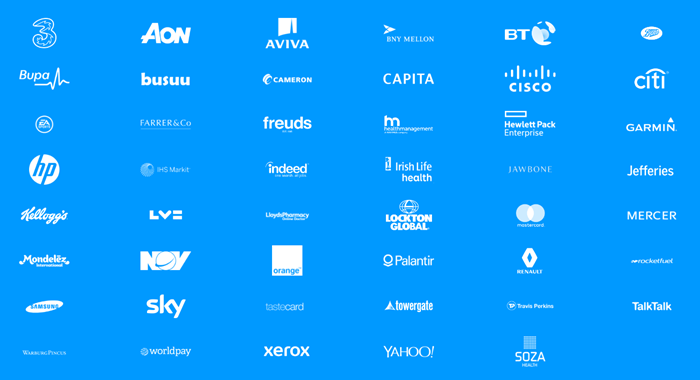
Key Partner Clients of Babylon Health
Currently, Babylon Health has partnered with multiple enterprises worldwide.Samsung, Citibank, British Telecom (BT), HP, Yahoo, TwitterOver 100 companies have already integrated Babylon into their corporate wellness programs.
Each round of financing represents a major breakthrough.
Babylon Health has completed two major funding rounds in less than four years since its establishment, with total fundraising reaching $85 million.

Babylon Health’s Historical Financing Rounds (Source: Crunchbase)
In January 2016, Babylon Health easily secured $25 million in its initial funding round, led by Kinnevik AB, with participation from Hoxton Ventures, Richard Reed, and Mustafa Suleyman. The funds were used to support the development of the Babylon AI diagnostic platform, providing users with personalized health consultation services.
In April 2017, Babylon Health completed a $60 million Series B financing round. This investment was considered the largest funding deal in the European healthcare sector, helping Babylon achieve the following objectives:
▲ Over 1 million app downloads;
▲ Global registrations increased by nearly 600%, reaching 800,000 registered users;
▲ Daily consultation and triage volume increased ninefold;
▲ Over 4/5 of users gave Babylon a 5-star rating.
Two Major Competitors
Babylon is not the only player applying this artificial intelligence to consumer-facing users; there are two other competitors in the UK alone, Ada and Your.MD. VCBeat (WeChat ID: vcbeat) has conducted a brief analysis of these three AI doctor platforms.

Overall, Babylon holds a slight edge in terms of user ratings and diagnostic accuracy. Although accessing professional medical advice on Babylon requires a paid subscription, it enables users to engage in real-time video or text consultations with physicians. In contrast, Ada only supports asynchronous messaging, while Your.MD requires integration with third-party chat applications such as Skype or Messenger to facilitate communication.
Furthermore, Babylon offers prescription delivery and health tracking services, features that are currently unavailable on Ada and Your.MD. This demonstrates that even within the UK market, Babylon holds a significant competitive advantage.
In China, major tech companies have been actively entering the field of AI-driven medical diagnosis and treatment. In October 2016, Baidu launched its Baidu Medical Brain, followed by Alibaba Cloud’s ET Medical Brain in March 2017, signaling their ambition to compete with IBM Watson and Google DeepMind.
VCBeat previously conducted a detailed review of China's artificial intelligence industry (Click here to view the original text), but we have found that AI in healthcare in China currently primarily serves B-end clients, acting as a physician assistant in fields such as medical imaging, new drug development, and health management. At present, there is no pure C-end AI diagnosis and treatment app similar to Babylon in China. It can be said that this market segment remains untapped in China.
Although AI in healthcare is still immature for consumer-facing (C-end) applications, and many industry insiders remain deeply skeptical, it must be acknowledged that democratizing AI-driven diagnosis and treatment represents a viable new entrepreneurial approach. Are there greater possibilities for AI applications in the medical field? This is a question every entrepreneur should consider.