

NarrativeDx Files S-1 for IPO: AI-Powered Platform Transforming Patient Experience Insights for Hospitals

HealthX Ventures
A Digital Venture Capital Fund Focused on the Healthcare Sector

NarrativeDx
AI Platform Service Provider

In recent years, as the healthcare concepts of “patient-centeredness” and “value-based care” have gained increasing public acceptance, patient experience has received growing attention within the overall healthcare delivery process. A research report released by Deloitte in April 2017 indicated that a positive patient experience would significantly enhance hospitals’ financial performance.
NarrativeDx, a tech startup based in Austin, Texas, leverages natural language processing (NLP) technology within artificial intelligence to analyze factors affecting patient experience in hospitals and provide solutions for improving it.
Core Leadership with a Strong Technical Background
As a technology-driven startup, NarrativeDx’s three core executives all possess strong technical backgrounds.
Kyle Robertson, Founder and Chief Executive Officer (CEO), earned his bachelor’s degree from Iowa State University, where he pursued a triple major in Computer Engineering, Mathematics, and Economics. During this period, he also spent one year as an exchange student in the Department of Mathematics at University College London. After graduation, Kyle Robertson worked as a software engineer at Digi International, an electronic components company, and later at National Instruments, an electronic equipment company.
In 2006, Kyle Robertson, who had been working for two years, seemed to have grown weary of his life as an engineer. He decided to return to academia and enroll at Boston College Law School to pursue legal studies. After graduating with a graduate degree, Kyle Robertson embarked on his career as an attorney at the prestigious law firm WilmerHale, where he primarily handled intellectual property litigation.
In 2012, Kyle Robertson resigned from his position to found iCare, a non-profit donation platform. Although iCare ceased operations just one year later, the venture provided Kyle Robertson with valuable entrepreneurial experience.
Compared with Kyle Robertson, who has undergone multiple transitions in his academic and professional career, the other founder, Senem Guney, appears much more focused.
Senem Guney earned her bachelor’s degree in Translation and Interpreting from Boğaziçi University in Istanbul. She then moved to the United States, where she pursued a master’s degree in Linguistics and a Ph.D. in Communication at the University of Texas at Austin. Prior to co-founding NarrativeDx, she served as a faculty member at the University at Albany, focusing her research on the integration of language and technology. Currently, Senem Guney serves as the Chief Experience Officer (CXO) of the company.
Chief Data Scientist (CDS) Tad Turpen, though not a founding team member, holds significant sway within the company. CEO Kyle Robertson spent six months searching for a suitable data analyst before Tad Turpen caught his attention with his bachelor’s degree in Computer Science from the University of San Diego and his master’s degree in Computational Linguistics from Brandeis University. Notably, Tad Turpen also had a brief academic stint at Peking University.

Figure 1: Three Core Executives
Leveraging Natural Language Processing to Gain Insights into Patient Reviews of Hospitals
NarrativeDx provides patient evaluations of hospitals and solutions for improving patient experience through the following four steps:
1) Data Collection: NarrativeDx gathers patient reviews of hospitals from sources such as the HCAHPS (Hospital Consumer Assessment of Healthcare Providers and Systems, a common hospital satisfaction survey program in the United States), review websites, and hospital feedback forms.
2) Data Processing: For artificial intelligence, data is categorized into structured and unstructured types. Systems can easily identify structured data, such as closed-ended questions that patients check off in hospital feedback forms. However, recognizing unstructured data poses a challenge for systems; open-ended patient reviews fall into this category. NarrativeDx leverages natural language processing technologies to process unstructured data, enabling the system to understand what patients are expressing.
3) Summary: After processing all the information, NarrativeDx identifies various factors affecting patient experience and ranks them by their level of impact.
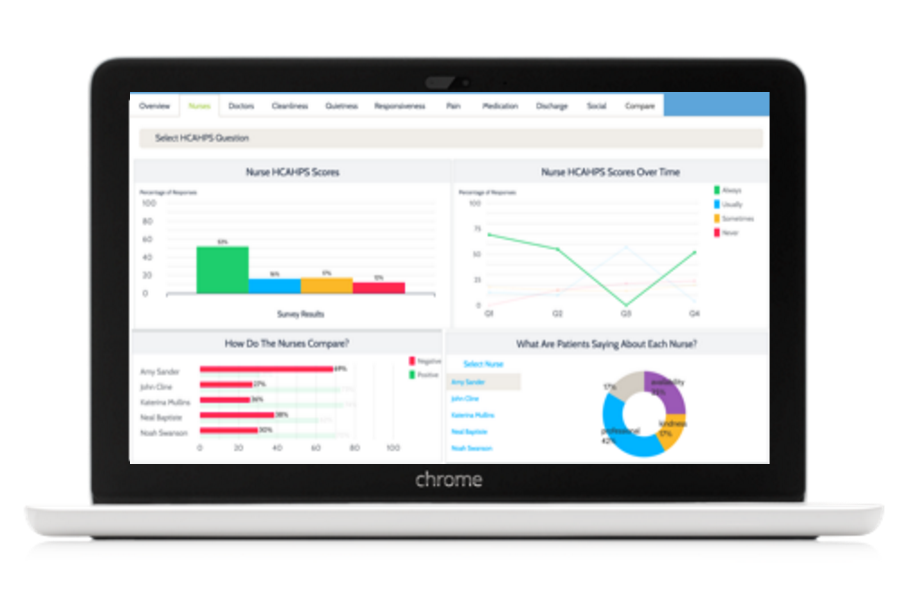
Figure 2: NarrativeDx summarizes the factors influencing patient experience
4) Provide Recommendations: In addition to presenting statistical results of patient experience, NarrativeDx can also serve as an assistant, offering recommendations to hospital administrators for improving patient experience.
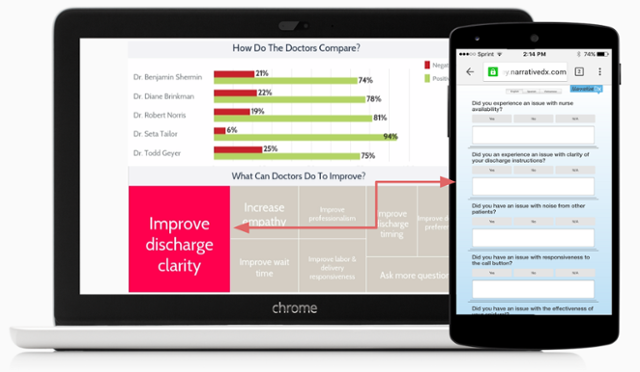
Figure 3: NarrativeDx provides recommendations for improving patient experience based on results
Addressing Pain Points in Traditional Patient Experience Surveys
Patient experience encompasses every aspect of the healthcare journey: whether hospital operations are well-organized, whether patients’ questions are answered promptly by healthcare professionals, and whether wards are safe and hygienic. In the internet era of information transparency, any negative feedback can impact a hospital’s brand.
Although many hospital administrators have recognized the importance of reputation and actively seek patient feedback, traditional patient survey methods suffer from limitations such as narrow scope and time-consuming processes. Furthermore, influenced by various stakeholders, these surveys often become mere formalities, preventing administrators from obtaining objective and impartial results.
NarrativeDx leverages artificial intelligence to address the aforementioned pain points.
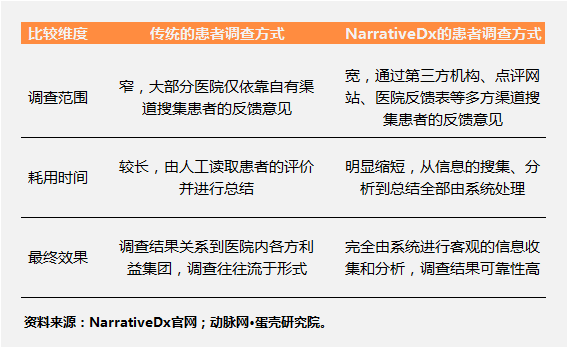
Figure 4: Traditional Patient Surveys vs. NarrativeDx Patient Surveys
Core Technologies Under Patent Application
NarrativeDx’s strength lies in its highly mature natural language processing technology within this field.
A common approach to natural language processing is keyword search, which requires manual pre-definition of the keywords to be filtered. However, this one-size-fits-all classification method is overly simplistic and crude, as the same word may convey entirely different meanings in different contexts.
NarrativeDx’s natural language processing technology can interpret the meaning of patient expressions by incorporating specific contextual information. Currently, NarrativeDx has filed for patent protection for its natural language processing technology, which is under review by the United States Patent and Trademark Office.
Incomplete Disclosure of Financing Details
NarrativeDx has publicly disclosed total fundraising amounting to $2.52 million. Additionally, the company completed its Series A financing round in May 2017, but neither the management team nor the investors have disclosed the specific figures.
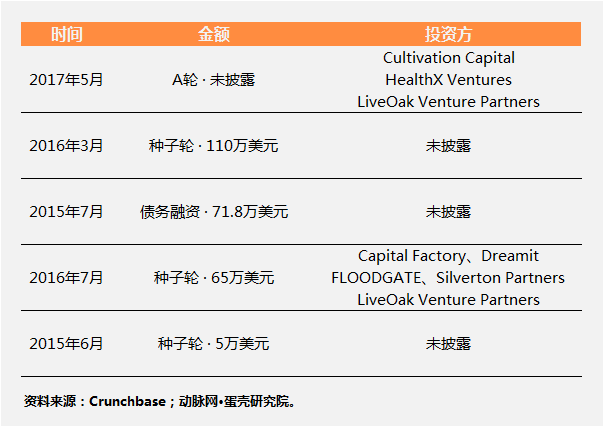
Figure 5: Statistical Table of NarrativeDx's Financing History
The new round of financing will be primarily used for NarrativeDx's market expansion efforts. Its current clients include prominent healthcare institutions such as Christiana Care Health System, NYU Langone Medical Center, and Palisades Medical Center.
Other Similar Startups
Capital is smart; it always flows in the direction that represents the future. Along with the rise of patient status and increased competition among hospitals, many startups have emerged in the United States in recent years aiming to “improve hospital efficiency and enhance patient experience.”
VCBeat·VBInsight has reviewed U.S. healthcare startups and selected two representative companies that leverage artificial intelligence to help hospitals improve operational efficiency and patient experience—Qventus and Gozio Health.
Qventus, formerly known as analyticsMD, was founded in 2012 in Mountain View, California. It offers a SaaS platform that provides hospitals with real-time decision support by analyzing data such as weather conditions, patient admission and discharge trends, and electronic health records.
For instance, Qventus can predict the number of new patients arriving at a hospital over the next few hours by comprehensively analyzing factors such as weather conditions, current patient census, and nearby emergencies, thereby helping hospitals prepare appropriate response measures.
Gozio Health is a technology company founded in 2015 in Atlanta, Georgia, specializing in providing indoor navigation services for patients within hospitals. By analyzing the specific conditions and internal layouts of individual hospitals, Gozio Health builds customized navigation systems. Patients can use their mobile phones to locate themselves, then click or input their desired destination, and the system will plot the fastest route for them.
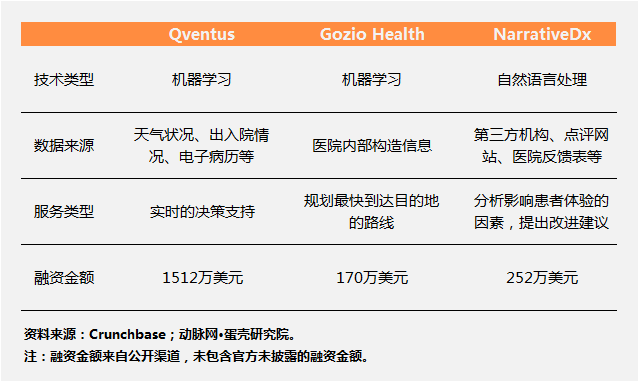
Figure 6: Statistical Overview of Qventus, Gozio Health, and NarrativeDx
Reflections for Entrepreneurs in China
Currently, hospitals in China still rely primarily on traditional questionnaire feedback and telephone follow-ups to assess patient experience. VCBeat believes that factors constraining the application of artificial intelligence to enhance patient experience exist on both the supply and demand sides:
1) Supply side: Domestic AI healthcare startups are concentrated in imaging diagnosis, with few ventures addressing patient experience.
According to the “Artificial Intelligence + Healthcare Data Report” recently released by VCBeat, there are more than 60 AI-driven healthcare companies in China, primarily focused on assisting medical imaging diagnosis. In contrast, overseas AI-driven healthcare companies number more than 130, with service areas spanning multiple fields such as medical imaging diagnosis, hospital management, and new drug research and development. Chinese AI-driven healthcare companies lag behind their overseas counterparts both in total number and in the diversity of specialized sectors they cover.
2) Demand Side: Insufficient market competition prevents the immediate realization of benefits derived from improved patient experience.
In stark contrast to the United States, where private hospitals dominate, China’s healthcare market remains predominantly public, with Grade 3A (San Jia) hospitals holding significant sway and resulting in insufficient market competition. Furthermore, while investments in AI-powered imaging diagnostics yield immediate, tangible returns upon deployment, improvements in patient experience require a longer timeframe to realize financial benefits; consequently, hospitals lack sufficient incentive to prioritize enhancing patient experience.
Although none of the aforementioned issues can be resolved in the short term, we are pleased to observe that some medical institutions in China have begun to make efforts to enhance patient experience. In June 2016, the Zhang Qiang Doctor Group publicly recruited China’s first Chief Patient Experience Officer. While some questioned it as a public relations stunt, this move nonetheless reflects the growing emphasis on patient experience within China’s healthcare landscape.