

Ancestry Files IPO Prospectus: From Genealogical Publishing Roots to Leading Consumer Genomics and Health
The Learning Channel (TLC) in the United States once produced a celebrity genealogy documentary series titled Who Do You Think You Are?. One episode featured renowned American actress Jessica Biel, who had grown up hearing from her family that she was one-eighth Native American and had always taken pride in this heritage. Unexpectedly, DNA testing arranged by the episode’s producers revealed no evidence of North American Indigenous ancestry. Further investigation suggested that this claim was likely fabricated by her great-grandmother to conceal a somewhat disreputable chapter in her ancestors’ past.
The above is excerpted from the recent article “Where Did Dad’s Dad’s Dad... Come From?” in Sanlian Life Week. The DNA testing product mentioned in the article is from the genealogy company Ancestry.
A minor incident also occurred during the 2016 season of *America’s Next Top Model*. Host Tyra Banks turned the reality show into a DNA laboratory. The supermodel contestants all underwent ancestral DNA testing, using products from Ancestry. In terms of data volume, valuation, and advertising expenditure, Ancestry ranked ahead of 23andMe.

From Publisher to Genealogy “Number One”: The Past and Present of Ancestry
Ancestry, founded in 1983, is the world’s largest for-profit genealogy company. The company initially operated in the publishing business.
In 1983, John Sittne founded a genealogy newsletter company, which was the precursor to Ancestry. By 1984, the company had begun engaging in genealogy-related publishing business.
On the other side, in 1990, two young graduates from Brigham Young University, Paul B. Allen and Dan Taggar, founded a floppy disk distribution company called Infobases. The pair began driving around to sell CDs and floppy disks.
Prior to launching his own venture, Allen worked at Folio Corporation, an information technology company co-founded by his brother, Curt, and his brother-in-law, Brad Pelo. Leveraging this familial connection, Infobases entered into a partnership agreement with Folio, utilizing its IT infrastructure to build the foundational platform for Infobases’ products.
Infobases grew rapidly, being named one of the “500 Fastest-Growing Companies” by Inc. magazine in just four years. That same year, Ancestry began publishing Ancestry Magazine.
In 1996, the Ancestry website was officially launched. A year later, the company was acquired by the publisher Western Standard, which was also the parent company of Infobases. It was this acquisition that brought Allen, Taggar, and Ancestry together.
After Ancestry was acquired by Western Standard, Allen and Taggar took an interest in the company. Soon thereafter, the two assumed responsibility for Ancestry’s operations, jointly building it into the largest online subscription-based family history database service in the United States.
In 2006, Ancestry completed the scanning and indexing of U.S. Federal Census data from 1790 to 1930. That year, the company was renamed The Generations Network.
In 2009, the company announced its listing on the NASDAQ, with an initial public offering (IPO) priced at $13.5 per share. To better align with its original brand identity, the company reverted its name to Ancestry. At this point, the company had established a comprehensive “family” ecosystem anchored by its flagship platform, ancestry.com, and encompassing AncestryDNA, AncestryHealth, AncestryProGenealogists, Archives.com, Family Tree Maker, Find a Grave, Fold3, Newspapers.com, and RootsWeb.
In 2012, the European private equity firm Permira acquired Ancestry for approximately $1.6 billion.
Ancestry.com Revenue Model: Free First, Then Paid
Ancestry.com is an online genealogy community operated by Ancestry. Upon registration, users receive a 14-day free trial, after which they are charged varying fees based on the selected service plan. Access to U.S. records alone costs $19.99 per month, while access to global records is priced at $34.99 per month.
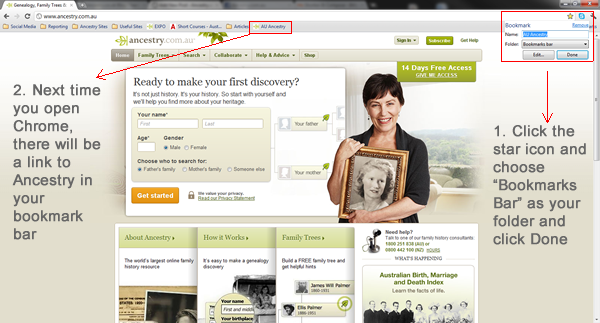
Ancestry.com offers a 14-day free trial to allow new users to thoroughly explore all of its features. By clicking “14-day free trial, start free trial” in the upper right corner of the company’s homepage and completing the registration information, users can access various services, including viewing family trees online, searching for information by surname, region, generational name, genealogical name, or ancestors, building their own family tree, uploading photos, and writing family stories, among others.
By subscribing, users also join the world’s largest genealogy community network. They can ask or answer questions within the community; the more clues they provide, the more family information they can uncover. When new information about a user’s ancestors is discovered, it will be displayed on their family tree.
Genealogy Research Ecosystem Built Around Core Business
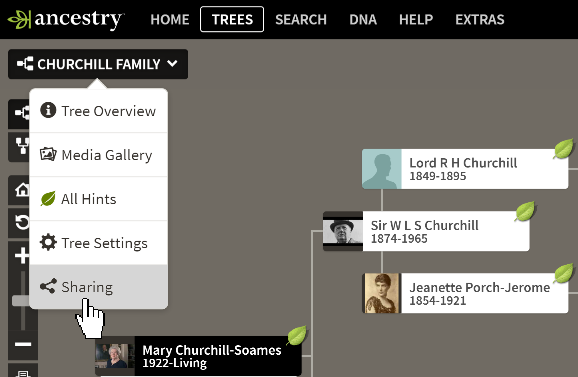
Centered around this online community, Ancestry has also established multiple subsidiary websites with ancestry.com as the core.
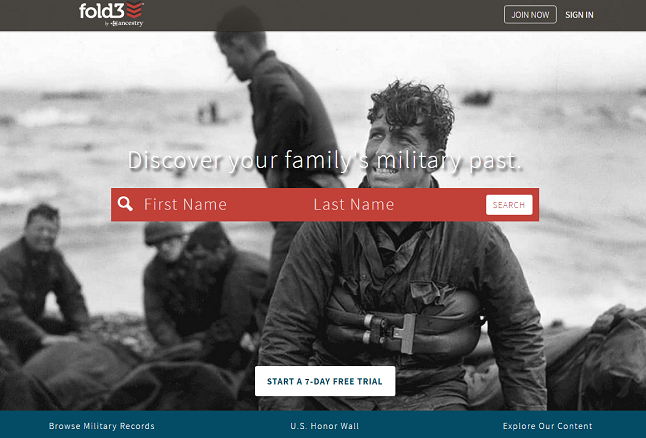
Fold3 specializes in U.S. military historical records. Most of the information is sourced from U.S. federal and city directories, as well as newspapers. Some of these data are available for free, while the majority require a paid subscription for access.
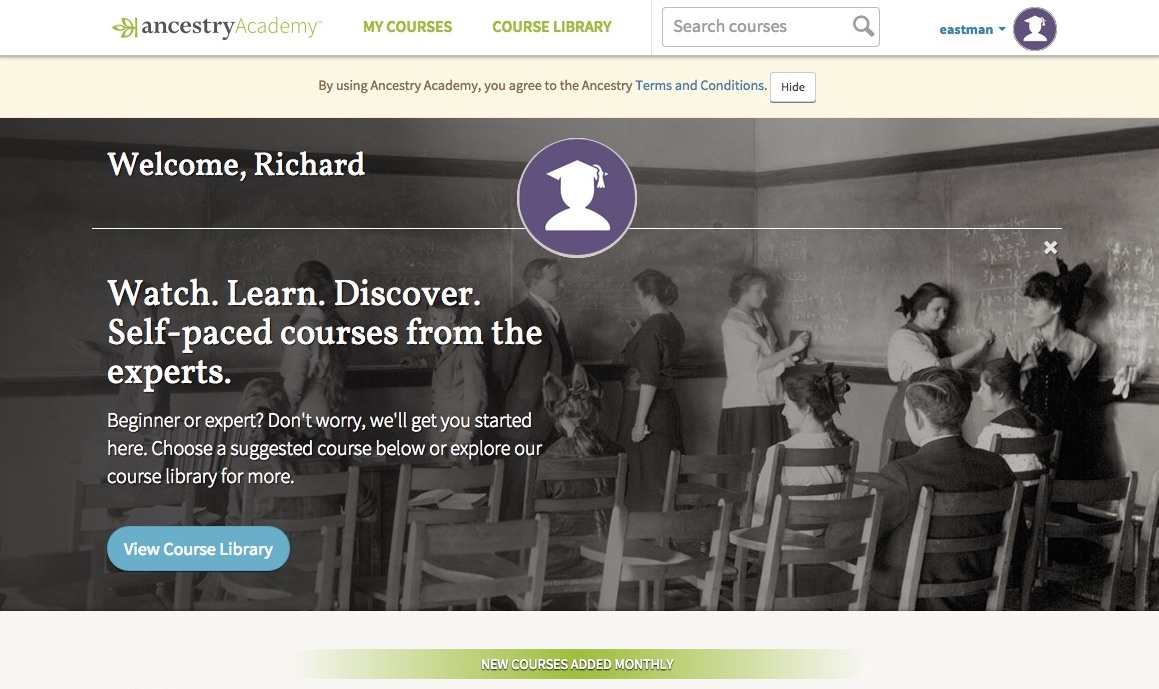
Ancestry Academy primarily offers guidance on family history research. The website officially launched in April 2015, featuring a wide range of courses on genealogical topics, such as Native American ancestry and online U.S. Census research. New courses are added to Ancestry Academy every month.
“The Road to Innovation Forged by ‘Traditional Methods’”
Ancestry.com’s core competitiveness stems from Ancestry’s vast volume of family relationship data. In addition to the U.S. Census data mentioned earlier (which continues to accumulate), Ancestry also collects various immigration records, naval service records, and even old newspapers and magazines.
Today, Ancestry has accumulated data on more than 3 million individuals, 19 billion family historical records, and millions of family tree datasets, making it the world’s largest online community resource for genealogical research. Among these, the earliest records date back to the 13th-century alumni registers of the University of Cambridge.
Most of these data were not obtained through shortcuts, especially in the early stages, when handwritten records often had to be manually entered into databases, including some archival documents with illegible handwriting.
Data entry is a massive undertaking; merely digitizing the U.S. Census archives took six years. The more data that is entered, the easier it becomes for users to access their genealogical information on the website. Such data is otherwise unavailable through standard searches, requiring users to personally visit local archives and libraries to conduct individual inquiries.
In this way, the value of Ancestry.com is demonstrated. For individuals seeking to trace their family roots—identifying their place of birth, mapping familial migration patterns, and discovering their ancestors—Ancestry.com is the only viable option. Moreover, user activities on the platform actually provide valuable clues to Ancestry. Each user serves as an information source through their interactions.
It is hard not to marvel at how Ancestry has carved out a path of innovation through “unconventional methods.”
In addition to the web version, Ancestry launched Android and iOS versions of ancestry.com in 2010.
1+1>2: Genealogical Research Enhanced by DNA Technology
Is there a more direct solution than DNA sequencing to understand one's genetic information? Ancestry launched its ancestry testing product, AncestryDNA, many years ago.
AncestryDNA’s product is similar to that of 23andMe. Users can place orders online through Ancestry or Amazon, with a typical price of $99 (discounts may be available during special holidays). Upon receiving the sample collection kit, users provide a small saliva sample themselves and then mail the sample back to Ancestry.
Generally, users need to wait 6–8 weeks to receive their test results. Of course, if they unfortunately encounter a “peak period,” the waiting time may exceed this estimate. Once the results are available, Ancestry will send an email to the user, who can view them by simply clicking the link or logging directly into the AncestryDNA website.
AncestryDNA employs microarray chip technology to analyze over 700,000 genetic markers. The test results reveal your genetic ancestry across 26 global regions and ethnicities.
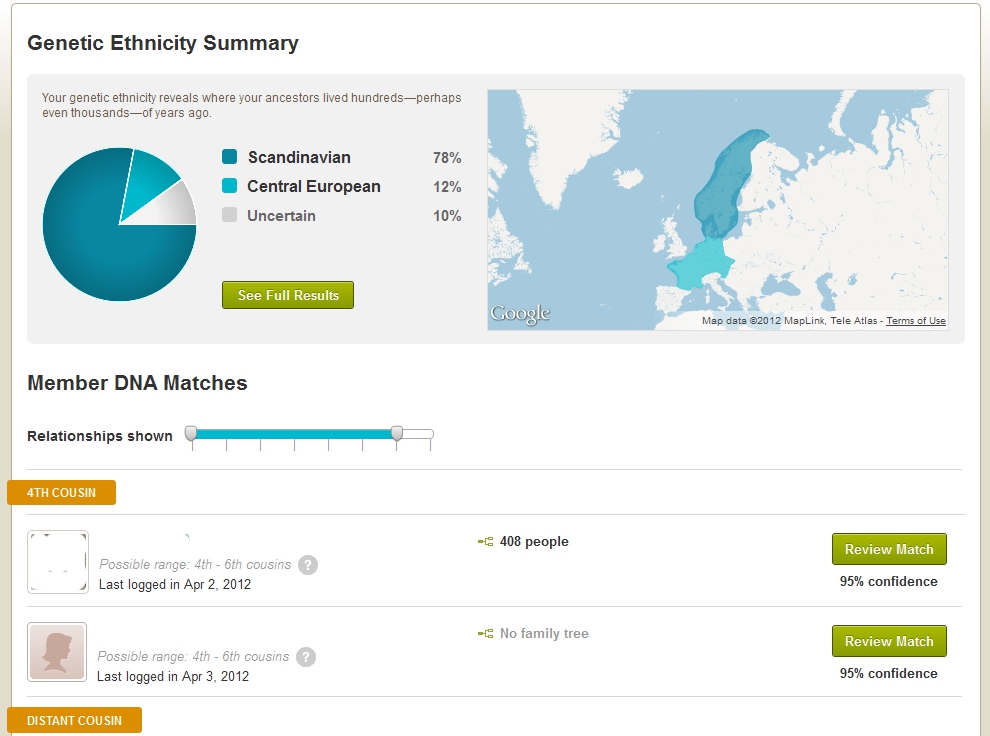
Moreover, Ancestry can link users to relevant individuals, locations, and human migration routes based on DNA data, thereby identifying potential ancestors.
Whether you are of pure Irish descent, have Northern Irish ancestry, or are a descendant of the Acadians, why your ancestors migrated and where they settled—DNA holds the answers.
But DNA testing is only the beginning.
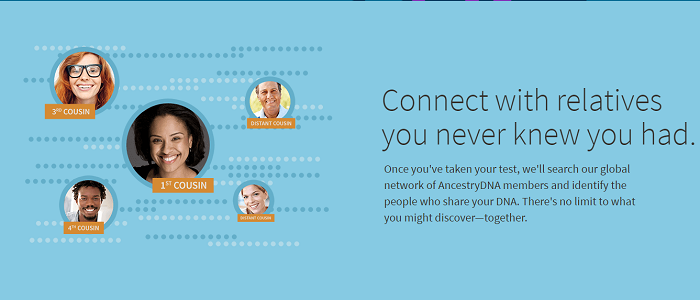
Upon receiving the results, users can search for individuals with similar DNA within Ancestry’s global network to discover distant relatives around the world whom they have never met.
With DNA information further empowered by Ancestry’s robust database and large user base, the discoveries users can make within Ancestry’s “Family Tree” system are virtually limitless.
Strategic Layout in the Health Industry
Whether in response to the broader trend of health industry development, or in an effort to counter the rapidly rising threat from 23andMe through business expansion, Ancestry has begun seeking breakthroughs in its genealogy services.
In July 2015, the company entered into a collaboration with Calico, a biotechnology affiliate of Google, aiming to leverage Ancestry’s genealogical data and Calico’s drug development capabilities to identify methods for extending lifespan and discover drug targets.
That same month, the company launched a new website—ancestryHealth.com.
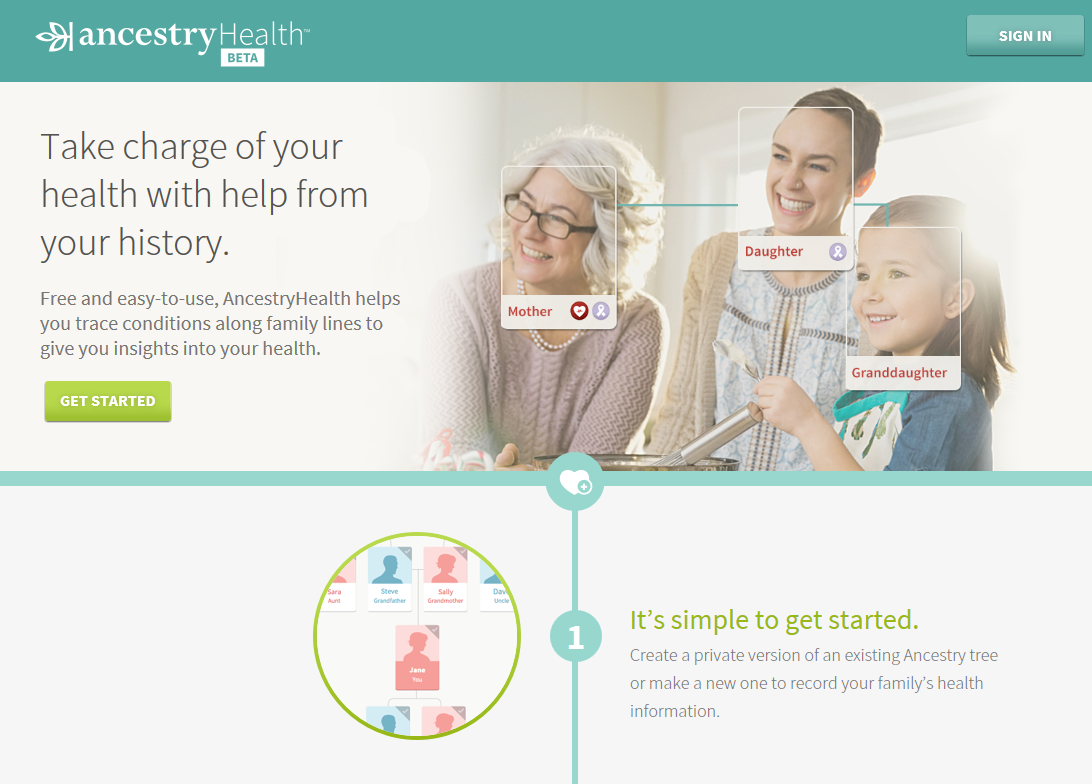
Users can add health information to their family trees through Ancestry Health. The website can use algorithms to uncover hidden health insights from this data, which users can then print out. This data can even be used in doctor-patient communications.
The company also aims to integrate these data into electronic health record systems to facilitate more direct data sharing between users and physicians.
Currently, AncestryHealth and AncestryDNA remain two separate business units, but Ancestry appears intent on integrating them. This would require expanding AncestryDNA’s testing offerings into the medical domain, meaning that Ancestry must secure approval from the U.S. Food and Drug Administration (FDA).
This has long been a challenge for 23andMe. However, the FDA’s recent approval of 23andMe’s first direct-to-consumer genetic testing product this year may also bring hope to Ancestry.