

Chongqing Medical University Affiliated Hospital No.1's 6-Year Medical Consortium Pathway: Partnering with 20 Hospitals and Achieving a 1:1 Patient Referral Ratio
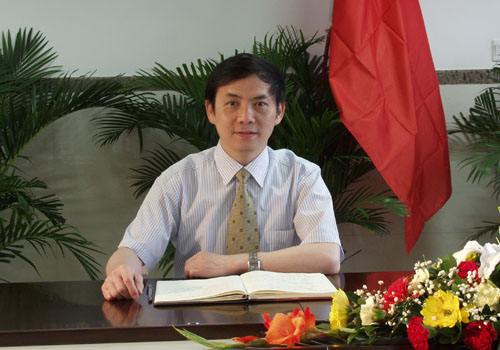
Ren Guosheng, President of the First Affiliated Hospital of Chongqing Medical University
“In my view, the relationship between tertiary hospitals and medical consortia is one of brotherhood, not a hierarchical superior-subordinate dynamic. Of course, even close brothers must keep clear accounts. If a tertiary hospital is merely designated as a ‘guiding hospital,’ that amounts to nothing more than a friendship.” Ren Guosheng hit the nail on the head in articulating the tangled web of interests among the various parties within medical consortia.
Ren Guosheng is the President of the First Affiliated Hospital of Chongqing Medical University, a Professor of Surgery, and a Doctoral Supervisor. He graduated from Chongqing Medical University and studied in France for three years, earning a medical degree from the Faculty of Medicine at the University of Rouen. With 23 years of experience in both basic research and clinical practice in general surgery, he possesses extensive clinical expertise and strong capabilities in diagnosing and treating complex and critical conditions. He specializes particularly in the early diagnosis and treatment of breast cancer (including surgical intervention, chemotherapy, and endocrine therapy) as well as post-mastectomy breast reconstruction.
In 1996, after returning from France, Ren Guosheng spent 11 years rising step by step from an ordinary clinician to hospital president, and then took six more years to evolve from the president of a Grade 3A hospital into the leader of a medical consortium.
So, how exactly did Ren Guosheng build the medical consortium? And what were the results?
In Ren Guosheng’s view, although the state began advocating for the establishment and gradual improvement of a tiered diagnosis and treatment policy system in 2015, the key measures undertaken by the First Affiliated Hospital of Chongqing Medical University to promote the development of primary care hospitals and provide assistance were formally implemented only after the General Office of the State Council forwarded the State Council’s guidelines on deepening the reform of the medical and healthcare system in 2016.
One significant reason is that the policy addressed the critical issue of enabling physicians to practice freely within medical consortia, thereby fundamentally resolving the bottlenecks associated with multi-site practice encountered during the early exploratory phase of the Medical Consortium affiliated with the First Affiliated Hospital of Chongqing Medical University.
In 2017, during the “Two Sessions,” Premier Li Keqiang included the “Two Comprehensive Initiatives” in the Government Work Report for the first time: comprehensively launch medical consortia in various forms, with tertiary public hospitals fully participating and playing a leading role.
On June 13, the General Office of the Chongqing Municipal People’s Government publicly released the “Key Tasks for Deepening the Reform of the Medical and Health Care System in Chongqing Municipality in 2017.”, focusing on the key tasks identified by the Municipal Party Committee and the Municipal People’s Government, leveraging the pilot program for comprehensive healthcare system reform as a strategic entry point, driving progress through reform and innovation, strengthening the coordinated linkage among medical services, health insurance, and pharmaceuticals (the “Three Medicals”), improving relevant policies, rigorously implementing measures, emphasizing reform outcomes, striving to achieve substantive breakthroughs in critical links and priority areas, and effectively enhancing the public’s sense of gain.
It also highlights the need to improve the operational mechanisms of medical consortia. All tertiary hospitals are to participate in the development of medical consortia and play a leading role. The functional positioning and the relationships of responsibilities, rights, and interests among healthcare institutions within the consortia should be further clarified. The operational mechanisms for various models of medical consortia—including integrated management, trusteeship, and medical collaboration—should be improved. Efforts should be made to substantiate urban medical consortia, county-level medical communities, specialty alliances, and remote diagnosis and treatment services, thereby strengthening shared responsibility and mutual benefit.
From the central government to local authorities, there has been a consistent advocacy for the development of medical consortiums. Ren Guosheng began pioneering the establishment of such a consortium at the First Affiliated Hospital of Chongqing Medical University as early as 2011.
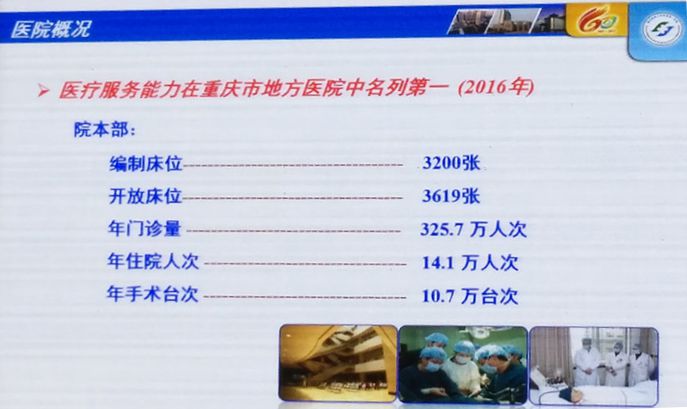
The First Affiliated Hospital of Chongqing Medical University was established in 1957, marking its 60th anniversary in 2017. After six decades of development, it has become the top-ranked local hospital in Chongqing Municipality. According to Ren Guosheng, as of 2016, the hospital had 3,200 authorized beds and 3,619 open beds, serving 3.257 million outpatient visits, 147,000 inpatient admissions, and performing 107,000 surgical procedures annually.
Meanwhile, the First Affiliated Hospital of Chongqing Medical University also enjoys considerable renown across China and has received numerous honors.
In 2012, the overall satisfaction score for high-quality nursing services in the survey conducted by the Hospital Accreditation Office of the former Ministry of Health was 96.12, ranking 16th nationwide;
In 2013, the National Health and Family Planning Commission’s Bureau of Medical Administration and Hospital Management commissioned a third-party to conduct an employee satisfaction survey at First-Line Array Hospitals, where our hospital ranked fourth nationwide;
In 2013, the Hospital Management Institute of the National Health and Family Planning Commission conducted nationwide monitoring of overall employee satisfaction and nurse satisfaction in selected hospitals; our hospital ranked third nationwide in both categories.
In 2013, the Chongqing Health Bureau conducted a third-party satisfaction survey across 12 hospitals, achieving a score of 91.99 and ranking first.
In the 2016 Scientific and Technological Influence Evaluation conducted by the Institute of Medical Information, Chinese Academy of Medical Sciences, which covered 1,325 Grade A tertiary hospitals nationwide, the evaluation index comprised 20% scientific and technological score and 80% reputation score. The First Affiliated Hospital of Chongqing Medical University ranked among the top 100 in scientific and technological influence across all 26 disciplines.
……
In addition to receiving numerous awards, the First Affiliated Hospital of Chongqing Medical University has a long-standing history and tradition of supporting grassroots healthcare institutions. In earlier years, such supported hospitals were referred to as “guidance hospitals,” and, as a university-affiliated hospital, it also served as a “teaching hospital.”“In 2011, we began exploring ways to forge closer ties between the First Affiliated Hospital of Chongqing Medical University and its partner hospitals, moving beyond the traditional model of a mere advisory institution,” said Ren Guosheng.
Therefore, on March 17, 2011, the First Affiliated Hospital of Chongqing Medical University successively took over the management of five county-level hospitals in Chongqing Municipality, establishing close collaborative partnerships. This served as the prototype for the “close-knit medical consortium” model that has been widely promoted since 2017.
In Ren Guosheng’s view,Even with the national policy this year advocating for ten thousand doctors to go to the countryside, it can only be described, to some extent, as “friends lending a hand.”The outcome of this approach is that, regardless of whether tertiary hospitals provide extensive or limited assistance to primary healthcare institutions, the result is invariably met with acclaim from these primary care facilities. However, it remains uncertain whether such efforts have genuinely enhanced the professional competencies of primary care physicians or effectively realized tiered diagnosis and treatment.
Six years later, the First Affiliated Hospital of Chongqing Medical University happened to encounter a healthcare reform opportunity driven by the national push for medical consortiums. In its search for exemplary models of medical consortium development, the Chongqing municipal health authorities conducted extensive visits and investigations, finding that the First Affiliated Hospital of Chongqing Medical University had made significant efforts in this area, with notable results.Therefore, the Chongqing Municipal Health Bureau approved the First Affiliated Hospital of Chongqing Medical University as Chongqing’s first hospital group, i.e., a medical consortium, within just a few days.
On March 28, at the National Health Work Conference, Vice Premier of the State Council Liu Yandong stated that the key priorities for health work in 2017 were the establishment of five institutional frameworks and the implementation of ten key tasks, with the first of these ten tasks being the development of medical consortia.
During the promotion of medical consortium development, major media outlets began seeking representative Grade A tertiary hospitals. As the First Affiliated Hospital of Chongqing Medical University had initiated these efforts early and achieved significant results, CCTV’s Xinwen Lianbo (News Broadcast) reported on its medical consortium on May 2, 2017.“This also demonstrates that our seven-year exploration of the medical consortium model has gained widespread recognition,” said Ren Guosheng, with evident satisfaction.
According to Ren Guosheng, the medical consortium of the First Affiliated Hospital of Chongqing Medical University currently comprises 20 (1+3+11+5) hospitals. The “1” refers to the main campus; the “3” denotes three directly affiliated branch hospitals; the “11” represents district and county hospitals in Chongqing; and the “5” indicates five hospitals located outside Chongqing Municipality.
Chongqing has 38 districts and counties, with 1,080 township health centers. Although the First Affiliated Hospital of Chongqing Medical University is a large public hospital, it cannot incorporate all hospitals in these townships, districts, and counties into its medical consortium system.
Therefore, the First Affiliated Hospital of Chongqing Medical University has provided assistance to major district- and county-level hospitals (such as People’s Hospitals, Traditional Chinese Medicine Hospitals, and Maternal and Child Health Hospitals), with the aim that each of these large hospitals in districts and counties can extend its reach to 6–10 township health centers and community hospitals. The actual number of institutions that can be supported depends entirely on the capacity of the respective district- or county-level hospital. “This is precisely why I have consistently advocated for the development of tightly integrated medical consortia,” added Ren Guosheng.
He has summarized his six years of experience in providing assistance through medical consortiums into a 20-character guideline: “Assess existing resources, identify gaps, clarify directions, propose measures, and promote harmonious development.” This also represents the core philosophy guiding both the internal development of the First Affiliated Hospital of Chongqing Medical University and its outreach support to other hospitals in recent years.
Before the First Affiliated Hospital of Chongqing Medical University began its assistance to the county-level hospital, Ren Guosheng first made the hospital understand: Is the issue a shortage of talent or merely a shortage of personnel?
Ren Guosheng’s greatest concern was that assisted hospitals would request personnel transfers from him rather than seeking his help in cultivating talent. “During my 12-year tenure as hospital president, from 2005 to 2008, the bed occupancy rates at district and county-level hospitals in Chongqing’s main urban area and surrounding cities ranged from 50% to 70%, while those with slightly better medical qualifications reached 80%–90%. In contrast, the First Affiliated Hospital of Chongqing Medical University maintained a bed occupancy rate exceeding 95%. Today, bed capacity at large district and county hospitals has increased by 110%–120%.”
According to China's staffing standards for healthcare institutions, not only are large district and county hospitals understaffed, but the First Affiliated Hospital of Chongqing Medical University is also facing a personnel shortage, with a deficit of 1,000 staff members.
Prior to your trusteeship, each district and county hospital had a strong desire for assistance: overwhelmed by patient volumes and facing severe staff shortages, they hoped that the supporting hospital would dispatch personnel to aid their operations.
“If a district or county-level hospital asks me to send staff from the First Affiliated Hospital of Chongqing Medical University to work there, I will immediately refuse. My goal in providing assistance through the medical consortium is to help doctors at district and county-level hospitals improve their clinical service capabilities and build a team of talented professionals who will stay.”
This is the core of assisting county and district hospitals and an effective method for implementing tiered diagnosis and treatment. Ren Guosheng believes that if 90% of patients are retained at county and district hospitals, but the physicians there lack the capacity to diagnose and treat them, it does not constitute a true medical consortium and fails to achieve the goals of tiered diagnosis and treatment. Similarly, if large hospitals, under the guise of medical consortia, “siphon” patients from primary care institutions without establishing an effective two-way referral system, they also fail to meet the objectives of tiered diagnosis and treatment.
Therefore, within the medical alliance system of the First Affiliated Hospital of Chongqing Medical University, Ren Guosheng required the leadership teams of all district and county hospitals to come to the main hospital to participate in all aspects of discipline construction, talent development, and professional training.
During the development of medical consortiums, Ren Guosheng established a sound principle: "Even among close brothers, accounts must be clearly settled."“We regard the hospitals we assist as brothers, but even between close brothers, accounts must be clearly settled. Only by making respective interests transparent can we achieve the goals of a closely-knit medical consortium.”
Meanwhile, Ren Guosheng also formulated the six core components of the medical consortium:
First, the purpose of assistance must be clearly defined.The First Affiliated Hospital of Chongqing Medical University assists district and county hospitals in achieving hospital accreditation, comprehensively enhancing their overall service capabilities and management standards.
Second, clarify the assessment indicators for assistance.In accordance with the “Accreditation Standards for Tertiary General Hospitals (2011 Edition)” issued by the National Health and Family Planning Commission, The First Affiliated Hospital of Chongqing Medical University places particular emphasis on teamwork and management. Given that district- and county-level hospitals also suffer from significant deficiencies in their management teams, the management team of The First Affiliated Hospital of Chongqing Medical University will prioritize providing targeted assistance to the management teams of primary healthcare institutions.
It is no exaggeration to say that the First Affiliated Hospital of Chongqing Medical University’s existing management and team-building systems—encompassing clinical care, teaching, research, talent development, and discipline construction—will be comprehensively extended to district- and county-level hospitals.
Third, adhere to the principle of “inviting up and reaching down,” highlighting the “Three Openings,” “Three Trainings,” and “Three Teams” for management and professional staff at district and county hospitals, and providing comprehensive, free, and on-demand “one-on-one” training.
"Three Openings": Open management, open talent development, and open discipline construction;
“Three Trainings”: Cultivate discipline leaders, key discipline personnel, and future discipline talents;
“Three Teams”: Technical Team, Management Team, Departmental Team.
"One-on-One":Departments and experts paired with apprentices in a one-on-one mentorship model, forming targeted partnerships to ensure training effectiveness and establish sustained guidance channels. Each district/county hospital selected 10 individuals to form one-on-one pairs with the First Affiliated Hospital of Chongqing Medical University.
Regarding the regulations for staff from the First Affiliated Hospital of Chongqing Medical University to “go down” to grassroots hospitals, Ren Guosheng has his own approach. He clearly outlines how many times per month they should visit, how long they should stay, and when they should return to the main hospital, as the main campus of the First Affiliated Hospital also needs to operate normally. For instance, department directors and head nurses typically spend about 3–4 days at the supported hospitals.
Fourth, adhere to the principles of “free” and “anytime.”Previously, the training of personnel at primary healthcare institutions was referred to as "advanced studies," which required waiting in line and lacked high-quality mentors. Meanwhile, these institutions had to balance the pursuit of revenue with their training obligations.To support more district and county-level hospitals, the First Affiliated Hospital of Chongqing Medical University offers them free advanced training opportunities.As long as doctors are interested in learning any specific technology, the First Affiliated Hospital of Chongqing Medical University will provide one-on-one tutoring.
At primary healthcare institutions within the medical consortium, when patients are referred to the First Affiliated Hospital of Chongqing Medical University, the primary care physicians responsible for these patients also participate during the hospital's procedures.Participate in consultations or ward rounds with physicians from the First Affiliated Hospital of Chongqing Medical University, followed by hands-on surgical practice. Under the guidance of these physicians, he can master the skill. Furthermore, the same technique can be practiced repeatedly.
5. Develop a catalog of major diseases for diagnosis and treatment.To implement tiered diagnosis and treatment, a catalog of primary diseases for diagnosis and treatment must be established.Tiered diagnosis and treatment requires that each medical institution clearly understand which conditions it should manage, thereby effectively alleviating the overcrowding pressure on large hospitals. To this end, The First Affiliated Hospital of Chongqing Medical University has developed a disease diagnosis catalog, and all its departments have established their own lists of major diseases. These catalogs specify which conditions should be treated at the hospital, which should not, and which can be managed by primary care institutions.
“If doctors at the First Affiliated Hospital of Chongqing Medical University adhere to the list of primary diseases for diagnosis and treatment, I will commend and reward them. Even if they do not, I never criticize them; instead, I analyze the big data on diagnosis and treatment within the department to adjust the list of primary diseases for diagnosis and treatment.”Ren Guosheng said.
Sixth, incorporate the two-way referral system of tiered diagnosis and treatment into the performance evaluation of medical consortia.As is well known, in the process of tiered diagnosis and treatment, upward referrals are often obstructed, while downward referrals lack awareness. To address this, the First Affiliated Hospital of Chongqing Medical University has established a green channel, enabling patients referred from primary care institutions to be transferred back within three to five days after surgery. However, some primary healthcare facilities are not yet fully capable of providing adequate postoperative rehabilitation. Therefore, these patients are first transferred to the Hospital’s integrated medical and elderly care department, thereby freeing up limited medical resources.
The First Affiliated Hospital of Chongqing Medical University has implemented numerous measures, such as establishing its own catalog for the diagnosis and treatment of major diseases, developing institutional frameworks, defining evidence-based guidelines, strengthening management, assigning dedicated personnel, clarifying responsibilities, prioritizing key areas, building platforms, and instituting reward and penalty mechanisms. So, what have been the outcomes of the medical consortium over the past six years?
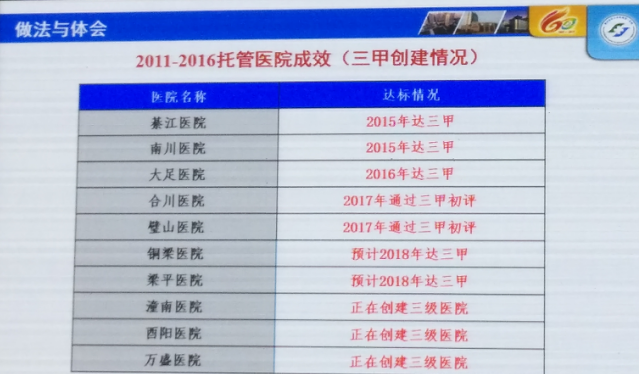
According to Ren Guosheng, the First Affiliated Hospital of Chongqing Medical University provides assistanceFirst BatchThe cycle for district and county hospitals is five years,Primarily providing support in areas such as scientific research and talent development.These county-level hospitals. Five years later, this batch of county-level hospitals has been promoted toGrade 3A Hospital.
In its research endeavors, the First Affiliated Hospital of Chongqing Medical University has assisted district and county hospitals in building comprehensive teams for scientific research, clinical care, and education.
In the medical field,The First Affiliated Hospital of Chongqing Medical University helped county-level hospitals, including Dazu Hospital, Tongliang Hospital, and Bishan Hospital, launch 1,212 new medical technologies.
In terms of teaching, previously, the most pressing concern for district and county-level hospitals was professional title promotion; with the assistance of the First Affiliated Hospital of Chongqing Medical University, over 200 staff members have successfully advanced their titles.
In terms of discipline construction, the First Affiliated Hospital of Chongqing Medical University has assisted county-level hospitals such as Dazu Hospital, Haifu Hospital, and Wansheng Hospital in establishing a total of 59 municipal-level key clinical specialties, 7 specialized disciplines, and 71 distinctive specialties.
In terms of two-way referrals, from 2015 to April 2017, a total of 1,312 patients were referred upward from district and county hospitals within the Medical Consortium of the First Affiliated Hospital of Chongqing Medical University, while 1,046 patients were referred downward, resulting in an upward-to-downward referral ratio of approximately 1:1.Among them, Dazu Hospital referred 54 patients to higher-level hospitals and transferred 125 patients to lower-level hospitals.
The main issues in the two-way referral system include the lack of unified and highly operational standards for both downward and upward referrals, the absence of clear referral and acceptance processes and procedures, inadequate management systems, and insufficient incentive and regulatory mechanisms.
During the referral process, upward referrals face obstacles due to lack of departmental attention, selective patient screening and refusal, and absence of registration (e.g., admission certificates and front pages of medical records). Downward referrals are neglected, with no promotional efforts, failure to issue downward referral forms, and incorrect completion of the “discharge status” field on the discharge summary front page.
Bidirectional referral is a crucial component in the development of medical consortiums and the implementation of tiered diagnosis and treatment. Ren Guosheng has placed significant emphasis on optimizing the disease spectrum structure, strengthening the core competencies of specialized departments, establishing referral systems, streamlining referral processes, clarifying responsibilities, and implementing robust incentive and penalty mechanisms.
It has been revealed that dozens of district and county hospitals are currently waiting to join the medical consortium led by the First Affiliated Hospital of Chongqing Medical University.“Although our collaboration period with the first six district and county hospitals has expired, they are reluctant to leave this assistance framework and wish to remain part of it. Therefore, when we expanded the medical consortium during the second five-year phase, we added only five more district and county hospitals,” introduced Ren Guosheng.
In the construction of the medical consortium at the First Affiliated Hospital of Chongqing Medical University, it is evident that the medical consortium serves as a significant measure to promote the vertical integration of healthcare resources. The interests of all relevant medical institutions are closely intertwined with the entities establishing the consortium and the implementation process. By clarifying the game-theoretic behaviors among key stakeholders—such as the strategic interactions regarding assistance and cooperation between core hospitals and member hospitals, and the competitive dynamics between non-member hospitals and the medical consortium—it is possible to explore a sustainable development path for the effective operation of medical consortia. This can be achieved by improving compensation and supervision mechanisms, enhancing primary healthcare service capabilities, fostering orderly competition among medical institutions within the region, and refining corporate governance structures.