

DATATOM's Innovative Approach to Building a Regional Healthcare Big Data Platform: A Case Study from Hami, Xinjiang
Shanghai Detuo Information Technology Co., Ltd. (hereinafter referred to as “Detuo”) is engaged in scientific research on “data intelligence.” Focusing on the field of data management, the company leverages innovative hyper-converged big data technology to provide industries with data infrastructure, hyper-converged management platforms, and services for data developers. Achieving a valuation of RMB 2 billion in just five years, Detuo is a technology-enabled enterprise experiencing ultra-rapid growth.
From Storage and Security to Data Management
In 1999, after graduating with a degree in Computer Science from Harbin Institute of Technology, Xie Yun, the founder of Datuo Information, joined ZTE Corporation to work in the telecommunications industry. At that time, Xie Yun was engaged in developing telecom BOSS (Business Operations Support System) systems, which leverage information technology to facilitate telecom operations. Since then, he has gained extensive exposure to technologies related to servers, storage, and enterprise application software.
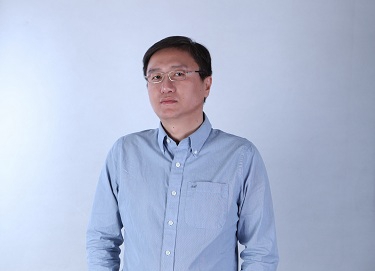
Xie Yun, Founder of Detuo Information
In 2003, after working at ZTE Corporation for four years, Xie Yun began to consider starting his own business. After careful deliberation, he chose to pursue a project in enterprise storage. The reason was simple: the telecommunications industry was undergoing significant transformation, with industry giants such as ZTE, Huawei, Inspur Dawning, and Lenovo rising to prominence. At that time, the storage industry was fragmented and lacked any unicorn companies, yet the market potential was enormous.
From 2003 to 2009, Xie Yun’s company primarily operated as an original equipment manufacturer (OEM), producing goods under other brands. In 2009, by chance, the company pivoted to the field of data security, disaster recovery, and backup.
At the end of 2011, Xie Yun identified a new market opportunity—big data,“DATATOM”Thus was born.
Looking back on his past career, Xie Yun has always been focused on data-driven entrepreneurship. He divides his entrepreneurial journey into three stages:
Phase I involves building the data infrastructure;
The second phase involves the development of data management applications;
Phase 3 is the tool platform for data.
As a technology platform company specializing in big data, Detuo Information simplifies complex big data technologies into an accessible development platform. The platform’s hardware and software are delivered as an integrated solution to partners for implementation across various industries.
In the past, due to the relatively foundational nature of data storage and security technologies, Xie Yun did not pay much attention to industry-specific attributes. Detuo Information’s strategy is to penetrate specific industries. Its products have been successfully implemented across numerous sectors, including media production, transportation and logistics, public safety, government administration, and financial securities, with the healthcare sector being no exception.
Building the Hami Medical Big Data Platform
Within a single hospital, merely integrating all data from information systems represents only one form of big data convergence and fails to demonstrate its true potential. However, in China, achieving data interoperability and standardization across hospitals remains highly challenging.
For a single hospital, data centralization is relatively easy since the data resides within its own internal systems. OnlyOnly when multiple hospitals in a region have completed the centralization of their internal data, and this data is subsequently aggregated into a regional health and medical big data platform, can big data generate value to a certain extent.
Following this line of thought, Detuo Information officially entered the healthcare sector in 2013. The company structured its strategy around three key areas: first, data management and big data applications for tertiary hospitals (Grade III Class A), such as unstructured data management at West China Hospital; second, big data solutions within the National Health and Family Planning Commission system, exemplified by the Hami Prefecture Health Big Data Platform; and third, medical colleges and universities, focusing on big data applications in experimental research and education.
The most representative example is the project in Hami Prefecture. The Hami Prefecture Central Hospital is a regional Grade III Class A general hospital integrating medical care, teaching, scientific research, and community services.
In the project, Detuo Information implemented comprehensive big data application scenarios at Hami Prefecture Central Hospital, and then expanded them from the hospital to the entire Hami Prefecture.
From the project launch in March 2016 to its official go-live in October 2016, a six-month period during which Detuo Information first collaborated with Hami Prefecture Central Hospital to complete the integration and analysis of the hospital’s internal data.
Subsequently, building on this project and under the leadership of the Hami Prefecture Health and Family Planning Commission, Detuo Information connected, includingHami Prefecture Maternal and Child Health Care Hospital, Xinjiang、Yili District Hospital、Uyghur Hospital、Barkol Hospitaldata from multiple hospitals, among others. Based on the data from these hospitals, Detuo Information has developedHami Prefecture Health and Medical Big Data Platform。
The main functions of Detuo's big data platform are as follows:
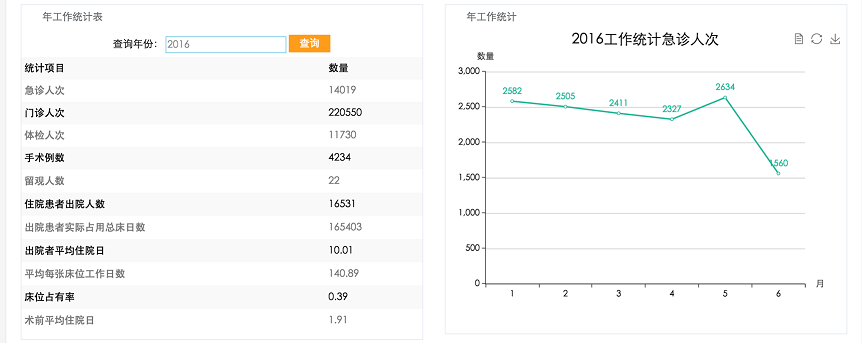
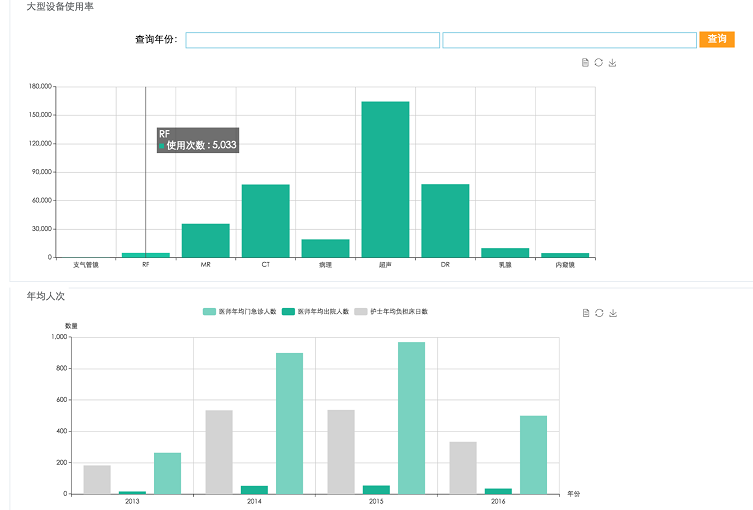
1. Management Cockpit
Provide multi-dimensional and multi-level data statistical analysis results from aspects involved in the daily operation of hospitals, such as "resource allocation, workload, treatment quality, work efficiency, patient burden, asset operation, scientific research achievements, etc."
2. Health Record Analysis
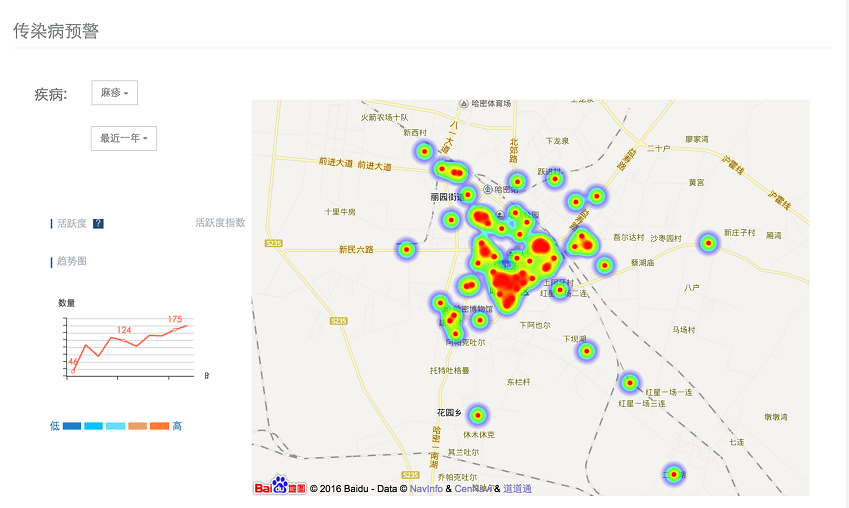
By mapping and correlating the resource pool via patient IDs, we conduct a multi-dimensional analysis of health record indices, covering patient cohort characteristics, regional distribution, age trends, and more. This process generates disease control area alerts, establishing a foundational model for subsequent comprehensive personal health analyses related to treatment, prevention, and risk assessment.
Mark patients’ residential addresses on a map based on their registration information, and issue early warning alerts when the number of cases of a specific infectious disease within a defined area reaches a predetermined threshold.
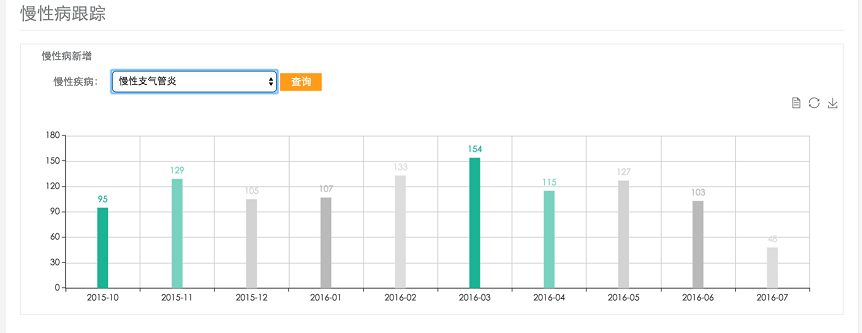
Analyze the development trends of chronic diseases in the region and conduct data analysis on medical visits by patients with chronic diseases.
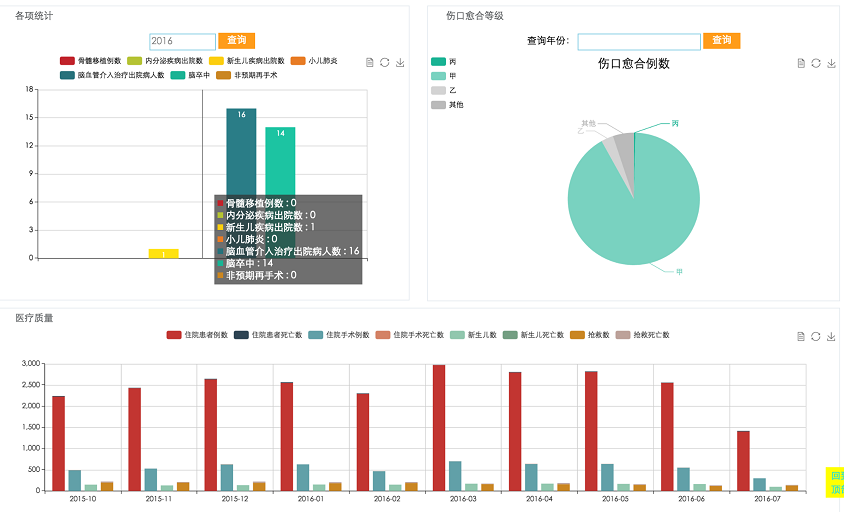
Based on ICD codes for diagnoses and procedures of inpatients, this system provides multi-dimensional analysis of patient volume, hospitalization costs, discharge outcomes, length of stay, and various safety indicators during hospitalization. It enables ranking and comparison to achieve comprehensive monitoring of healthcare quality and safety.
3. Comprehensive Performance Management
Complete a comprehensive node analysis of medical personnel, potentially mining all behavioral nodes of staff since their onboarding at the hospital. Examples include diagnosis, treatment, surgery, rewards and penalties, job transfers, promotions, and personal professional achievements. The final analysis will be stored in the database to establish integrity profiles for medical personnel.
Statistical analysis of hospital medical revenue reveals trends in key metrics of interest to hospital administrators, enabling rational adjustments to the revenue structure and thereby improving profit margins.
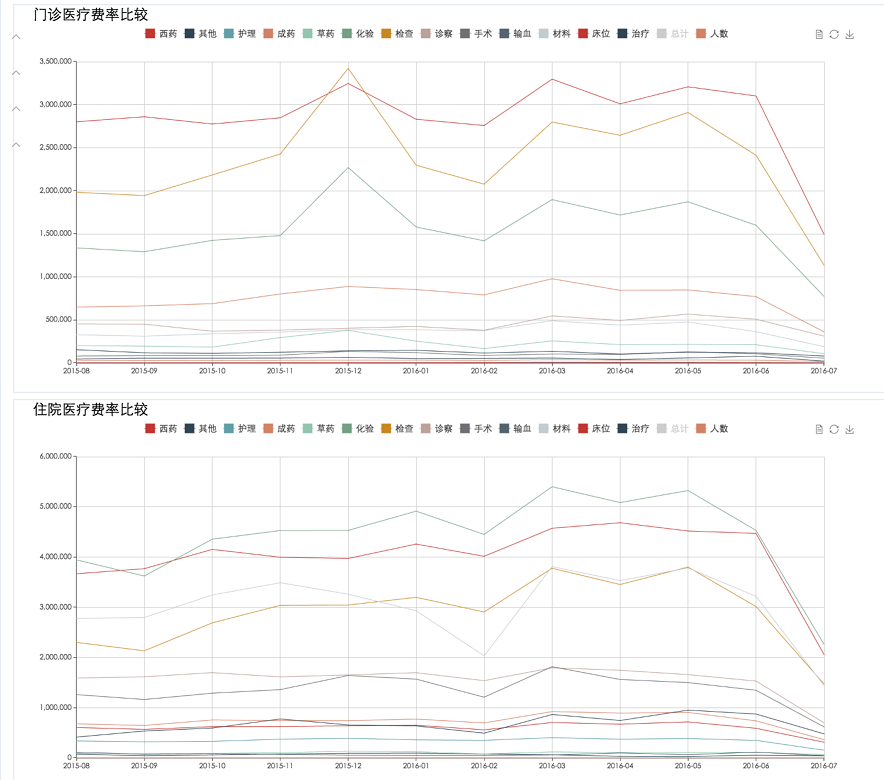
Analyze patient visit costs to provide data support for management needs such as health insurance cost containment and cost allocation.
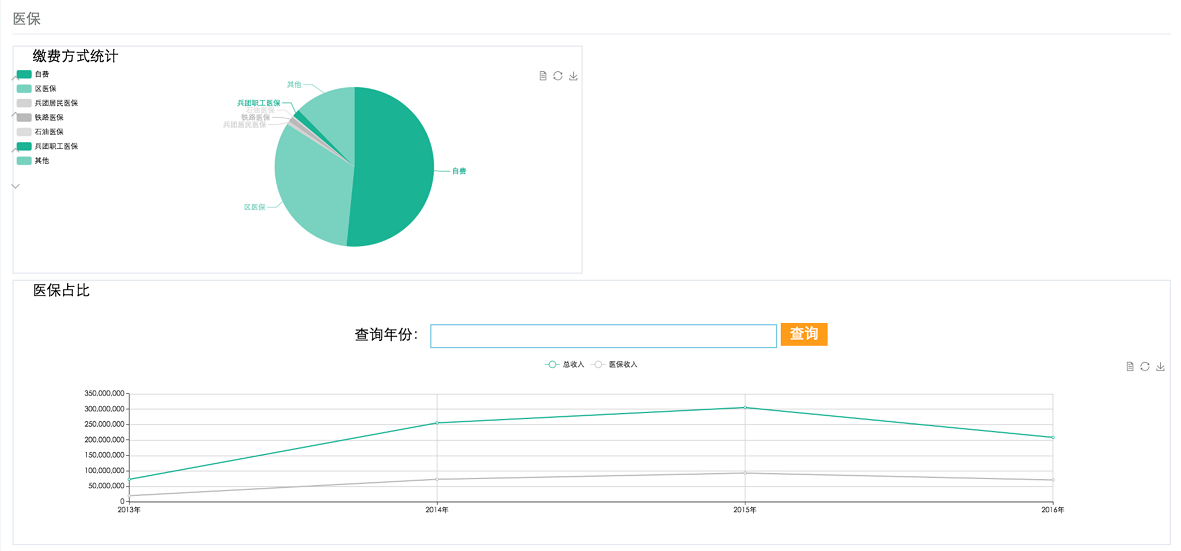
After Detuo Information integrated big data with social security data, it was discovered that a significant number of patients traveled from Hami to Urumqi for medical treatment, with a large proportion of this group being diabetes patients.
These data reflect that a significant proportion of diabetic patients are lost due to the inadequate level of diabetes diagnosis and treatment in the Hami region. For administrators, there is an urgent need to enhance the diagnostic and therapeutic capabilities of diabetes specialists in Hami City.
As of now, Detuo Information has completed the deployment of database clusters for hospital resource pools, integrated 12 hospital business systems, created 8,052 data tables, established 5,300 data extraction protocols, and cumulatively consolidated approximately 554 million data records.
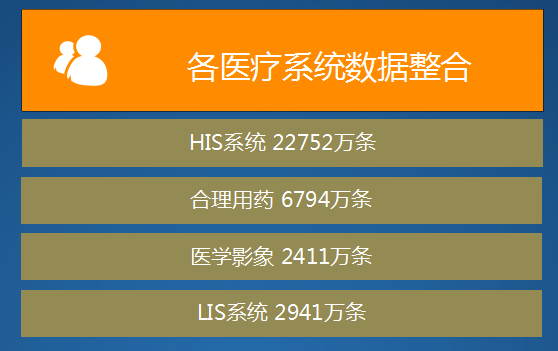
Technically, the core capability of Detuo Information’s big data platform lies in its ability to automatically crawl public opinion data and pharmaceutical data from the internet, as well as structured and unstructured data (including documents, images, audio, and video) from information systems, via engines for data structuring, storage, and search. The data is then stored according to predefined rules, ultimately forming a comprehensive big data technology platform.
There are two methods for data updates on the big data platform: one isReal-Time Data Stream, which means real-time updates; the second type isDaily Update. Among these, certain critical data, such as "HIS data," are updated in real time, whereas report-type data are generally retrieved by the system once daily.
Xie Yun believes that the key to establishing such a big data integration platform lies in achieving a breakthrough through a core hospital. Only when the core hospital is willing to take the lead and demonstrate the value and power of big data to higher-level authorities will other hospitals be motivated to participate.
Just as Detuo Information’s “Data Cage” project has demonstrated in government administration, the “point-to-area” approach is a proven and effective strategy. By leveraging the Data Cage to integrate and consolidate all data within a single entity onto one platform, internal information systems are fully interconnected. This lays the groundwork for subsequently opening up the integrated data, ultimately achieving seamless data connectivity across various commissions, offices, and bureaus.
“Previously, getting hospitals or the government to open up their data involved much buck-passing and hassle. But the ‘Data Iron Cage’ has enabled internal data integration within organizations, establishing unified standards and specifications, which makes subsequent upward integration relatively easier,” said Xie Yun.
What Detuo Information truly does is the underlying infrastructure.
The big data industry chain is divided into four levels, namelyData Resource Layer、Infrastructure Layer、Platform Tools LayerandApplication Implementation Layer。
At the base lies user data; above it is the infrastructure that supports this data, such as storage systems, servers, and hyper-converged infrastructure (HCI) devices; further up are the tool platforms, including data engines, databases, and big data search capabilities; at the top layer are big data applications, such as those in medical big data and health big data.
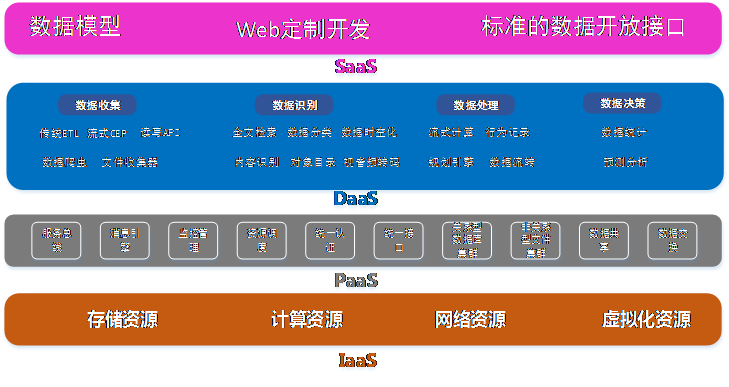
Detuo Information’s true technological advantage lies in the middle two layers, namelyInfrastructure LayerandPlatform Tools Layer。
Detuo Information connects users’ data through infrastructure and partners at the application level through its tool platform, ultimately empowering both partners and users.
In addition, Detuo implements certain projects independently, leveraging benchmark cases to drive industry collaborations.The significance of the Hami Big Data Platform project lies herein.。
On this point, Xie Yun told VCBeat: “We connect with partners in the industry who have R&D capabilities and solution offerings through benchmark cases, enabling them to develop on Detuo Information’s platform. We even open-source application-level source code for them. This is how we penetrate any industry.”
In terms of partnerships, Detuo Information has established collaborative relationships with well-known listed companies in the medical informatics sector, such as Wonders Information and Neusoft Corporation.
Medical Big Data: The Future of Detuo Information
When discussing the development of medical big data, Xie Yun believes that medical big data will have several major characteristics in the future:
1、Multidimensional Data.Big data is not just about volume; data complexity is equally critical, encompassing imaging data, audio and video content, structured data, and unstructured data generated by the Internet of Things (IoT). By integrating these diverse data sources, enterprises can deliver commercial or operational value to healthcare institutions, representing a major industry trend.
2.Integration of Internal and External Data.In the future, big data generated from the integration of health big data, internet data, and clinical data will drive advancements in hospital diagnosis and treatment capabilities. Integrating external and internal hospital data is key for hospitals to embrace big data.
3.From Single to Regional to National. Hospitals must first integrate their legacy information systems to unlock the value of data. Once these institutions transition from isolated information silos into big data platforms, it will be relatively easier for the government to consolidate big data at a higher level.
4.From a single industry to the entire industry.True big data is never confined to a single industry; rather, it involves the integration of data across different sectors. With the aforementioned three elements in place, integrating data from other industries will give rise to new business models.
Detuo Information's Future Development Strategy is Named“DANA Inside”,“DANA”It is Detuo's big data product.
“To use an analogy, much like a CPU serves as the core component in PCs, laptops, tablets, and smartphones, it functions as a truly foundational, cross-platform service,” said Xie Yun.
At present, big data companies are caught in a misconception: they tend to present users’ known information in flashy but superficial formats. In reality, this process generates no incremental value.
Detuo Information leverages foundational technologies to connect data with every individual, going beyond simple BI-driven business mining to truly integrate big data into workflow processes.
Currently, Detuo Information has a team of over 200 people, among whom70% are R&D personnel, with marketing and logistics personnel accounting for only 20% and 10%, respectively.
Xie Yun told VCBeat: “Although Detuo has been in existence for just over five years, it began achieving profitability from its second year of operation and has successfully completed three rounds of financing to date. Moreover, the funds raised in the last two rounds, designated as strategic capital for Detuo, remain entirely untouched and will be allocated toward ecosystem development in the future.”