

After Two Decades in Primary Care and Four Years of Exploration, MinKang Carves a New Path in the Clinic SaaS Market
Since its establishment in 1996, Minkang has been cultivating the informatization industry for 20 years. From being a leader in China’s public health systems to transforming into a clinic SaaS provider, a review of Minkang’s development journey clearly reveals the company’s various explorations in the primary healthcare market:
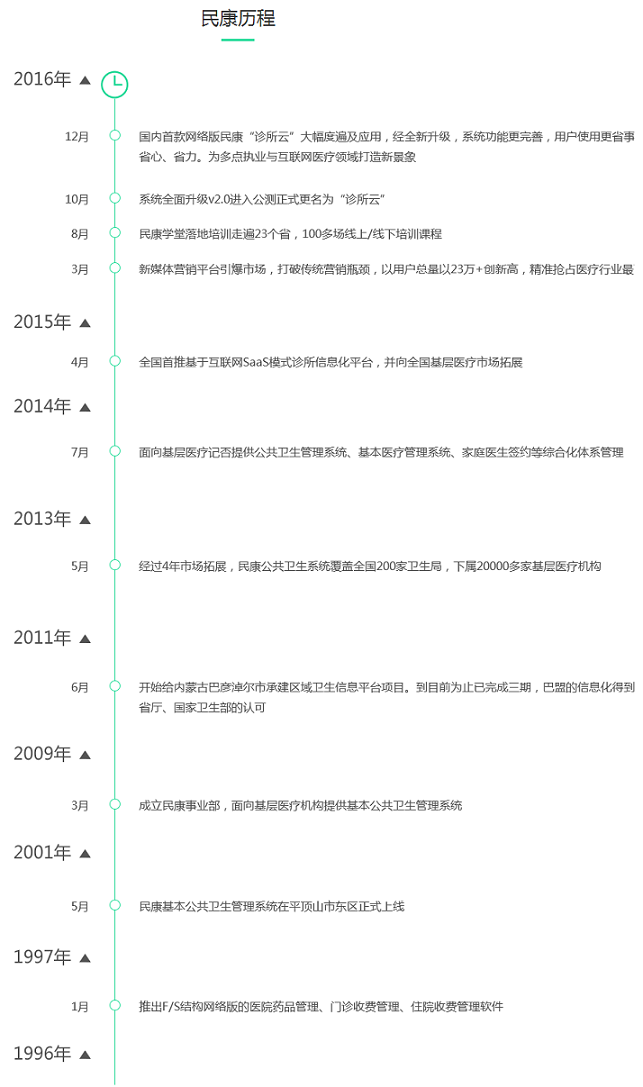
As a wholly-owned subsidiary of Tianfangda, Minkang has cultivated a solid brand reputation within the industry through its years of deep-rooted presence at the grassroots level.
After 2013, Minkang entered a transition period and began to focus on the private clinic market. In no time, Minkang became one of the first companies in China to provide information platforms for clinics using the Internet SaaS model.
Traditional User Base and Product Structure of Minkang Clinic Software
The latest data from the Statistical Information Center of the National Health and Family Planning Commission shows that as ofIn late April 2017,China has a total of 930,000 primary healthcare institutions, including 205,000 clinics (infirmaries).
Of the more than 200,000 clinics, the majority were established by individuals outside the formal healthcare system.Entrepreneurs outside the public sector had no prior exposure to information systems. BecauseMost of them believe that,Information technology struggles to enhance operational efficiency and drive revenue growth for clinics.。
Entrepreneurs launching primary care clinics within the medical system oftenThey are department heads, physicians, or nurses at public hospitals. Having used Hospital Information Systems (HIS) extensively throughout their tenure in these institutions, they have carried over these habits after launching their own ventures. Regarding clinic SaaS solutions, theyMinimal learning curve.
Minkang’s Clinic Cloud is a refined, streamlined, and customized version of the Minkang HIS system. Based on the number of users, Clinic Cloud is offered in eight tiers, priced at RMB 500, RMB 1,500, RMB 2,800, RMB 6,000, and so on. Compared with other informatization systems that often cost tens or even hundreds of thousands of yuan, Clinic Cloud is affordably priced.
Over the past four years, Minkang Clinic Cloud has surpassed 18,000 paying users.Covers high-end chain clinics and fragmented primary-care clinics.Among these 18,000 clinics, the ratio of non-public to public sector personnel is approximately 5:1.。
Minkang's primary care clinic products mainly consist of several components:
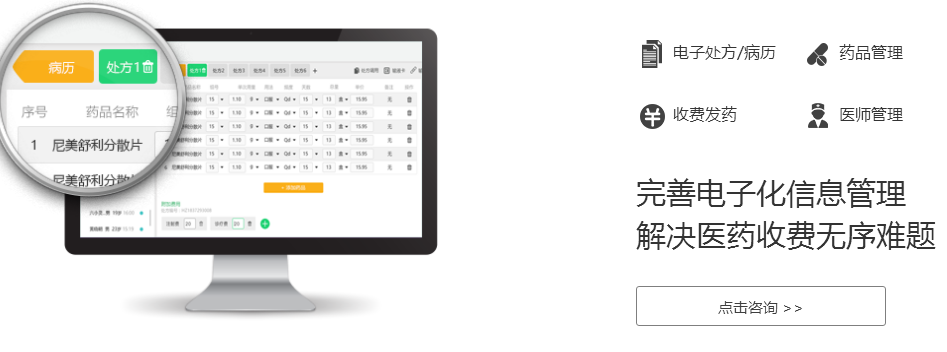
Minkang Clinic Cloud, delivered as a SaaS platform, integrates healthcare-related industries to provide primary care institutions with one-stop medical services spanning pre-consultation, during-consultation, and post-consultation phases;
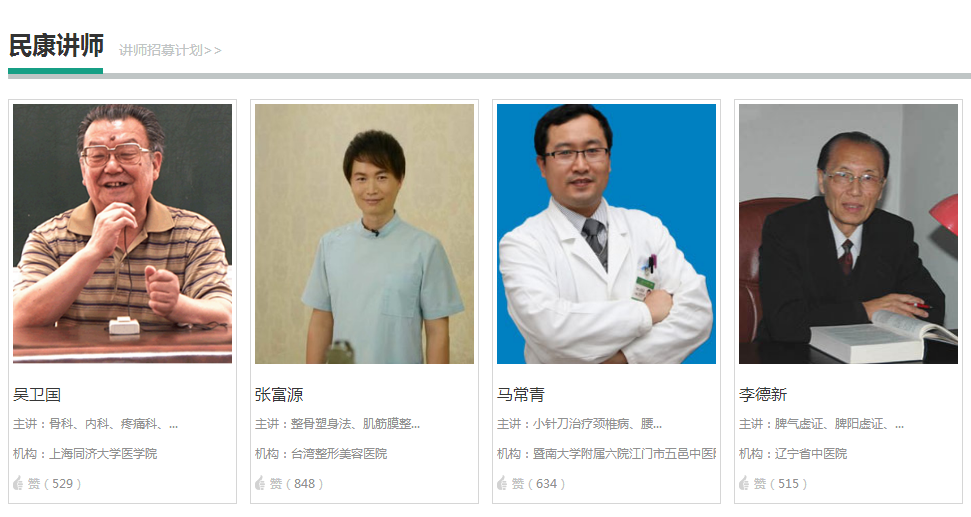
Minkang Academy helps doctors, nurses, and clinic owners enhance their medical skills, while assisting clinic operators in improving their business management capabilities.
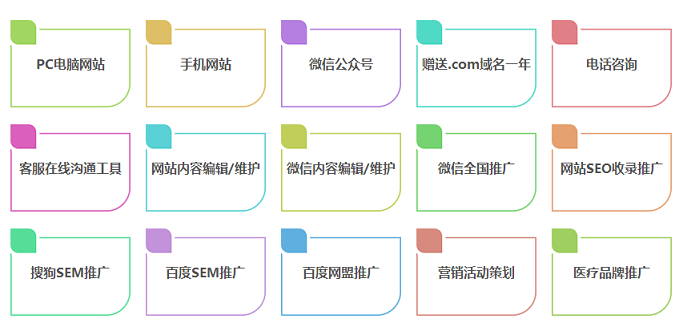
The Minkang Clinic Management Information Platform can help clinics, outpatient departments, and other medical institutions overcome brand promotion challenges through resource integration. It enables the establishment of websites accessible via PCs, mobile phones, and WeChat, leveraging internet platforms for nationwide marketing and promotion in China, allowing clinics to rapidly accumulate a patient user base and build their ownClinicBrand.
New Strategy: Centered on Minkang Clinic Cloud, Facilitating Deep Integration of Primary Care Clinics with Medical Insurance, Pharmaceuticals, and Elderly Care
In recent years, Minkang has consistently sought to boost user engagement through its “Minkang Academy” and digital media marketing channels. However, given the high barrier to entry in medical education, it has proven exceedingly difficult to enhance the clinical competencies of physicians at these clinics via online training programs.
Coupled with the persistently high costs of internet marketing, only a small number of entrepreneurs are willing to adopt this model.
Ultimately, all these issues stem from the fact that informatization is not the true pain point for clinics.
After years of exploration, Minkang has formulated a new strategic initiative called the “One Body, Three Wings Strategic Empowerment Plan,” building upon its Clinic Cloud, Minkang Academy, and new media marketing services.
“One Body, Three Wings”Plan,“All-in-One” refers to the SaaS Outpatient Cloud (comprising twelve major modules, such as electronic medical records, remote consultation, and mobile payment); “San Yi” refers to the integration of medical insurance, pharmaceuticals, and elderly care, thereby establishing R&D centers and marketing centers.
Under this strategy, Minkang leverages information technology as a platform to integrate medical insurance (including commercial insurance), pharmaceuticals, and elderly care, thereby extending the reach of clinics to surrounding residents, particularly the elderly, frail, sick, and disabled. This approach not only enables residents to experience the services provided by primary care outpatient facilities but also helps clinics realize greater value.
On December 26, 2016, the Shenzhen Municipal Human Resources and Social Security Bureau issued the latest “Administrative Measures for Designated Medical Institutions under Shenzhen’s Social Medical Insurance Program.”
“The Measures” stipulate that clinics applying for designated medical insurance provider status must “establish a medical insurance information system in accordance with the requirements for real-time settlement and supervision of medical insurance, and achieve interface integration via the medical insurance information system for real-time medical insurance transaction data, drug inventory management data (including procurement, sales, and stock), electronic medical record data, and physician information.”
Following the issuance of these Measures, Minkang swiftly initiated operations and obtained approval from the Shenzhen Municipal Human Resources and Social Security Bureau, enabling social insurance payment functionality within its clinic management software. Soon thereafter, Minkang established partnerships with over 200 primary care clinics in Shenzhen.
In this regard, Yan Biao, General Manager of Minkang, stated: “Once a clinic passes the audit, it can obtain the qualifications and license to become a designated medical insurance provider. This not only resolves the clinic’s informatization challenges but also addresses social security payment issues. For the clinic, this further enhances its brand and reputation, thereby completely eliminating ‘Illegal Clinics' hat.”
Currently, Minkang’s pricing for social security informatization, interface integration, and a series of agency services at its clinics in Shenzhen is set at three tiers: RMB 12,000, RMB 14,000, and RMB 18,000 per clinic. In other cities across China, the prices are relatively higher, at approximately RMB 80,000 per clinic.
If a city is taken as the unit, Minkang’s cost for developing medical insurance partnerships in a single city is approximately RMB 200,000. Once a city’s medical insurance policies are opened to clinics, Minkang will establish a local presence there, dispatching around six staff members, including sales representatives, business analysts, and after-sales engineers.
In Yan Biao’s words: “This is one of the most core demands for private clinics when purchasing information technology products at the current stage.”
In addition to medical insurance, Minkang also collaborates with large-scale or distinctive domesticServiceCollaborate with commercial insurance companies, such as Ping An Insurance, PICC, and Hua An Insurance.
On one hand, Minkang can partner with insurance companies to provide medical liability coverage for doctors or practitioners at clinics, thereby reducing their professional risks.
On the other hand, clinics can also act as agents to distribute commercial insurance products—such as health, critical illness, accident, and even dividend-type policies—to their existing patients. By providing high-quality health and disease insurance services, clinics can help alleviate patients’ financial concerns regarding medical treatments not covered by basic medical insurance.
Furthermore, Minkang has reached agreements with commercial insurance companies to designate certain high-quality primary care clinics as designated primary healthcare providers for these insurers, thereby helping them enhance their brand reputation.
In China, medicine and pharmaceuticals have always been intrinsically linked. With the implementation of policies such as the separation of prescribing from dispensing and the two-invoice system, the pharmaceutical distribution sector is becoming increasingly streamlined.
For primary care clinics, retail sales of pharmaceuticals have always been a significant component of their revenue streams.
At the strong request of numerous clinic clients, Minkang has partnered with several large pharmaceutical companies,Built the Yaozhigong B2B trading platform,Enable tens of thousands of grassroots clinics to achieve one-stop direct procurement of pharmaceuticals and medical supplies.
Furthermore, Minkang has partnered with numerous well-known domestic pharmaceutical companies, including Kangmei Pharmaceutical, Luye Pharma, and Xiuzheng Pharmaceutical, to explore payment models such as online payments, offline payments, and credit-term payments. Meanwhile, it plans to introduce third-party supply chain finance companies to address the funding difficulties faced by primary healthcare institutions.
Leveraging its extensive network of 18,000 clinics, the Minkang Outpatient Clinic Cloud Platform facilitates centralized online procurement and collective bidding with pharmaceutical companies, thereby enabling clinics to secure relatively lower drug purchase prices.
This approach not only provides clinic patients with direct discounts but also enables the general public to purchase affordable medications.
China’s aging population is becoming increasingly severe, yet there are very few primary healthcare institutions providing elderly care services. Therefore, it is imperative to engage a broader range of private medical institutions in delivering high-quality care to the elderly, frail, sick, and disabled.
Since the majority of national medical insurance funds are allocated to the elderly population, and supportive policies related to integrated medical and elderly care have been significantly liberalized across China, MinKang has chosen to partner with major domestic elderly care service providers. This collaboration aims to enhance information technology integration and supporting hardware services for elderly care institutions, extending even toIntegration with Medical Insurance.
Yan Biao told reporters, “When elderly users submit care requests via mobile devices, the Minkang Clinic Cloud system immediately transmits their needs to nearby primary care clinics. These clinics then provide home-based services through a competitive order-acceptance model, ensuring that seniors receive effective and timely medical, nursing, and caregiving services.”
Of course, this model can also drive patient traffic to primary care clinics and help them generate revenue.
"Continuously exploring, continuously approaching the core"
As of now, MinkangBranches have been established in six provinces: Hebei, Shandong, Henan, Sichuan, Hubei, and Hunan.。
From Minkang Clinic Cloud and Minkang Academy to services such as health insurance integration, pharmaceutical supply chain connectivity, and the integration of medical care with elderly care, Minkang has gradually identified the core needs of primary care clinics through continuous exploration.
When discussing the market landscape of clinic SaaS, Yan Biao stated: “No dominant players have yet emerged in the grassroots healthcare informatization market. Even MinKang itself covers fewer than 20,000 clinics, which is negligible within China’s grassroots healthcare system comprising nearly one million institutions.”
As a pioneer in clinic SaaS, can Minkang“One Body, Three Wings“The plan is poised to go far and succeed, which is truly exciting.”