

DXY Group Unveils Collaborative Healthcare Ecosystem at DHC Summit, Driving Win-Win Partnerships Across the Medical Industry
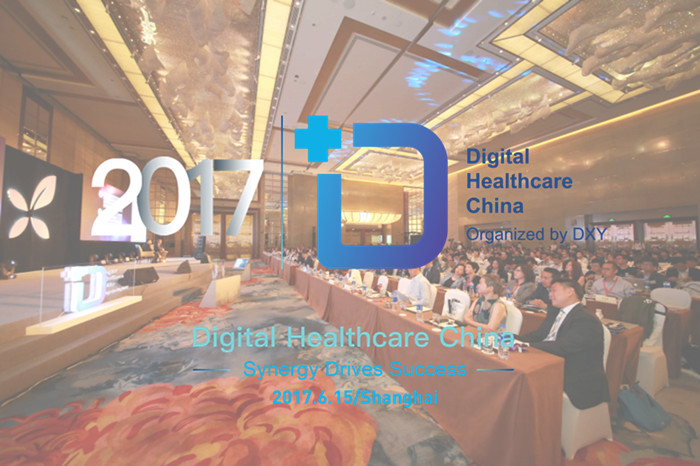
On June 15, DXY held the fourth Digital Healthcare China (hereinafter referred to as DHC) Industry Summit in Shanghai.Primarily targeting enterprises and institutions in the healthcare industry to foster interaction and exchange.
At the conference, Li Tiantian, founder of DXY, got straight to the point:
From the PC era to the mobile internet era, successful enterprises and talents have emerged continuously, with increasing support from capital and policy. However, the success rate of startups has not improved; instead, it has become increasingly difficult, as the strategies that worked in the early, unregulated days may no longer be fully applicable today.
In today’s fiercely competitive market environment, companies that compete on the strength of their teams, collaboration, and strategy stand a greater chance of success.
And this is precisely the theme of this summit—Collaboration for Mutual Win.
Through this summit, DXY also unveiled its strategic layout in physician services (“DXY Broadcast”) and patient services (“Intelligent Skin Diagnosis”), as well as a business pathway for achieving win-win collaboration by partnering with industry stakeholders.
On the patient side, driven by the “Internet Plus” model, a new patient-centric service paradigm is being embraced and implemented across the industry. Amid the rapid advancement of mobile health technologies, the healthcare sector increasingly recognizes the necessity of collaboration. How can DXY join forces with stakeholders to break down industry barriers, create synergies, and deliver high-value medical services to patients?
Regarding skin diseases, according to Dr. Yin Heng, a dermatologist at the Second Xiangya Hospital of Central South University (hereinafter referred to as "Xiangya Second Hospital"), there are four major pain points for patients seeking medical care: reliance on folk remedies, excessive concern, numerous pitfalls, and blind consultation.
Meanwhile, dermatologists face significant challenges: on one hand, the vast diversity of skin diseases, with over 3,000 types, poses a substantial burden; on the other hand, different conditions often present with similar clinical manifestations, or the same disease may exhibit varying phenotypes across different individuals, anatomical sites, and stages of progression, leading to considerable diagnostic ambiguity.
Therefore, DXY, the Second Xiangya Hospital, and Dana Technology have entered into a tripartite collaboration,New Product Launched on May 19—Developed an AI-Assisted Diagnostic System for Dermatological DiseasesThis system collects, integrates, and manages a vast repository of dermatological cases. Leveraging artificial intelligence technologies, it differentiates, identifies, and provides auxiliary diagnosis for autoimmune skin diseases, aiming to offer dermatologists a platform for continuous learning as well as an AI-assisted diagnostic tool for skin conditions.In the future, we will further deepen open collaboration with pharmaceutical companies, pharmacies, hospitals, and insurance providers to deliver a comprehensive patient service journey.
In addition to cross-industry collaborations in artificial intelligence, Li Tiantian believes that mobile health holds significant promise in the fields of primary healthcare and chronic disease management, offering integrated and continuous solutions.
Therefore, DXY, Eli Lilly China, and Tencent jointly developed the Diabetes Care and Support Program—the Eli Lilly Diabetes Youxing Care Project—which represents an innovative ecosystem in chronic disease management, enabling physicians and patients to better manage diabetes through internet-based technologies, disease education, and services.
Thomas Mickelson, CMO of Eli Lilly China, believes that serving patients—through targeted therapies, personalized support, predictable prognoses, and more convenient services—cannot be achieved in isolation; instead, collaboration is essential to build an excellent ecosystem.
On the physician side, DXY has also launched its Dingxiang Boka product. It is a data-driven live-streaming interaction tool for doctor-to-doctor and doctor-to-patient engagement.Leveraging DXY’s community of 2 million physician users, Dingxiang Boka can accurately define audience segments, map out the dissemination pathways, impact, and trends of physician brands, thereby enabling more precise outreach to target physician groups and providing strategic and decision-making support.
Why launch Dingxiang Boka and build physician IPs at this time?
Li Tiantian responded to the reporter as follows: “From the development trajectory of social media, it has evolved from early blogs and forums to online communities, and then to self-media, a process spanning just over two decades. In the current era of rapid self-media growth, different types of ‘internet celebrities’ have emerged across various platforms. The medical profession is no exception.”
In the era of the knowledge economy, Li Tiantian, founder of DXY, believes that “the influencer doctors who truly align with future trends should be those focused on knowledge sharing.”To understand the demographic characteristics and development trajectories of influencer physicians, DXY and Boston Consulting Group (BCG) jointly conducted a survey of influencer physicians in the healthcare sector, evaluating them across multiple dimensions such as influence and activity level.
Chen Baiping, a Partner and Managing Director at BCG, pointed out that influencer physicians can expand their influence by leveraging their professional expertise, unique characteristics, and digital platforms—for example, by publishing popular science articles, sharing clinical insights, and participating in online Q&A sessions. This influence can target both patient communities and fellow medical professionals.
Since its inception 17 years ago, DXY has been committed to providing better services for physicians. Leveraging its professional platform and promotional matrix, along with extensive experience in new media operations accumulated over the years, DXY can rapidly help physicians build their personal brands, achieve effective dissemination, and enhance their ability to convert brand influence into tangible value. With these resources, DXY is also well-positioned to help physicians quickly become “internet celebrities.”
Dr. Liu Guanghui, an attending physician in the Department of Endocrinology and Metabolism at Tongji Hospital, affiliated with Tongji University, is one of the beneficiaries.Having joined DXY as a fellow member as early as October 2006, he has built a high-quality physician IP through continuous learning, absorption, and output.
Liu Guanghui jokes that if he is not on DXY, he is on his way to DXY, as he has gained immensely from the platform. In his view, a physician’s personal brand is not a fleeting trend; rather, it involves continuously producing original content through lifelong learning to influence the general public and specific populations, potentially even developing into a series. This aligns with WeChat’s branding slogan: “Even the smallest individual should have their own brand.”
Dingxiangyuan Doctors’ Dingxiang Boka product is designed to cultivate more “Liu Guanghuis.”Zhang Wei, Vice President of DXY and Head of the Enterprise Business Division, pointed out that the initiative aims to help every capable and innovative physician create greater value and shine more brightly.
Dingxiang Boka will also collaborate with various industry stakeholders to jointly identify and discover like-minded physicians, delivering their content and brands to relevant audiences, while continuously enhancing operational efficiency and quality on the platform.This is the original aspiration that DXY has adhered to for the past 17 years: to help Chinese doctors achieve better professional development, which also represents the value of physician IP.
At the DHC Conference, Cheng Long, Director of the Information Research Office at the Health Development Research Center of the National Health and Family Planning Commission, delivered a keynote address. He emphasized that the development of internet healthcare should focus on eight key words: “innovation-driven” and “risk control.” Innovation has always been the driving force behind development, ranging from individual companies to the entire nation.
In the process of innovative development, risks are inevitable; mastering the balance between the two is a profound discipline and a subtle art.This is particularly true for new drug development, which requires in-depth communication and collaboration with physicians.
James Yau, Head of Excellence in Operations and Marketing at UCB China, has observed that physician behavior is undergoing a transformation in the internet era,This shift has necessitated corresponding changes in pharmaceutical companies’ communication strategies and tactics toward physicians, transitioning toward personalized and customized engagement.
DXY, which has long served physicians, possesses a profound understanding of changes in physician behavior and transforms these physician data into visible digital insights. With four pillars—customer segmentation, content development, multi-channel communication, and continuous optimization of the overall model—it helps drive marketing models toward precision and predictability. As a result, it has played a key role in helping UCB China refine its strategy.
Digitalization has opened new doors for pharmaceutical companies’ marketing, but the sustained openness of this door relies on the support of information technology teams.“For technology to be implemented, it must be digitized,” emphasized Lu Yong, CIO of Takeda Pharmaceutical Asia-Pacific.Takeda Pharmaceutical leverages its N-Cube strategy to integrate digitalization and technology, delivering greater service value.
Patrick Nowlin, Head of Sanofi China’s Diabetes Business Unit, offers a distinct perspective on digital strategy: leveraging digital platforms to deliver enhanced services and education to customers, while collaborating with third parties to innovate value-based platforms that empower physicians to better manage their patients.This is a disruptive innovation under the guidance of traditional values. For example, the collaboration between Sanofi and DXY not only segmented customers but also utilized an online-to-offline (O2O) approach for precision marketing.
Google AlphaGo’s stunning performance in the game of Go has made artificial intelligence a headline-grabbing buzzword this year. Verily, a company under the same Alphabet umbrella as Google, aims to make significant strides in the healthcare sector.
Yang Yang, Head of Greater China at Verily, stated that Verily’s goal is to leverage global healthcare data and innovate medical technologies to empower health with the best solutions. To achieve this goal, the first step is to collect and organize relevant data; the second is to analyze the data to identify key insights and determine methods for interpretation; and the third is to feed these insights back into the healthcare industry for practical application.
In Verily’s view, artificial intelligence can effectively analyze data and extract useful information.Applications in the medical field, such as automated kidney disease assessment, involve using deep learning technology to develop algorithms that identify key pathological features of kidney disease, with potential future applications in the treatment of diabetic nephropathy.
Digitalization-driven innovation encompasses not only innovations in products and business models, but also, more importantly, innovations in disease management models.“In the future, we look forward to collaborating with more stakeholders in the healthcare industry for mutual benefit and win-win outcomes,” said Li Tiantian.