

Shengnuo Yijia Files IPO Prospectus: The Pioneer Dominating 70% of China's Critical Illness Medical Travel Market

Saint Lucia
Hospital Management Consulting Service Provider

HongShan
Business Consulting, Enterprise Management Consulting Investment Institutions
Saint Lucia, the pioneer that took China’s cross-border healthcare industry from zero to one, is a name frequently cited by practitioners in the field. As the first Chinese official member of the Medical Tourism Association of the United States, having secured Series A investment from HongShan (Sequoia Capital China), winning awards at the “Healthy China Annual Gala” for four consecutive years, and being listed among the “Ultimate Luxury Goods” favored by high-net-worth individuals in the Hurun Report, Saint Lucia is adorned with numerous honors and accolades. Yet, while brimming with confidence in its future, the company remains highly self-critical and far from complacent.
“To be honest, we have not yet encountered any strong direct competitors,” said Cai Qiang, founder and chairman of Saint Lucia. “But we are aware that such a day will eventually come, and we are prepared for it. After all, even KFC and McDonald’s face competition!”
“We can give ourselves no more than 75 points at most,” Cai Qiang later remarked, “as there is still substantial room for improvement in terms of professionalism and attention to detail across all aspects.”
In fact, this is VCBeat’s (WeChat ID: vcbeat) first exclusive interview with Saint Lucia, although both parties have long been aware of each other. We are curious about how this pioneer in the cross-border healthcare industry was founded and grew to its current scale. Through this interview, VCBeat has gained a deeper understanding of the wisdom behind this enterprise, which we interpret here.
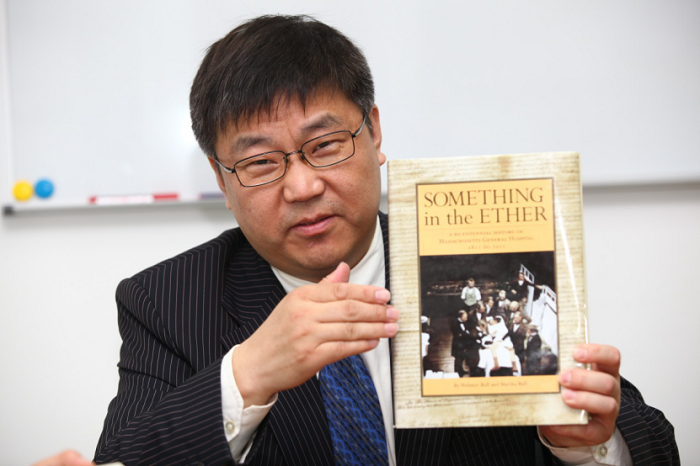
Cai Qiang, Founder and Chairman of Saint Lucia
The Essence of Cross-Border Healthcare: The Principle of Potential Difference
Cai Qiang holds a Ph.D. in physics. “At that time, my research focused on disciplines such as quantum mechanics. This academic experience instilled in me a critical way of thinking, namelyPrioritizing Fundamental Principles. Other external voices are not actually that important.”
This is why he chose to embark on successive entrepreneurial ventures after graduation, becoming one of the earliest pioneers in overseas study consulting in China in 1997, and later founding Saint Lucia.
In 2001, Cai Qiang immigrated to Australia with his family, and their second child was born there. He witnessed firsthand the stark differences in maternity care environments between China and abroad. When his eldest son was born in China, he was not allowed to be present in the delivery room. In contrast, when his wife gave birth to their daughter in Australia, the doctors not only encouraged him to attend the delivery but also prepared a camera in advance to capture the moment of the baby’s birth. Reflecting on this disparity in medical services, Cai Qiang remarked that while countries like Australia may not possess the world’s most advanced medical capabilities, they far surpass China in terms of patient-centered service.
He immediately recognized it as an opportunity. At that time, there was no organization in China capable of facilitating overseas medical treatment for patients, so Cai Qiang decided to establish one himself. In 2009, he returned to China to begin preparations. Typically, many individuals conduct extensive market research when entering a new field, but Cai Qiang did not, because cross-border healthcare was not yet a defined market at the time, rendering such market research irrelevant.
“My market research basically amounted to asking a close friend, who is a chief physician, whether there was any demand for sending patients abroad for medical treatment. He told me it was a no-go.” This friend retorted, “With health insurance coverage in China and the exorbitant cost of medical care overseas, who would go abroad for treatment?”
But Cai Qiang still decided to go ahead. He believed that,Just as electric current flows from high potential to low potential, demand will inevitably arise wherever there is a gap in medical capabilities between domestic and international markets.. After extensive communication and coordination, and upon securing referral authorizations from several renowned affiliated hospitals of Harvard Medical School, the team officially registered and established Saint Lucia in Beijing in 2011.
In its first year, Saint Lucia secured only two clients. The second year saw slight improvement, with seven clients, but by then the company had exhausted its RMB 6 million in registered capital. As partners proposed withdrawing their investments, Cai Qiang faced a difficult choice: continue or give up. Ultimately, he bought out his partners’ shares, remaining steadfast in his vision for the cross-border healthcare industry and bearing the substantial financial pressures of operating the business.
“We often joke that we spend the equivalent of a Mercedes-Benz every month, yet don’t even earn enough to buy a bicycle.” However, in the course of serving just a handful of patients, Cai Qiang witnessed firsthand the hope that cross-border healthcare brought them, further solidifying his confidence in the industry’s potential.
At that time, Saint Lucia’s goal still seemed distant—saving 1,000 patients’ lives within 10 years. Unexpectedly, this target was far surpassed within five years, and now theirAnnual referral volume reaches thousands, capturing over 70% of the domestic market share for outbound medical care for critically ill patients (excluding self-arranged patients)., and has already achieved break-even.
Defining Serious Healthcare: Clarifying Positioning and Professional Strengths
Cai Qiang was the first to propose “Serious Healthcare“individuals who embrace this concept. ‘Serious’ means focusing exclusively on cross-border medical care for patients with critical illnesses, while excluding services such as cosmetic surgery, sheep placenta therapy, and overseas childbirth; furthermore, it involves collaboration solely with the world’s most premier medical institutions.”
Positioning itself in the realm of serious medical care was the first step for Saint Lucia to establish its competitive advantage. It is precisely because of this strategic focus that the company has accurately penetrated major and complex disease areas such as oncology, cardiovascular diseases, neurological disorders, and rare diseases, gradually becoming the Chinese cross-border healthcare enterprise with the largest number of partnerships with top-tier overseas medical institutions.
Professional services aligned with the positioning of serious medical care constitute the second step in building their competitive advantage. Their early entry into the market has also allowed them to accumulate a substantial number of patient case studies, fostering a deeper understanding of the processes involved in seeking medical treatment abroad. Currently, Saint Lucia, headquartered in Beijing, has established branches in Shanghai, Guangzhou, Hangzhou, Ningbo, Wenzhou, and Shenzhen, as well as in the United States and Japan. Its cross-border healthcare services cover countries including the United States, the United Kingdom, Germany, and Japan, and it has opened multiple overseas customer service centers. “For each individual patient, we generate a professional analysis report recommending the most suitable country, hospital, and physician based on their specific condition,” said Wang Shun, Chief Medical Officer of Saint Lucia.
The professionalism and meticulousness of the service are evident in its detailed offerings. Prior to departure, a professional medical translation team first organizes and translates the client’s medical records, condensing years or even decades of history into a standardized referral summary of just a few pages. Subsequently, the company provides visa assistance, secures cost estimates and invitation letters from overseas hospitals, and facilitates advance payment of the estimated costs. Finally, clients are granted a 48-hour cooling-off period; if, after careful consideration of the pros and cons, they decide against seeking medical treatment abroad, they may receive an unconditional refund.
After arriving abroad, dedicated medical and daily living assistance teams provide comprehensive support to patients throughout their overseas medical journey, including interpretation, medical navigation, and lifestyle services. Wang Shun informed us that Saint Lucia’s overseas offices are located near patient accommodations, and the company regularly organizes various excursions, thereby supporting patients’ treatment and recovery from multiple angles.
In this lengthy service chain, the devil is in the details. During an interview, VCBeat raised a question: What do you believe is the core reason for Saint Lucia’s emergence as an industry leader? Founder Cai Qiang stated that the primary factor was neither effective marketing and promotion nor the first-mover advantage of being a pioneer in cross-border healthcare; rather, it was the expertise accumulated over years of service delivery.Professionalism in Every Detail Wins Over Users。
In addition to its clients, another admirer of Saint Lucia’s professionalism is its investor, HongShan. Zhou Kui, a partner at HongShan China Fund, stated that prior to investing in Saint Lucia, the team conducted thorough due diligence, even dispatching specialists to conduct on-site visits to its overseas partner hospitals. After gaining a comprehensive understanding, they highly recognized Saint Lucia’s philosophy and execution capabilities, establishing a close partnership in the cross-border healthcare sector.
Mode: Brand Building + In-depth Business Exploration
An analysis of Saint Lucia’s business model must be grounded in the user reputation it has accumulated over the years. “Although we have advertised on airplanes and engaged in certain media promotions, in reality, there are60% of clients are referred by existing customers..” From this perspective, a company’s core value always lies in the value it delivers to its customers, and consumer recommendations are the most effective form of advertising.
Corporate brands are born from customer trust. When it comes to seeking medical treatment abroad or “serious healthcare,” the first name that often comes to mind is Saint Lucia. Moreover, our understanding is that Saint Lucia has employed a variety of strategies to build its brand.
First, Saint Lucia'sNumerous office locations are situated in bustling business districts with convenient transportation and well-equipped facilities., such as Beijing’s Oriental Plaza, Shanghai’s Plaza 66, and Guangzhou’s International Finance Centre. The rationale behind this strategy extends beyond facilitating client consultations; it also serves as a form of brand building. By positioning ourselves in the most prominent and prime locations, we underscore our commitment to premium services and demonstrate our capability to deliver the highest quality of care.
Secondly, given that seeking medical treatment abroad is often a patient’s last resort, the gravity of such a decision is self-evident; people would not readily entrust their lives to an obscure company. Saint LuciaIt has been featured in multiple reports by China Central Television (CCTV) and the People's Daily, while much of the content on its official website further demonstrates its strength and resources.—Referral authorizations from major authoritative hospitals abroad, successful treatment cases for various diseases, and more. Even Lang Yongchun, a former anchor of Xinwen Lianbo (CCTV News Broadcast), hit it off with Cai Qiang by chance and became a strategic advisor and “super spokesperson” for Saint Lucia.
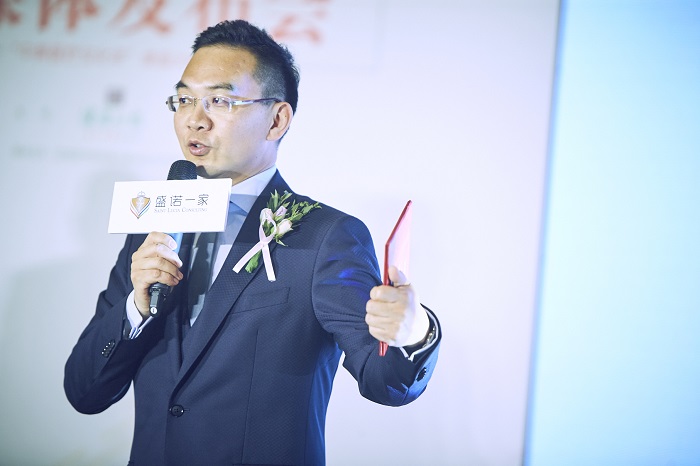
Former Editor-in-Chief of Xinwen Lianbo, Lang Yongchun, Appointed as Strategic Advisor to Saint Lucia
Cai Qiang emphasized that the keyword for the brand is trust. “Our fee structure has always been transparent. For items such as airfare and accommodation, we can assist with placing orders, but we never take any money from these transactions; all payments, additional charges, and refunds related to treatment are made directly by patients to the hospital, without us handling the funds,” he said. Saint LuciaService fees only, no hospital kickbacksThis commitment fosters greater customer trust in their brand, and more importantly, stems from their unwillingness to violate regulations for the sake of profit and incur a notorious reputation.
In this interview, Cai Qiang also revealed to VCBeat that Saint Lucia had previously focused on service-oriented, asset-light operations, but now they are alsoConsider establishing a physical medical institution in China“We are still in the planning stage, so it is not convenient to disclose specific details. However, what can be said is that this institution will certainly inherit Saint Lucia’s ‘serious medical care’ DNA and will collaborate with top-tier medical resources, allowing us to fully leverage the high-quality medical resources we have accumulated.”
Here, we may venture some bold conjectures: First, the entity may prioritize establishing telemedicine networks with top-tier overseas hospitals. Second, it may integrate with its existing operations to create a one-stop service platform for patients with critical illnesses, thereby facilitating treatment and outbound medical referrals for domestic patients. Third, Cai Qiang has stated that cross-border healthcare services can flow both outward and inward; in the near future, more foreign patients may choose to seek medical care in China, and this physical healthcare institution may even extend its services to overseas patients.
In addition to providing overseas medical services for high-net-worth individuals, Saint Lucia has also decided to make the latest international medical knowledge accessible to the general public. Recently, they launched a new project—Lung Cancer Helper App, making it China’s first app specifically designed to provide professional health education and reference cases from similar patients for individuals with lung cancer. This project carries a public welfare mission: although China is poised to become the country with the highest number of lung cancer cases worldwide, it has long lacked an authoritative and reliable lung cancer community.
“In the United States, every hospital has a public education library freely accessible to patients, with content that even includes guidance on how to inform loved ones of a cancer diagnosis; yet our patients struggle to obtain accurate disease-related knowledge,” said Cai Qiang. He stated that he has no intention of pursuing any other career in his lifetime, hoping instead to help more patients gain access to trustworthy medical channels and healthcare information. This humanistic commitment is perhaps a key reason why Cai Qiang became involved in cross-border healthcare, and it remains the enduring driving force behind this medical services enterprise.