

China Launches C-DRG Pilot Program Led by Zhang Zhenzhong: A National Standard for Diagnosis-Related Group Payment Reform
In June, public hospitals in three cities—Shenzhen (Guangdong Province), Karamay (Xinjiang Uygur Autonomous Region), and Sanming (Fujian Province)—along with three provincial- or municipal-level hospitals, namely the Union Hospital Affiliated to Fujian Medical University, Fuzhou First Hospital, and Xiamen First Hospital, announced the simultaneous launch of DRG pilot programs.
As one of the 70 key healthcare reform tasks for 2017 designated by the State Council, the DRG payment and reimbursement reform was elevated to the level of national strategy for the first time.
At the launch meeting of this pilot program, the National Health and Family Planning CommissionHonorary Director, Health Development Research CenterZhang ZhenzhongRegarding"Design and Implementation of C-DRG Payment Standards"and“Principles and Key Points for the Development of Implementation Plans by Pilot Cities”, conducted an internal training session.
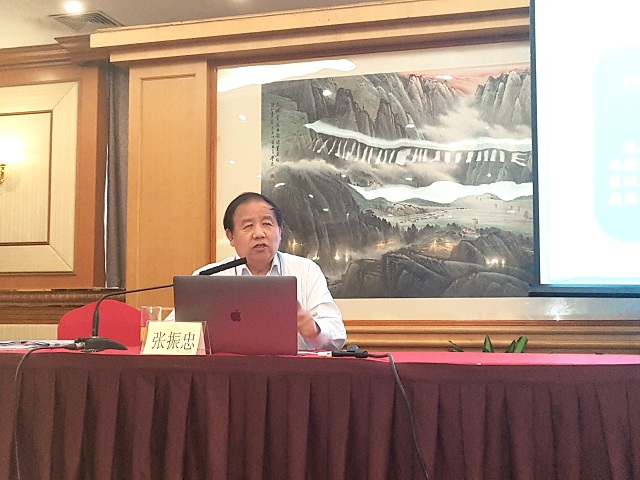
Zhang Zhenzhong, Honorary Director of the Health Development Research Center under the National Health and Family Planning Commission
The following training materials, curated by VCBeat, are provided for reference and study by healthcare professionals:
Core Content:
I. What is DRG?
II. Why Implement DRG?
3. What is C-DRG?
IV. What is the basis for C-DRG-related grouping?
V. What are the six major characteristics and five major principles of C-DRG?
1. What is DRG?
What we often refer to asDRGs: Actually, a Common-Sense Error.Nowadays, when people discuss DRG, they often append a “s”. However, none of the document standards and specifications issued by countries around the world today contain “s”. In fact, only when discussing Diagnosis-Related Groups (DRGs),involvingDRG Groups,willPlus“s”. All discussions on the system, design, and management of DRG should not include “s”。
DRG, short for "Diagnosis-Related Groups," is based onSeverity of Illness in Hospitalized Patients、Complexity of Treatment Methods、Degree of Resource Consumption (Cost) in Diagnosis and TreatmentandComorbidities, complications, age, hospitalization outcomes, and other factors, patients are classified into various "Diagnosis-Related Groups (DRGs)." Prices, charges, and health insurance payment standards are determined on a bundled basis per group.
Under this bundled payment model, the medications used by patients,Medical ConsumablesandExaminations and TestsAll become costs of diagnostic and treatment services, rather than means for hospitals to generate revenue.
Following the implementation of the Diagnosis-Related Groups (DRG) payment system, it not only serves as an effective guide for standardizing medical practices but also acts as a strategic directive for hospital operations. DRG plays a significant role in fostering cost-awareness among healthcare professionals, preventing over-treatment, excessive diagnostic testing, and over-prescription, thereby promoting greater operational efficiency in hospitals.
Globally, particularly in the United States, Australia, and Europe, DRG-based payment has become a widely adopted model, yielding favorable outcomes over its long-term implementation.
II. Why Implement DRG?
For a long time, fee-for-service has been the primary method for hospital billing and health insurance reimbursement in China. Currently, subsidies from various levels of government finance account for only a small portion of the actual operating expenses of public hospitals at the county level and above in China.8.22%。The remaining compensation for hospitals is primarily derived from their own medical service activities.
Furthermore, public hospitals are subject to strict government-set pricing for medical services, with price levels far below the actual cost of care. These prices fail to reflect the labor value of healthcare professionals and are insufficient to cover hospital operational costs.
Meanwhile, the absence of a clear application management mechanism for pharmaceuticals and medical consumables has led to revenue from these items becoming the primary means of hospital compensation. This is the fundamental reason behind the formation of the “drug-revenue-subsidized healthcare” compensation model.
Under this compensation mechanism, medical institutions adopt the "fee-for-service" payment model.Inducing patients to consume, prescribing excessively large doses, overusing high-value consumables, and ordering excessive tests and examinationsIt has become a concentrated manifestation of hospitals’ profit-seeking behavior, and the trend is intensifying.
These mechanisms and tendencies have led to an increase in the sales volume of pharmaceuticals and medical consumables, as well as a rise in the utilization of diagnostic and laboratory tests, driving a rapid escalation in healthcare costs. This has placed an unsustainable burden on health insurance funds and increasingly strained the financial capacity of residents to afford medical care. The implementation of Diagnosis-Related Group (DRG)-based bundled payment systems is one effective approach to addressing these issues.
III. What is C-DRG?
The full name of C-DRG is the “National Specifications for Diagnosis-Related Group (DRG)-Based Payment and Charging.” It is a DRG-based payment and charging system with Chinese characteristics, developed over a decade by a national large-scale research task force established by the Health Development Research Center (hereinafter referred to as the “Research Center”) under the commission of the Department of Finance of the National Health and Family Planning Commission.
C-DRG is not a simple grouping or service, but rather a comprehensive system. This system consists ofOne Standard System, Three Basic Tools, One Cost Platform, and One Set of Principles for Charging and Payment PoliciesComposition, abbreviated as the “1311” system.
Among these, the standardized system primarily refers to the “National Specifications for Diagnosis-Related Group (DRG)-Based Payment and Charging,” which consists of three parts: the “Grouping Volume,” the “Weighting Volume,” and the “Payment and Management Volume.” Notably, when conducting DRG grouping, unified clinical diagnostic terminology is used for case classification, rather than disease classification codes.
Three foundational tools, including "Disease Classification and Codes (GB/T 14396-2016), i.e., the Chinese National Standard Version of ICD-10," "Standardized Terminology for Clinical Disease Diagnosis in China," and "Chinese Classification and Coding of Healthcare Services (CCHI)";
The "National Medical Service Price and Cost Monitoring and Research Network" serves as a unified cost platform. It has three key features: First, it covers 1,268 hospitals across 31 provinces, municipalities, and autonomous regions in China. Second, it functions as a platform for the collection and management of price and cost data. Third, it acts as a data monitoring platform for medical service prices, while also providing information support for DRG grouping and the determination and revision of relative weights.
One principle of payment and collection policy, emphasizing "rate adjustment and payment and collection policy principles," with pricing determined through negotiations among relevant parties based on local conditions.
In addition, C-DRG is committed to establishing a series of nationally unified data classification and coding systems for the payment and management of healthcare institutions. For instance, the drug coding system has been operational on the National Health and Family Planning Commission’s centralized bidding and procurement platform for nearly one year.
The coding system for high-value medical consumables is still under development, with preliminary completion achieved for three product categories. The coding for ultimate cost accounting units has been implemented and promoted within the "China Healthcare Service Price and Cost Monitoring and Research Network" to ensure comparability and analysis of cost accounting units across all medical institutions.
IV. What is the basis for C-DRG-related grouping?
Who specifically is involved?
1. It should be correlated with the severity of the disease;
2. It should be correlated with the complexity of disease treatment methods;
3. It must be correlated with resource consumption (i.e., costs) during the treatment process. The research center organized more than 700 clinical experts across China to standardize and unify the disease diagnosis names currently used in clinical practice in China. Initially, a working group based in Beijing developed the standards, which were then reviewed by demonstration experts from across the country. The resulting unified disease diagnosis names for clinical use are applied to DRG grouping.
Among these, diseases requiring hospitalization (primary diagnosis) are categorized into23 Groups, and in principle, cross-group disease classification is not permitted. Subsequently, they were categorized according to different treatment methods intoThree Major Categories:
① Surgical procedures in the operating room (including various endoscopic surgeries);
② Surgical treatments performed outside the operating room (including endoscopic interventions, and physical device-based therapies other than radiotherapy, such as laser, radiofrequency, ultrasound, and extracorporeal shock wave lithotripsy);
③ Pharmacotherapy and radiotherapy in internal medicine.
After categorizing diseases (primary diagnoses) into three major categories, they are further classified based on disease severity, and finally divided into484 Basic Groups. Subsequently, based on other factors influencing resource utilization, such as valid comorbidities and complications, age, and other variables, each base group is further stratified into 1 to 3 subgroups, ultimately resulting in 958 subgroups.
Why not group by ICD-10?
The ICD system is a disease classification and statistical framework owned by the World Health Organization (WHO) as intellectual property, which permits countries to localize it for their own use. This system categorizes diseases based on their nature, with each code representing a category of diseases rather than a single specific disease.
Due to the ICD systemIt cannot be accurately mapped to the resource consumption associated with a specific disease and its corresponding treatment., In view of the above reasons, the tool used in C-DRG grouping is the "disease diagnosis terminology" (i.e., disease diagnosis names) used by clinicians to diagnose diseases, rather than ICD-10.
V. What are the six major characteristics and five major principles of C-DRG?
Six Key Features
1. The research objectives are clearly defined, serving medical service pricing and health insurance payment services;
2. It possesses independent intellectual property rights in China and utilizes self-developed tools;
3. It is a cross-classification system primarily based on clinical similarity, supplemented by data validation;
4. It collected1,268 Hospitals Across Chinaof cost and expense data;
5. It is a hybrid payment method that covers all diseases, primarily based on Diagnosis-Related Groups (DRGs) for inpatient care, with multiple bundled payment models coexisting;
6. It features a nationally unified grouper, which will be provided free of charge to health and family planning authorities, medical insurance administration departments, and hospitals across China in the future.
Five Major Principles
1. Establish national unified grouping and determine the relative weight values for the national unified DRG groups;
2. Regions implementing C-DRG shall specifically determine the rates and prices.
3. Establish stringent management systems to prevent reductions in services, declines in clinical quality, and compromises in the quality of pharmaceuticals and medical consumables.
4. Establish systems and methodologies to incorporate medical technologies and products conducive to technological innovation into the DRG system, thereby enabling such innovations to benefit patients;
5. Establish a rigorous regulatory framework with clear incentives and penalties.