

Eight Pioneering Cybersecurity Firms Leveraging Blockchain, AI, and Cloud to Secure Global Healthcare Data
In recent years, with the advancement of information technology, traditional medical record-keeping methods have been gradually replaced by big data, electronic health records (EHRs), and electronic medical records (EMRs). Meanwhile, as the Internet of Medical Things (IoMT) rapidly develops, remote patient monitoring technology is set to become the mainstream of future healthcare systems. For instance, connected cardiac monitors, implantable sensors, and wearable devices are increasingly transforming the way patients receive care by enhancing early disease prevention and diagnosis.
Technological advancements have also brought significant challenges, with healthcare institutions worldwide becoming prime targets for cyberattacks. For instance, during the recent Bitcoin ransomware incident, the WannaCry ransomware infected systems in 99 countries globally, including China, causing substantial losses. The UK’s National Health Service (NHS) was among the first to be attacked, resulting in system outages at more than 40 hospitals, cancellation of scheduled surgeries, diversion of ambulances to other facilities, and payment of hefty ransoms.
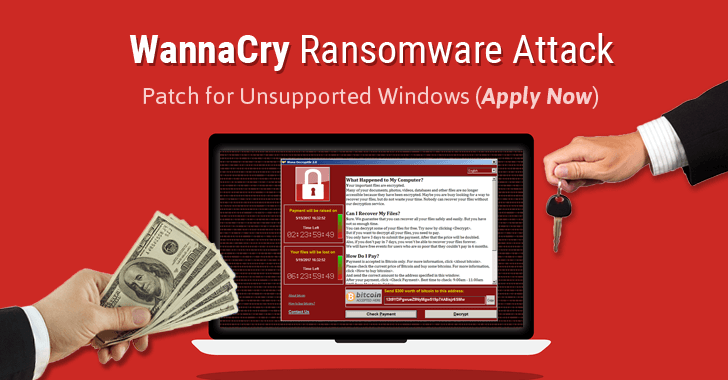
This ransomware incident has sounded an alarm for healthcare institutions worldwide, making medical information security an urgent issue to be addressed. Whether it is email fraud, cloud sharing and loss of mobile devices, or malicious attacks by hackers, they all bring serious financial and reputational losses to healthcare institutions.
Moreover, identity theft and medical information theft resulting from healthcare data breaches not only cause financial and emotional harm to patients but also directly threaten their lives. While this incident may involve the loss of patients’ health data, the next could see life-sustaining devices compromised or sabotaged, potentially leading to irreversible tragedies.
Consequently, an increasing number of cybersecurity companies are prioritizing the medical information security market and launching a variety of healthcare data security solutions.According to a Grand View Research report, the global healthcare cybersecurity market is projected to reach $10.8 billion by 2020.
Who are the companies specializing in cybersecurity for healthcare information networks?VCBeat (WeChat: vcbeat)A compilation of 121 companies worldwide providing medical data security services, with eight distinctive firms selected for feature coverage. These enterprises are leveraging AI, blockchain, and cloud security technologies to address healthcare information breaches.
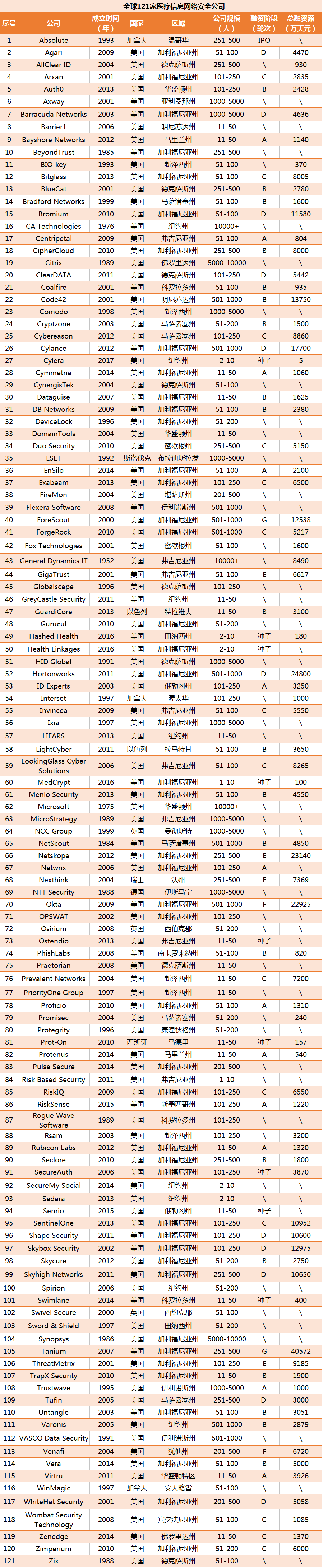
121 medical information cybersecurity firms, with 109 in the United States alone
As we can see, the majority of companies are from the United States, totaling 109. Additionally, internet companies in countries such as the United Kingdom, Canada, Switzerland, and Israel are also beginning to prioritize medical information security.
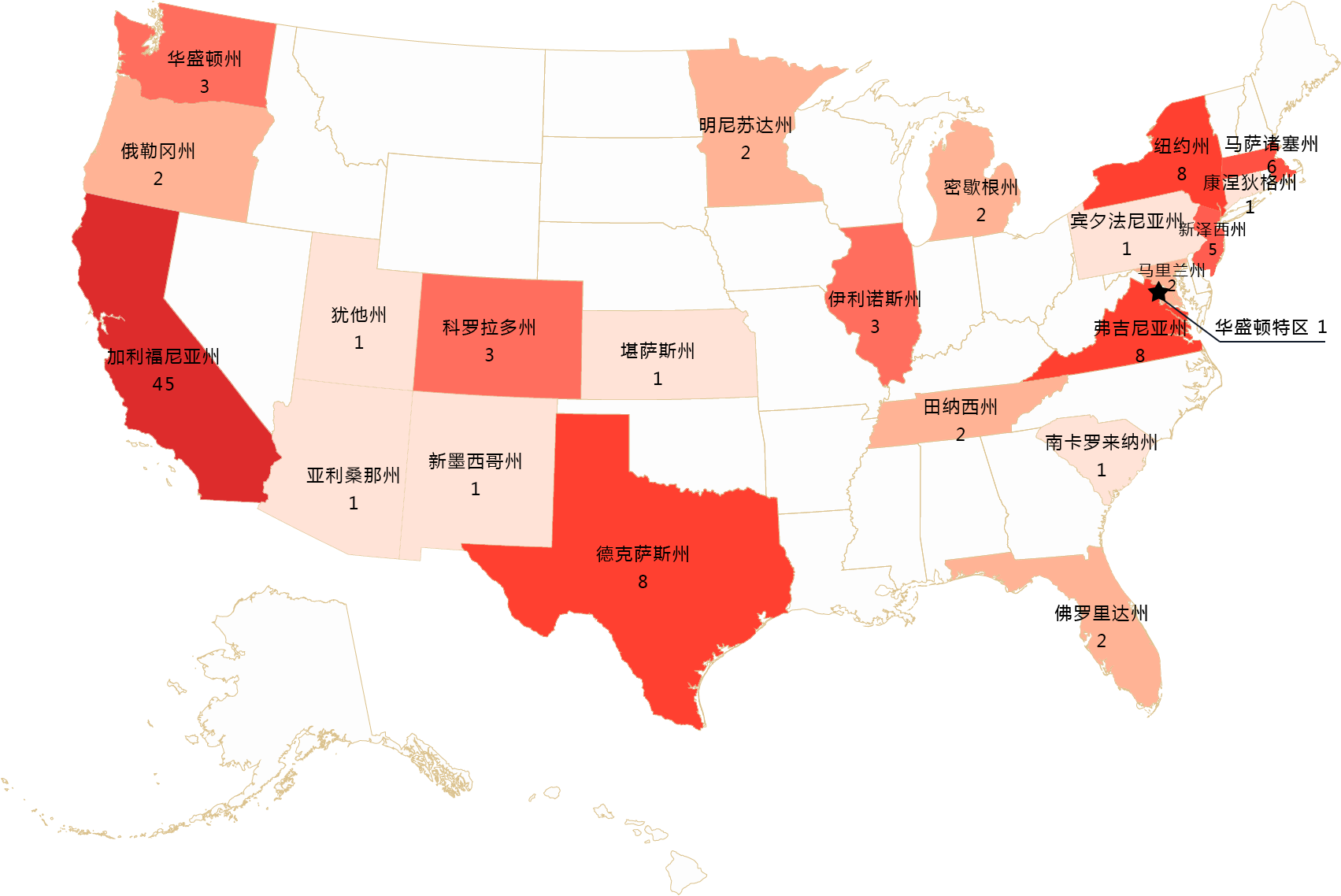
Geographic Distribution of 109 Healthcare Cybersecurity Companies in the United States
An analysis of the geographic distribution of these 109 U.S. companies reveals that they are primarily concentrated in California (45 companies), Texas (8 companies), Virginia (8 companies), New York (8 companies), and Massachusetts (6 companies). What drives this distribution pattern? California is home to the largest and most leading-edge technology companies, anchored by San Francisco; Texas serves as a major hub for technology research and development; and the eastern states benefit from the economic and policy advantages of New York City and Washington, D.C. Compared to other regions, healthcare and financial institutions in these states have greater demand for data security, leading to a higher concentration of cybersecurity firms specializing in this area.
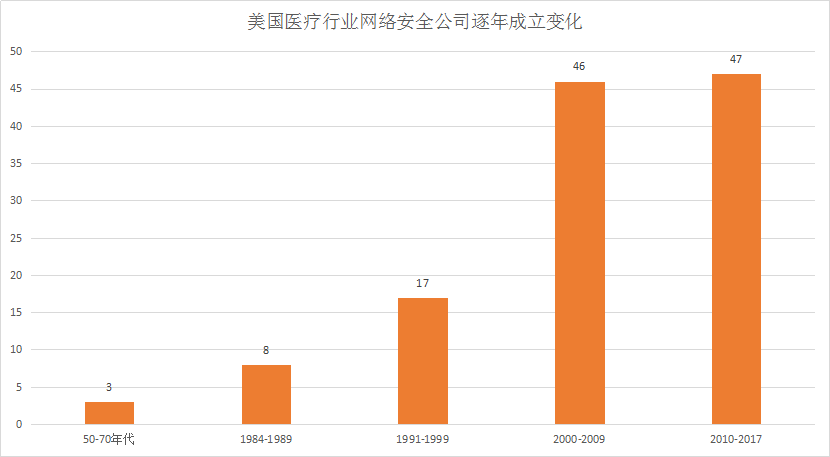
Furthermore, an analysis of the founding years of these U.S. companies reveals slow growth from the 1950s to the 1970s, with only three enterprises established during that period. The number began to increase gradually in the 1990s, and the most rapid growth occurred after 2000, with 46 new data and cybersecurity companies founded between 2000 and 2009. Since 2010, the number of U.S. data and cybersecurity companies has shown steady growth, with a total of 47 enterprises established from 2010 to the present. This trend indirectly reflects the development of internet healthcare in the United States; in particular, the rapid expansion of internet healthcare in recent years has led to a growing demand for medical information security.
These 8 Companies Provide AI, Blockchain, and Cloud Security Solutions to Healthcare Institutions
The advancement of information technology has led to greater data mobility. Patient health data recorded by wearable devices or implantable sensors are transmitted via the Internet from the device end to PCs or mobile terminals (apps), and finally uploaded to the cloud for storage. While this facilitates data storage and retrieval, it also increases the risk of data breaches. Every step—from data recording and transmission to storage—can potentially become a target for cyberattacks.
To enhance data security and strengthen risk management, these 121 companies have developed various software solutions and tools aimed at mitigating cyberattacks and security risks. Some leverage endpoint security software, others utilize blockchain technology, while still others employ AI and cloud security technologies to help healthcare institutions address vulnerabilities in medical information security. Among them, eight companies deserve particular attention.
Founder:Stephen Midgley、Errol Olsen
Major Investment Institutions:Palisade Systems、LiveTime Software

Absolute primarily provides near real-time security vulnerability remediation, itsSelf-Healing Endpoint Security Technology, enabling IT personnel to maintain control over devices and data. Absolute’s cloud-based visualization platform allows healthcare institutions to perform remote IT asset management, ensuring the security of medical information and safeguarding the privacy of patients and healthcare professionals.
Absolute’s flagship product is its Device & Data Security (DDS) solution. By combining the DDS console with self-healing endpoint security technology embedded in firmware, DDS ensures that data cannot be tampered with or deleted. Additionally, DDS provides robust visibility and near-real-time remediation capabilities to safeguard endpoint devices and data stored on computers or in the cloud.
Absolute’s Computrace (computer theft tracking service program) software has been embedded into the BIOS of computers by globally leading enterprises such as Dell, HP, Lenovo, MPC, Toshiba, and Fujitsu to enhance computer security.
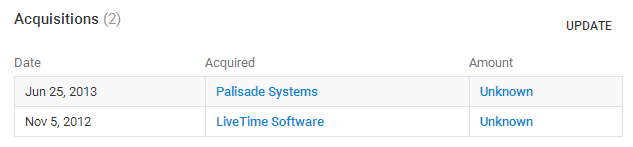
Funding Status:Absolute went public on September 29, 2000, and acquired LiveTime Software and Palisade Systems in 2012 and 2013, respectively.
Founder:Chris Bowen, Darin Brannan, and Carl Kunkleman
Major Institutional Investors:Excel Venture Management, Flare Capital Partners, Heritage Group, HLM Venture Partners, etc.
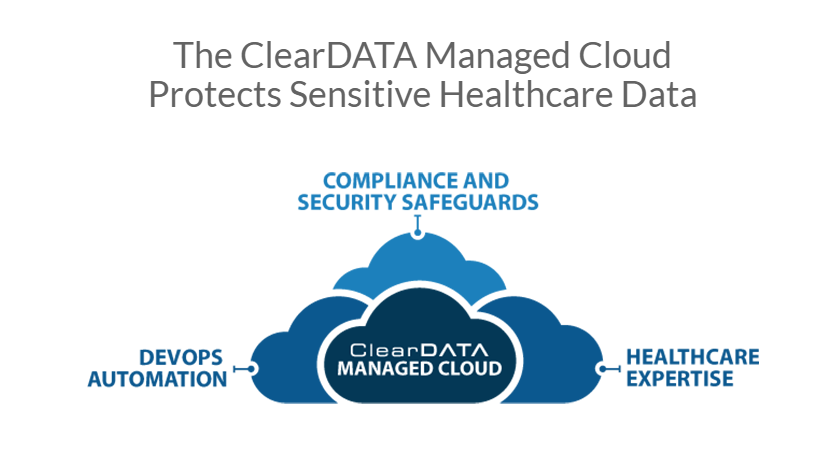
ClearDATA is a healthcare cloud computing and information security service provider, equipped with specially designed DecOps automation technology, which can be regarded asAWS for Health. The platform currently provides HIPAA (Health Insurance Portability and Accountability Act)-compliant medical data management services to over 350,000 healthcare professionals, including data hosting, off-site backup, disaster recovery, medical image backup and storage, and medical information security.
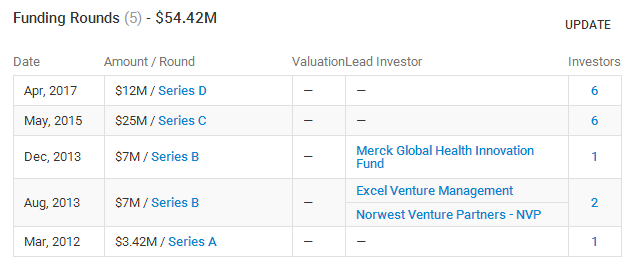
Financing Status:ClearDATA has completed a total of five funding rounds, with the cumulative amount raised reaching $54.42 million to date. The most recent round occurred in April 2017, when ClearDATA closed its $12 million Series D financing.
Founder:Dylan Anderson
Major Investment Institutions:BlueCross BlueShield Venture Partners,Peloton Equity,Trident Capital Cybersecurity
ID Experts primarily provides innovative software and services to protect data privacy, prevent fraud and identity theft, and offer recovery services for victims of identity theft. Additionally, payers utilize this solution to reduce medical fraud and avoid medical identity theft. ID Experts’ primary clients include government agencies, enterprises, healthcare organizations, financial institutions, and higher education institutions.
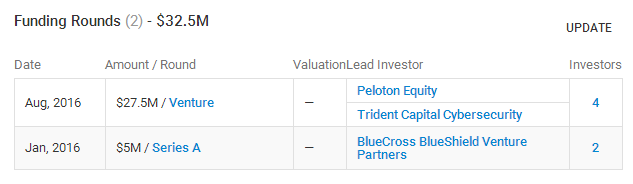
Financing Status:ID Experts primarily completed two rounds of financing, in January and August 2016, respectively. To date, the company has raised a total of $32.5 million.
Founder:Stuart McClure、Ryan Permeh
Key Investment Institutions:Blackstone, Capital One Growth Ventures, Dell Ventures, DFJ Growth, Fairhaven Capital Partners, Khosla Ventures, etc.

Cylance is the first company toArtificial Intelligence, scientific algorithms andMachine LearningA cybersecurity company dedicated to improving how enterprises, governments, and end-users proactively address cybersecurity challenges. Leveraging advanced mathematical processing, Cylance can rapidly and accurately distinguish between safe and threatening elements, going beyond simple blacklisting or whitelisting. By combining complex mathematics and machine learning with a unique understanding of hacker mentality, Cylance provides users with technological and service support to truly predict and prevent advanced threats.
Cylance’s AI-powered endpoint detection and response solution can effectively predict and mitigate cyberattacks. Designed to safeguard the entire healthcare infrastructure, the product operates on Microsoft Windows and Mac OS X and integrates with existing security information and event management (SIEM) platforms.
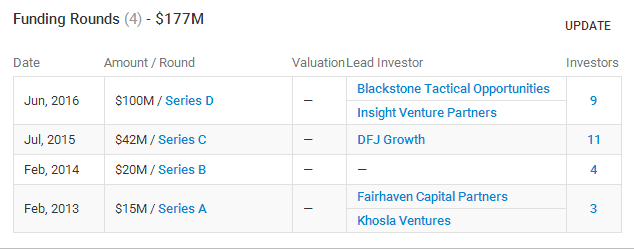
Financing Status:Cylance has completed four rounds of financing, with the total amount raised reaching $177 million. Its most recent funding round was in June 2016, when the company closed a $100 million Series D round.
Founder:John Bass
Major Investment Institutions:Martin Ventures、Fenbushi Capital
Hashed Health is a healthcare innovation enterprise, primarily throughBlockchainand distributed ledger technology, providing technical solutions for healthcare institutions to drive their business operations. Service offerings include the Internet of Things (IoT), revenue cycle management, payment model reform, medical records, insurance, and logistics for healthcare or pharmaceutical supply chains.
Financing Status:Since its establishment in 2016, Hashed Health has conducted only one financing round, raising $1.8 million.

Founder:Mike Kijewski、Eric Pancoast、Brett Hemenway
Major Investment Institutions:Safeguard Scientifics、Long River Ventures

MedCrypt provides data security services to original equipment manufacturers (OEMs) of medical devices. From medical imaging systems to implantable devices such as cardiac pacemakers, MedCrypt ensures that devices execute commands only from trusted sources. MedCrypt has developed a suite of APIs to encrypt data sent and received by medical devices and to remotely monitor device health. Once these API nodes are integrated into the devices, they can monitor data activity in real time to detect anomalies.
Financing Status:MedCrypt, a relatively young company, has completed only one round of seed financing amounting to $1 million since its establishment in January 2016.

Founder:Sanjay Beri、Scott Hogrefe
Major Investment Institutions:Accel Partners, ICONIQ Capital, Lightspeed Venture Partners, Social Capital, etc.
Netskope isCloud SecurityAs a leader, by leveraging patented technology, the company’s cloud security platform provides enterprises with real-time visibility into cloud usage. This means that personnel responsible for information security can monitor dangerous activities in the cloud at any time, respond promptly, and eliminate potential threats to protect critical data. Netskope’s advanced cloud-based DLP (Data Loss Prevention) and workflow solutions have gained the trust of many large companies worldwide. Netskope, headquartered in Oakland, California,Kaiser Permanente (Kaiser)Collaborate with medical institutions to mitigate cloud-based threats and promptly detect anomalous data movement or changes.
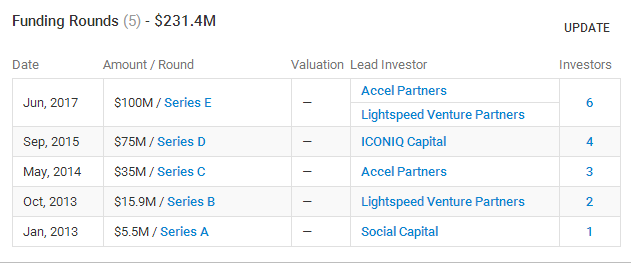
Funding Status:Netskope has undergone five rounds of financing, with the total amount reaching $231.4 million. In June 2017, Netskope completed its $100 million Series E financing round, co-led by Accel Partners and Lightspeed Venture Partners, with participation from Geodesic Capital, ICONIQ Capital, Sapphire Ventures, and Social Capital.
Founder:Pedro Bados、Vincent Bieri
Major Investment Institutions:Auriga Partners, Highland Europe, VI Partners, Galeo-Ventures, Waypoint Capital, etc.
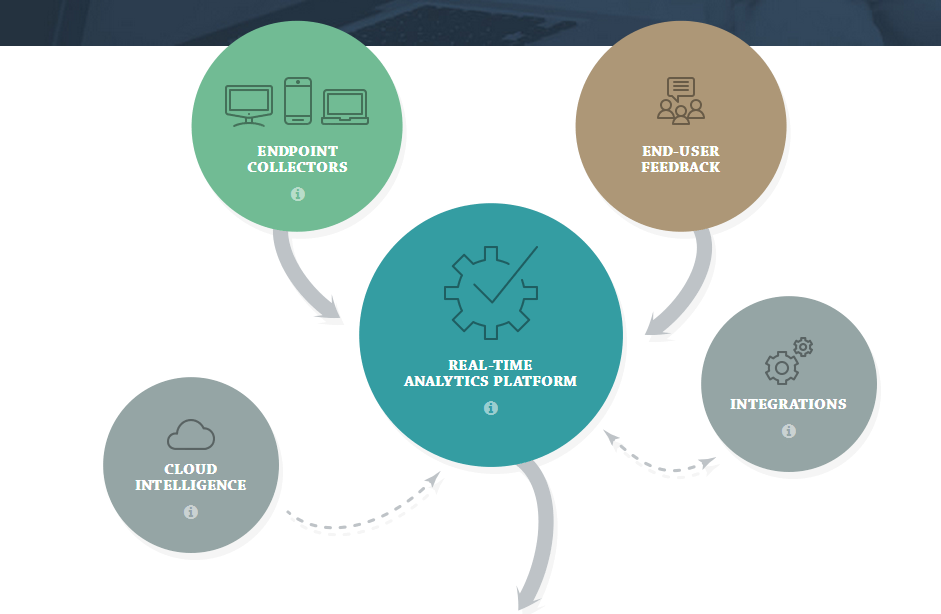
Nexthink is a Swiss company specializing in end-user IT analytics. It originated from an artificial intelligence research project launched by the École Polytechnique Fédérale de Lausanne (EPFL) in 2004. Currently, Nexthink employs over 600 people worldwide and manages more than 2.4 million endpoints. Leveraging proprietary self-learning and artificial intelligence technologies, Nexthink delivers real-time IT analytics across enterprises. This cross-temporal and cross-endpoint analytical capability effectively identifies potential security threats and system failures.
In the healthcare sector, Nexthink aims to help medical institutions safeguard health information, reduce incidents of medical data breaches, ensure HIPAA compliance, mitigate the risk of HITECH penalties, and encourage internists and clinicians to use their own devices.
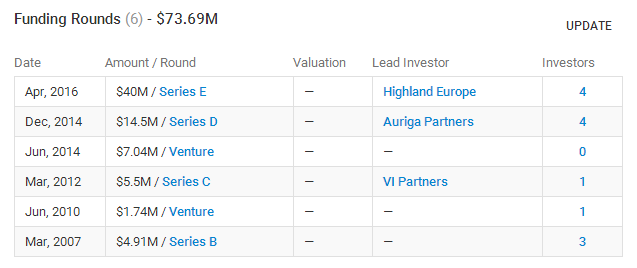
Financing Status:To date, Nexthink has completed eight funding rounds, raising a total of $73.69 million.
References:
https://www.cbinsights.com/blog/healthcare-cybersecurity-startups/
http://www.beckershospitalreview.com/healthcare-information-technology/107-cybersecurity-companies-in-healthcare-2017.html
https://www.crunchbase.com/organization/netskope#/entity
https://www.linkedin.com/feed/