

DXY Group Unveils Dual Strategic Focus for 2017: Building Physician IP and Advancing AI in Healthcare
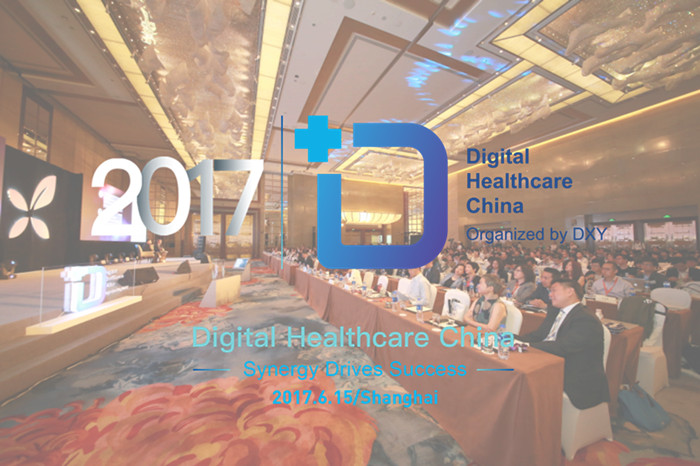
On June 15, at the Digital Healthcare China (DHC) 2017 conference in Shanghai, VCBeat met with Li Tiantian, founder of DXY. Addressing an audience of more than 700, he recounted the achievements made since founding DXY.
This is the fourth DHC Conference hosted by DXY, and Li Tiantian hopes that attendees will gain valuable insights from this event.Collect more industry success stories, while inviting diverse opinion leaders from the sector to share insights on how to jointly create value across the value chain.
This conference featured numerous highlights, the most prominent of which was DXY’s announcement of its strategic focus for 2017:One is to build a doctor's personal brand., and the other isArtificial Intelligence。
At the outset of the conference, Li Tiantian modestly remarked that DXY had indeed achieved some modest successes since 2017. He frequently participates in industry startup conferences as a judge or guest speaker to share his entrepreneurial insights.
DXY’s Development Journey and Its Modest Achievements:
In 2000, DXY was established and created 129 sub-forum discussion boards;
In 2006, a medical portal was established, covering all therapeutic areas;
In 2011, the five core apps accumulated 15 million users;
In 2012, DXY's WeChat official account was launched and garnered 20 million followers;
……
Specific details are shown in the figure below:

To date, DXY has onboarded over 2 million physicians internally, covering 70% of China’s physician population. It maintains a database of 1 million high-quality physician profiles, its three core medical apps have amassed 10 million users, and it partners with more than 50 leading multinational and domestic healthcare companies.
Behind DXY’s modest achievements lies its significant contribution to helping numerous physicians become online influencers, leveraging its professional platform, promotional matrix, and years of accumulated expertise in new media operations. A notable example is Liu Guanghui from Shanghai Tongji Hospital.
With the development of social media, the evolution from early blogs and forums to online communities and then to self-media has taken place in just over two decades. In the current era of rapidly accelerating self-media growth, different types of “internet celebrities” have emerged across various platforms.
In Li Tiantian’s view, the number of internet-famous physicians emerging from the medical community will continue to grow.
Liu Guanghui is a clinician in the Department of Endocrinology. In his view, physicians should also cultivate their own personal brands, echoing WeChat’s slogan: “Even the smallest individual has their own brand.”
He registered on DXY in October 2006. Looking back on his decade of learning on the platform, he defined 11 keywords for himself and subsequently joined Sina Weibo, launched a Tieba forum, and created a personal WeChat Official Account, among other platforms. During his initial period on the site, he posted hundreds of threads, many of which were featured as high-quality content.
He adopted the username “Da Nei Ming Bu Liu Guanghui” on Sina Weibo. The moniker “Da Nei Ming Bu” evokes the image of a martial arts master possessing extraordinary skills and remarkable decisiveness. To design the logo for this self-media brand, Liu Guanghui enlisted the assistance of Dr. He Yizhou from Zhongshan Hospital. Throughout his clinical practice, he has demonstrated his humanistic compassion as a physician through multidisciplinary teams (MDT) and various platforms. This reflects his vision of the ideal physician.
In 2015, Liu Guanghui was honored as an Outstanding Member of the Endocrinology Section on DXY. He curated trending threads, including featured posts. In his view, physicians continuously draw knowledge from the DXY platform and apply it to their clinical practice.
Therefore, Liu Guanghui’s colleagues also frequently use the DXY website and the “Laiwen Yisheng” platform for doctor-patient communication, including peer-to-peer exchanges among physicians. Currently, tens of thousands of doctors from Grade 3A hospitals are registered on the “Laiwen Yisheng” platform, providing such medical services to patients.
Subsequently, he also delivered several open courses on DXY and published more than twenty books.
So, is Liu Guanghui an example of a successful physician with a strong personal brand? How can physicians build their personal brands more quickly and effectively? What is the biggest challenge on the path to becoming a recognized personal brand for physicians?
To untie the bell, one must seek the person who tied it. To clarify these issues, it is necessary to deconstruct the development path of Dr. Liu Huiguang’s personal physician brand.
First, what exactly can doctors do? A doctor is a clinician, a researcher, and also an educator, responsible for mentoring interns, clerks, and standardized residency training physicians. However, excelling in these three roles alone is not enough to become an intellectual property (IP) brand. Doctors must also be capable of producing accessible content that helps the general public understand various diseases; only then can they potentially establish themselves as an IP.
When physicians are able to create content and become writers, can they also become true intellectual property (IP) brands? Not yet; they must also master communication and community management. Thus, physicians need to be versatile professionals. Here, “IP” refers to the concept of intellectual property, which requires physicians to engage in lifelong learning and continuously produce original content—this is the most fundamental prerequisite.
Numerous physician influencers have already emerged, including “Chengdu Sewer.” By continuously expanding their knowledge and integrating cutting-edge medical advances, they provide the public with practical, down-to-earth science communication. They have also produced several best-selling books and engaged in offline interactions. Strictly speaking, they represent high-quality intellectual property (IP) brands.
Every physician influencer is a potential high-quality intellectual property (IP) asset. Some specialists are heavily occupied with their professional duties and have substantial clinical responsibilities; however, once they acquire certain community management skills, including communication techniques, they possess distinct advantages in building their personal IP.
A medical IP is not a fleeting trend; its value does not lie in current popularity, but rather in whether physicians can consistently produce original content, exert sustained influence on the general public and specific target audiences, and develop a cohesive series of offerings.
In Li Tiantian’s view, physician influencers or physician IPs can be categorized into two types. The first type consists of those widely seen on Weibo, who gain popularity not through professional medical content, but by relying on jokes, criticism of current affairs, or commentary on social phenomena, thereby attracting a large number of followers. The second type includes physicians like Guanghui, who leverage their professional expertise and knowledge to provide knowledge-based economic services.
He is more optimistic about the second category of physician IPs, as they can produce content in a sustainable manner over the long term.
With the advent of the knowledge economy era, DXY and Boston Consulting Group (BCG) jointly conducted a survey on “influencer physicians” in the medical community to understand their group characteristics and development pathways, evaluating them across multiple dimensions such as influence and activity level.
Chen Baiping, a Partner at BCG, pointed out that internet-famous doctors can expand their influence by leveraging their professional expertise, unique characteristics, and digital platforms—for example, by publishing popular science articles, sharing clinical insights, and participating in online Q&A sessions. This influence can target both patient groups and fellow physicians.
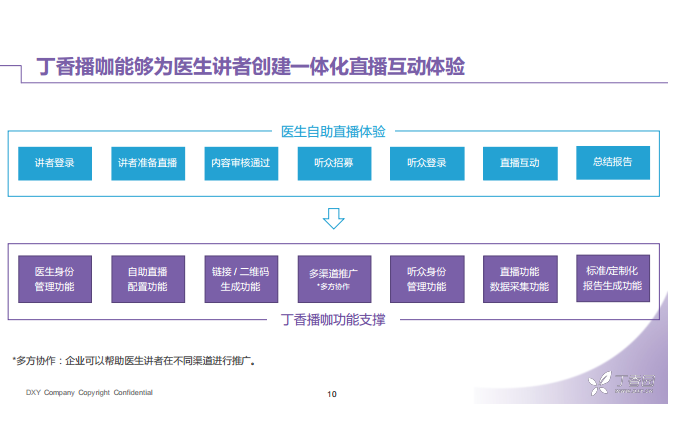
At the DHC Conference, DXY unveiled its Dingxiang Boka product, aiming to cultivate more “Liu Guanghuis.” Zhang Wei, Vice President of DXY and Head of the Enterprise Business Unit, pointed out that the initiative is designed to help every capable and innovative physician create greater value and shine brighter, by providing an integrated live-streaming interactive experience for physician speakers.
As follows:
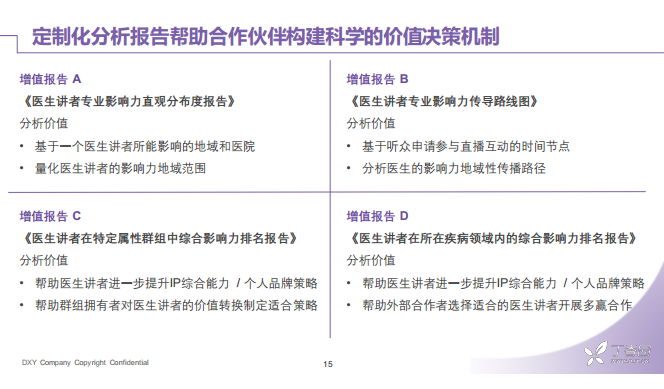
These data from physician speakers will also give rise to four key content reports.First, a report on the distribution of professional influence among physician speakers. This includes identifying which cities and regions are influenced by a speaker based in Beijing, and which are influenced by a speaker based in Shanghai. Second, communication pathways. When a physician shares live-streaming content within their WeChat Moments, it is possible to identify the respective hospitals of both the sharing physician and the viewing physicians. The physicians who log in first are considered to have greater trust in the content shared by the originating physician.
Dingxiang Bojia aims to leverage physicians’ own influence to educate more doctors, which embodies the value of doctor-to-doctor interaction.
Moving forward, DXY Broadcast will collaborate with various industry stakeholders to jointly identify and engage like-minded physicians, delivering their content and personal brands to relevant audiences while continuously enhancing operational efficiency and quality on the platform. This reflects DXY’s original mission, steadfastly upheld over the past 17 years: to facilitate the professional development of Chinese physicians, which also underscores the value of physician IP.
The newly launched AI-powered intelligent auxiliary diagnosis system for skin diseases is another product with which DXY is increasing its investment in the consumer market.
Why Choose Dermatology?
According to Dr. Yin Heng, a dermatologist at the Second Xiangya Hospital of Central South University (hereinafter referred to as “Xiangya Second Hospital”), there are four major pain points for patients seeking medical care for skin diseases: reliance on folk remedies, excessive concern, numerous pitfalls, and blind consultation.
Meanwhile, dermatologists face significant challenges: on one hand, the sheer variety of skin diseases—with over 3,000 types—poses a substantial burden; on the other hand, different conditions often present with similar clinical manifestations, while the same disease may exhibit varying phenotypes across different individuals, body sites, and stages of progression, leading to considerable diagnostic ambiguity.
Therefore, DXY, the Second Xiangya Hospital, and Dana Technology collaborated to launch a new product on May 19—the AI-assisted diagnostic system for dermatology. This system collects, integrates, and manages a vast repository of dermatological cases, leveraging artificial intelligence to differentiate, identify, and assist in the diagnosis of autoimmune skin diseases. It aims to provide dermatologists with a platform for continuous learning and an auxiliary tool for dermatological diagnosis.
In the future, we will further deepen open collaboration with pharmaceutical companies, pharmacies, hospitals, and insurance providers to deliver a comprehensive patient care journey.
Artificial intelligence has rapidly become a headline-grabbing buzzword this year, thanks to Google AlphaGo’s stunning performance in the game of Go. Verily, a sister company of Google under the Alphabet umbrella, aims to make significant strides in the healthcare sector.
Yang Yang, Head of Greater China at Verily, stated that Verily’s goal is to leverage global healthcare data and innovate medical technologies to empower health with the best solutions. To achieve this goal, the first step is to collect and organize relevant data; the second is to analyze the data to identify key insights and develop methods for their interpretation; and the third is to feed these insights back into the healthcare industry for practical application.
From Verily’s perspective, artificial intelligence can effectively analyze data and extract valuable insights. In the medical field, applications such as automated kidney disease assessment leverage deep learning techniques to develop algorithms that identify key pathological features of kidney disease, with potential future applications in the treatment of diabetic nephropathy.
At the conclusion of the conference, Li Tiantian reiterated: “Looking ahead, we look forward to collaborating with more stakeholders across the healthcare industry to achieve synergistic growth and mutual success!”