

Apple Advances Clinical Data Integration on iPhone Through Strategic Acquisitions and Top-Tier Health Data Talent
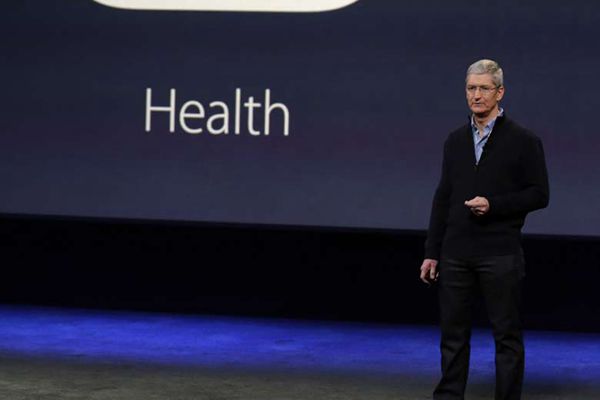
Apple CEO Tim Cook has repeatedly mentioned the Health app.
With the advent of the digital health era, startups across various related industries have sprung up like mushrooms after rain. Some have succeeded, but many more have quietly reached dead ends, vanishing into the surging tide of digital health commercialization like spray crushed by a massive wave.
As leaders in the technology industry, international giants such as Apple and Google place greater emphasis on integrating industry resources. Whether it is Apple’s HealthKit, ResearchKit, and CareKit, or Google’s discontinued Google Health, all are products of this vision.

Screenshot of the interface of the built-in “Health” app on Apple’s iOS system
The image above should be very familiar to Apple iPhone users. Since iOS 8, this app has come pre-installed on iPhones. After nearly three years of development, it now supports hundreds of health-related hardware devices and software applications, enabling the aggregation of users’ health information.
Not long ago, CNBC (the global financial news network under NBCUniversal) published a series of reports over two consecutive weeks tracking Apple’s strategic moves in digital health.The article states that Apple is working to make the iPhone a one-stop platform for medical information services and is seeking opportunities to provide clinical data beyond health metrics, such as laboratory results and allergy lists.
To this end,Apple is continuously engaging in discussions with hospitals, seeking suitable acquisition targets, and actively participating in various conferences within the medical IT industry.VCBeat (WeChat: vcbeat) has compiled this tracking report and other related materials for you, providing insights into Apple’s latest developments and grand strategy in the digital health sector.
Integrating Clinical Information into the iPhone
Imagine if all your health and medical information—such as outpatient visit notes, laboratory test results, prescriptions, and other health records—could be accessed anytime on your iPhone and shared with your doctors. No more logging into hospital websites to search for records or calling your former physicians to request that they forward your information to new providers. Wouldn’t that be thoughtful and convenient?
This is precisely the vision Apple is currently striving to realize.
Reporters learned from six relevant sources that,A secret team within Apple’s rapidly growing health division is negotiating with medical software and hardware developers, hospitals, and other industry groups, aiming to persuade them to provide clinical data—such as detailed laboratory results and allergy test reports—to the iPhone.iPhone users can choose to share this information with third parties, such as hospitals and medical developers.
One senior source stated that Apple is monitoring startups in the cloud hosting sector, seeking potential M&A targets that may be suitable for its program.
At its core, Apple’s current moves in the healthcare sector mirror the way iTunes revolutionized the music industry—replacing CDs and MP3s with a centralized management system—to similarly unify fragmented and complex medical data under a single, cohesive framework.
Farzad Mostashari, former National Coordinator for Health Information Technology at the U.S. Department of Health and Human Services and founder of the startup Aledade, stated that if Apple could execute this well, it would be a remarkable achievement.
Apple’s move clearly deviates from its previous healthcare strategy. For instance, the iOS “Health” app is primarily designed to store data such as step counts and sleep patterns, with a focus on fitness and general wellness rather than clinical applications.
It also features a function called “Health Data,” which includes options for importing health records obtained from healthcare providers; however, the content remains quite limited and falls far short of meeting actual clinical needs.

“Health Records” Interface in Apple’s “Health” App
Solving the Crisis of Clinical Information Interoperability
Apple is grappling with a monumental challenge that the digital health sector has struggled to address for years: despite more than a decade of flourishing in the digital era, patients still cannot easily share their medical information with physicians, particularly across different hospitals or clinics.
This information is often stored in email attachments or PDF files sent via fax, while some so-called “patient portals” frequently suffer from poor user experience and provide only limited access to information.
This issue is commonly referred to as the “interoperability crisis.” With the rapid advancement of the information age, poor interoperability no longer merely causes inconvenience to patients but may also place them in dangerous situations.
Apple is attempting to address the issue of “interoperability” by turning patients into hubs of care. Its goal is to provide iPhone users with tools to check, store, and share their medical information, including lab results, allergy lists, and more.
Medical expert Aneesh Chopra told reporters that the lack of data sharing among various sectors of the healthcare industry often leads to preventable errors and misdiagnoses. He believes that with the advancement of digital health, patients and their trusted physicians should have access to complete patient medical information.
Apple has been in discussions with health IT groups in recent months, seeking solutions to the “interoperability crisis.” These groups include the Argonaut Project, a private-sector initiative advocating for the adoption of standards for open healthcare information, and The Carin Alliance, an organization dedicated to empowering patients to take control of their own data. According to sources familiar with the matter, Bud Tribble, Apple’s Vice President of Software Technology, has personally been involved in the latter’s operations.
In addition, Apple has hired some of the top developers specializing in Fast Health Interoperability Resources (FHIR), including Sean Moore, a current Apple software engineer who previously worked at Epic Systems, the electronic health record giant, and Ricky Bloomfield, a physician from Duke University with a background in medical informatics.
The Failure of Google Health and Apple’s Advantages
As mentioned above, the “interoperability crisis” has long been a persistent issue in the digital health sector. Before Apple made its significant moves, other tech giants had already attempted to address this problem through their own web-based patient health record services, but all such efforts ended in failure. The most notable example was Google’s shutdown of its product, Google Health, in 2011.
In a previous analysis of Google Health’s failure, Brian Dolan, a columnist for MobileHealthNews, listed nine major reasons for Google Health’s Waterloo:
1. Overly monotonous and dull, lacking in fun and social interaction, resulting in low user engagement;
2. The American public generally distrusts commercial companies like Google and is unwilling to provide health data;
3. The information import process is overly complex, unfriendly to non-professionals, and results in a poor user experience;
4. Lack of physician involvement hinders large-scale clinical application;
5. Insurance companies are reluctant to share data with Google;
6. Insufficient marketing efforts, with many users unaware of the app's existence;
7. At that time, Google’s senior leadership provided limited support for expanding into the healthcare sector;
8. Difficulty in advertising to patients;
9. Unable to resolve practical issues for patients, such as managing medical data, scheduling outpatient appointments, reducing health insurance costs, and refilling prescriptions.
By comparing Apple’s approach point-by-point with the reasons for Google’s failure, it becomes evident that Apple holds inherent advantages in many areas. Currently, the majority of physicians are using iOS, and with over one billion active devices worldwide, Apple facilitates hospitals and developers in finding ways to interconnect these devices. Furthermore, Apple has consistently emphasized its commitment to data privacy and security on various occasions, thereby earning the trust of its loyal user base and the general public.
Micky Tripathi, President and CEO of the Massachusetts Digital Health Collaborative and a healthcare IT expert, stated that although he believes only about 10% to 15% of patients—such as those with chronic conditions or those highly health-conscious—care about the so-called interoperability of clinical medical information, if any company can crack user engagement, it is surely Apple.
Of course, Google’s failure was also attributable to the circumstances at the time. In the six years following the discontinuation of Google Health, the government continued to promote technical standards in electronic health records (EHRs) to facilitate data sharing, thereby providing a policy foundation for Apple’s advancements in this area.
Apple Has Acquired Two Digital Health Startups
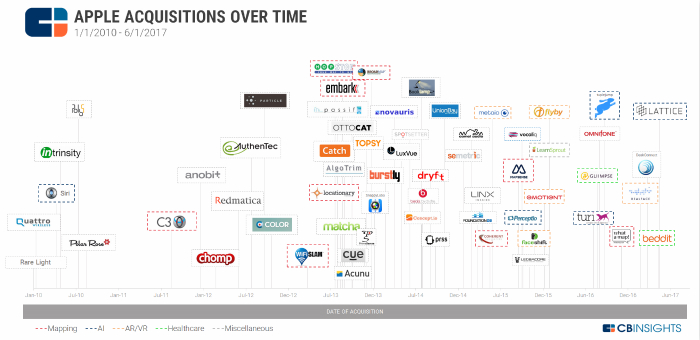
Overview of Apple’s Acquisitions from January 2010 to June 2017
According to the chart of Apple’s acquisition activities released by CB Insights in early June, healthcare companies accounted for a significant proportion of its acquisition targets, fully demonstrating Apple’s determination to expand its footprint in the medical field.
Two digital health startups, Gliimpse and Beddit, were acquired by Apple in August 2016 and May 2017, respectively. Founded in Silicon Valley in 2013, Gliimpse provides a secure online platform that enables users to manage and share their personal health data in the cloud. Beddit, a Finnish manufacturer of sleep monitoring devices, offers products that track users’ sleep duration, snoring frequency, body temperature, respiration, and heart rate.
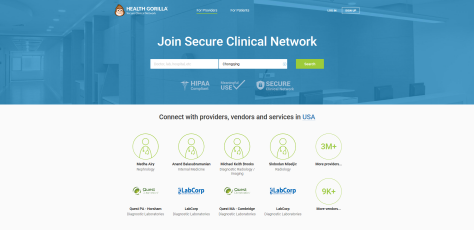
Health Gorilla Official Website
In addition to the two startups already under its umbrella, sources have revealed that Apple is secretly collaborating with a small startup called Health Gorilla, which specializes in integrating various diagnostic data.
Research has confirmed that hospitals often struggle to access critical patient care data scattered across third-party laboratories, primary care physicians, and specialists. The absence of this information frequently leads to flawed clinical judgments by hospitals, resulting in misdiagnosis.
Health Gorilla, based in Silicon Valley, was founded by CEO Steve Yaskin after he witnessed the numerous frustrations faced by a physician friend when sharing patient diagnostic data. Accordingly, the company has been committed to providing physicians with “complete patient medical histories” since its inception.
The company’s services are primarily geared toward physicians, offering an integrated information platform for booking appointments and sharing medical records. It also provides free services to patients, promising to collect their medical information within 10 minutes.
According to sources, the partnership between Health Gorilla and Apple primarily focuses on integrating various diagnostic data (including blood test results, etc.) from hospitals, laboratory companies (such as Quest and LabCorp), and imaging centers into the iPhone.
In addition to the aforementioned clinical information layout, CNBC reported in April 2017 that Apple was developing a non-invasive dynamic blood glucose monitoring technology; furthermore, iOS 11 and watchOS 4, scheduled for release in the fall, are expected to incorporate numerous health and medical features. VCBeat will continue to monitor these developments.
Note: The above content is compiled. VCBeat strives to ensure the accuracy of the translation.
References:
http://www.cnbc.com/2017/06/14/apple-iphone-medical-record-integration-plans.html
http://www.cnbc.com/2017/06/19/apple-working-with-start-up-health-gorilla-on-iphone-ehr-plan.html
http://www.mobihealthnews.com/content/apple-rumored-be-working-health-gorilla-timberwolves-tap-fitbit-and-more-digital-health
http://www.mobihealthnews.com/11480/10-reasons-why-google-health-failed
https://www.cbinsights.com/blog/apple-acquisitions-ai-ar-vr-healthcare-timeline/