

Nezha Baobei Surpasses 400,000 Users with AI-Powered Neonatal Jaundice Screening App; Files IPO Prospectus
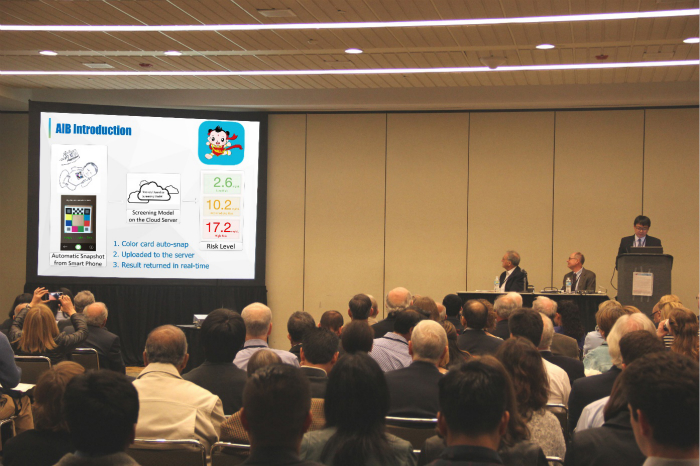
Dr. Shen Tian’s Presentation at the 2016 PAS (Pediatric Academic Societies) Meeting in the United States
Jaundice is the first health issue faced by newborns. The incidence of neonatal jaundice in China ranges from 60% to 80%, with slight variations across different regions. Bilirubin encephalopathy caused by jaundice is preventable but not curable; it often progresses to cerebral palsy, leading to sequelae such as intellectual disability, hearing impairment, and seizures.
Shenzhen Beishen Medical Technology Co., Ltd., established in 2015, has developed a jaundice detection software app called “Nezha Baobei” that leverages artificial intelligence technologies such as image processing and machine learning to practically address clinical challenges in pediatrics.
Currently, Beishen Medical is collaborating with multiple maternal and child health hospitals across China to conduct big data research on neonatal jaundice. This initiative holds exceptional significance for reducing the incidence of bilirubin encephalopathy in newborns, improving screening for hyperbilirubinemia, and informing the formulation of healthcare policies by relevant authorities.
Three founders with interdisciplinary and complementary expertise in image processing, obstetrics, and gynecology.
Reporters learned that the three founders come from the fields of obstetrics and gynecology, image processing, and communications technology, respectively. Dr. Shen Tian previously worked at Siemens Healthineers, focusing on image processing; Mr. Nie Tao formerly served at Motorola, where he mastered low-level communication technologies; and Dr. Jiang Xiangyang has over 20 years of clinical experience in obstetrics. The professional expertise of the founding team has been the driving force behind the project’s rapid development.
With a thorough understanding of the clinical needs in obstetrics, gynecology, and neonatology, as well as years of collaborative partnerships with obstetrics and gynecology specialists across China, the founding team is confident in addressing the global challenge of out-of-hospital monitoring and follow-up for neonatal jaundice.
Traditional methods for detecting neonatal jaundice, such as blood sampling and transcutaneous bilirubinometry, require newborns to return to the hospital for scheduled follow-up visits. For infants only a few days old, exposure to the elements and the risk of cross-infection within healthcare facilities pose significant health hazards. Additionally, due to the high volume of deliveries, major maternity hospitals are compelled to increase bed turnover rates, typically discharging mothers and their babies within 72 hours. However, the peak incidence of jaundice occurs precisely between the fourth and sixth days after birth. Parents often lack the experience to recognize jaundice in their children, and consistent follow-up by healthcare professionals is difficult to ensure. Consequently, how to monitor jaundice at home remains a pervasive challenge confronting neonatologists worldwide.
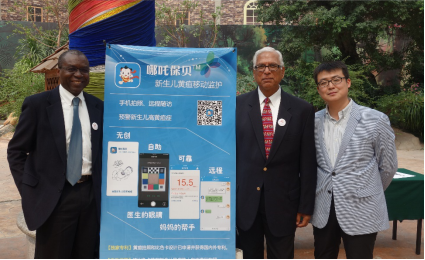
This project has received strong support from Professor Bhutani at Stanford University Children's Hospital and Professor Akinbi at Cincinnati Children's Hospital.
When the team first proposed the concept of Nezha Baobei, smartphones were not yet widespread, and the hardware conditions necessary for household use were not met. With the proliferation of smartphones and the gradual maturation of the “Internet + Healthcare” model, the Nezha Baobei app was subsequently launched.
Mr. Nie Tao told reporters, “At present, not only in China but also on a global scale, Nezha Baobei is the first of its kind in the field of mobile monitoring for neonatal jaundice.”With the gradual popularization of big data and artificial intelligence (AI) applications and concepts, Nezha Baobei can achieve far more than its current capabilities. Beishen Medical will continue to focus on leveraging AI to help clinicians solve complex medical challenges.
Features of Nezha Baobei: Non-invasive, Remote, Simple, and Reliable
The product’s technical background is primarily based on leveraging the smartphone camera function and employing image processing and analysis techniques to upload skin samples from neonates under examination to the cloud in real time.
By establishing a detection model through the comparison of data such as gestational age, chronological age, body weight, and serum total bilirubin levels in the database, Nezha Baobei rapidly calculates the total bilirubin level in neonates and provides real-time test results along with risk alerts.
From the outset of its promotion, the project garnered attention from the National Center for Women and Children’s Health and the Chinese Medical Association, earning recognition from top pediatric authorities at Stanford University and leading medical universities across China. Collaborative research with Hainan Provincial Maternal and Child Health Hospital received funding from the National Natural Science Foundation of China in 2016.
The widespread adoption of Nezha Baobei will significantly reduce the follow-up workload for neonatal healthcare professionals.
“We conducted clinical trials at several renowned university-affiliated hospitals in China, collecting over 10,000 sample data points. The accuracy approaches that of hospital-grade diagnostic devices valued at 100,000 yuan, and the related research paper was published in Issue 8, 2016, of the Chinese Journal of Pediatrics,” Nie Tao told reporters.
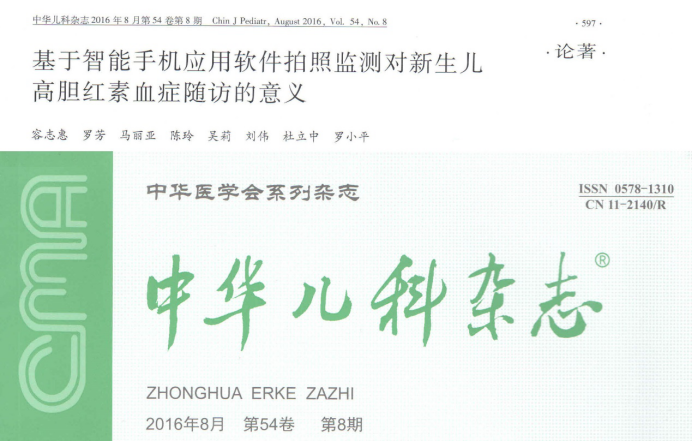
Research Paper on the Nezha Baobei APP Published in Chinese Journal of Pediatrics
Reporters learned that the product is primarily used for neonatal jaundice detection and risk alerting within the first 30 days after maternal discharge, with most usage taking place in home settings.
It is extremely convenient to use: simply place the color chart on the newborn’s chest. The system automatically identifies the target and, after assessing image quality, lighting conditions, and skin regions, automatically scans and captures a photo. Mothers need only hold the camera steady to obtain a clear image of the baby’s skin.
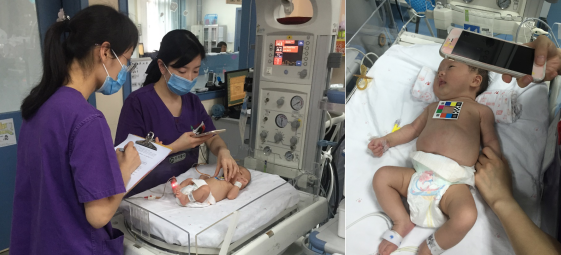
Conduct big data validation trials for accuracy at Tongji Hospital Affiliated to Huazhong University of Science and Technology and Zhejiang Provincial Children's Hospital
Images are uploaded to a cloud server, which automatically calculates and returns the bilirubin level. Based on the neonate’s age in hours since birth, the system alerts physicians and mothers to the newborn’s jaundice risk level. Currently, the platform has nearly 400,000 registered users, with an average of approximately 2,000 new neonatal users added daily.
Dr. Jiang Xiangyang, an expert in obstetrics and gynecology, stated, “In fact, our product was invited to deliver a presentation at the annual meeting of the American Academy of Pediatrics within less than a year of its launch. Its accuracy, reaching as high as 86%, has been clinically validated by Tongji Hospital and maternal and child health hospitals across various regions. Our technology has gained recognition from international authorities in neonatal medicine, leading to co-authored publications.”
In addition to domestic public benefit initiatives, Nezha Baobei has been invited by Professor Bhutani of Stanford University to launch a multinational, multicenter study involving Stanford Children's Health, the Red Cross War Memorial Children's Hospital in Cape Town, South Africa, children's hospitals in Mexico, the All India Institute of Medical Sciences (AIIMS) in New Delhi, India, and children's hospitals across mainland China.
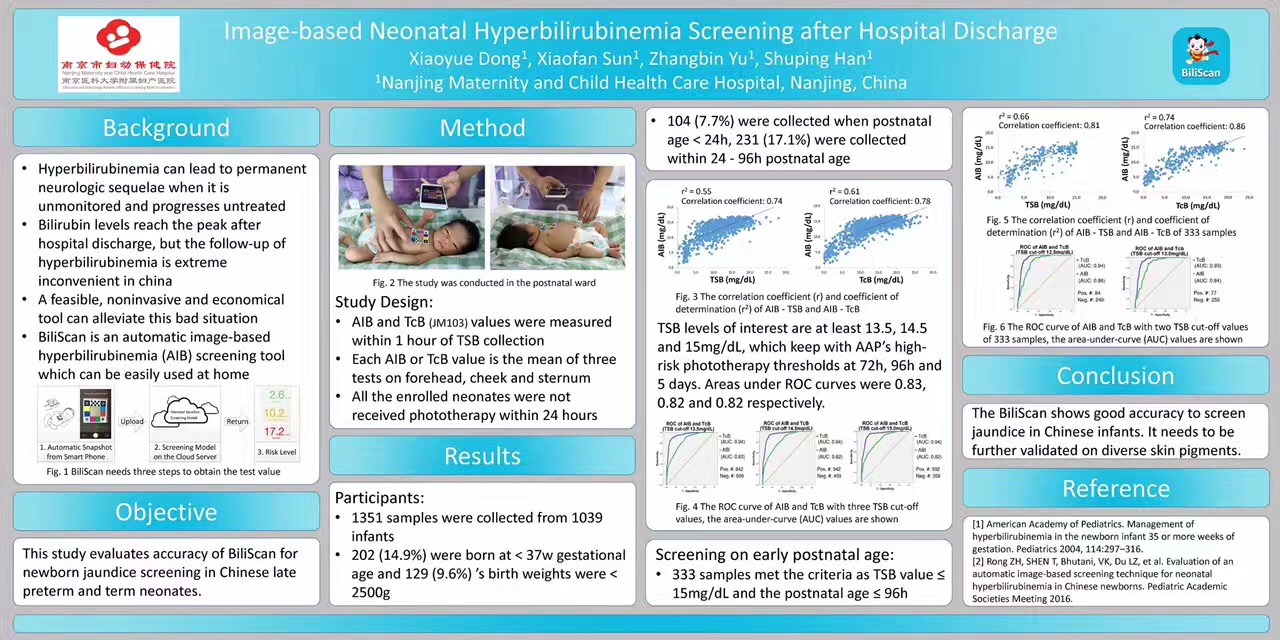
The “Nezha Baobei” Paper Published by the Neonatal Research Team of Nanjing Maternity and Child Health Care Hospital at the 2017 PAS
Future Plans: Continue to Promote Mobile Phone-Based Detection Technology for Neonatal Stool
Nie Tao also shared that the hospital’s promotion has been widely welcomed by pediatricians across various regions. “There are no similar projects abroad based on the same principle, which is why our project was able to quickly take the stage at international academic conferences after its launch. However, we still overcame numerous challenges during the research and development process, including data collection, algorithm development, and application deployment.”
Currently, Nezha Baobei has established collaborations with key provincial- and municipal-level hospitals, including Peking Union Medical College Hospital, Nanjing Maternity and Child Health Care Hospital, Children's Hospital of Fudan University, Hainan Women and Children's Medical Center, Tongji Hospital Affiliated to Huazhong University of Science and Technology, The Children's Hospital, Zhejiang University School of Medicine, and Bao'an District Maternal and Child Health Hospital of Shenzhen.
The product is currently free to use, with primary revenue derived from advertising fees, as well as a small amount of technical service fees from hospitals and communities. The company has completed its seed funding round.
Financing arrangements will be made in accordance with project progress. Regarding the product roadmap, Dr. Shen Tian stated, “In addition to neonatal jaundice testing, we have developed a neonatal stool test, primarily for screening cholestasis in infants after 28 days of age, which is now commercially available. In other areas, we will continue to pioneer new technologies in the field of medical imaging.”
Note: This software is developed specifically for neonatal skin; photo-based detection results for adults are not clinically meaningful. This app is intended for home-based auxiliary diagnosis and risk alerts. For neonatal health concerns, please follow your physician’s advice.