

China's First Intergenerational Learning Center Innovation Model Report: Exploring a New Elderly Care Approach through Elder-Child Integration
In June 2015, renowned Hollywood producer Evan Briggs brought intergenerational learning centers into the public spotlight with his five-minute documentary Present Perfect, sparking widespread discussion across society.
This documentary showcases the heartwarming aspects of intergenerational learning between the elderly and children. At the intergenerational learning center, seniors rediscover and affirm their self-worth, finding joy and laughter through their interactions with children. Meanwhile, children receive unconditional love from the elderly and gradually come to realize that “adults sometimes need help too.”
As the name “Intergenerational Learning Center” suggests, the purpose of bringing older adults and young children together is to facilitate mutual learning. However, placing these two groups, both of whom require external care, in the same setting may lead to various frictions. These practical issues have become the most debated topics.
Currently, available data indicate that only five institutions in China have attempted this model, and public understanding of it stems almost entirely from Evan Briggs’s five-minute documentary and the accompanying written descriptions. VCBeat and VBInsight have conducted an in-depth analysis of the model’s implementation abroad, interviewed stakeholders on domestic project progress, and explored issues such as safety, spatial layout design, activity planning, and the feasibility of replicating the model in China. This report focuses on addressing the following key questions:
1. What new models of elderly care will be spurred by the spiritual needs of the elderly?
2. How will the two typical organizational forms of intergenerational learning centers facilitate positive interactions between the elderly and young children?
3. How will the intergenerational learning center’s value transmission chain address the pain points of all stakeholders and maximize their respective benefits under safe conditions?
4. Interpretation of the Most Promising International Practice Cases
5. Discussion on the Replicability of Intergenerational Centers in China
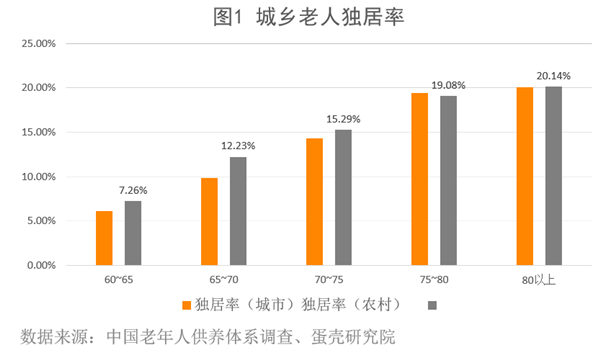
With the rapid increase in China’s elderly population, living environments have undergone significant changes, and the proportion of older adults living alone has been steadily rising. The quality of life of this special group—older adults living alone—has inevitably drawn societal attention. Their quality of life is influenced not only by their physical health and economic status but also by their psychological well-being.
According to the Survey on the Support System for the Elderly in China:
The rate of elderly individuals living alone increases with age, while the rates among urban and rural residents remain relatively comparable. Among the reasons for living alone, widowhood ranks first.
This indicates that the transition among older adults from living with companions to living alone occurs rapidly, and the likelihood of a subsequent change in this living arrangement is low; this phenomenon becomes increasingly pronounced with advancing age.
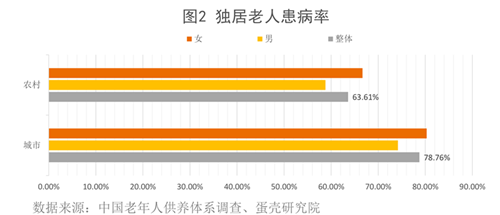
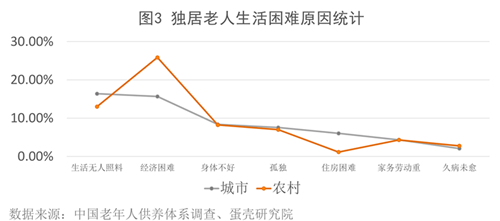
In terms of objective conditions,The greatest difficulty faced by elderly individuals living alone in urban areas is the lack of caregivers, followed by financial and housing hardships. In contrast, for elderly individuals living alone in rural areas, the most prominent challenge is financial hardship, followed by the lack of caregivers.
In terms of subjective difficulties, loneliness has become the biggest problem facing elderly people living alone.
Addressing the challenge of loneliness is not only a concern for the families of elderly individuals living alone, but also an issue that elderly care institutions must confront. Seniors choose to reside in these facilities not merely because they provide basic caregiving services, but also because such institutions offer a degree of psychological support.
Currently, most nursing homes operate in relatively closed environments, where prolonged exposure to a monotonous lifestyle can easily lead to depression among the elderly; thus, there is a need to incorporate more diverse elements into these facilities.
<Intergenerational Learning Center Profile>
In Europe and North America, school–family interactions are highly integrated, with parents frequently involved in the instructional process. Grandparents have surpassed mothers as the largest group of classroom teaching assistants. When this new intergenerational dynamic is harmonious, the needs of parents, children, and grandparents are all met.
Driven by this demand and experimental results demonstrating that two generations can coexist harmoniously, a model integrating nursing homes with kindergartens has emerged, enabling mutual comfort and learning between the elderly and young children. This model is known as an Intergenerational Learning Center.
Intergenerational Learning Centers are typically specialized facilities situated between nursing homes and kindergartens, serving as connectors that bring young children and the elderly together.
The operational model of the Intergenerational Learning Center involves bringing together older adults and young children during scheduled interactive sessions to foster positive engagement and address the distinct psychological needs of both groups.
Currently, there are two models for intergenerational learning centers:
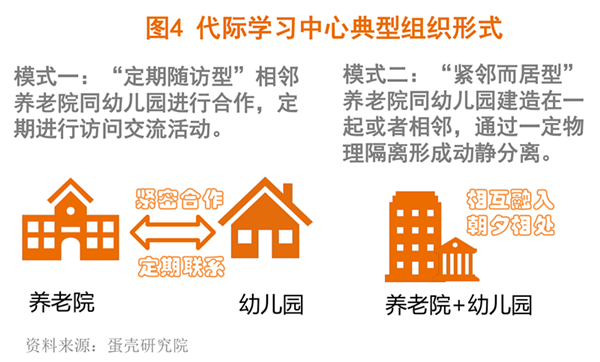
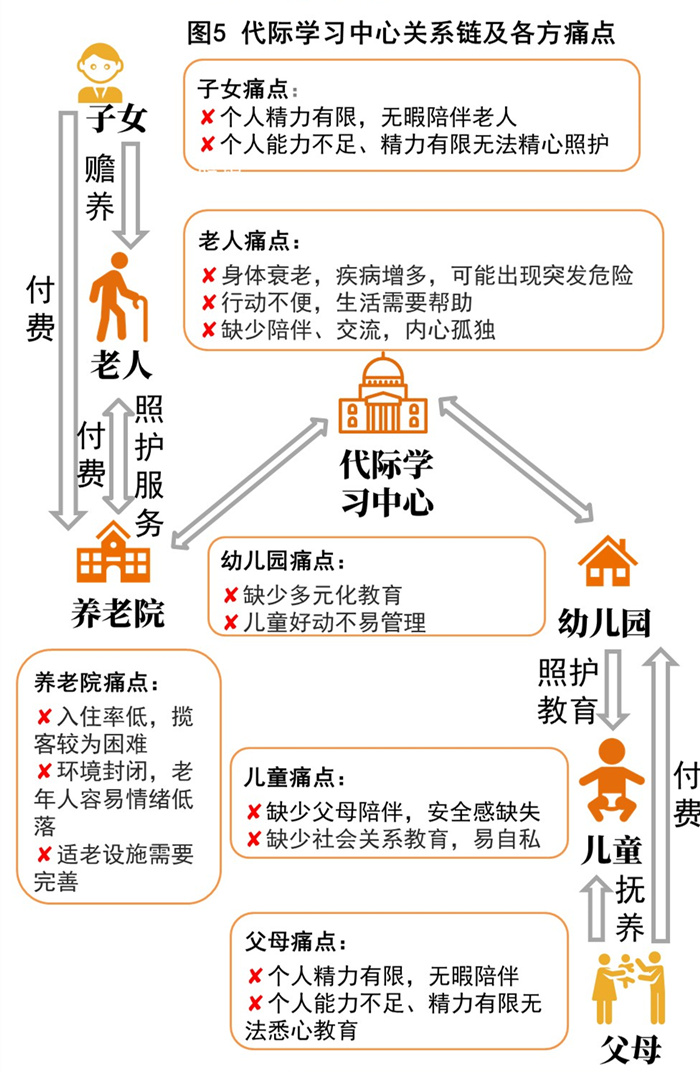
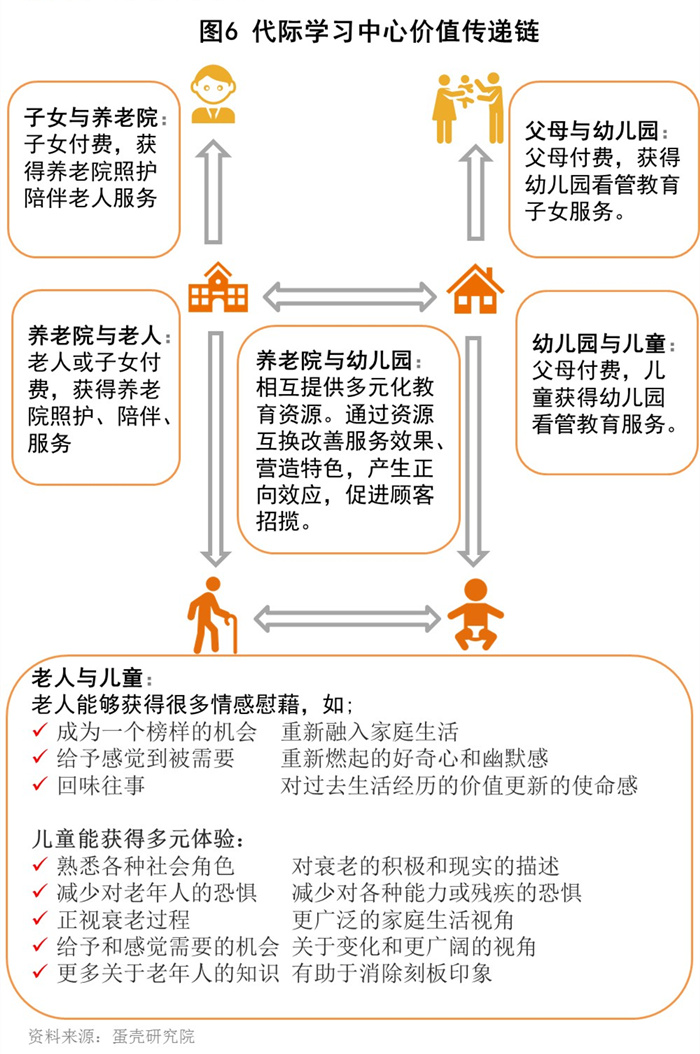
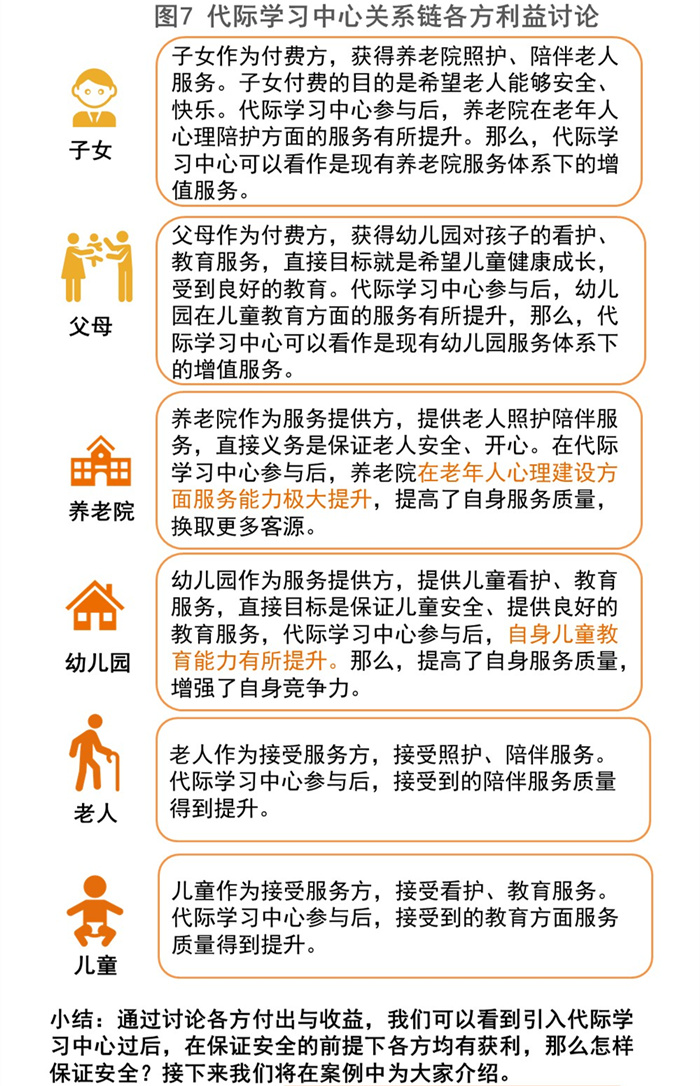
Currently, intergenerational learning centers are primarily concentrated in high-end elderly care institutions in Europe and the United States;
Reports indicate that the United States has more than 500 intergenerational learning centers, and this model has also emerged in Western European countries such as Ireland and Germany.
Providence Mount St. Vincent in Seattle, the nursing home featured in the documentary mentioned in our introduction, serves as a model for intergenerational learning centers in the United States. In the following section, we will use Providence Mount St. Vincent as a case study to introduce the operational practices of intergenerational learning centers abroad.

In 1980, the administrators of Vincent Nursing Home recognized that their community was missing a vital element—happy children. A staff member subsequently proposed establishing a childcare center.
Since 1990, the administrators of Vincent Nursing Home have been studying the demand for child care centers among nearby residents and corporate employees.
Through investigation, the team decided to create some unique formats to integrate lively and interesting children with the original project, naming it“Intergenerational Learning Center” (ILC)。
The above is an excerpt from this report,To read the full report, scanQR Code at the End of the Article,Join Membership, you can obtainFull Report。
The report also includes the following:
1. Overview of Vincent Intergenerational Learning Center, including staffing and hardware facilities,Opening Hours,Event Planning;
2. Domestic Project Overview;
3. Interview founders of intergenerational learning centers in China to discuss public concerns regarding safety, enrollment, and operations;
4. Discussion on the Replicability of Intergenerational Learning Centers in China.
This is China’s first research report dedicated to intergenerational learning centers—“New Dynamics in Intergenerational Pairing: A Report on Innovative Models for Intergenerational Learning Centers.” Starting from the needs of older adults, it examines the interests of various stakeholders, studies and interviews existing projects, and explores development opportunities for intergenerational learning centers in China. Through an in-depth analysis of this report on innovative models for intergenerational learning centers, it identifies the underlying reasons for the emergence of this model and its value.Elderly individuals often lead monotonous lives and yearn for a more enriched spiritual life.Following this lead, we turned our attention to the senior tourism industry, which also aims to enrich the spiritual lives of the elderly.
Scan the QR code below to becomeVCBeat Official Member, can obtainFull Version"Senior Travel Industry Report: Four Major Breakthroughs in the Trillion-Dollar Market". Gain more insights into elderly life, the eldercare industry, and the senior tourism sector. Meanwhile, in the coming year, you will have unrestricted access to the completeIndustry Trend Report, timely grasp the latest globalInvestment and Financing Information, boasting a comprehensiveMedical Enterprise Database, and alsoMassive Resource Matching。

Scan the QR code to become a VCBeat member,
Beta Version Trial Price: 365 CNY/year.