

Overlooked Traditional Chinese Medicine E-commerce Holds a Trillion-Yuan Market Opportunity
Wang Guoqiang, Director of the National Administration of Traditional Chinese Medicine, has stated on multiple public occasions that traditional Chinese medicine may be ruined by Chinese herbal medicines.
His argument is that, unlike Western medicine and pharmaceuticals, Traditional Chinese Medicine (TCM) relies heavily on the quality of medicinal herbs. However, non-standardized cultivation practices and issues such as pollution residues have raised serious concerns about the quality of TCM materials. With the source compromised, the quality issue of TCM has become one of the hidden threats affecting the inheritance and development of TCM.
Traditional Chinese medicine, a precious legacy bequeathed by our ancestors, has today evolved into a massive industry valued at hundreds of billions. However, if quality issues remain unresolved, the consequences could be dire from the slightest oversight.
However, the current situation is not entirely bleak. The industry has recognized this issue, and many modern Chinese herbal medicine companies have begun to prioritize the quality of medicinal materials by collaborating with authentic herb production bases or establishing their own cultivation centers to ensure quality control.
More significantly, the innovative “Internet + Chinese Herbal Medicine” model has emerged, leveraging internet tools to provide services such as standardized cultivation of Chinese herbal medicines, traceability of authentic regional herbs, publication of supply and demand information, and financial support, thereby addressing various issues across the entire chain from cultivation to distribution. Among its branches, e-commerce for Chinese herbal medicines stands out as one of the most influential and mature segments.
VCBeat (WeChat ID: vcbeat) has compiled a list of projects related to e-commerce platforms for traditional Chinese medicinal (TCM) materials. It aims to provide a comprehensive analysis of the current state of the TCM e-commerce market from perspectives such as market supply and demand, the number of enterprises, and the competitive landscape, thereby exploring the vitality of the “Internet + TCM Materials” model.
Scan of E-commerce Enterprises in Traditional Chinese Medicine Materials
Chinese Herbal Medicine E-commerce refers to websites that provide information services for the trading of Chinese herbal medicines. Based on their target users, they can be divided into two major categories: B2B e-commerce platforms for transactions between enterprises and online pharmacies catering to individual consumers.
VCBeat’s analysis reveals that there are 18 active B2B e-commerce companies specializing in traditional Chinese medicinal materials on the market. All of them are comprehensive platforms offering services such as market information, price trend analysis, and transaction matching.
Table 1: List of B2B E-commerce Platforms for Traditional Chinese Medicine Materials
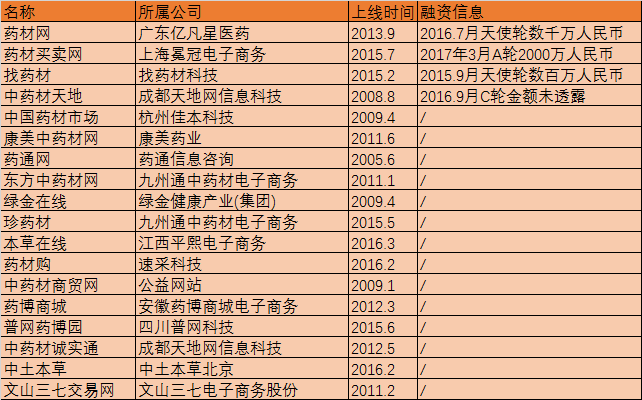
As can be seen from the above chart, 15 out of the 18 B2B e-commerce platforms for Chinese herbal medicines were launched in or after 2009, indicating that the development of e-commerce in this sector started relatively late and is still in its nascent stage.
Based on the financing information, only four companies have disclosed funding details, and the amounts raised are relatively small. This indicates that investors have limited understanding of this type of company and require more time to accept the concept.
It is also worth noting that, in addition to platforms specializing in the trading of traditional Chinese medicinal (TCM) materials, B2B pharmaceutical e-commerce platforms have partially entered the online trading of TCM materials and TCM decoction pieces. Our analysis of ten B2B pharmaceutical e-commerce platforms reveals that their websites all list categories for TCM materials and decoction pieces; however, these offerings generally consist of highly standardized decoction pieces and refined decoction pieces.
Table 2: List of B2B Pharmaceutical E-commerce Platforms Involving Traditional Chinese Medicinal Materials/TCM Decoction Pieces
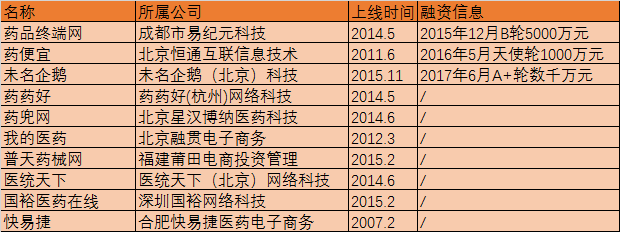
It is easy to understand why pharmaceutical B2B e-commerce platforms have ventured into the trading of traditional Chinese medicine (TCM) materials and TCM decoction pieces. Since their primary clients are retail pharmacies and clinics, both of which have demand for these products, adding this category is a logical step. However, compared with major categories such as chemical drugs and proprietary Chinese medicines, the sales volume of TCM decoction pieces is very low. In fact, some platforms that appear to offer this category do not facilitate any actual transactions.
In addition to these two types of e-commerce platforms targeting medical institutions and retail pharmacies, online pharmacies catering to individual consumers also offer traditional Chinese medicine (TCM) decoction pieces. Our statistics show that there are 13 general online pharmacies with a category for TCM decoction pieces, and two online pharmacies specializing exclusively in the sale of TCM decoction pieces.
Table 3: Online Pharmacies with Herbal Slice Business
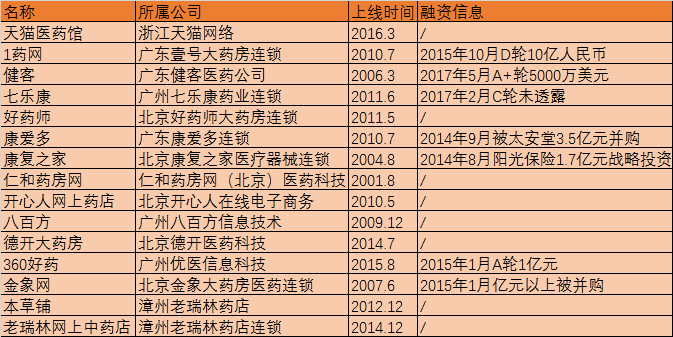
Company information in the chart can be queried in the VCBeat database. Scan the QR code at the end of the article to become a VCBeat member, and you can log in to the VCBeat mini-program/official website to use the database to query relevant company information.
Below, we will analyze the aforementioned three categories of enterprises and select relevant companies to discuss their specific practices in the business of Chinese herbal materials and traditional Chinese medicine decoction pieces.
Kangmei Chinese Medicine Network

Kangmei Chinese Herbal Medicine Network is a whole-industry-chain service platform for Chinese herbal medicines under Kangmei Pharmaceutical (600518, SH). Launched in 2011, the website established and began operating service centers in Anguo (Hebei), Yulin (Guangxi), Kunming (Yunnan), Chengdu (Sichuan), and Longxi (Gansu) in 2012. Meanwhile, it set up information collection points across major herbal medicine markets, authentic producing areas, and distribution hubs nationwide, enabling real-time monitoring of trading activities and market trends. Based on this data, Kangmei Chinese Herbal Medicine Network introduced the “Kangmei·China Chinese Herbal Medicine Price Index” to describe the trend of price changes in Chinese herbal medicine transactions over specific periods.
Kangmei Chinese Medicine Network has integrated logistics and warehousing resources to establish a modern pharmaceutical distribution system. It has currently set up more than 30 modern pharmaceutical warehousing and logistics centers across China, including in Beijing, Northeast China, Shanghai, Puning, and Sichuan, as well as over 380 secondary service outlets covering major medicinal herb production areas nationwide.
To connect with upstream medicinal herb growers, Kangmei Chinese Medicine Network has also launched an “Agricultural Supplies” section, providing farmers with market information on seeds and seedlings, pesticides and fertilizers, machinery and equipment, and other resources to facilitate their procurement.
As evident from the aforementioned business operations, Kangmei Chinese Herbal Medicine Network adopts an online-to-offline (O2O) development model. Its foundational services include information dissemination and transaction matching. Leveraging Kangmei Pharmaceutical’s resources—such as traditional Chinese medicine (TCM) trading centers and warehousing and distribution logistics across various regions—the platform provides merchants with offline trading venues and warehousing and distribution services, functioning as a comprehensive service platform.
The development of Kangmei Chinese Herbal Medicine Network has benefited from Kangmei Pharmaceutical’s leading position in the traditional Chinese medicine (TCM) crude drug and TCM decoction piece industry. In the sector of TCM crude drugs, Kangmei primarily operates through a wholesale model, conducting centralized large-scale procurement at production regions corresponding to the growth cycles of various herbs. After processing, the materials are stocked and then distributed to TCM decoction piece manufacturers, proprietary Chinese medicine manufacturers, health supplement manufacturers, and others. In 2016, Kangmei traded 138 varieties of TCM crude drugs, generating revenue of RMB 5.79 billion.
In terms of traditional Chinese medicine (TCM) decoction pieces, according to Kangmei Pharmaceutical’s 2016 annual report, the company was capable of producing more than 1,000 types and over 20,000 specifications of TCM decoction pieces. In 2016, Kangmei Pharmaceutical’s revenue from TCM decoction pieces exceeded RMB 4.7 billion, representing a year-on-year increase of 26.43%.
Kangmei Pharmaceutical regards the Kangmei Traditional Chinese Medicine (TCM) Network as a key operational focus. Leveraging its existing business foundation, the Kangmei TCM Network will continue to expand its nationwide network infrastructure by collaborating with local governments to establish 800 service centers at the production origins of major TCM herbal varieties. Meanwhile, the company will introduce strategic industry operators, integrate industry resources, increase investment in and promotion of green health products that are both medicinal and edible, add night trading sessions for selected varieties, facilitate procurement docking with large pharmaceutical enterprises, and broaden its business channels and scope.
Zhen Medicinal Herbs & Oriental Chinese Herbal Medicine Network

In addition to Kangmei Pharmaceutical, the listed pharmaceutical company Jointown Pharmaceutical Group has also made significant inroads into the e-commerce of traditional Chinese medicinal materials. It established Jointown Traditional Chinese Medicinal Materials E-Commerce Co., Ltd., launched the Zhenyaocai.com platform on this basis, and undertook the operation of the Dongfang Traditional Chinese Medicinal Materials Network.
The founder of Dongfang Chinese Herbal Medicine Network is Dai Wei, who formerly served as the General Manager of Yaotong.com. In 2011, Dai Wei, together with other founding team members, established Dongfang Chinese Herbal Medicine Network. Subsequently, the platform was integrated into the Jointown system and is currently a member of Jointown Pharmaceutical Group.
In terms of specific operations, the Oriental Chinese Herbal Medicine Network is an information-oriented comprehensive service website that provides informational services such as traditional Chinese medicine (TCM) news, production area updates, policies and regulations, price trends, market indices, and supply-and-demand listings. Trading of Chinese herbal medicines is not its primary focus.
In fact, as China’s largest private pharmaceutical distribution enterprise, Jointown has long been involved in the trading of traditional Chinese medicinal (TCM) materials. According to data from its official website, Jointown’s sales of TCM decoction pieces reached RMB 17.68 million in 2005; by 2010, sales from its TCM business had grown to RMB 380 million. In April 2014, Liu Baolin, Chairman of Jointown Group, personally presided over a meeting to officially launch its e-commerce platform for TCM materials.
In August 2014, Jointown Traditional Chinese Medicine E-Commerce Co., Ltd. was incorporated with a registered capital of RMB 200 million. In May 2015, the Zhenyaocai online platform was launched. On July 1 of the same year, the platform completed its first online transaction of medicinal herbs, achieving cross-provincial delivery of the goods.
In terms of specific operations, Zhenyaocai adopts a “Business Manager System,” whereby business managers initially register growers at major Chinese herbal medicine production areas and list supply information on the Zhenyaocai website. For large-volume transactions, Zhenyaocai’s business managers provide matchmaking services to facilitate the deals.
The trading services provided by Zhenyaocai include listed sales, medicinal herb procurement, and payment settlement; its financial services include medicinal herb pledging, accounts receivable factoring, and credit-based procurement; it also offers warehousing custody and entrusted distribution.
Overall, third-party warehousing and financial services constitute the core competitive advantages of Zhenyaocai. In practice, although Zhenyaocai does not store all medicinal herbs listed on its platform in its warehouses, it endorses their quality and provides quality inspection services to clients who require them. Regarding financial services, Zhenyaocai addresses the challenge of delayed payments in traditional Chinese medicine (TCM) transactions by offering supply chain finance solutions, including herb pledging, accounts receivable factoring, and advance-payment procurement.
The Zhenyaocai model addresses information asymmetry and trust deficits between suppliers and buyers of medicinal herbs. By serving as a third-party trading platform that endorses quality standards and payment security, it facilitates large-scale online transactions of traditional Chinese medicinal materials.
Chengdu Tiandi Network Information Technology

According to the official website, Chengdu Tiandiwang Information Technology Co., Ltd. was established in Beijing in June 2006, and its subsidiary website, Zhongyaocai Tiandiwang (Chinese Herbal Medicine Tiandiwang), was officially launched on August 28 of the same year. In May 2012, Tiandiwang launched an e-commerce trading platform for Chinese herbal medicines called “Zhongyaocai Chengshitong” (Chinese Herbal Medicine Honest Pass).
According to business registration records, Chengdu Tiandiwang Information Technology Co., Ltd. was registered in June 2008 and has undergone multiple changes in its business registration. The company’s current registered capital is RMB 20.37 million, with Yu Rong serving as the legal representative. Shareholders include Shanghai Zhongwei Anjian Venture Capital Partnership (holding 34.10%), Long Xingchao (12.77%), Yang Guo (7.30%), Shanghai Zhongwei Venture Capital Center (6.57%), Li Wenchang (3.79%), among others.
Tiandiwang Information Technology has two wholly-owned subsidiaries, Bozhou Tiandiwang Information Consulting Co., Ltd. and Xiushan Tiandiwang Information Technology Co., Ltd., as well as other subsidiaries such as Chengdu Shushang Technology Co., Ltd. and Sichuan Tianji Trading Co., Ltd.
In terms of financing, Tiandi Network Information Technology has disclosed four rounds of investment: the angel round in January 2011, invested by Infinity; the Series A round in March 2013, led by Zhongwei Fund and Chongde Investment, amounting to RMB 1 billion; as well as the Series B round completed in September 2015 and the Series C round completed in September 2016. The specific amounts for the latter two rounds were not disclosed.
Chengdu Tiandi Network Information Technology operates two websites: Zhongyaocai Tiandi Wang (Chinese Herbal Medicine World) and Zhongyaocai Chengshitong (Chinese Herbal Medicine Honest Connect). The former is a comprehensive information portal, while the latter is a trading platform. Both websites share the same Internet Drug Information Service Qualification Certificate (Sichuan Commercial Operation No. 20140001) and Transaction Service Qualification Certificate (National A20160001).
Tianxia Herbal Medicine Network features sections on market trends, pricing, supply and demand, product varieties, think tank insights, data, and indices. The market trends section primarily provides information on transaction price movements at herbal medicine production areas and expert commentary on market conditions from Tianxia Network specialists. The supply and demand information is updated frequently, with users posting supply and purchase requests nearly every day; these users are distributed across China. The think tank relies on survey reports from production area markets to generate data reports on major traded medicinal herbs and operational trends in the traditional Chinese medicine (TCM) industry. Notably, Tianxia Herbal Medicine Network also publishes market indices, which can serve as reference indicators for the performance of the TCM herbal medicine sector.
TCM Honest Connect is a herbal medicine trading platform under Tiandi Network, launched in May 2012. Featuring an e-commerce-style interface, the platform hosts primarily distributors as merchants, who display their products with images and text categorized by herb type. Clicking on a product leads to a detailed page that provides contact information for offline inquiries with the traders. Transaction records indicate a moderate frequency of trades. According to official data from Tiandi Network, TCM Honest Connect facilitates RMB 18 billion in offline transactions and RMB 800 million in online transactions annually.
Herbal Medicine Trading Network

HerbTrade.com was established in Shanghai in July 2015 and is a subsidiary of Shanghai Mianguan E-Commerce Co., Ltd. It is an e-commerce platform specializing in the trading of traditional Chinese medicinal materials. At its inception, the company secured nearly RMB 10 million in investment from renowned angel investor Wang Gang (who previously invested in Didi Chuxing). In March 2017, it completed a Series A financing round of RMB 20 million, invested by the Shanghai Health and Medical Industry Fund.
The two core founders are Guo Mian and Yu Shasha. The former previously worked at Zhaogang.com and Nanjing Pharmaceutical, bringing experience in the e-commerce sector for bulk commodities, while the latter has held positions at Vale, Rio Tinto, and FMG.
The trading model of Yaocaimaimai.com comprises three categories. The first is self-operated sales, whereby the platform establishes its own herbal medicine wholesale enterprises in various regions to procure herbs directly from growers and resell them. Business registration records indicate that Yaocaimaimai.com has branch offices in Chengdu, Dingxi, Yulin, Yuzhou, Anguo, Bozhou, and other locations. The second category is consignment sales, where growers or distributors deposit their herbal products into Yaocaimaimai.com’s centralized warehouses, with the platform responsible for publishing product information. The third category is matched transactions, in which growers and distributors post listings on Yaocaimaimai.com, and the platform’s business managers facilitate connections between buyers and suppliers.
The official website of Yaocai MaiMai states that its business model integrates SaaS with a warehousing and logistics system, eliminating intermediaries to provide one-stop trading services for clients across the herbal medicine industry chain. Building on its B2B foundation, the platform has introduced an F2F (Farm-to-Factory) model. The Yaocai MaiMai platform has amassed nearly 300,000 clients, covering over 9,000 growers, with approximately 15,000 buyer groups regularly conducting herbal medicine transactions on the site. Its transaction volume has reached 3% of the industry’s total output.
Find Medicinal Herbs

Zhaoyaocai is a subsidiary of Zhan Yaocai Technology (Tianjin) Co., Ltd., which was established in August 2015. The founder is Niu Zhengzhao, a veteran of the pharmaceutical e-commerce industry who previously served as CEO of Jinxiang Wang.
Zhaoyaocai is positioned as an intermediary platform that provides information and transaction services for Chinese herbal medicine planting cooperatives and downstream processing factories. This aligns with the P2F (Planting base to Factory) model proposed by Niu Zhengzhao, who aims to address issues such as opaque planting information, low product standardization, and excessive transaction links in the Chinese herbal medicine industry.
The business model of Zhao Yaocai is “agent procurement,” whereby the company establishes a network of procurement agents in various herbal medicine-producing regions to provide agency services for enterprises with demands for traditional Chinese medicinal materials. These services include product inspection, quality verification, and shipment coordination, effectively serving as an extension of the client enterprises’ procurement departments.
Numerous Issues in Traditional Chinese Herbal Medicine Trading
From the source, the cultivation of Chinese herbal medicines is equivalent to agriculture. Due to differences in origin, solar terms, climate, and regional resource endowments, distinct cultivation centers and centers for authentic (Daodi) medicinal materials have emerged.
The four traditional major medicinal herb hubs—Bozhou in Anhui, Anguo in Hebei, Zhangshu in Jiangxi, and Yuzhou in Henan—as well as other renowned production or distribution centers for Chinese herbal medicines, such as Yulin in Guangxi, Wenshan in Yunnan, and Chengdu in Sichuan.
These regions boast a long history of cultivating and trading traditional Chinese medicinal (TCM) materials. Taking Bozhou, Anhui Province, as an example, the hometown of the renowned physician Hua Tuo, its cultivation of TCM materials dates back to before the Han Dynasty. Today, it stands as China’s largest base for TCM material cultivation and a central distribution hub.
There is a certain degree of correlation among crude Chinese herbal medicines, Chinese herbal decoction pieces, and proprietary Chinese medicines, with the distinction between crude Chinese herbal medicines and Chinese herbal decoction pieces being not particularly pronounced. Generally speaking, crude Chinese herbal medicines refer to semi-finished products harvested and processed using traditional methods at their place of origin; Chinese herbal decoction pieces are derived from crude Chinese herbal medicines through specific processing and preparation procedures, making them ready for direct medicinal use; proprietary Chinese medicines are formulated by extracting active ingredients from Chinese herbal decoction pieces and manufacturing them into tablets, powders, ointments, injections, and other dosage forms according to specific traditional Chinese medicine prescriptions.
Demand for Chinese herbal medicinal materials is categorized into several segments. The first comprises traditional Chinese medicine (TCM) industrial enterprises, such as manufacturers of proprietary Chinese medicines and health supplements, which use these materials as raw ingredients for TCM formulations and health products. The second involves the sale of processed and prepared herbal slices (decoction pieces), distributed through channels including medical institutions at all levels and retail pharmacies.
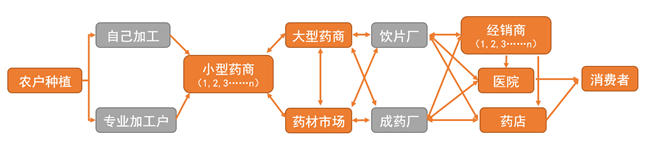
Distribution Channels of Chinese Herbal Medicines, Source: Yaocai Bang
Due to the lengthy distribution chain, numerous issues plague the trade of traditional Chinese medicinal (TCM) materials. It is widely reported in the industry that non-medicinal substances are used to counterfeit herbs—for instance, creating artificial Cordyceps molds filled with starch and dyed to mimic genuine Cordyceps sinensis, or dyeing corn silk red to pass off as saffron. Other fraudulent practices include adding non-medicinal components to increase weight or substituting herbs with look-alike analogs. Furthermore, it is even more common to encounter substandard products passed off as premium ones, or high-quality and low-quality materials mixed together.
The second issue is pricing. Due to the lengthy distribution chain, each tier of distributors requires a profit margin, causing the price for end consumers to rise to several or even dozens of times higher than the origin price. Taking Wenshan Notoginseng as an example, the online listing price for Grade 20 Notoginseng roots from growers in Wenshan Prefecture, Yunnan Province, was RMB 680 per kilogram on a certain Chinese herbal medicine e-commerce platform, whereas the retail price at pharmacies exceeded RMB 2,000.
Third, there is the issue of information asymmetry. The cultivation of Chinese herbal medicines is nearly akin to agriculture, resulting in a large number of producers but relatively few buyers; consequently, supply and demand parties often lack awareness of each other’s market information.
Characteristics of Traditional Chinese Medicinal Materials Trading
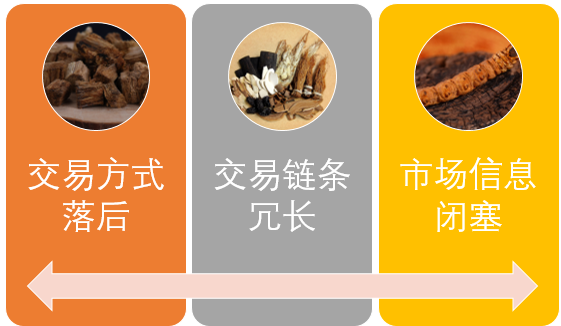
E-commerce Platforms for Traditional Chinese Medicinal Materials Emerge as the Times Demand
So, what has the e-commerce sector for traditional Chinese medicinal materials done since its entry, and what problems has it resolved?
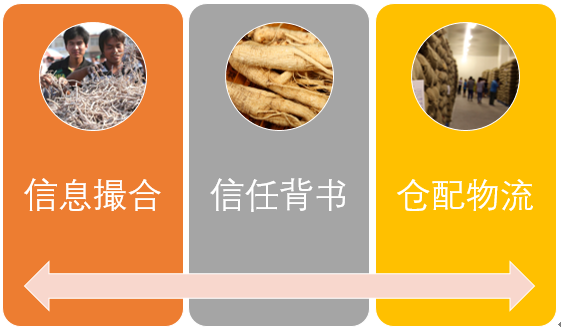
From a business model perspective, the vast majority of e-commerce platforms for traditional Chinese medicinal (TCM) materials operate under an “agent model.” In this model, the platform assigns dedicated personnel to post growers’ information online, providing information display services. Most platforms also offer warehousing, authentication, and other value-added services, as well as financial services such as pledge financing. For pharmaceutical companies and other buyers, the platforms provide services such as product inspection and verification, effectively performing the preliminary tasks associated with procurement.
This model has emerged because Chinese herbal medicines are “non-standardized products.” Even in regions known for authentic, geo-specific herbs, variations exist due to differences in cultivation cycles and harvesting methods. The rise of e-commerce platforms for Chinese herbal medicines has effectively served to endorse product quality; measures such as standardized warehousing and distribution, along with platform-mediated payments, have helped address the issue of “trust.”
From a business model perspective, e-commerce platforms for traditional Chinese medicine (TCM) materials hold inherent value. By aggregating primary market information and providing trust endorsement for transactions between non-acquainted parties, these platforms naturally merit service fees from relevant stakeholders. However, the TCM material e-commerce sector is still in its nascent stage, with the vast majority of platforms currently offering free services; they may begin charging service fees in the future.
Secondly, e-commerce platforms for traditional Chinese medicinal materials can give rise to additional services for growers. For instance, information services related to seeds, seedlings, agricultural machinery, and fertilizers, such as those provided by the Kangmei Traditional Chinese Medicine Network, may also become one of the future revenue streams for similar platforms.
The Primary Role of E-commerce Platforms for Traditional Chinese Medicinal Materials
Frequent Policy Tailwinds for Traditional Chinese Medicine
Although e-commerce for traditional Chinese medicine (TCM) materials is part of the new internet economy, it is equally influenced by the broader environment of the TCM industry. From the perspective of the overall TCM landscape, under the call for reviving traditions, TCM has received unprecedented encouragement, and the industry’s development momentum is robust.
At the same time, it should be noted that regulatory authorities have gradually introduced standards and guidelines for the quality of traditional Chinese medicinal materials, prepared slices of traditional Chinese medicine, and proprietary Chinese medicines, leading to increasingly stringent industry oversight.
We have compiled policies and regulations related to Traditional Chinese Medicine (TCM) to analyze the policy environment for TCM development.
Table 4: Policies Related to Traditional Chinese Medicine
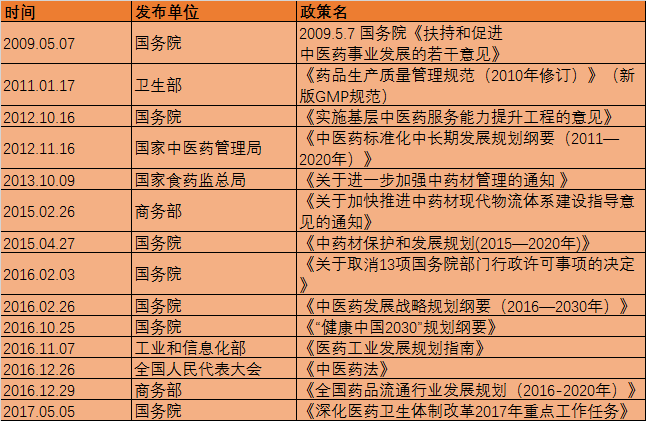
Table 5: Main Contents of Traditional Chinese Medicine Policies
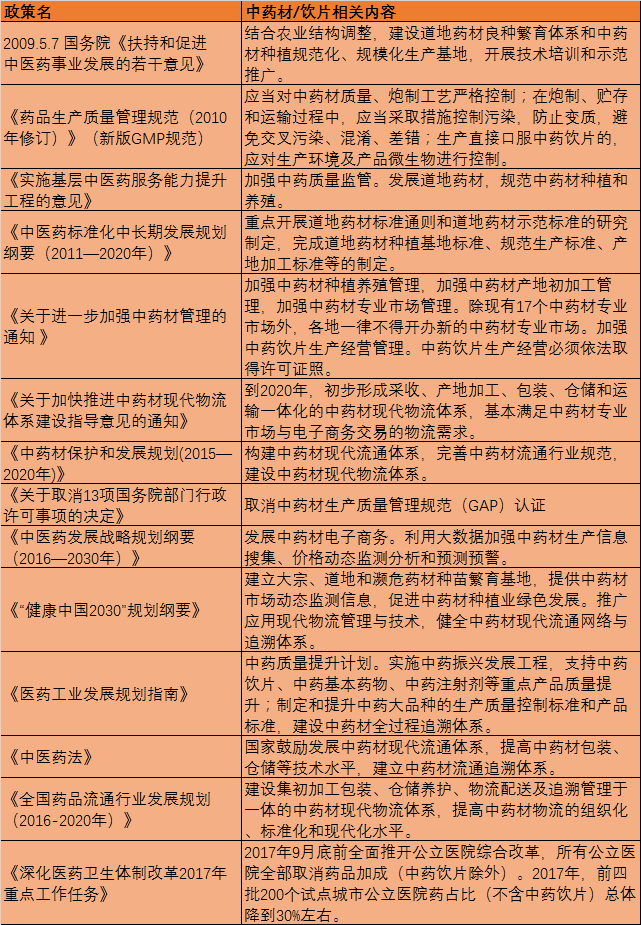
As can be seen from the table above, policies related to Traditional Chinese Medicine (TCM) and TCM medicinal materials cover the entire process from cultivation to sales. In terms of the protection of geo-authentic herbs, efforts should focus on researching and formulating general standards and demonstration standards for geo-authentic herbs, and complete the development of standards for geo-authentic herb cultivation bases, standardized production, and origin-based processing.
For primary processing, strict control shall be exercised over the quality of Chinese crude drugs and processing techniques. During processing, storage, and transportation, measures shall be taken to control contamination, prevent deterioration, and avoid cross-contamination, mix-ups, and errors. For the production of Chinese herbal decoction pieces intended for direct oral administration, controls shall be implemented on the production environment and product microbiology.
Directly relevant to the e-commerce of traditional Chinese medicinal (TCM) materials is the establishment of “a modern logistics system for TCM materials that integrates harvesting, primary processing at the place of origin, packaging, warehousing, and transportation, basically meeting the logistics demands of specialized TCM material markets and e-commerce transactions.” This undoubtedly creates a favorable policy environment for the e-commerce of TCM materials.
From the demand side, hospitals, as key demanders, will continue to see a sustained increase in their demand for traditional Chinese medicinal materials and decoction pieces. The policies influencing this trend include the zero-markup policy, measures to control the proportion of drug costs, and adjustments to the new National Reimbursement Drug List.
First, under the zero-markup policy, the National Health and Family Planning Commission has mandated that all public hospitals across China eliminate drug markups—except for traditional Chinese medicine (TCM) decoction pieces—by the end of September this year. Consequently, to offset the revenue decline resulting from the removal of drug markups, hospitals may increase the utilization of TCM decoction pieces.
In terms of reducing the drug-to-revenue ratio, the National Health and Family Planning Commission also requires that pilot cities for healthcare reform lower their overall drug-to-revenue ratio to approximately 30%. Traditional Chinese medicine (TCM) decoction pieces are excluded from this ratio and will also benefit from the incremental growth resulting from the adjustment of the drug-to-revenue ratio.
In February this year, the Ministry of Human Resources and Social Security released the 2017 edition of the National Reimbursement Drug List, imposing strict restrictions on adjuvant drugs and traditional Chinese medicine (TCM) injections. As alternatives, TCM decoction pieces, which are not subject to these restrictions, will also benefit from favorable policies.
Data from the National Bureau of Statistics shows that in 2016, the sales revenue of the traditional Chinese medicine (TCM) decoction pieces industry reached RMB 192.2 billion. Although its share within the pharmaceutical industry was the lowest at 6.5%, it recorded the fastest growth rate of 13.1%, surpassing the overall growth rate of the pharmaceutical economy and demonstrating strong development momentum. Considering these factors, the market size for TCM decoction pieces is expected to exceed RMB 200 billion this year. Based on this projection, even if estimated at half the scale of the TCM decoction pieces market, the market size for TCM medicinal materials will still reach hundreds of billions of yuan.
E-commerce Platforms for Traditional Chinese Medicinal Materials to Witness Competition Among Major Players
Returning to the e-commerce sector for traditional Chinese medicinal (TCM) materials, platforms are gearing up to capitalize on the favorable market environment and prepare for future explosive growth. However, it is important to note that TCM material e-commerce differs from other e-commerce categories. Its characteristics—namely, non-standardized products and bulk trading—mean that competition in this space will be dominated by major platforms.
The reason is that the supply of traditional Chinese medicinal materials is not directly oriented toward end consumers, but primarily serves large-scale decoction piece manufacturers and proprietary Chinese medicine manufacturers. This determines that e-commerce platforms for traditional Chinese medicinal materials must provide additional services beyond information matching, including goods inspection, warehousing and distribution, and quality testing certification, effectively acting as procurement agents for major buyers.
This service model dictates that e-commerce platforms for traditional Chinese medicine (TCM) materials inherently operate under an “asset-heavy” model, characterized by barriers in industry expertise and capital investment. The internet’s strengths lie in rapid replication and large-scale promotion to amortize costs, which may not be applicable in the TCM materials e-commerce sector. This is because trading channels for TCM materials were already well-established before this model emerged; therefore, the role of these platforms is to provide services to participants, reduce their costs, and enhance efficiency.
In terms of asset investment, we have observed that numerous traditional Chinese medicine (TCM) e-commerce platforms have established pharmaceutical wholesale subsidiaries in major TCM production and distribution hubs, staffed them with personnel, and built warehouses and logistics systems, incurring substantial costs. This explains why, after the surge of TCM e-commerce platforms around 2014, the sector has slightly contracted in recent years: with business models not yet fully matured and capital requirements being prohibitively high, new entrants are naturally barred from the market.
Moreover, traditional decoction piece giants such as Kangmei Pharmaceutical and Jointown have entered the e-commerce competition for Chinese herbal medicines, possessing resources and competitive advantages that surpass those of their peers. Apart from a few companies that had already established their presence, new entrants now find it extremely difficult to compete with them head-on.
Therefore, it can be concluded that the future of e-commerce for Chinese herbal medicines will be a strategic contest among major platforms. These large platforms may embed more services into their e-commerce systems to serve the entire industrial chain of Chinese herbal medicines, including growers, small-scale purchasers, processors, warehousing and distribution networks, and decoction piece manufacturers. By providing comprehensive services ranging from cultivation planning to circulation and then to processing and production, they will become the guardians of the development of Traditional Chinese Medicine (TCM).
Scan the QR code below to become an official member of VCBeat,More industry insights and investment & financing news are all included. Moreover, in the coming year, you will have unlimited access to the completeIndustry Trend Report, timely grasp the latest globalInvestment and Financing Information, boasting a comprehensiveMedical Enterprise Database, andMassive Resource Integration。

Scan the QR code to become a VCBeat member
Beta Version Trial Price: CNY 365/year