

Dingdang Kuaiyao CEO Wang Licheng: Pioneering New Retail in Healthcare with Multi-Scenario, On-Demand Services from Store to Home
Since 2014, the concept of pharmaceutical O2O (Online-to-Offline) has remained highly popular, attracting numerous participants ranging from traditional pharmaceutical companies to internet giants such as BAT. However, during its development, the pharmaceutical O2O sector has gradually encountered many challenges, including low-frequency demand, high costs, and difficulties in achieving profitability. In particular, last year’s news of Yaogongli’s broken capital chain brought greater uncertainty to the pharmaceutical O2O industry. For a time, everyone was pondering the future direction of pharmaceutical O2O.
Dingdang Medicine, as one of the first players in the pharmaceutical O2O sector, has gradually clarified its strategy and intends to share it to “empower” pharmaceutical retail and share the dividends of the “Internet + Healthcare” model.
Recently, VCBeat held an in-depth discussion with Wang Licheng, CEO of Dingdang Medicine, to gain insights into his perspectives on pharmaceutical O2O and Dingdang Medicine’s latest strategic vision.
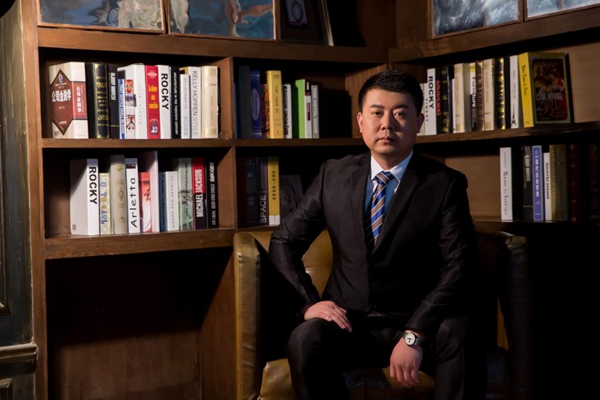
Wang Licheng, CEO of Dingdang Medicine
Half Flame, Half Ice
Wang Licheng graduated from Shandong University with a degree in Finance. He began his career in 1998, working successively at B&Q and The Home Depot, accumulating ten years of experience in offline retail. In 2008, he left the retail industry to venture into e-commerce, first as an entrepreneur and later by joining Tmall, marking a decade-long journey in the e-commerce sector.
Reflecting on his past work experience, Wang Licheng summarizes it as “ten years offline, ten years online.” His retail background has made him place greater emphasis on the fundamentals of offline operations, while his e-commerce experience has clarified how to leverage traffic and utilize internet marketing and communication strategies. Combined, these experiences form the basis of “New Retail,” which integrates online and offline channels.
Now, Wang Licheng has been working at Dingdang Medicine for half a year. In the field of pharmaceutical O2O, which emphasizes the combination of offline and online services, Wang Licheng's past career has provided him with a foundation for decision-making.
How to View the Pharmaceutical Industry: Wang Licheng Describes It as “Half Fire, Half Ice”The “fire” aspect refers to the continuous expansion of the pharmaceutical market, with its growth rate surpassing that of the overall economy during the same period. The industry remains largely immune to significant fluctuations driven by economic cycles, positioning it as a perennial sunrise industry. The “ice” aspect stems from insufficiently open pharmaceutical policies and numerous regulatory constraints. Additionally, offline pharmacies face prohibitively high rental costs. As a traditional, low-frequency industry, healthcare remains relatively distant from the internet ecosystem, making it difficult for new ideas and innovations to gain traction.
“Traditional players treat the pharmaceutical industry as a business rather than a passion. Incumbents are reluctant to try new things unless their existing interests remain unshaken.”
An examination of Beijing’s actual situation reveals that, despite being an economically developed region, its pharmaceutical retail sector exhibits relatively low levels of marketization and chain-store penetration. Numerous mom-and-pop pharmacies, which should have been eliminated by market forces or integrated into chain operations, continue to persist. Constrained by regulations on minimum distances between pharmacy locations and the high costs of consolidation, these small businesses manage to sustain themselves with slim profit margins over the long term. The coexistence of innovative pharmaceutical retail models and traditional practices in this market is a phenomenon worthy of serious consideration.
New Strategies for Integrated Marketing
After joining Dingdang Medicine, Wang Licheng also reflected on the company’s strategic approach. He stated that Dingdang Medicine would integrate online and offline resources to empower pharmaceutical manufacturers and retail pharmacies. First, it would collaborate with pharmaceutical companies to build a “C2B2M” supply chain model. Second, it would empower offline pharmacies to expand their service radius, extending coverage from 500 meters to 3 kilometers, and leverage Smart Pharmacy System 2.0 to reconstruct the value proposition of traditional pharmacies.
The foundation of the C2B2M model is the “FSC Pharmaceutical Enterprise Alliance,” proposed by Dingdang Medicine in 2015. The initial concept was to integrate industry resources, enabling alliance member pharmaceutical companies to centrally procure active pharmaceutical ingredients (APIs), packaging materials, excipients, and other supplies, thereby reducing drug costs from the upstream segment of the industrial chain and alleviating price burdens.
The upgraded C2B2M model integrates online and offline marketing initiatives on the basis of FSC. Dingdang Medicine will leverage its position as a benchmark brand in pharmaceutical O2O to harness synergies across its ecosystem. From the outset, Dingdang Medicine established strategic partnerships with over 460 domestic and international pharmaceutical companies, including Sino-American SmithKline, Xi’an Janssen, By-Health, Tongrentang, and AstraZeneca, signing sales cooperation agreements worth more than RMB 100 million.
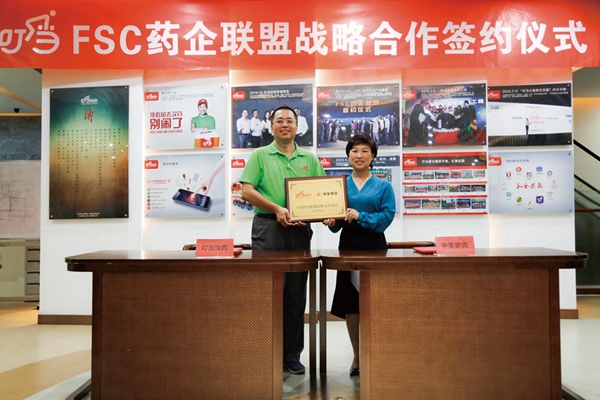
Signing Ceremony for the Strategic Cooperation between Dingdang Medicine and Sino-American SmithKline
Integrated marketing represents a breakthrough in the collaboration between Dingdang Medicine and pharmaceutical companies. It not only provides Dingdang Medicine with the endorsement of major pharmaceutical brands but also brings the presence of pharmaceutical enterprises into internet marketing, creating a win-win situation for all parties involved.
In the pharmacy sector, Dingdang Medicine has been promoting the “smart upgrade” of retail pharmacies since early 2016, introducing services such as online consultations, health check-ups, and rapid medication delivery. After a year of promotion, Dingdang Medicine’s smart pharmacy model has largely taken shape, and the company launched its Smart Pharmacy 2.0 model at the beginning of this year.
Building on the previous foundation, the 2.0 model offers more refined and clearer services. Taking rapid consultation as an example, Dingdang Medicine has partnered with internet healthcare platforms to equip pharmacies with remote diagnosis and treatment devices. Users can conduct quick consultations via these terminals and purchase medications directly using electronic prescriptions.
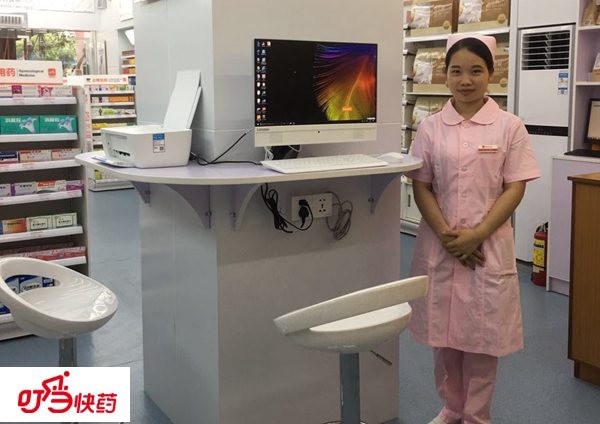
Dingdang Smart Pharmacy Fully Integrates with Internet Hospital
Dingdang Medicine also collaborates with Dingdang TCM to provide services such as traditional Chinese medicine (TCM) consultations, prescription processing and dispensing, and delivery of herbal decoction pieces, further enhancing the medical service capabilities of its smart pharmacies.
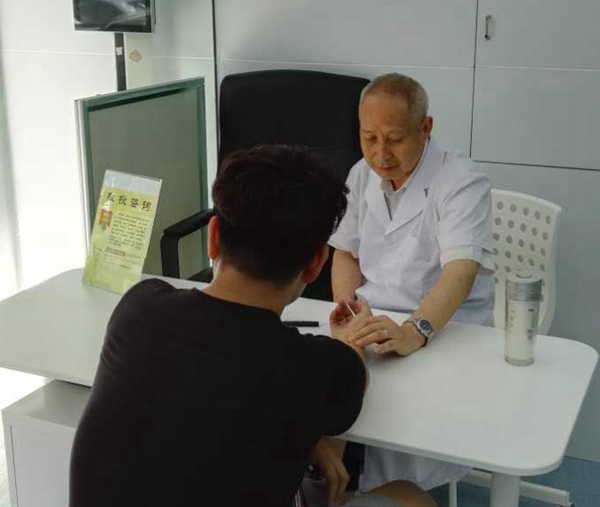
Dingdang TCM Joins Dingdang Smart Pharmacy
Smart Pharmacy 2.0 also helps pharmacies enhance their delivery capabilities. After receiving online orders, the sandbox system integrates order addresses with electronic geofencing to flexibly allocate delivery resources, ensuring timely deliveries. The intelligent dispatch center will further optimize delivery resources and improve delivery efficiency.
Dingdang Medicine positions itself as an O2O open platform, integrating upstream and downstream resources, which has undoubtedly generated strong synergistic effects.
Grasping User "Three-Dimensional" Data
Wang Licheng noted that pharmaceutical O2O services can also leverage “user profiling.” Taking user data from Dingdang Medicine as an example, the majority of O2O service users belong to the post-80s and post-90s generations, aged between 27 and 38. This demographic is predominantly female, particularly new mothers who have recently given birth.
In terms of purchased medications, in addition to common remedies for colds and gastric disorders, as well as personal protective equipment, pediatric medicines are also top sellers. For some young mothers, caring for a sick child leaves them with no time to buy medication, making home delivery the most convenient option. In particular, nighttime delivery services have garnered excellent customer reviews.
By leveraging this data, it is possible to reverse-engineer the planning for pharmaceutical procurement and warehousing, thereby fully meeting order demands. From a supply chain perspective, strong sales performance of similar drugs on Dingdang Kuaiyao enhances bargaining power with pharmaceutical manufacturers, enabling comprehensive exploitation of value-added opportunities.
Wang Licheng believes that data has three dimensions: length, width, and depth. Length refers to the size of the user base, width refers to the scenarios in which users engage with the service, and depth refers to the extent to which services can be expanded within specific scenarios. The accumulation and sedimentation of such data constitute the “soul” of new retail in the pharmaceutical industry. Dingdang Kuaiyao will continue to expand across these three dimensions to enrich the value of its data.
Additionally, in terms of marketing strategies targeting users born in the 1980s and 1990s, more “trendy” approaches can be adopted, such as social media dissemination and topic-based marketing. Dingdang Medicine has produced thematic advertisements aimed at young mothers and placed ads on subway systems and its mobile app, which undoubtedly reflects a precise understanding of its target audience.
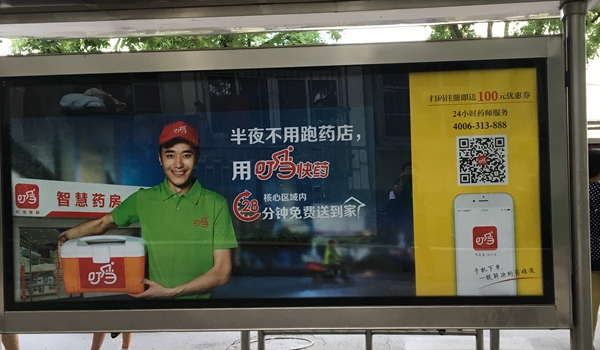
Dingdang Medicine Bus Stop Advertisement
Dingdang Medicine has also listed its services on popular food delivery and fresh produce O2O platforms, such as Baidu Waimai, JD Daojia, Meituan, and Ele.me, aligning with the habits of young users and securing a stable source of traffic.
“O2O is a trendy lifestyle, and pharmaceutical O2O is no exception. Our development strategy must align with this trend and consistently focus on young users,” said Wang Licheng.
Empowering traditional pharmacies is another crucial strategy for Dingdang Medicine. This empowerment involves transforming these pharmacies through measures such as standardizing brand identity, adding diagnostic and treatment services, equipping them with testing hardware, and implementing digitalization upgrades.
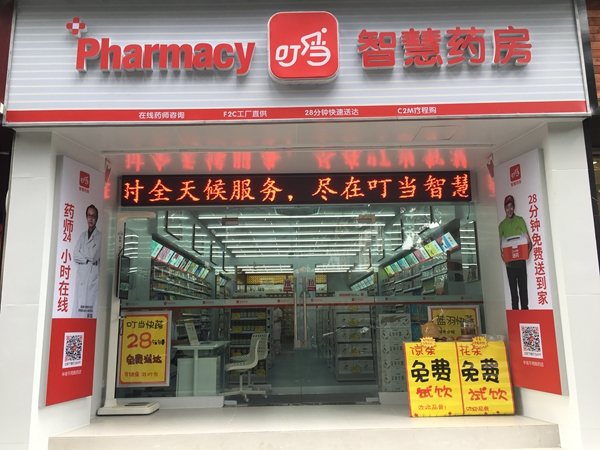
Dingdang Smart Pharmacy Storefront
Dingdang Medicine’s flagship “Smart Pharmacy” is a microcosm of its empowerment of traditional pharmacies. VCBeat’s visit to the Dingdang Smart Pharmacy in Dengshikou, Dongcheng District, revealed that the store offers remote consultations provided by WeDoctor’s Wuzhen Internet Hospital; basic health screenings such as measurements of weight, blood glucose, blood lipids, and blood pressure are also available; additionally, the pharmacy provides Traditional Chinese Medicine (TCM) consultation services and herbal decoction services.
“We offer both in-store and home-delivery services. O2O is inherently a model that integrates online and offline channels. Smart pharmacies can cater to users with diverse needs, leverage pharmacy resources across multiple levels, and improve sales per square foot.”
Sales per square meter is a crucial metric that Wang Licheng uses to evaluate smart pharmacies. In his view, the challenge for O2O models does not lie in the absence of a profitable business model; rather, it is about leveraging existing resources to optimize service quality and maximize sales per square meter, thereby resolving the issue of profitability.
"As users visit stores or receive home deliveries more frequently, businesses can better understand their consumption habits, enabling diversified operations or customized product development. The pharmaceutical O2O business model holds diverse possibilities."
In fact, Dingdang Medicine has partnered with Renhe Group to develop “Lanyu Kuaiyan,” a ready-to-eat rock sugar bird’s nest beverage, tailored to the consumption patterns of female users. The product is sold on the Dingdang Medicine platform, with monthly sales exceeding 10,000 units.
How Can Pharmaceutical O2O Break Through the Impasse?
Dingdang Medicine was incubated internally by Renhe Group in 2014, and subsequently began to introduce industrial capital. At the end of 2016, it secured RMB 300 million in Series A financing, led by Tongdao Capital.
In terms of financing scale, Dingdang Medicine holds a leading position in the pharmaceutical O2O sector and ranks among the top players within the broader “Internet + Healthcare” industry.
In terms of store scale, as of this June, Dingdang Medicine has established over 200 stores across seven cities, including Beijing, Shanghai, Guangzhou, Shenzhen, Chengdu, and Zhengzhou, serving more than 10 million users with daily orders exceeding 30,000.
From an industry-wide perspective, pharmaceutical O2O players are being courted by various companies. For instance, Haoyaoshi Pharmacy, under Jointown Pharmaceutical Group, enables select pharmacies to offer delivery services. Platform-based enterprises are even more numerous; companies such as Meituan, Ele.me, and JD Daojia all allow pharmacies to list on their platforms and fulfill online orders. Additionally, Alibaba Health has established the O2O Pioneer Alliance, providing traditional pharmacies with access to O2O channels.
In terms of policy, regulators have offered considerable encouragement to pharmaceutical O2O services. The “13th Five-Year Plan for Drug Circulation” explicitly supports collaborations between drug distribution enterprises, medical institutions, health insurance authorities, and e-commerce companies to develop pharmaceutical e-commerce services. These initiatives aim to provide patients with convenient options such as “online ordering and in-store pickup” and “online ordering and home delivery” for over-the-counter (OTC) medications, thereby promoting the integrated development of online and offline channels. Following the release of this policy, the industry widely regarded it as the dawn of a new era for pharmaceutical O2O.
However, despite the positive news, pharmaceutical O2O still faces unfavorable factors such as high delivery costs and low-frequency demand. Wang Licheng partially agrees with this view. Nevertheless, he believes that these challenges will not hinder the development of pharmaceutical O2O; the industry’s potential remains intact, with the key lying in how to effectively address these issues.
To illustrate this point, Wang Licheng cited a specific example. He noted that in the early stages, Dingdang Medicine received very few orders during evening hours, which were insufficient to cover staff costs; nevertheless, the company persisted in providing 24-hour medication delivery services. The rationale behind this strategy was to build user trust in the Dingdang Medicine brand. Once brand equity was established, users would engage with the service repeatedly, and with increased usage frequency, the platform’s value proposition would naturally become more apparent.

28-Minute Ultra-Fast Delivery: Strengthening the Foundation of Home Healthcare Services
Wang Licheng has repeatedly emphasized the concept of “consumption scenarios.” He stated that home delivery constitutes one consumption scenario, while in-store visits represent another. By upgrading services and transforming traditional pharmacies, Dingdang Medicine has introduced more consumption models within these two scenarios. The expansion of such models enables a deeper understanding of users, thereby facilitating the provision of personalized and diversified services. In other words, with a sufficiently large user base and high user stickiness, a viable business model will naturally fall into place.
At the end of the interview, Wang Licheng told VCBeat that Dingdang Medicine’s goal and vision is to “lead in delivering ultimate health services.”
“Leading” refers to Dingdang Medicine’s commitment to continuous innovation, expanding the scope of “Internet + Healthcare” models, and setting industry trends. “Ultimate” signifies that Dingdang Medicine avoids superficial attempts, aiming instead to genuinely address pain points in pharmaceutical retail and comprehensively meet users’ service needs. “Health Services” indicates that Dingdang Medicine positions itself not merely as a pharmaceutical retailer, but as a provider of comprehensive health products and services.
From pharmaceutical delivery to providing comprehensive health products, and further extending into health services, Dingdang Medicine’s business model is becoming increasingly diversified, offering greater reference value for pharmaceutical O2O strategies.