

Siwei Xiangtai Secures Tens of Millions in RMB in Angel Funding Led by Anlong Fund to Advance AI-Powered Cervical Cancer Screening

Su Siming, CEO of Siwei Xiangtai
According to statistics from the National Cancer Center of China, there are currently 4.2 million new cancer cases in China each year, with over 3 million deaths annually. The five-year survival rate is approximately 37%, significantly lower than the 67% reported in the United States.
Where lies the problem? Experts state, “China’s health check-up and prevention system is incomplete; 50% of cancer patients present at hospitals already in advanced stages, with only 10% diagnosed at an early stage.” The absence of an early cancer screening system constitutes the primary obstacle to cancer prevention and control in China.
Another significant factor is the lack of standardized cancer diagnosis and treatment. Due to the shortage of highly skilled physicians in China, particularly pathologists, adherence to standardized cancer treatment protocols has remained challenging.
Siwei Xiangtai has long focused on obstetrics and gynecology, dedicating itself to promoting specialized technologies that can effectively reduce the incidence and mortality rates of gynecological malignancies. To this end, VCBeat (WeChat: vcbeat) conducted an exclusive interview with Su Siming, CEO of Siwei Xiangtai.
Doctor-Led Startup Focused on Cervical Cancer Screening
Founded in 2011, Siwei Xiangtai’s core team members each boast over a decade of experience in the healthcare industry. The significant transformations and trends shaping the future of healthcare are undoubtedly promising, yet they also present substantial challenges. Siwei Xiangtai aims to seize this critical window of opportunity.
It has been learned that Su Siming graduated from the Medical Laboratory Science program at the Medical College of Hunan Normal University. He previously worked as a clinical laboratory physician and later assumed responsibility for national market operations at pharmaceutical and medical device companies.
“The products I have been involved with are primarily in the fields of obstetrics and gynecology and oncology. We have consistently adhered to an academically driven promotion strategy, closely integrated with clinical practice, which has enabled us to gain a deeper understanding of current market demands in this sector. When I chose to embark on my entrepreneurial journey, I continued to focus on the maternal and child health sector.”
The company is currently focused on addressing cervical cancer. Cervical cancer is the second leading cause of cancer-related deaths among women, surpassed only by breast cancer. According to data from the National Central Cancer Registry of China, there were 150,000 new cases in China in 2013, with incidence rates showing an upward trend and affecting younger populations.
“It is currently believed that cervical cancer in women is clearly associated with human papillomavirus (HPV) infection. Cervical cancer is an infectious disease that can be prevented, treated, and cured,” stated Academician Lang Jinghe, a renowned expert in the Department of Obstetrics and Gynecology at Peking Union Medical College Hospital.
Cervical intraepithelial neoplasia (CIN), a precancerous lesion of the cervix, develops over a relatively prolonged period. With diligent participation in population-based screening and regular follow-up, the disease can be effectively intervened upon and prevented, and early diagnosis can lead to a complete cure. Statistics indicate that 320 million people in China require cervical cancer screening annually.
Traditional screening techniques primarily include cytology testing and high-risk HPV detection. Cytology testing has made outstanding contributions to the decline in cervical cancer incidence and mortality rates worldwide over the past half-century, particularly with widespread use in developed countries. Moreover, continuous improvements in liquid-based cytology preparation techniques have eliminated interference from blood and mucus, significantly enhancing the clarity of monolayer cell smears.
However, due to the uneven development of healthcare in China, primary care hospitals lack experienced cytopathologists for slide interpretation, and some are even unable to conduct screening due to insufficient facilities and personnel. Furthermore, the waiting time for screening results ranges from three days to two weeks, often leading to significant loss to follow-up and patient attrition. Consequently, the widespread adoption of liquid-based cytology as a cervical cancer screening method in developing countries has encountered considerable resistance.
HPV testing represents another breakthrough in primary screening methods. Compared with cytology, although HPV testing improves the sensitivity for detecting high-grade cervical lesions, it has lower specificity. This is primarily because HPV infection is prevalent in a large population, and not all HPV infections progress to cervical cancer; the estimated progression rate is approximately 3%.
Therefore, HPV testing alone is prone to causing overdiagnosis and overtreatment, increasing the psychological and financial burden on patients. Furthermore, since screening results need to be transmitted from primary care hospitals, immediate results are not available, leading to a significant rate of loss to follow-up.
20 Years of R&D: TruScreen Outperforms Cytology in Screening Efficacy
Su Siming told reporters, “The use of primary screening technologies has significantly reduced the incidence and mortality rates of cervical cancer. However, as these methods have been widely adopted in clinical practice, their limitations have gradually come to light, with occasional occurrences of missed diagnoses, misdiagnoses, and imprecise reporting.”
To address this issue, Professor Malcolm Coppleson, an international pioneer in colposcopy and a renowned gynecologic oncologist, along with his colleague Dr. Bevan Reid, envisioned leveraging big data and artificial intelligence technologies to develop a cervical cancer screening method that does not require laboratory facilities or pathologists with specialized training. This approach simulates expert judgment and provides real-time results, thereby overcoming the limitations of cytology-based methods while enhancing the stability and accuracy of outcomes.
Thus, in 1986, they established a company in Sydney, assembling a team of distinguished R&D professionals to conduct joint research in collaboration with the Australian Academy of Science. The team comprised gynecologic oncologists, electronic engineers, software engineers, statisticians, and sensor technology experts, among others.
The database for this artificial intelligence-based cervical cancer screening technology (TruScreen, hereinafter referred to as TS) was rigorously curated and classified by leading gynecologists and colposcopists in accordance with evidence-based medicine. The data were derived from millions of tissue samples representing diverse ethnic populations across Australia, the United Kingdom, Singapore, New Zealand, the Philippines, and Brazil. The final clinical validation was conducted under the leadership of renowned experts, including Professor Coppleson and Professor Albert Singer, with participation from top gynecologic oncologists worldwide. The results were published in the International Journal of Gynecological Cancer in 2003.
Due to the substantial time and effort required for machine learning development and core algorithm establishment, the research and development of TS technology spanned 20 years and cost AUD 120 million.
The final product has obtained multiple international certifications, including approval from the Australian Therapeutic Goods Administration (TGA), European CE marking, and China’s National Medical Products Administration (NMPA, formerly CFDA) (Registration No.: Guo Xie Zhu Jin 20152211279). It has been granted 20 international patents and received numerous awards, including the Australian Good Design Award. The product is featured in the internationally renowned authoritative textbook *Cervicology* and included in *Australia’s 100 Best Inventions*, an official publication commemorating a century of Australian innovation.
AI-based cervical cancer screening technology scans and collects parameters such as the attenuation of photoelectric stimulation intensity, refraction, scattering angles, and electrical impedance values of the cervical epithelium. It can obtain 25,000 classified parameters within 1–2 seconds, with the entire examination taking only 1–2 minutes to deliver real-time results.
Since its introduction to China, this technology has undergone clinical observation at multiple top-tier medical institutions. A meta-analysis using Meta-Disc software, encompassing 10,582 subjects from 36 authoritative medical institutions including Peking University People's Hospital, demonstrated that the pooled sensitivity of the TS technology was 84%, compared to 60% for cytology. The sensitivity range for the TS technology was 70%–95.85%, whereas that for cytology was 31.58%–80.43%. The screening efficacy of the TS technology is significantly superior to that of cytology, which holds substantial value for the early screening of cervical cancer.

TruScreen Screening Product
Existing clinical trial results have confirmed that the TS technology offers high sensitivity and specificity, is simple to operate and easy to implement, is painless and non-invasive, is well tolerated psychologically by women, provides real-time results, and improves diagnostic and treatment efficiency. It is an early screening technique for cervical precancerous lesions that aligns with China’s national conditions and the current level of medical development.
Four Key Advantages of TruScreen
Siwei Xiangtai’s current main product on the market is TruScreen, an AI-powered cervical cancer screening system. The company is also upgrading and developing a next-generation AI-based cervical cancer screening system leveraging big data from the Chinese population.
“Our primary users in past collaborations have been domestic secondary and tertiary medical institutions, as well as maternal and child health hospitals. In the future, a significant portion of our focus will shift toward home healthcare and community-based primary care,” said Su Siming.
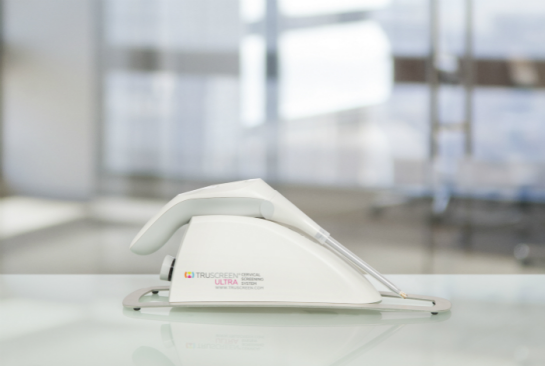
TruScreen Products Have Four Major Advantages
TruScreen is not merely an AI concept; it has truly entered the stage of clinical application. In China, Siwei Xiangtai has accumulated extensive practical experience in promotion through years of dedicated efforts. The product’s advantages are primarily reflected in four aspects:
1. Efficiency.Traditional techniques require several days to obtain results, whereas the entire TruScreen examination process takes only 2–3 minutes, with results available immediately.
2. Accuracy.Cytology testing has a sensitivity of 30–80%, while the average sensitivity of TruScreen reaches 85%.
3. Standardization.Cytological examination requires manual sampling, slide preparation, and interpretation, making it highly susceptible to human factors. TruScreen, an artificial intelligence technology, is unaffected by human factors, delivering objective, standardized results with good reproducibility.
4. Patient satisfaction.TruScreen is painless and non-invasive, providing real-time results, which makes it more acceptable to women undergoing screening.
It has been reported that Siwei Xiangtai has established in-depth collaborations with dozens of professional medical institutions, including Peking Union Medical College Hospital, the 301 Hospital (PLA General Hospital), Beijing Chaoyang Hospital, and Shanghai Renji Hospital. In April 2017, Siwei Xiangtai secured tens of millions of yuan in angel-round financing, led by Anlong Fund. In the second half of 2017, Siwei Xiangtai will partner with an Australian manufacturer to initiate the upgrade and development of next-generation products, ultimately achieving localized production in China.
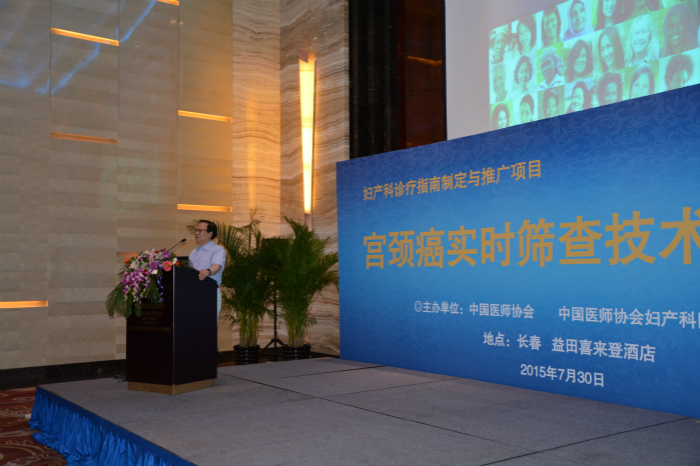
Academician Lang Jinghe Serves as Chair of the TS Technology Launch Event at the COGA Annual Meeting
“At present, we remain a sales-driven enterprise with annual sales reaching the tens of millions of yuan. We are currently transitioning into an integrated company encompassing R&D, production, and sales. Having already entered into a production licensing agreement for TruScreen technology, we plan to commence localized production of TruScreen technology in China in the second half of 2017.”
Future Plans: Expanding Sales Channels and Identifying Business Growth Points
Su Siming also shared with reporters the circumstances surrounding his first sale, which was made to a Grade 3A hospital. At an academic conference, the director of the outpatient department at that hospital attended a special presentation on the TS product. She expressed strong interest, believing that the product would better meet her professional needs and enhance patient care.
However, the hospital’s senior department director was strongly opposed to AI-based screening technology, dismissing it as deceptive and questioning whether cervical cancer could truly be detected simply by shining a flashlight. After persistent advocacy by the outpatient department director, the Siwei Xiangtai team engaged in multiple rounds of clear and accessible discussions with the senior expert, ultimately securing his approval to implement this technology at the hospital.
After two years of clinical use, TS technology has become the primary screening method replacing traditional techniques. Driven by the hospital’s promotional efforts, many other hospitals have adopted this technology, with positive feedback.
“Going forward, we plan to first achieve the domestication of artificial intelligence technologies and the localization of data to Chinese populations, with a target of collecting approximately one million cervical samples from Chinese women. Future financing will primarily be directed toward research in these two areas.”
Regarding profitability, Su Siming believes that the localization of TS technology will effectively reduce product production costs. In terms of distribution channels, Peking Union Medical College Hospital is leading a clinical research project on TS technology involving one hundred hospitals, while collaborations have also been established with cervical and breast cancer screening programs and major domestic health checkup platforms to expand sales channels and identify new business growth points.