

BoKang Medical Files for IPO: Building a Nationwide Light-Asset Rehabilitation Healthcare Platform
From its humble beginnings with four partners, ten beds, and the management of a 100-square-meter department, Bokang Medical has navigated a thorny entrepreneurial path to become a professional hospital management company that now holds controlling stakes in and directly operates, provides comprehensive management for, and engages in technical collaborations with dozens of hospitals (and departments).
Beijing Bokang Hospital Management Co., Ltd. (hereinafter referred to as “Bokang Medical,” formerly Beijing Jingshoutang Hospital Management Co., Ltd.) is a specialized provider of rehabilitation medical services, integrating medical services, hospital management, and medical investment.
Guided by its mission to “share global rehabilitation expertise,” the company focuses on the rehabilitation healthcare sector and is committed to becoming China’s leading rehabilitation healthcare operations and management group. What has been its development trajectory? To find out, VCBeat (WeChat ID: vcbeat) conducted an exclusive interview with Cheng Jiayuan, Chairman of Bokang Medical.
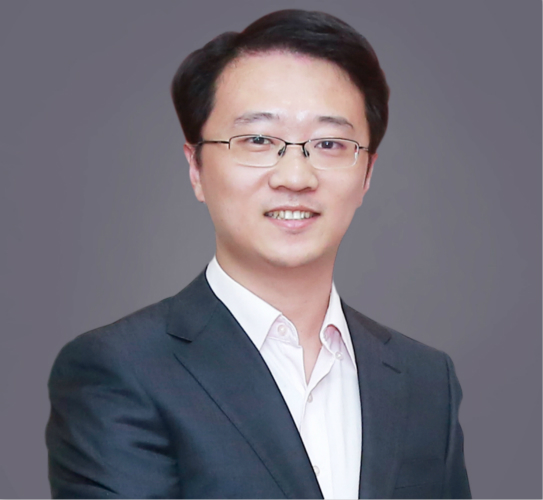
Cheng Jiayuan, Chairman of Bokang Medical
Identifying the Supply-Demand Mismatch in Pediatric Rehabilitation, I Decided to Launch a Startup
In 2008, Cheng Jiayuan graduated from Peking University Health Science Center as a typical top-tier medical student. After graduation, he joined the Specialty Care Product Group of GlaxoSmithKline (hereinafter referred to as GSK) China’s Prescription Pharmaceuticals division, where he worked in pharmaceutical sales. During his tenure at GSK, he was responsible for products related to neurology and rehabilitation, through which he connected with many leading experts in these fields.
Through exchanges with these experts, Cheng Jiayuan learned that many children with cerebral palsy require inpatient rehabilitation therapy. However, due to bed capacity constraints and specific requirements for bed turnover rates at tertiary hospitals, many patients can only receive basic outpatient rehabilitation guidance and are unable to undergo systematic treatment.
“At that time, I recognized a stark imbalance between the supply and demand of medical resources in pediatric rehabilitation, with severe disparities in resource allocation. Witnessing numerous families traveling great distances to bring their children to Beijing for medical care, I thought that if I could leverage my efforts to help them access top-tier specialists and receive high-quality treatment, many children could secure better life outcomes. This realization sparked my entrepreneurial ambition,” said Cheng Jiayuan, reflecting on the circumstances that led to his venture.
Thus, in late 2010, Cheng Jiayuan teamed up with three other co-founders, resigned from their well-compensated positions at foreign enterprises, and jointly established Bokang Medical, with a primary focus on addressing the difficulties and high costs faced by pediatric patients in accessing medical care.
Significant Complementary Advantages of the Team
Bokang Medical was initially conceived to provide a high-quality venue for early intervention and treatment for the large population of children with cerebral palsy, thereby alleviating the difficulties and high costs associated with accessing medical care for some patients. Consequently, its core customer base consists of children requiring rehabilitation therapy and intervention, such as those with cerebral palsy.
Currently, many hospitals in the market lack the technical expertise and hardware infrastructure for pediatric rehabilitation. In Beijing, only a few large tertiary Grade A hospitals are capable of providing genuine pediatric rehabilitation services. However, these tertiary Grade A hospitals face severe bed shortages and are subject to mandatory requirements for bed turnover rates, leaving many patients unable to access the care they need.
“Our strengths lie in our team and operational management capabilities. Currently, there are no comparable companies operating at scale in China; while a few social organizations are engaged in similar activities, they lack standardization and have not achieved significant scale,” said Cheng Jiayuan.
It has been reported that the core team of Bokang Medical has an average age in their early thirties, representing a dynamic and vigorous workforce. The team comprises industry veterans with over a decade of experience in the management, operations, and promotion of private hospitals, nationally renowned experts and professors in the field of rehabilitation, and elite professionals from top-tier global pharmaceutical companies.
It can be said that the founding team features complementary professional strengths, backed by robust professional backgrounds, extensive practical experience, and a strong track record of successful cases. Particularly in operational management, the company has accumulated profound management expertise and hands-on operational experience, secured substantial client resources, and earned widespread industry recognition as well as high praise from patients and their families. Such capabilities are not easily replicated by new market entrants.
Bokang Medical has partnered with the China Rehabilitation Research Center and the Beijing Association of Rehabilitation Medicine, boasting a wealth of top-tier domestic expert resources. Notably, in the field of pediatric rehabilitation, it collaborates with the Department of Pediatric Rehabilitation at Beijing Bo’ai Hospital, the largest pediatric rehabilitation department in China, and has established deep cooperative relationships with numerous institutions across the country.
Consistently Profitable
Bokang Medical’s growth was not achieved overnight. Starting with the management of a single department featuring just ten beds and covering 100 square meters, it has evolved into a specialized hospital management company that now holds controlling interests in two directly operated hospitals and provides comprehensive trusteeship and technical cooperation to dozens of other hospitals (or departments). This journey has encompassed three distinct phases: from simple departmental trusteeship, to holistic hospital management, and finally to preliminary chain-style operational management.
Each step represents a qualitative leap in operational and management capabilities, accompanied by extensive exploration and innovation. Currently, Bokang Medical holds controlling stakes, provides comprehensive trusteeship, or engages in technical collaborations with dozens of hospitals (or departments) across China.
The company provides comprehensive support and holistic solutions across technology, capital, equipment, operations, and talent, delivering an overall qualitative improvement for partners in areas such as discipline construction, departmental development, talent cultivation, infrastructure development, brand building, as well as economic and social benefits.
“At the outset of our venture, we managed clinical departments, providing patients with specialized, high-quality medical services. Later, we expanded to managing entire hospitals, exporting management expertise and technical capabilities. Now, we are also acquiring suitable target hospitals, embarking on a new journey driven by the dual engines of operations and investment,” said Cheng Jiayuan.
Currently, Bokang Medical’s revenue is primarily derived from fees for medical services provided by hospitals (departments) under its holding or trusteeship.
Cheng Jiayuan is highly confident about revenue generation: “We have remained profitable since our inception, and we enjoy strong recognition from the industry. Several institutions even offered high praise on the spot, emphasizing that startups should return to the essence of business. Startups must possess the ability to sustain themselves; projects like ours, which first establish a viable business before scaling into a replicable model, are well received. We received numerous suggestions and recommendations, and many investment firms have proactively reached out to us.”
Plan for Series A financing and expand across China
China has a pediatric population of 256.5 million, with a substantial number of children requiring rehabilitative therapy each year. Among them, the incidence rate of cerebral palsy in children is approximately 5 per 1,000. Currently, there are about 6 million individuals with cerebral palsy in China, and it is projected that an additional 1 million cases will emerge over the next decade. This represents a significant market.
In the realm of new technology development, Bokang Medical’s independently developed MotionTracking posture capture and analysis system, along with its supporting equipment, has disrupted traditional gait analysis systems. By utilizing wearable sensors to detect postural movements and employing mathematical models and motion tracking algorithms, the system enables precise dynamic capture, analysis, and quantitative assessment of body posture. Compared to conventional optical gait analysis systems, it imposes no special requirements on the environment, offers a higher cost-performance ratio, and provides more comprehensive and accurate functional measurements. Consequently, it holds broad application prospects in the field of rehabilitative medicine.
“Given the long payback period associated with asset-heavy operations and the large number of existing medical institutions, we have decided to adopt an asset-light model for rapid expansion and development.”
In terms of medium- to long-term planning, Bokang Medical intends to spend approximately five years, divided into three phases, to build a three-tier rehabilitation chain system. In addition to providing standardized medical services to the general public, it will also offer differentiated, one-stop, high-quality services to rehabilitation patients with premium needs.
Bokang Medical will also develop and operate an online rehabilitation medical platform and app, establish a physician group of rehabilitation specialists, and build China’s leading O2O rehabilitation healthcare platform.
The post-financing plan constitutes the first phase of our medium-to-long-term strategy. By the end of 2018, we aim to add approximately 30 entrusted hospitals (or departments) in Beijing and surrounding provinces, such as Hebei, Shanxi, and Shandong, leveraging models like IoT and PPP. This will bring our total managed portfolio to around 40 hospitals (or departments).
Phase II: Plan to establish secondary specialized rehabilitation hospitals in the provincial capitals of the targeted provinces, and set up provincial expert consortia and consultation centers.
In Phase III, a Tier-1 center for operations, clinical treatment, scientific research, and international cooperation will be established in Beijing. The company will build tertiary rehabilitation hospitals in accordance with international JCI standards, positioning them as world-class institutions to drive the overall medical excellence of the group, ultimately creating a comprehensive chain of tertiary rehabilitation facilities.
This round of financing officially commenced approximately two weeks ago. Bokang Medical was invited to participate in several roadshows, which received generally positive feedback.
“We plan to complete our Series A financing within the next three months, leveraging capital to rapidly expand and develop across China,” Cheng Jiayuan concluded.